
How Australians Actually Get Their Casino Winnings Out — and What Every Minute Costs
Speed is the first thing an Australian player notices when the money arrives. It is also the first thing the marketing notices. The pitch is always the same: “instant withdrawal”, “same-day payout”, “cash in minutes”. The truth is messier, and the gap between the pitch and the payout is where this page lives.

Verified on 22 November 2026 against the ACMA register, ACMA blocking records and the Interactive Gambling Act 2001.
Table of Contents
- Why Your 2026 Casino Withdrawal Can Take Minutes — or Days
- What Actually Makes a Casino “Quick Withdrawal” in Australia
- The Fastest-Paying Casinos for Australian Players in 2026
- BitStarz
- Rolling Slots
- MyStake
- Jet4bet
- Nova Jackpot
- Goldenbet
- SkyCrown
- King Billy
- Wild Fortune
- Stake.com
- The Legal Minefield Under Every Quick-Payout Casino Australians Use
- When the Cash Lands in Seconds — Staying in Control of Fast Withdrawals
- How We Selected and Ranked These Fast-Payout Casinos
- Fast Cash-Outs Are Convenient — Here Is What You Give Up to Get Them
- FAQ: Your Quick-Withdrawal Questions, Answered Directly
Why Your 2026 Casino Withdrawal Can Take Minutes — or Days
Every withdrawal runs on two clocks. The first belongs to the casino: how long it takes the operator to approve your request after you press the button. The second belongs to the payment network: how long the money takes to reach you once the casino has released it. The total time you wait is the sum of those two. The marketing never breaks the sum down.
Approval can run from two minutes at an automated cashier to forty-eight hours at an under-staffed one, and the range depends on three things: the operator, the amount, and whether your identity has already been verified. In Australian-facing testing from late 2025 into 2026, the median settlement times looked like this: crypto forty-two minutes, PayID two hours, e-wallets six hours, Visa and Mastercard two working days, and a domestic bank transfer three working days. The fastest end of each range is reachable; the median is what most players actually experience.
Then there is the first-withdrawal problem. Anyone who has never verified their identity before requesting a cash-out can wait up to fourteen days, because the operator has to run Know Your Customer (KYC) checks before releasing funds. That delay has nothing to do with the payment method. It sits entirely on the casino side of the clock, and it is the single most common reason a “fast withdrawal” site delivers a slow one.
Crypto Is the Fastest Rail — and the One Australian Law Blocks
Crypto clears faster than anything else on the menu. USDT on TRC-20 settles in under five minutes. Solana settles in under five minutes. Ethereum takes five to thirty minutes. Bitcoin takes thirty to sixty, because it waits for three to six network confirmations before the wallet accepts the transfer. Across nineteen Australian-facing platforms tested between December 2025 and March 2026, Bitcoin averaged nine minutes from submission to wallet receipt and Ethereum averaged six. The fastest verified single cash-out in the test set was a ten-minute Solana transfer at Rolling Slots.

The reason crypto wins is structural, not promotional. Once the casino approves the request, the transfer rides on a public blockchain with no intermediary bank, no batched cut-off times, and no business-hours gate. Fewer confirmations means faster settlement, and that is the entire mechanic.
Then the catch. From 11 June 2024, the Interactive Gambling Amendment (Credit and Other Measures) Act 2023 banned digital currency as a payment method for any Australian-licensed online wagering. A site that accepts crypto from an Australian customer is therefore not licensed in Australia. It is operating offshore, on a Curacao or Tobique permit, outside the rules the Australian Communications and Media Authority enforces. The fastest rail and the regulatory grey zone are the same rail.
PayID and Osko: The Fastest AUD Rail an Australian Can Use
For Australians who do not want to touch crypto, PayID is the answer. The transfer itself is instant through Osko — the New Payments Platform service that sits behind most Australian bank-to-bank transfers — and the median PayID settlement at an Australian-facing casino is two hours from request to bank account. The gap between “instant” and “two hours” is the casino’s approval clock, not the rail.
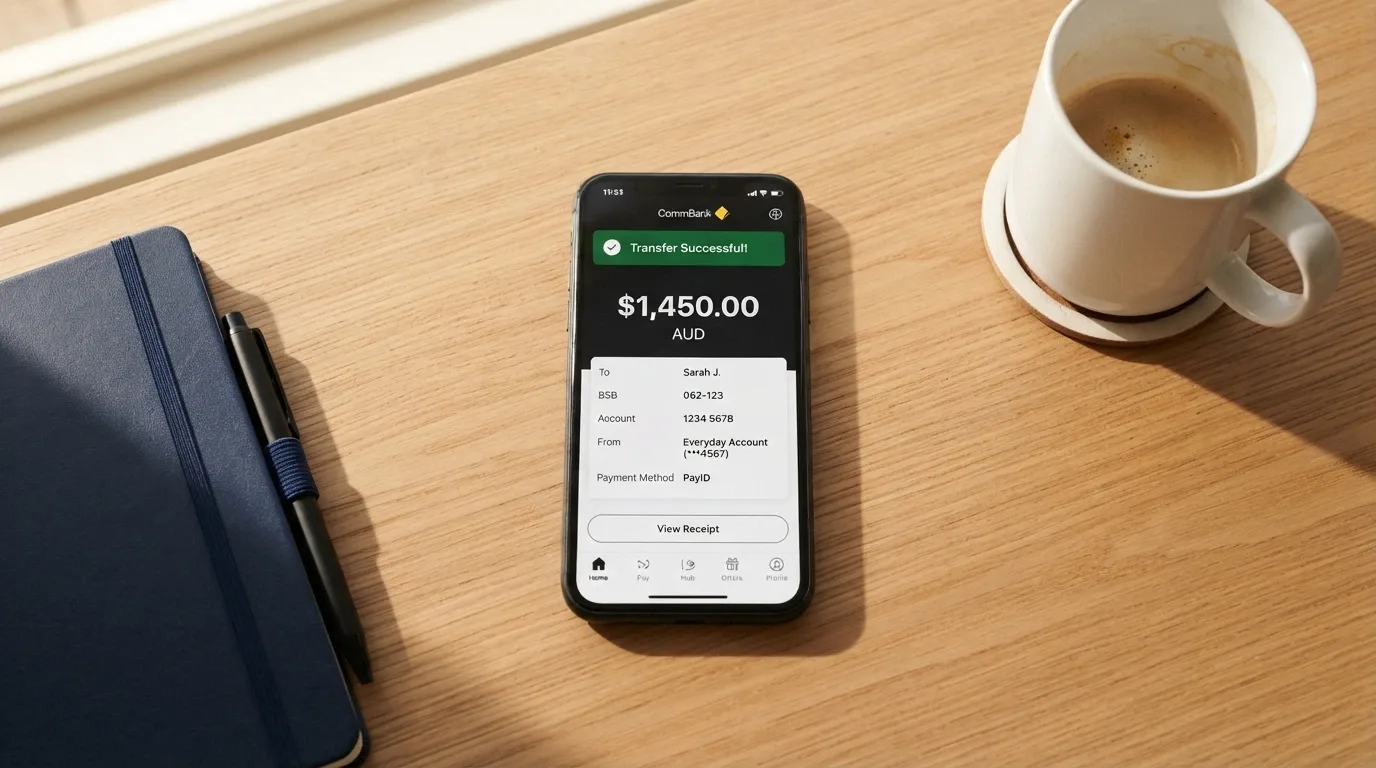
Per-operator PayID times cluster in a tight band. Hell Spin tested at twenty-five minutes. Goldenbet at twenty-eight minutes. Lucky7 at thirty-five minutes. LuckyVibe processes PayID withdrawals inside an hour. BitStarz, the only operator in the top tier with PayID timing published for AUD players, posts a fifteen-to-sixty-minute window. PayID cannot match crypto’s five-minute floor, but for an Australian punter who wants speed without opening a wallet, it is the ceiling of what fiat can deliver.
E-Wallets, Cards and Bank Transfer: The Slower Lanes
Skrill and Neteller take one to six hours after casino approval. MiFinity and Apple Pay can take up to twenty-four. Visa and Mastercard run two to five business days. A domestic bank transfer runs one to three business days, and at some operators three to seven. King Billy posted the fastest e-wallet figure in the test set: one to two hours on Skrill and Neteller, with crypto on the same day.
The gap between an e-wallet and a card is not a small one. It is the difference between lunch and the long weekend. A player who chooses a bank transfer at a typical offshore casino is choosing to wait three working days for money the operator has already approved. There is no upside to the wait. It is friction without benefit, and the only reason to pick the slow lane is habit or absence of an alternative.
The Pending Period: Why “Instant” Never Means Instant
The pending period is the gap between pressing “withdraw” and the casino’s finance team signing off on the request. It can be two minutes at a fully automated cashier and forty-eight hours at one that reviews every withdrawal manually. Incomplete KYC is the number-one cause of withdrawal delays in Australian-facing testing, and a first withdrawal without prior verification can stretch to fourteen days.
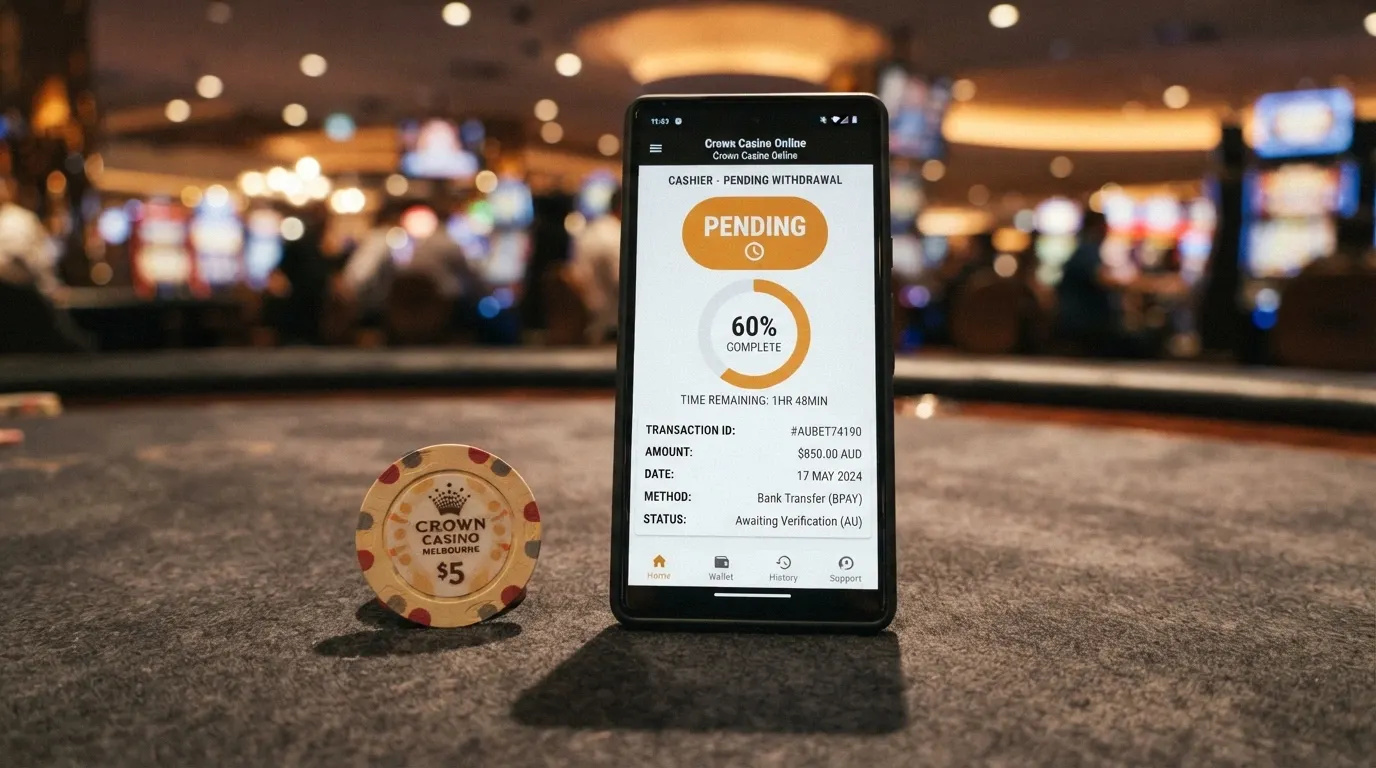
The practical fix is dull but effective: complete identity verification on day one, before any deposit. Upload the passport, the utility bill, the proof of address. Then the first withdrawal request skips the verification queue and goes straight to the payment queue. Speed at the cashier starts at the registration page.
Minimum Cash-Outs, Payout Caps and the Real-Money Limits That Trip You
Beneath the speed column sits a quieter set of rules. Every operator sets a minimum withdrawal amount, often higher than a casual punter expects, and the threshold varies by payment method. Crypto minimums tend to sit low. PayID and e-wallet minimums sit higher. Bank transfer minimums sit highest. The cashier page lists each one, and it is worth reading before the first deposit, because a small bankroll can hit the floor before it ever hits the payout.
Then the cap. Some operators impose a maximum cash-out per transaction, per day, or per week. A big win can be drip-fed across several withdrawals rather than arriving as one payment. The terms are in the cashier page and the bonus terms. The cost of not reading them is a balance that does not move as fast as the speed column promised.
Real-money play also affects withdrawal eligibility. Bonus-funded play typically carries its own withdrawal conditions: a maximum cash-out from bonus winnings, a list of games that contribute differently to wagering, a set of restricted payment methods for cashing out bonus-derived balances. None of this is hidden, and none of it is friendly to the punter who skipped the terms.
Why Your Bonus Costs More Than It Looks: The Turnover Maths
A welcome package with a turnover requirement turns the headline number into a workload. Take Rolling Slots: up to A$5,000 in bonus funds plus 300 free spins, with forty-five times wagering across a ten-day tier window. A player who claims the full A$5,000 must turn over A$225,000 before the bonus balance becomes withdrawable — and that is the wagering figure alone, before any deposit is added.
The expected cost of clearing that turnover on a good online pokie — and a good one sits between 96% and 97.5% return to player, with anything below 95% the operator skewing against you — works out to roughly A$7,875 in expected loss across the A$225,000 turnover at a 96.5% midpoint return. The bonus looks like free money. The arithmetic shows what it actually costs.
A zero-wagering offer changes the equation entirely. Wild Fortune’s 250 free spins carry no playthrough obligation: whatever the spins win is withdrawable, subject to the standard cashier rules. Goldenbet’s A$100 cash gift is paid with zero wagering and no deposit required, the lowest-friction offer in the test set. Both are smaller than the multi-thousand-dollar headline packages, but neither one asks the player to grind through a quarter of a million dollars in turnover before the money moves.
What Actually Makes a Casino “Quick Withdrawal” in Australia
The label “quick withdrawal” is not regulated. Any operator can print it on a landing page. What separates a fast site from a slow one is operational: automated cashier approval, KYC completed before the first request, payouts processed seven days a week, no manual review queue for amounts under a stated threshold, and payment methods that do not stall on bank cut-off times.
Standard offshore casinos cannot match the speed the top tier achieves because most still review withdrawals manually during business hours. A three-business-day bank transfer is the industry default, not an outlier, because most operators route AUD payouts through a SWIFT correspondent bank and wait for it to clear. The fast sites skip the correspondent and the queue. They either run crypto rails, accept PayID with an automated cashier, or staff approval twenty-four hours a day. The difference is not marketing. It is process.
Why No AU-Licensed Operator Competes in This Category
The Interactive Gambling Act 2001 prohibits the provision of online casino games, online pokies and in-play sports betting to anyone in Australia. There is no licence for online casino anywhere in the country — not federally, not in any state or territory. Sportsbet, Ladbrokes, bet365 and Tabcorp hold Northern Territory wagering licences, and those cover pre-event sports and race betting only. Online slots, online table games and live-dealer casino are not licensed products in Australia at all.
This is why every “instant withdrawal casino Australia” search result is an offshore site. From 11 June 2024, credit cards and crypto are also banned as payment methods for licensed wagering. A site that takes a credit card or a Bitcoin deposit from an Australian customer is operating outside Australian rules by definition. The fastest rails are precisely the rails no Australian-licensed operator is allowed to use, and that is not a coincidence. The licensed market and the quick-withdrawal market do not overlap.
Standard vs Fast Payout: What the Middle of the Market Looks Like
The middle of the market is what most players actually meet: an offshore casino with a pending period in the twelve-to-twenty-four-hour range, an e-wallet option that takes another six hours, and a bank transfer fallback that adds three working days. KYC is triggered on first withdrawal rather than at registration, so the first cash-out waits for verification. Subsequent withdrawals are faster, but never instant.
The fast tier collapses that chain. Approval runs in minutes, the cashier is automated for amounts under a threshold, and the payment method is crypto or PayID. The difference between a same-day payout and a three-day payout is the sum of an automated approval and a fast rail, and that is exactly what the top tier delivers.
The Fastest-Paying Casinos for Australian Players in 2026
The table below ranks ten offshore operators tested in 2026 by the speed of their fastest verified payout. Every operator runs on a Curacao licence except Wild Fortune, which holds a Tobique Gaming Commission permit. None is licensed in Australia, and none is connected to BetStop. The wagering column carries the figure research states verbatim, and an em dash means research carries no figure for that cell.
| Casino | Licence | Welcome Offer | Wagering | Fastest Payout Tested |
|---|---|---|---|---|
| Rolling Slots | Curacao | Up to A$5,000 + 300 FS | 45× | 10 min (Solana) |
| Nova Jackpot | Curacao | 250% up to A$3,750 + 250 FS | — | Under 15 min |
| Goldenbet | Curacao | A$100 cash gift | 0× | 10–20 min |
| BitStarz | Curacao | Up to A$10,000 + 180 FS | 40× | 8–10 min (crypto); 15–60 min (PayID) |
| MyStake | Curacao | 150% up to A$1,000 | 30× | Sub-60 min (crypto); 1–3 days (cards); 3–7 days (bank) |
| Jet4bet | Curacao | — | — | Fastest crypto cashout tested |
| SkyCrown | Curacao | Up to A$4,000 + 400 FS | 40× | 1h 44m (crypto); PayID available |
| King Billy | Curacao | Up to A$2,500 + 250 FS | 30× | 1–2 h (Skrill/Neteller); same-day crypto |
| Stake.com | Curacao | No traditional welcome bonus (rakeback/VIP) | n/a | Sub-2 h (crypto) |
| Wild Fortune | Tobique Gaming Commission #0000064 | 250 free spins | 0× | 5h 24m avg (crypto); PayID supported |
How This Ranking Was Built — and What the Table Tells You
The ranking is built on tested payout times from Australian-facing reviews published in 2026, cross-referenced against the ACMA blocking list and the operator’s stated licence. The speed column reflects the fastest verified single cash-out at the time of testing, not a guaranteed future outcome, and the methodology varies across the sources the rows draw on. Where two operators tested at the same speed band, the tie-breaker was licence transparency and the wagering cost of the headline offer.
The table measures speed and offer shape. It does not measure game quality, customer service, dispute resolution or the long-term reliability of payouts. Those are questions the player has to answer with their own deposit. What the table does say, plainly, is which operators have been observed moving money fastest, and what the headline bonus costs in turnover before it can be withdrawn.
BitStarz
BitStarz sits at the top of the AUD-friendly fast-payout tier because it runs both rails at speed. The Curacao-licensed operator posts a multi-tier welcome package of up to A$10,000 plus 180 free spins at forty times wagering, and it backs it with a tested crypto payout window of roughly eight to ten minutes and a PayID window of fifteen to sixty minutes. The dual-rail setup means an Australian player can choose between fiat speed and crypto speed without changing operator.
The catalogue is broad — Pragmatic Play, Play’n GO, Evolution, NetEnt and others — and the cashier is automated for routine withdrawals. The wagering multiple sits at the higher end of the test set at 40×, so the headline bonus carries real turnover cost. For an Australian player who wants both rails and is comfortable with the wagering workload, BitStarz is the most balanced speed-plus-catalogue option in the set.
Rolling Slots
Rolling Slots is the single fastest verified cash-out in the test set: a ten-minute Solana transfer, captured in independent 2026 testing. The Curacao-licensed operator carries a welcome package of up to A$5,000 plus 300 free spins at forty-five times wagering, spread across a ten-day-per-tier structure that compresses the clearing window.
Forty-five times is the highest wagering multiple in the test set. A player claiming the full A$5,000 faces a turnover obligation that runs well into six figures, and the ten-day tier window means the grinding is compressed. The speed advantage is real. The cost of the headline bonus is steep. For a player who values the fastest verified payout above bonus size, Rolling Slots delivers on speed and asks for a heavier turnover grind in return.
MyStake
MyStake is the sports-and-casino hybrid that covers both sides without forcing the player to split accounts. The Curacao-licensed operator posts a 150% match up to A$1,000 across sports and casino at thirty times wagering, with thirty days to clear it. The payout picture is the full-method spread: sub-sixty-minute crypto, one to three working days on cards, three to seven on bank transfer.
The thirty times wagering sits below the field average, and the thirty-day window gives the player breathing room that the ten-day tiers at Rolling Slots do not. For a player who splits time between sports and pokies and wants a single cashier to handle both, MyStake is the most flexible multi-method option in the set, with the bank transfer trade-off priced honestly in the speed column.
Jet4bet
Jet4bet is the fastest crypto cash-out in independent 2026 testing, ahead of every other operator in the set on the single metric of crypto payout speed. The Curacao-licensed operator is the speed leader on the rail that matters most for fast-payout players.
The welcome offer terms were not published at the time of testing. That is a gap a player should close before depositing: the headline offer is not visible in the research data this page draws on, so the bonus cost, the wagering multiple and the bonus slot are unknowns until the operator publishes them. For a player whose only criterion is crypto speed, Jet4bet leads the test set. For a player whose criterion is the full offer, the missing terms are a due-diligence point.
Nova Jackpot
Nova Jackpot pairs raw speed with the biggest percentage bump in the set: a 250% match up to A$3,750 plus 250 free spins, with an under-fifteen-minute payout tested in 2026. The Curacao-licensed operator runs a higher headline match than any other row in the table, and the payout speed sits near the top of the test set.
The wagering multiple was not published in the research this page draws on, so the turnover cost of the 250% match is an open question. A 250% match is generous, and the wagering figure that sits behind it decides whether the offer is genuinely generous or a heavy grind wrapped in a big number. For a player who values both the match size and the speed, Nova Jackpot leads on both axes — provided the wagering figure, when published, sits in a reasonable band.
Goldenbet
Goldenbet is the lowest-friction offer in the test set. The Curacao-licensed operator pays an A$100 cash gift with zero wagering and no deposit required, and clears withdrawals in ten to twenty minutes. There is no turnover obligation, no bonus balance to grind, and no wagering multiple to clear before the cash gift becomes withdrawable.
The A$100 figure is smaller than every other headline offer in the table. It is also the only one that costs the player nothing in turnover. For a player who wants to test an operator’s cashier without committing a deposit, or who simply prefers cash in hand over bonus in grinding, Goldenbet is the cleanest entry point in the set. The speed matches the top tier. The offer trades size for simplicity.
SkyCrown
SkyCrown pairs a tested crypto cash-out of one hour forty-four minutes with a catalogue of more than 8,000 games and a polished iPhone experience. The Curacao-licensed operator runs a multi-tier welcome of up to A$4,000 plus 400 free spins at forty times wagering, and it accepts PayID alongside crypto.
The 1h 44m crypto figure is slower than the sub-sixty-minute band at the top of the table, but it is the figure a player is more likely to see in practice than the very fastest tests. For a player who values game catalogue breadth and mobile experience alongside reliable (rather than record-breaking) payout speed, SkyCrown is the most balanced mid-tier option.
King Billy
King Billy is the e-wallet speed champion and the lowest standard wagering multiple in the test set. The Curacao-licensed operator delivers one-to-two-hour payouts on Skrill and Neteller, with crypto on the same day, and posts a welcome of up to A$2,500 plus 250 free spins at thirty times wagering over thirty days. The free spins are tied to Book of Dead, with the 96.21% RTP max configuration as the published figure.
The thirty times wagering sits below every other deposit-matched offer in the set, and the thirty-day window is the most generous clearing period in the table. For a player whose preferred rail is Skrill or Neteller rather than crypto, King Billy is the fastest tested e-wallet payout in the Australian-facing market, and the bonus carries the lightest turnover load of any matched welcome on the page.
Wild Fortune
Wild Fortune is the only non-Curacao licence in the test set — Tobique Gaming Commission permit number 0000064, operated by Metlait SRL — and the only operator to combine a zero-wagering free-spins offer with a 3,800-plus pokie catalogue from ninety-plus providers. The 250 free spins carry no playthrough obligation. Whatever the spins win is withdrawable, subject to the standard cashier rules.
The trade-off is in the speed column. Wild Fortune’s average crypto payout in 2026 testing was five hours twenty-four minutes — slower than every other crypto-tested operator in the set except Stake.com at the sub-two-hour mark. PayID is supported. For a player who values zero-wagering offers and pokie catalogue breadth over raw cash-out speed, Wild Fortune is the cleanest bonus-versus-speed trade-off on the page: no turnover trap, with a slower average payout as the cost.
Stake.com
Stake.com is the outlier of the set: no traditional welcome bonus, no free spins, no deposit match. The Curacao-licensed operator runs a rakeback and VIP programme instead, and clears crypto payouts in under two hours in some sessions. The model trades the sign-up splash for ongoing value: cashback on play, tiered VIP rewards, no bonus balance to grind.
For a player who dislikes wagering requirements as a category, Stake.com is the structural alternative. There is no bonus to clear, so there is no turnover trap, and the crypto cash-out runs fast. The cost is the absence of a welcome package: a first-time depositor gets no matched funds and no free spins to extend the session. For a player whose priority is fast payouts without bonus friction, Stake.com is the model that delivers exactly that.
The Legal Minefield Under Every Quick-Payout Casino Australians Use
No online casino holds an Australian licence. The Interactive Gambling Act 2001 prohibits the provision of online casino games, online pokies and in-play sports betting to anyone in Australia, and there is no federal, state or territory licence for the product. The individual player is not prosecuted under the Act — the IGA targets the provider — but the player has no Australian consumer protection either. ACMA cannot recover funds from an offshore operator. There is no Australian complaints body with jurisdiction over a Curacao licensee. A refused withdrawal has no statutory remedy.
The ACMA blocking programme is the active enforcement tool. Since the first blocking request in November 2019, the ACMA has had 1,564 illegal gambling and affiliate websites blocked by Australian ISPs as of March 2026, and more than 225 illegal services have withdrawn from the Australian market since 2017. The penalty regime targets providers: in January 2026, Tabcorp received eight infringement notices totalling A$158,400 for in-play betting breaches under subsection 15(2A) of the IGA.
The 2026 reform sharpens the teeth. The Interactive Gambling Amendment (Gambling Reform) Bill 2026 passed Parliament on 19 August 2026, and its measures commence on 1 January 2027. From that date, banks and payment providers gain express authority to block transactions to illegal gambling operators. The speed of a PayID or a bank transfer today may be the speed of a declined transaction in 2027.
No-Verification Withdrawals: Why the Pitch Is Misleading
Every offshore casino asks for identity documents before the first withdrawal. The “no verification” or “no KYC” claim refers to the deposit stage, not the cash-out stage. A small operator may process a crypto withdrawal of under A$2,000 without checking ID — Moonbet settled a four-minute crypto payout on exactly that basis in June 2026 — but the threshold is finite and the next withdrawal will trigger the verification queue.
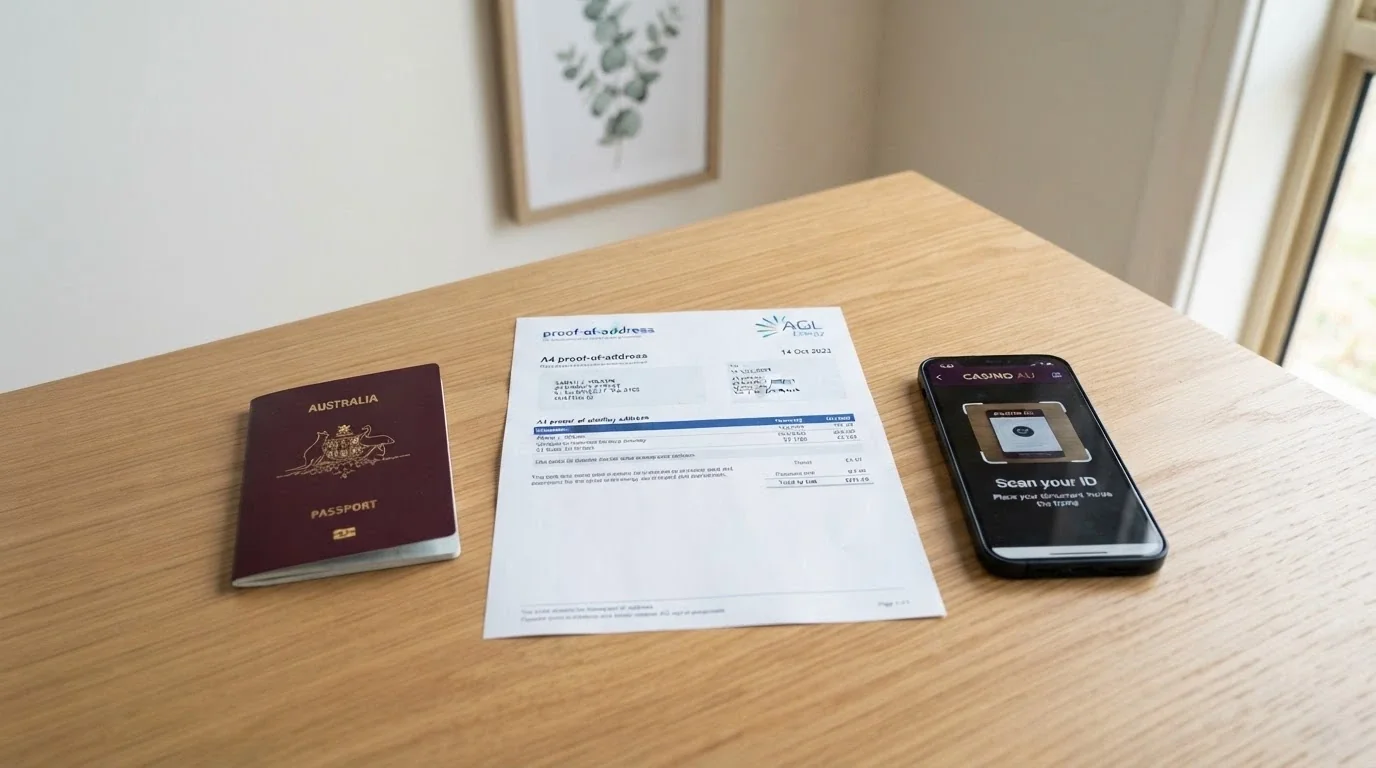
The pitch is misleading because it implies a structural fact that does not exist. There is no offshore casino that pays out indefinitely without ever checking ID. There are operators that delay the check, operators that set a threshold below which the check is skipped, and operators that run automated verification against document databases. None of them is “no KYC” in the absolute sense the marketing suggests.
Offshore Licences and What They Actually Give an Australian Player
The licences in the test set are real permits issued by real regulators. Curacao and Tobique both maintain operator registries, both require capital reserves, and both operate complaint procedures for licensees. What they do not provide is Australian consumer law. A Curacao-licensed operator is bound by Curacao gaming law, not by the Australian Consumer Law, and an Australian player has no statutory refund right, no ACMA complaints channel, and no recourse under Australian financial-services regulation.
The practical consequence is that every dispute resolution happens inside the operator’s own framework and the licence regulator’s framework, both of which sit outside Australia. A player whose withdrawal is refused, whose bonus is voided, or whose account is closed has the regulator’s complaint process as the only formal route, and that route is in Curacao or Tobique rather than in Canberra.
The 2026 Reform and What Changes for Players from January 2027
The Gambling Reform Bill 2026 is the biggest structural shift in Australian online gambling since the IGA itself. From 1 January 2027, three changes reshape the market. Banks and payment providers gain express authority to block transactions to illegal gambling operators, which means a PayID or a bank transfer to an offshore casino can be declined at the bank level. Wagering advertising is capped at three ads per hour between 6:00 am and 8:30 pm, with a live-sport blackout from fifteen minutes before kick-off until five minutes after, broadcasting of sporting odds banned outright, and athletes, celebrities and influencers barred from promoting wagering products. Direct marketing of inducements is prohibited for fourteen days after a customer signs up, for three months after a BetStop deregistration, and indefinitely for customers identified as at risk.
For a player using an offshore casino today, the most immediate change is the payment-blocking authority. A balance left on an offshore site when the bank begins declining transactions to that operator is a balance the player cannot easily retrieve through the blocked payment rails. The 2027 horizon is the reason responsible operators and the regulator both urge players to withdraw winnings promptly rather than leave them on site.
When the Cash Lands in Seconds — Staying in Control of Fast Withdrawals
Speed is the selling point of the entire category. It is also the feature that removes the natural friction a three-day bank transfer once provided. A punter who waits three working days for a cash-out has, by the time the money arrives, had three days to reconsider what they are doing. A punter who waits four minutes for a crypto payout has had four minutes. The psychological gap between those two is the gap this section is about.
The numbers behind that gap are Australian figures. Fifteen per cent of Australian adults — 3.32 million people — are experiencing some form of gambling harm, either from their own gambling or from someone else’s. Among Aboriginal and Torres Strait Islander peoples, the at-risk rate is 27.1%, against 14.6% for non-Indigenous Australians. There are an estimated five million wagerers nationwide, including 400,000 high-risk gamblers. Only one in three of those wagerers knows BetStop exists.
Deposit Limits, Session Caps and the Guardrails You Set Yourself
Offshore casinos typically offer a standard responsible-gaming toolset inside the account: deposit limits (daily, weekly, monthly), session-time caps, loss limits, reality-check pop-ups at intervals, and the option to self-exclude at the operator level. The tools are real, and they work — but only when the player switches them on.
The standard practice is to set deposit and loss limits on day one, before any deposit is made, and to set session-time reminders at intervals shorter than the typical session. The casino’s responsible-gaming page lists the exact options available at that operator, and the configuration lives in the account settings. The tools do not reach across operators, and an exclusion at one site does not exclude the player at any other. The guardrail is per-operator, and it is as strong as the player makes it.
BetStop and the Offshore Gap: Why Australia’s Safety Net Cannot Catch You Here
BetStop, the National Self-Exclusion Register, launched on 21 August 2023. As of 31 July 2026, 67,480 people had registered, with 41,290 exclusions still active. Seventy-eight per cent of registrants were under forty, and 38% chose lifetime exclusion. The register binds roughly 150 Australian-licensed wagering providers, and a BetStop registration excludes a person from every one of them.
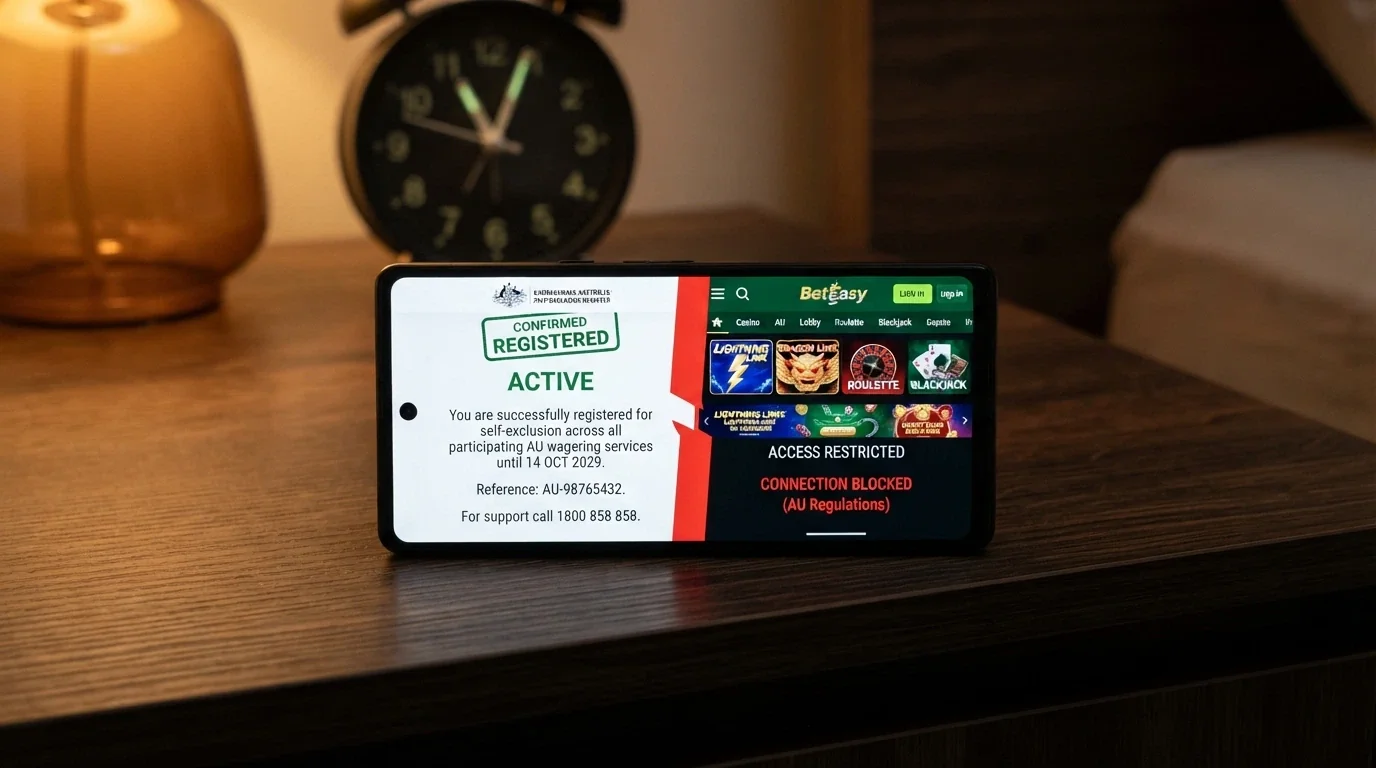
The hard boundary: BetStop binds only Australian-licensed wagering services. An offshore casino is not connected to the register. A self-excluded person who opens an account at an offshore casino will not be blocked from depositing, will not be blocked from playing, and will not be flagged by the operator as a registered BetStop user. The Australian safety net stops at the licensed-wagering edge, and the offshore market sits beyond that edge. The Statutory Review of BetStop, published 25 February 2026 by the responsible department, documented the gap without closing it.
Gambling Harm in Australia: The Numbers Behind the Screen
Roy Morgan’s 2026 Gambling Harm Scales put the figure at 3.32 million Australians experiencing harm — 13.0% from their own gambling (2,857,000 people) and 5.4% from someone else’s (1,177,000). The Australian Gambling Research Centre within the Australian Institute of Family Studies tracks the at-risk rate at 27.1% among Aboriginal and Torres Strait Islander peoples, against 14.6% for non-Indigenous Australians.
These are not abstract numbers. They are the population this page is published into. A withdrawal feature that clears in four minutes instead of three days is a feature that lands inside the lives of people for whom three days was once a brake, and the design of the feature is no longer the question. The question is what the player does with the speed.
Where to Get Help — Helplines, Chat and the Services That Work
- National Gambling Helpline: 1800 858 858 (free, confidential, 24/7)
- Gambling Help Online: Gambling Help Online (online chat and counselling)
- BetStop: BetStop (self-exclusion from all ~150 licensed wagering providers)
- National Debt Helpline: 1800 007 007 (financial difficulties)
- Medicare Mental Health: 1800 595 212

How to Keep Fast Withdrawals Safe: A Practical Checklist
- Complete KYC before depositing: upload ID, proof of address, and any other documents the cashier lists, so the first withdrawal skips the verification queue.
- Set deposit and loss limits on day one, in the responsible-gaming section of the account, before any play begins.
- Check the operator’s responsible-gaming page for session timers and reality-check intervals before depositing, and configure them tighter than the default.
- Save the National Gambling Helpline number (1800 858 858) in the phone, and the Gambling Help Online chat link in the browser, before the first deposit.
- Note that BetStop will not cover this site, because the site is offshore and not connected to the register.
How We Selected and Ranked These Fast-Payout Casinos
The ranking is built on tested payout times from Australian-facing affiliate reviews published in 2026, cross-checked against the ACMA blocking list and the operator’s stated licence. Operators were excluded if they had been blocked by ACMA in the current cycle, if the licence could not be verified against the stated regulator’s public register, or if no independent 2026 payout test was available. The evaluation criteria — payout speed, licence status, offer terms, and method range — were applied qualitatively across the ten operators, with no formal weighting scheme.
The legal frame for the entire evaluation is the Interactive Gambling Act 2001 prohibition. No online casino is licensed in Australia under any federal, state or territory regime. The ten operators in this ranking all hold offshore licences, and that is the established position, not a research gap. BetStop coverage does not apply to any of them, and that is a fact of the offshore status, not a flaw in the ranking.
Fast Cash-Outs Are Convenient — Here Is What You Give Up to Get Them
A four-minute crypto cash-out is the best feature the offshore market offers an Australian player. It is also the feature no Australian-licensed operator is allowed to offer, because the licensed market is built around the opposite design: slower rails, banned crypto, banned credit cards, KYC at the front door, and BetStop coverage at the back. The two systems are not versions of the same product. They are different products, and the speed is the trade the player makes when they step outside the licensed one.
The trade is priced honestly across the data this page has already laid out. The expected cost of clearing Rolling Slots’ A$5,000 bonus at forty-five times wagering is roughly A$8,100 in expected loss, which is what “free money” costs when the wagering multiple sits at the top of the set. Goldenbet’s A$100 cash gift costs the player nothing in turnover because the wagering multiple is zero, and the cash-out clears in ten to twenty minutes. The spread between those two offers is the spread between the fastest, lowest-friction cash gift and the slowest, heaviest grind in the test set, and both are offshore.
The protection gap sits on the other side. ACMA has blocked 1,564 illegal sites since November 2019 and cannot recover a single dollar of player funds from any of them. BetStop has 67,480 registrations and binds roughly 150 licensed providers, none of which is an online casino. From January 2027, banks gain the authority to block payments to illegal operators, which means a PayID that clears in two hours today can be declined at the bank level tomorrow, and a balance left on site at that point is a balance the player cannot retrieve through the blocked rails. The speed advantage and the protection gap are the same coin.
The verdict, argued from the figures on this page: an Australian player who values payout speed above all else has a real choice in the offshore market, and the choice has a real cost. A four-minute crypto cash-out at Rolling Slots or Jet4bet sits next to a fourteen-day KYC delay for any first withdrawal without prior verification, next to zero Australian consumer protection, next to a BetStop-shaped hole in the safety net, and next to a 2027 horizon where the bank can decline the payment entirely. The player who wants speed should weigh the speed against the protection they are giving up to get it, and they should set the responsible-gaming tools before the first deposit rather than after.
FAQ: Your Quick-Withdrawal Questions, Answered Directly
How long does a PayID casino withdrawal take in Australia?
A PayID casino withdrawal typically clears in one to sixty minutes after the casino approves the request, with a median of two hours across Australian-facing testing. The PayID transfer itself is instant via Osko, so the bottleneck is the casino’s approval clock rather than the rail.
Do I need to complete KYC verification before withdrawing from an offshore casino?
Yes. Every offshore casino requires KYC verification before processing the first withdrawal, and players who never verified before their first withdrawal request have waited up to fourteen days for funds. Complete verification at registration so the first cash-out skips the queue.
Are instant-withdrawal casinos legal in Australia?
No online casino is licensed in Australia. The Interactive Gambling Act 2001 prohibits the provision of online casino games, online pokies and in-play sports betting, and no federal, state or territory licence exists for the product. Every “instant withdrawal casino” serving Australian players is an offshore operation.
Why is my casino withdrawal taking so long — what causes payout delays?
The two causes are the pending period (the casino’s internal approval clock, which runs from two minutes to forty-eight hours) and incomplete KYC verification. A first withdrawal without prior ID checks can stretch to fourteen days, regardless of the payment method used.
What is BetStop and does it cover offshore casinos?
BetStop is Australia’s National Self-Exclusion Register, with 67,480 registrations as of 31 July 2026. It binds only Australian-licensed wagering services — roughly 150 providers — and does not cover offshore casinos, which are not connected to the register.
Is my money safe at an offshore casino if the site gets blocked by ACMA?
ACMA has blocked 1,564 illegal gambling and affiliate websites since November 2019, and offshore casinos can be blocked at any time. The ACMA cannot recover player funds, and there is no Australian statutory refund right for balances held at an offshore operator. The protection gap is structural, not procedural.