
Where Australians Actually Find Fast-Paying Casinos — and What That Costs
Data current as of 22 November 2026; licence claims verified against the ACMA register and operator terms pages.
Online casino games are prohibited in Australia under the Interactive Gambling Act 2001. There is no licence for them anywhere in the country — not federally, not in any state or territory, and there never has been. Every casino on this page is therefore offshore, operating illegally under Australian law, and Australians who use them have no Australian consumer protection to fall back on. That fact sits at the top of this ranking on purpose, because it changes what a fast payout is actually worth.
It is also why this page exists. Search results for “instant payout online casino Australia” lead almost exclusively to affiliate pages that rank ten offshore casinos without ever naming the prohibition. A reader looking for a fast withdrawal deserves to know what they are signing up for before they compare payout times. The law does not stop these casinos from accepting Australian customers; it stops Australians from having anywhere to complain when something goes wrong.
The Australian Communications and Media Authority has blocked 1,564 illegal gambling and affiliate websites since November 2019, with 133 sites blocked in just the October–December 2025 quarter. Over 225 illegal services have withdrawn from the Australian market entirely since 2017. The block list is updated continuously, and a casino that is accessible today can be unreachable next month with a balance still sitting on it.
What follows is a ranking of the offshore casinos Australians most often use when chasing fast withdrawals, with tested payout times where they exist, bonus terms where the operators publish them, and the legal frame that surrounds every one of them. The ranking is built around tested speed — PayID and crypto times measured by independent reviewers with amounts and dates published — not on marketing claims. Where the data is thin, the page says so.
Table of Contents
- The Reality Behind ‘Instant’ Payout Claims
- How We Identified the Fastest-Paying Operators
- Instant-Payout Casinos on Mobile
- The Ranked Operators
- How Instant Payouts Actually Work
- Crypto vs PayID: Which Delivers the Fastest Withdrawal
- Why Your 2026 Bonus Could Block an Instant Payout
- Pokies and Casino Games Built for Instant Payout
- The Legal Reality: Online Casinos and Australian Law
- Staying in Control: Responsible Gambling
- How We Evaluated and Ranked These Casinos
- What Australian Players Should Know Before They Deposit
- Frequently Asked Questions
The Reality Behind ‘Instant’ Payout Claims
“Instant” is the most misleading word in offshore casino marketing. Gambling Insider’s 2026 fast-withdrawal guide puts it plainly: instant means you get paid as soon as the processing period ends, and that processing period can run anywhere from one hour to forty-eight hours. The payment rail underneath can be near-instant — PayID settles in seconds on Australia’s New Payments Platform once the money leaves the operator — but the operator holds the request before releasing it.
That gap between “instant” and “in your account” is what most “instant payout” claims actually describe. A casino advertising instant PayID withdrawals is telling the reader the payment rail is fast, not that they have waived their right to review the request first. The pending period, KYC checks, bonus-wagering verification, and withdrawal-cap enforcement all happen during processing.
The fastest tested fiat result on this page is SkyCrown’s PayID withdrawal at eleven minutes (A$920 on a Tuesday afternoon) and eighteen minutes (A$450 on a Saturday night). Those numbers come from independent reviewers publishing timestamps and amounts, not from the operator’s marketing. Most operators in this market run PayID at 24 to 48 hours end-to-end, with twelve to eighteen hours of that being operator-side processing.
Crypto is genuinely faster at the network level — USDT on TRC20 is the speed king, settling in minutes for a negligible A$2 fee — and the fastest tested operator-side processing is BitStarz at twelve to thirty minutes. But crypto carries its own friction: a wallet, an exchange step, and the certainty that using it confirms you are playing at an unlicensed offshore site, since the Australian government banned crypto for licensed wagering on 11 June 2024.
The honest read of “instant” at an offshore casino is this: a tested PayID under an hour is a realistic ceiling for most players, a same-day PayID is the typical result, and anything under twelve minutes is the exception that proves the rule. Anyone marketing crypto as “instant” is closer to the truth, but the rail is not the bottleneck — the operator’s processing is.
How We Identified the Fastest-Paying Operators
The ranking is built on tested withdrawals published by independent reviewers, with amounts, dates and times included — not on operator claims or marketing copy. SkyCrown’s eleven-minute PayID result carries weight because Wildfish published it with the dollar figure and the day of the week. Royal Reels’ four-hour twelve-minute PayID result comes from Tech Insider under the same standard. BitStarz’s twelve-to-thirty-minute crypto processing is from Payout Verdict’s 2026 Instant Withdrawal Pokies Australia review.
The testing methodology is straightforward: a real-money account, a real withdrawal request, a stopwatch from “request submitted” to “funds received.” The independent reviewers doing this work are Australian-facing and publish in AUD where the operator allows it. Where they don’t — Stake denominates everything in USD — the dollar amounts are converted at the time of test, not at the time of publication.
PayID at most operators ran 24 to 48 hours end-to-end in 2026 tested cashouts, with twelve to eighteen hours of operator-side processing being typical. That figure is the median, not the ceiling — the ranking separates operators that clear it in minutes from those that take hours.
The casino’s own published payment times are not used as a primary input. They are cross-checked against independent tests where those exist, and noted as marketing-only where they don’t. An operator that advertises “instant PayID” but tests at four hours has not been excluded for the lie — the lie is the page’s point — but the test result is what orders the list.
Instant-Payout Casinos on Mobile
The honest answer here is short: mobile browser play works at the offshore casinos reviewed, and there is no evidence that payout speed differs between mobile and desktop. Mobile apps from these operators exist, but the tested-withdrawal data this run gathered did not include a mobile-specific breakdown. RocketPlay’s mobile browser is reported to work well in third-party reviews; app availability and quality vary by operator and were not confirmed here.
The implication is that mobile is not a ranking input on this page. A reader who plays on a phone is playing on the same casino, the same cashier, the same PayID or crypto pipeline as a desktop player. The withdrawal request is submitted through the same web interface on a smaller screen. What changes the speed is the rail and the operator’s processing, not the device.
The Ranked Operators
| Operator | AU Licence Status | Welcome Bonus | Wagering | Fastest Payout Tested | Key Payment Methods |
|---|---|---|---|---|---|
| SkyCrown | Offshore, no AU licence | A$8,000 + 400 free spins | 40× | 11 min PayID (A$920) | PayID, MiFinity, crypto, bank transfer |
| RocketPlay | Offshore, Curaçao framework | 100% up to €1,500 + 50 FS | Up to 40× | Under 1 hour PayID | PayID, crypto, e-wallets |
| Royal Reels | Offshore, ACMA-blocked | 100% A$500 / 75% A$750 / 100% A$1,250 | 35× bonus only | 4 hr 12 min PayID | PayID, crypto, AUD-native |
| Stake | Offshore, Curaçao CGA | 200% up to USD 2,000 | 40× | Crypto within 2 hours, zero fees | Crypto (no PayID confirmed) |
| Rainbet | Offshore, Curaçao-licensed | 100% deposit match | — | Near-instant crypto (verified accounts) | Crypto only |
| Fair Go | Offshore, no AU licence | 100% up to A$200 × 5 deposits (A$1,000 total) | 30× deposit + bonus | Crypto 15–60 min after approval | Crypto, bank wire (A$50 fee) |
| WinSpirit | Offshore, no AU licence | — | — | 1–24 hours | E-wallets, crypto, cards |
| BitStarz | Offshore, Curaçao-adjacent | — | 40× on NDB | Crypto 12–30 min | Crypto (no PayID) |
| Bizzo Casino | Offshore, no AU licence | — | — | 1–3 business days | — |
| Scream Casino | Offshore, no AU licence | — | — | — | — |
Every operator on this list is offshore. None holds an Australian licence, because no such licence exists.
SkyCrown
SkyCrown holds the fastest tested PayID withdrawal on this page: eleven minutes for an A$920 request on a Tuesday afternoon, eighteen minutes for an A$450 request on a Saturday night. Both figures come from Wildfish.com’s 2026 review, with timestamps and amounts published. The welcome package is the largest in the featured set — four tiers up to A$8,000 plus 400 free spins, all at 40× wagering on both bonus money and free spins. The provider mix is broad, with Pragmatic Play, Play’n GO, BGaming and several smaller studios in the lobby.
Withdrawal caps at SkyCrown are explicit: A$7,500 daily, A$15,000 weekly, A$45,000 monthly. Crypto withdrawals start at A$30 and cap at A$6,000 per transaction. The processing speed that delivers the eleven-minute result does not extend to the cap enforcement — a player withdrawing A$45,000 in a month still waits the same hours for approval on each transaction. The 40× wagering is heavier than the 30×–35× range the market treats as reasonable, and applies to free spins as well as cash, which stretches clearance timelines further.
For a reader who values tested speed above all else and accepts the 40× playthrough, SkyCrown is the benchmark the rest of this page is measured against.
RocketPlay
RocketPlay processes PayID withdrawals in under an hour for most Australian banks and carries a library of more than 3,000 games. The casino operates under a Curaçao framework licence — offshore, no Australian equivalent. Daily withdrawal limits run around A$5,000, lower than SkyCrown’s A$7,500. The welcome offer is denominated in euros — 100% up to €1,500 plus 50 free spins at up to 40× wagering — which means an Australian player is converting to AUD at the cashier and again on the way out.
The 40× wagering sits above the 30×–35× band the rest of this page treats as reasonable. The game library is the main draw: 3,000+ titles across multiple providers gives a reader room to pick around the wagering requirements, though pokies contribute 100% while table games contribute only 10% — so the choice of game directly determines clearance speed. Mobile browser play works well per third-party reviews; the app claim was not independently verified this run.
For a reader who wants sub-hour PayID and a larger game catalogue than SkyCrown offers, RocketPlay delivers. The euro-denominated welcome bonus is a friction point at the cashier that does not appear at the AUD-native operators.
Royal Reels
Royal Reels is the most Australia-adapted casino in the featured set and the one the ACMA has blocked. Three deposit tiers in AUD — 100% up to A$500, 75% up to A$750, 100% up to A$1,250 — total a A$2,500 ceiling across the welcome package, all at 35× wagering on the bonus only. The A$5 per-spin cap during clear-down is a restriction most competitors don’t publish and few players notice until they hit it. A A$10 no-deposit bonus after phone verification sits alongside, though its terms are tighter than the deposit welcome.
PayID tested at four hours twelve minutes on a weekday — slower than SkyCrown and RocketPlay, but still same-day. The 5,400+ pokies library from 40+ providers is the largest in the featured set. VIP withdrawal caps climb from A$10,000 weekly at the standard tier to A$25,000 and A$50,000 at higher tiers — meaningful for a player withdrawing large winnings, irrelevant for a player withdrawing A$500.
The ACMA block is the headline: Royal Reels has been directed to ISPs for blocking, and the operator maintains mirror domains to stay reachable. A player whose preferred domain is blocked mid-session loses access to their balance through the front door. The ACMA cannot recover that money. The AUD-native welcome package is genuinely useful for Australian players who don’t want to convert at the cashier.
For a player who values AUD throughout the bonus and a large game library, Royal Reels delivers. The ACMA block and the mirror-domain workaround are part of the picture and cannot be separated from it.
Stake
Stake is the crypto-native giant of the featured set. Curaçao Gaming Authority under the new CGA framework, 3,000+ games including provably fair originals, and a 15-level VIP programme running from Bronze to Obsidian with progressive rakeback. The welcome offer is a 200% deposit match up to USD 2,000 at 40× wagering — a different shape from the AUD packages at SkyCrown and Royal Reels, since every figure on Stake is in USD.
Crypto withdrawals process within two hours with zero operator fees — the zero-fees claim is meaningful, since several competitors charge a percentage on top of network fees. Trading volume runs at US$1.86B with an average deposit of US$690, both figures large enough that the platform’s liquidity is not in doubt. No PayID support was confirmed this run, which means a fiat-only Australian player has no path in or out through local rails.
The VIP structure is the most developed in the featured set. Rakeback at higher levels returns a percentage of house edge to active players, which is a different model from the cashback or reload structures elsewhere on this page. For a crypto-comfortable player who values volume liquidity and zero withdrawal fees, Stake is a strong match. For a player who wants PayID or AUD-native bonuses, the platform is not configured for that reader.
Rainbet
Rainbet is crypto-only, Curaçao-licensed, and configured for verified-account near-instant withdrawals. Four thousand games with provably fair mechanics, and a monthly race that pays 1,000 positions — most competitor race structures reward 100 or fewer. The race prize pool runs at US$1.7M. Trading volume sits at US$301M with an average deposit of US$324, both figures lower than Stake but consistent with a smaller platform.
The welcome offer is a 100% deposit match; exact terms were not confirmed in the 2026 research run. No fiat payment methods were confirmed this run — a player wanting to deposit AUD through PayID or card will not find that route. The near-instant withdrawal applies to verified accounts; an unverified account waits for KYC processing before any withdrawal is approved, which on the crypto-only platform is faster than at fiat-only competitors but still gated by document review.
For a crypto-only reader who values race structures and provably fair games, Rainbet delivers a different proposition from the AUD-native operators above. The absence of fiat rails is a hard constraint, not a preference.
Fair Go
Fair Go is the RTG veteran — 280 games from a single provider, with a welcome offer that runs 100% up to A$200 on each of the first five deposits for a total of A$1,000, at 30× wagering on deposit plus bonus. The wagering sits at the reasonable end of the market range. Crypto withdrawals process in fifteen to sixty minutes after approval, with a pending review that can run up to 48 hours before the crypto timer starts.
The minimum withdrawal of A$100 and the A$50 bank wire fee are the friction points. A player withdrawing A$150 by bank wire keeps A$100 — the fee is one-third of the withdrawal. Crypto avoids the fee but not the A$100 minimum. No PayID support is published, which means the choice is between a fee-heavy bank wire and a minimum-gated crypto withdrawal.
For a player with a larger bankroll who can clear the A$100 minimum and absorb the A$50 fee, Fair Go’s 30× wagering and RTG library offer a focused experience. For a player withdrawing small amounts, the fee structure locks out economic access.
WinSpirit
WinSpirit processes e-wallet and crypto withdrawals within one to 24 hours and card withdrawals in three to five days. Weekly reloads at 30% run alongside tournaments and VIP daily bonuses. The welcome bonus and exact wagering terms were not confirmed this run; the operator is presented based on its payment-method breadth and reload structure rather than its welcome offer.
The card withdrawal timeline puts WinSpirit in the slower half of the featured set for fiat users. A reader relying on cards will wait three to five business days regardless of operator — WinSpirit is no slower than competitors here, just no faster. The e-wallet and crypto tiers are competitive with the faster operators on this page.
For a player who values weekly reloads and tournament play, WinSpirit offers the structure. The thin welcome-offer data is a gap a reader should close before depositing.
BitStarz
BitStarz runs the fastest tested operator-side crypto processing on this page: twelve to thirty minutes from request to funds sent, per Payoutverdict.com’s 2026 review. The no-deposit bonus terms are published: 40× wagering on winnings, A$100 maximum cashout, seven-day expiry. PayID is not supported per the same source, which means Australian players depositing in AUD will use a card, e-wallet, or crypto.
The NDB structure is the main catch: 40× wagering is above the 30×–35× reasonable band, the A$100 cap is at the low end of the A$50–A$200 market range, and seven days is tight. A player who lands A$500 from a NDB free spin round cannot withdraw it — the cap kicks in at A$100. The combination of speed and tight bonus terms is the operator’s profile.
For a player who values crypto processing speed above bonus generosity, BitStarz delivers. The NDB terms should be read carefully before any no-deposit claim.
Bizzo Casino
Bizzo runs a 100+ provider library and a tournament-heavy format. Payout speed is one to three business days — the slowest in the featured set. Welcome bonus and wagering terms were not confirmed in the 2026 research run; this writeup describes the operator’s positioning rather than its offer.
The provider breadth is the main draw: a player who wants variety across studios will find more here than at Fair Go’s RTG-only library. The payout timeline makes Bizzo a same-week operator rather than a same-day one — fine for a player not chasing speed, wrong for a player reading this page for instant payouts.
For a player who values library breadth and tournament play over withdrawal speed, Bizzo is positioned for that reader. The bonus terms gap is one a reader should close before depositing.
Scream Casino
Scream Casino is included based on market-share position among Australian-facing offshore casinos. Limited independent review data was available this run — payout times, bonus terms, and game counts were not confirmed. The operator’s own published terms are the only source available, and unverified claims carry risk.
The honest framing is that Scream Casino could not be ranked on the same criteria as the operators above because the criteria could not be sourced. A reader considering this operator should treat its own published terms as the starting point, and verify payout times, bonus structure, and licence details independently before depositing. No figure on this page is attributed to Scream Casino because none was confirmed.
How Instant Payouts Actually Work
A withdrawal moves through three stages: operator-side processing, the payment network, and receipt at the bank or wallet. The “instant” label covers different parts of this pipeline at different operators, and the slowest stage sets the total time.
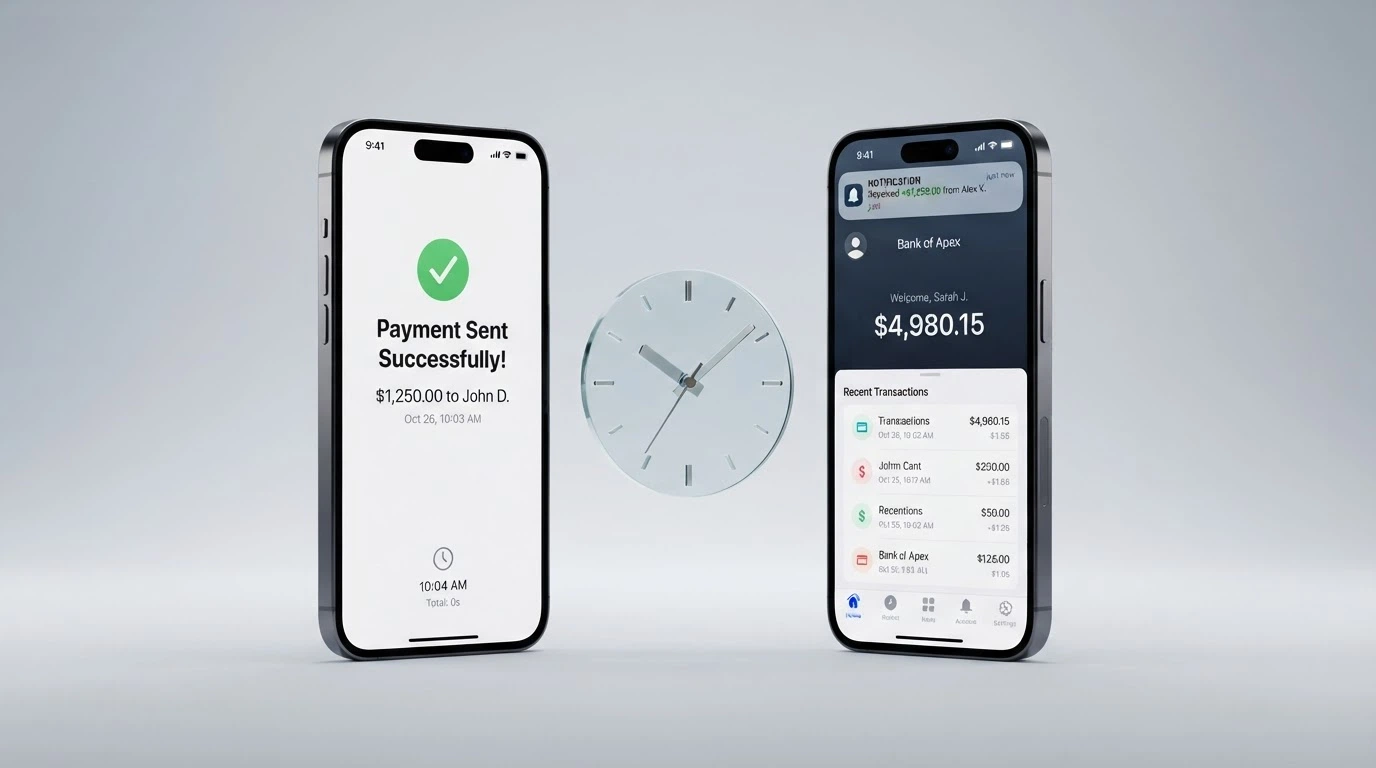
Operator-side processing is where most of the delay lives. PayID at the network level settles in seconds — the New Payments Platform and Osko rail move money between Australian bank accounts in real time once the funds leave the operator. But the operator holds the withdrawal request while it runs KYC checks, verifies bonus wagering, enforces withdrawal caps, and applies fraud screening. At most operators in 2026, that processing ran twelve to eighteen hours for PayID; at the fastest, it ran eleven minutes.
Incomplete KYC is the number one cause of withdrawal delays. A player who has not submitted identity documents before requesting a withdrawal will wait until the documents are reviewed — sometimes longer than the operator’s published pending period. First withdrawals almost always take longer than subsequent ones because the KYC pipeline runs on the first request only.
Payment network speed is the part operators have least control over. PayID/Osko is near-instant. USDT on TRC20 settles in minutes for less than A$2 in network costs. Bank transfers take three to five business days regardless of operator. Card withdrawals sit at three to five business days for the same reason — the card network is slower than the bank-to-bank rail. Crypto networks vary: Bitcoin confirmations take longer than USDT/TRC20, Ethereum depends on gas fees, and stablecoins on Tron are the fastest for cost and confirmation time.
“Processed” and “in your account” are not the same event. An operator can process a withdrawal in fifteen minutes and the funds still take hours to arrive if the network is slow — or arrive instantly if the network is fast. The marketing word “instant” describes the operator’s processing, not the total pipeline. A reader who treats “instant” as a guarantee of receipt in seconds will be disappointed by most operators on this page.
PayID Withdrawals: The Fastest Fiat Option for Australians
PayID and the New Payments Platform it runs on are the fastest fiat option for Australian players, per Gambling Insider’s 2026 guide. The payment rail clears in seconds once the operator releases the funds. The bottleneck is operator-side processing, and the spread of tested results — SkyCrown at eleven minutes, Royal Reels at four hours twelve minutes — is the spread of operator discipline, not the spread of the rail.
PayID deposits to offshore casinos do work, and a reader who has used PayID to send money to a friend can use PayID to deposit at an offshore casino. The legal frame is different: PayID to a friend is a personal transfer; PayID to an offshore casino is a payment to an entity operating outside Australian rules. Since the 11 June 2024 credit-card and crypto ban, PayID has become the de facto deposit route for Australian players at offshore casinos — and the de facto evidence that the operator is unlicensed, since no licensed Australian wagering service takes crypto.
Tested times across operators in 2026: SkyCrown eleven minutes (A$920) and eighteen minutes (A$450); Royal Reels four hours twelve minutes (weekday); RocketPlay under one hour for most Australian banks; most unnamed operators twenty-four to forty-eight hours end-to-end. The spread tells the reader that the rail is fast and the operator is the variable.
Real-Money Withdrawal Speed Tiers
Three tiers cover the Australian-facing offshore market in practice.
Under one hour: crypto at BitStarz (twelve to thirty minutes), Stake (within two hours), Rainbet (near-instant for verified accounts). PayID at SkyCrown (eleven to eighteen minutes tested) and RocketPlay (under one hour). This is the tier the marketing word “instant” is gesturing at, and a small set of operators actually delivers it.
Same-day (under twenty-four hours): PayID at Royal Reels (four hours twelve minutes tested), most other operators on PayID end-to-end. Crypto at operators with slower processing times. This is the typical result for a player who has completed KYC and is not on a flagged account.
One to three days: PayID at operators with slow processing, card withdrawals at most operators, e-wallet withdrawals at slower operators. Bank transfers at three to five business days are the floor regardless of operator.
The tier a reader should aim for depends on what they are withdrawing and how often. A player withdrawing small amounts frequently benefits from the under-one-hour tier. A player withdrawing a large balance once a quarter is less affected by speed and more affected by caps and fees.
Why KYC Verification Delays Payouts More Than Any Payment Method
KYC — know your customer — is the identity-verification process every offshore casino runs before processing a first withdrawal. Documents typically include a government-issued photo ID, a proof of address (utility bill or bank statement), and sometimes a payment-method verification. The review can take hours or days depending on the operator and the document quality.
A player who has not completed KYC before requesting a withdrawal will wait until the documents are reviewed. The wait is often longer than the operator’s published pending period, because the pending period assumes KYC is already done. Pre-completing KYC — submitting documents after the first deposit, before any withdrawal is requested — is the single highest-leverage action a player can take on payout speed.
For Australian players at offshore casinos, KYC also means providing identity documents to an entity operating outside Australian privacy law. The Interactive Gambling Act 2001 makes the casino’s product illegal in Australia; it does not give the casino any privacy obligation under Australian law. The documents sit on a server in Curaçao or another offshore jurisdiction, governed by that jurisdiction’s privacy rules. A player who treats KYC as routine is also accepting that the documents are stored offshore.
Crypto vs PayID: Which Delivers the Fastest Withdrawal
The headline comparison runs this way: USDT on TRC20 processes in minutes for under A$2, making it the fastest withdrawal rail at the network level. BitStarz processes crypto in twelve to thirty minutes; Stake in one to two hours; Rainbet near-instant for verified accounts. PayID at SkyCrown ran eleven to eighteen minutes in independent testing. The two rails are competitive on speed — the difference is friction, fees, and the regulatory signal.

Crypto carries friction a PayID transfer does not. A wallet to hold the funds, an exchange step if the player wants AUD, network fees even when low, and the learning curve of a first crypto transaction. PayID is a bank account: a player enters their PayID identifier, confirms the amount, and the funds arrive. The friction difference matters more for a player making their first withdrawal than for a player who has run dozens of crypto transactions.
Crypto carries fees PayID does not. USDT on TRC20 runs under A$2 per transaction, which is negligible for most withdrawals. Other coins and networks run higher. PayID at the receiving bank is free; the operator may charge a percentage on top, which is the operator’s fee, not the rail’s. Stake’s zero-fee crypto processing is the cleanest offer in the featured set on this dimension.
Crypto carries a regulatory signal PayID does not. Since 11 June 2024, crypto has been banned as a payment for licensed online wagering in Australia. An operator asking for crypto is operating outside Australian rules. PayID deposits to an offshore casino are also outside Australian rules, but PayID itself is not banned — the ban covers the licensed product, not the payment method per se. Using crypto is a cleaner signal that the operator is unlicensed than using PayID, because the licensed alternative does not accept crypto.
For a reader who has already decided to play offshore and values raw speed, USDT on TRC20 is the fastest rail. For a reader who wants AUD throughout and minimal friction, PayID at a fast-processing operator delivers comparable speed with less setup. The regulatory signal is the same: both routes lead to an offshore casino with no Australian licence.
Crypto Withdrawals: Under 30 Minutes with Zero Operator Fees
USDT on TRC20 is the speed king of crypto rails for Australian-facing offshore casinos. Confirmations take one to three minutes, network fees run under A$2, and the fastest operators process withdrawals in twelve to thirty minutes. The combination delivers a total pipeline of fifteen to forty minutes for most crypto withdrawals at the fastest operators.
Operator-side processing times for crypto in 2026: BitStarz twelve to thirty minutes, Stake within two hours with zero fees, Wild Fortune three to four hours. Rainbet reports near-instant for verified accounts in Trustpilot reviews from July 2026. The spread is similar to PayID — the rail is fast, the operator is the variable.
The 11 June 2024 ban on crypto for licensed wagering signals something the marketing does not: a licensed Australian wagering service cannot accept crypto. An operator that does accept it is, by definition, outside the licensed system. Penalties for operators that fail to enforce the ban run up to A$247,500. The fact that an offshore casino accepts crypto is not surprising — it is what offshore means — but the ban makes the offshore status visible at the cashier rather than buried in the terms.
Bitcoin and Multi-Coin Withdrawals
Bitcoin confirmations are slower than USDT on TRC20. The network’s block time averages ten minutes, and most operators wait for multiple confirmations before crediting a withdrawal. Ethereum depends on gas fees, which fluctuate with network congestion. The general pattern is that USDT on Tron is the fastest and cheapest rail, Bitcoin is the slowest of the major coins, and Ethereum sits in the middle.
Per-operator multi-coin support specifics were not confirmed in the 2026 research run. The broad pattern is that BitStarz, Stake, and Rainbet support multiple coins, while AUD-native operators like Royal Reels and Fair Go focus on PayID, bank wire, and a smaller crypto selection. A reader wanting Bitcoin specifically should check the operator’s cashier page for the current coin list and minimum withdrawal per coin.
When PayID Beats Crypto for Australian Players
PayID’s edge over crypto for Australian players is not speed — SkyCrown’s eleven-minute PayID and BitStarz’s twelve-to-thirty-minute crypto are in the same band. The edge is friction. PayID needs no wallet, no exchange, no learning curve. A player enters their PayID, confirms, and the funds arrive in Australian dollars. Crypto needs a wallet, an exchange step if the player wants AUD, and the acceptance that the funds are in USDT or BTC until converted.
The AUD-native point matters for tax and accounting simplicity. Crypto winnings in USDT or BTC are a taxable event when converted to AUD — the ATO treats the conversion as a disposal. PayID winnings in AUD are not. A player running a large withdrawal through crypto and converting on a local exchange is running a foreign-exchange position on top of a gambling position, which adds a layer of complexity PayID does not.
The regulatory signal is the same: both routes go to offshore casinos with no Australian licence. The payment method is a tell about the operator’s status, not about the player’s risk profile. A player choosing PayID for simplicity is making a friction decision, not a safety decision.
Why Your 2026 Bonus Could Block an Instant Payout
A welcome bonus can turn an instant-payout casino into a weeks-long clearance grind. The mechanism is wagering: a 40× requirement on a A$500 bonus means A$20,000 in turnover before a dollar of winnings can be withdrawn. The 30×–35× band is what the market treats as reasonable; anything above 50× is practically unclearable for most players.

Game contribution percentages determine how fast turnover accumulates. Standard video pokies contribute 100% — every A$1 wagered counts as A$1 toward the requirement. Progressive jackpot pokies contribute 0% to 10%. Table games typically contribute 10% and are often excluded entirely. Live dealer games are almost always excluded. A player clearing a bonus on table games is running ten times the turnover of a player clearing on pokies.
Max cashout caps limit what can be withdrawn even after wagering is cleared. No-deposit bonus caps in 2026 ran A$50 to A$200 — a player winning A$500 from a NDB free spin round at a A$100 cap walks away with A$100 after wagering. Deposit bonus caps vary by operator and were not fully confirmed this run; the principle is the same.
The combination of high wagering, low game contribution on excluded games, and a max cashout cap is what the marketing word “bonus” obscures. The arithmetic is straightforward: a A$500 bonus at 40× wagering on pokies at A$1 per spin is 20,000 spins. At 720 spins per hour on a five-second interval, that is 27.8 hours of continuous play. The expected loss on that turnover at 96.5% RTP — a representative figure for Gates of Olympus and similar high-volatility pokies — is A$700 (20,000 × A$1 × 3.5% house edge). The bonus is worth A$500; the expected cost of clearing it is A$700. The net position is negative A$200 before any win is counted.
No-Deposit Bonus Terms and Instant-Withdrawal Rules
Five operators with published no-deposit bonus terms set the market frame for what an NDB costs the player who clears it.
BitStarz runs a 40× wagering requirement on NDB winnings, with a A$100 maximum cashout and a seven-day expiry. The 40× sits above the 30×–35× reasonable band; the A$100 cap sits at the low end of the A$50–A$200 market range; the seven-day window is tight.
Royal Reels runs a 30× to 40× wagering range with a A$200 maximum cashout and a seven-to-fourteen-day window. The A$200 cap is the most generous in this set; the wagering range is wider than most competitors, depending on the specific NDB.
For context, KatsuBet (30×, A$100, seven days), Mirax Casino (35×, A$100, seven days), and 7Bit Casino (45×, A$100, seven days) sit outside the featured set but illustrate the spread. A$100 max cashout is the market norm; seven-day expiry is the market norm; wagering varies from 30× to 45×.
The headline NDB figure — “free spins,” “free bonus,” “A$10 no deposit” — is not the player’s expected return. The expected return is the headline figure minus the expected loss from clearing the wagering requirement, capped at the max cashout. A A$10 NDB at 30× wagering on pokies at 96.5% RTP with a A$200 cap is worth roughly A$10 minus A$10.50 in expected loss, capped at A$200. The arithmetic is unfavourable at small NDB values and becomes favourable only when the player wins substantially above the cap.
Wagering Requirements: The Hidden Payout Blocker
The turnover math is the part most readers skip. A 40× wagering requirement on a A$500 bonus is A$20,000 in bets. A 35× requirement on a A$1,250 bonus (Royal Reels’ third tier) is A$43,750 in bets. At 720 spins per hour on a five-second interval, A$20,000 is 27.8 hours of continuous play; A$43,750 is 60.8 hours.
Game weighting extends the timeline. A player who wants to clear on table games at 10% contribution needs to run ten times the turnover — A$200,000 in bets to clear a A$500 bonus at 40×. Live dealer exclusion is more severe: wagers on live dealer games do not count at all, so a player who prefers live dealer is not clearing anything.
Per-spin caps during clear-down are a restriction most competitors do not publish. Royal Reels’ A$5 cap during bonus clear-down means a player cannot run A$10 spins to accelerate turnover — every spin is capped at A$5, regardless of bankroll. The cap slows clearance proportionally.
Max Cashout Caps on Bonus Winnings
Even after wagering is cleared, most bonuses cap what can be withdrawn. No-deposit bonus caps run A$50 to A$200 in 2026. Deposit bonus caps vary by operator and were not fully confirmed in this run; the principle applies across the market.
The cap matters more than the headline bonus figure. A A$8,000 welcome package with a A$500 max cashout on the bonus is not a A$8,000 welcome — it is a A$500 welcome with a large headline. A player chasing the headline figure has not read the terms.
The interaction between wagering and the cap is what makes NDB offers arithmetic-negative at small win values. A player who wins A$50 from a NDB free spin round clears wagering fast, hits the cap at A$50 to A$200, and walks away. A player who wins A$1,000 from the same round clears wagering, hits the cap, and loses A$800 to the cap. The cap punishes the player who wins big — the player the marketing is targeting.
Pokies and Casino Games Built for Instant Payout
Pokies are the primary game type at Australian-facing offshore casinos, and the primary game for bonus clearance, since they contribute 100% to wagering. The provider mix at the larger operators runs across Pragmatic Play, Play’n GO, BGaming, NetEnt, and several smaller studios; Royal Reels lists 40+ providers and 5,400+ pokies, the largest library in the featured set.

RTP is the clearance-rate factor. Higher RTP means less expected loss while clearing wagering. The 14 titles with verified RTP in this run’s research range from 99.00% (Mega Joker) to 96.00% (Elvis Frog in Vegas). A player clearing a bonus on Mega Joker at 99% RTP is running a 1% house edge; a player clearing on Elvis Frog at 96% is running a 4% edge. The difference across A$20,000 in turnover is A$600 in expected loss.
| Slot Title | Provider | RTP | Volatility |
|---|---|---|---|
| Mega Joker | NetEnt | 99.00% | High |
| Blood Suckers | NetEnt | 98.00% | Low |
| White Rabbit Megaways | Big Time Gaming | 97.77% | High |
| Fortune Tiger | — | 96.81% | — |
| Big Bass Bonanza | Pragmatic Play | 96.71% | Medium/High |
| Sweet Bonanza | Pragmatic Play | 96.51% | High |
| Reactoonz | Play’n GO | 96.51% | High |
| Gates of Olympus | Pragmatic Play | 96.50% | High |
| Wanted Dead or a Wild | Hacksaw Gaming | 96.38% | Very High |
| Book of Dead | Play’n GO | 96.21% | High |
| Starburst | NetEnt | 96.09% | Low/Medium |
| San Quentin xWays | Nolimit City | 96.03% | Extreme |
| Wolf Gold | Pragmatic Play | 96.01% | Medium |
| Elvis Frog in Vegas | BGaming | 96.00% | Medium–High |
The table lists the 14 titles with verified RTP from this run’s research, ordered by RTP descending. Volatility is included where research confirmed it.
Volatility does not change the RTP but does change the experience. A low-volatility pokie delivers small wins frequently; a high-volatility pokie delivers rare large wins. The clearance-rate calculation uses RTP, not volatility — the house edge is the same per spin — but the player’s bankroll experience is different. A player clearing wagering on Blood Suckers at 98% RTP and low volatility will see steady small wins; a player clearing on San Quentin xWays at 96.03% and extreme volatility will see long dry spells punctuated by rare large hits. The expected loss is the same; the variance is not.
Free-Play vs Real-Money Pokies
Demo mode lets Australian players test pokies without depositing. The mechanics are straightforward: a player loads the pokie, the casino provides a play-money balance, and the player spins without risking real funds. There is no payout from demo mode — winnings are not withdrawable — and the experience differs from real-money play in ways a reader should know.
Some operators run demo mode at a higher RTP than real-money play. The practice is not universal, but it is not rare. A player who tests a pokie in demo and concludes “this pays out well” may be testing at a higher RTP than the real-money version delivers. The opposite is also possible — demo at lower RTP to discourage play — though less common.
Free-play is a trial tool, not a profit tool. A reader should test games in demo to learn the mechanics, the bonus triggers, and the volatility profile, then deposit real money knowing the RTP may differ.
The Legal Reality: Online Casinos and Australian Law
The Interactive Gambling Act 2001 makes it an offence to provide online casino games, online pokies, and in-play sports betting to a person in Australia. The prohibition is not a grey area, and there is no licence for it anywhere in the country — not federally, not in any state or territory. The Interactive Gambling Amendment Act 2017 closed the loopholes offshore operators had used and gave the Australian Communications and Media Authority its enforcement and blocking powers.

What is permitted and licensable is wagering on races and sport placed before the event begins, lotteries, and keno, through operators licensed by a state or territory. Licensing for online wagering is state and territory business, concentrated primarily through the Northern Territory. The product Australians can legally bet on online is pre-event race and sports wagering through licensed operators. The product they cannot legally access is online casino games, and every casino on this page is providing that product.
The Australian Communications and Media Authority enforces the online prohibition. It investigates complaints, issues formal warnings and civil penalty proceedings, refers operators for enforcement, and directs ISPs to block illegal sites. Since its first blocking request in November 2019, the ACMA has had 1,564 illegal gambling and affiliate websites blocked. Over 225 illegal services have withdrawn from the Australian market entirely since the ACMA started enforcing new rules in 2017. The block list is updated continuously.
A player using these sites has no Australian consumer protection, no Australian complaints body — the ACMA cannot recover money — no BetStop coverage, and no recourse if the operator refuses a withdrawal. The site can be blocked at any time with a balance still on it. The ACMA cannot help in any of these situations.
Why No Online Casino Holds an Australian Licence
The IGA’s prohibition is the reason no online casino licence exists in Australia. The Act makes providing the service an offence, and no regulator has the power to issue a licence for a prohibited product. This is not a matter of an application not being approved — there is no application pathway.
What IS licensed is pre-event wagering on races and sport, lotteries, and keno. A reader looking for a legal Australian online gambling product will find licensed wagering operators — corporate bookmakers licensed by state and territory bodies, primarily through the Northern Territory — but not casinos. Land-based casinos (Crown, The Star, and others) exist and are state-licensed, but they are physical venues, not online platforms.
The distinction matters for what a player gives up by using offshore casinos. A licensed wagering operator is subject to Australian consumer protection, dispute resolution, advertising restrictions, and harm-minimisation requirements. An offshore casino is subject to none of these. The product is the same — casino games — but the legal frame is entirely different.
What ACMA Site Blocking Means for Your Money
The ACMA’s blocking programme works at the ISP level. The regulator directs Australian internet service providers to block access to specified domains, and the ISPs comply. The block is technically straightforward — DNS-level blocking, IP-level blocking, or both — and it works within hours of the ACMA’s request.
The scale is significant. The ACMA blocked 1,564 illegal gambling and affiliate websites since November 2019. The October–December 2025 quarter alone saw 133 sites blocked. Over 225 illegal services have withdrawn from the Australian market since 2017, many in response to ACMA enforcement actions. The block list is not static; new domains are added as the ACMA identifies them.
For a player, the block means access can be cut off at any time. A casino accessible today can be unreachable tomorrow, and the mirror domain the operator sets up to circumvent the block can itself be blocked in the next enforcement round. If a player’s balance is on the casino when the block lands, there is no Australian body that can recover it. The ACMA’s role is enforcement against the operator, not fund recovery for the player.
Mirror domains are the operator’s workaround. When the primary domain is blocked, the operator registers a new domain and redirects players there. The new domain can also be blocked, and the cycle continues. For a player, this means the URL they bookmarked may stop working without warning, and the replacement URL may not be obvious.
The 2026 Gambling Reform: What Changes from January 2027
The Interactive Gambling Amendment (Gambling Reform) Bill 2026 passed Parliament on 19 August 2026 and its measures commence on 1 January 2027. The reform is law with a start date — not speculative, but not yet binding.
The key measures are bank payment blocking, expanded ACMA powers, and advertising restrictions. Banks and payment providers gain express authority to block transactions to illegal gambling operators. Financial institutions — ADIs and payment system participants — must prevent payments being made to illegal online gambling operators. For a player, this means a PayID transfer to an offshore casino can be refused by the bank starting 1 January 2027.
The ACMA gains expanded powers and take-down notice authority. Foreign-matched lotteries and online keno are banned. The reform package includes advertising restrictions: a maximum of three wagering ads per hour between 6:00 am and 8:30 pm on television; no wagering advertising from fifteen minutes before a live sporting event until five minutes after it ends; live-sport blackout periods; radio ads barred during school times; broadcasting odds banned; online ads only to verified 18+ users with opt-out; no ads in sports venues or on uniforms; athletes, celebrities and influencers barred from promoting wagering.
Direct marketing of inducements is prohibited for fourteen days after sign-up, for three months after BetStop deregistration, and indefinitely for at-risk customers. The inducement prohibition closes the bonus-marketing loop that currently targets new sign-ups immediately.
For an Australian player at an offshore casino, the January 2027 commencement is a concrete near-term risk. The bank-blocking measure makes deposits and withdrawals harder to route through Australian banks. A player whose casino is on the ACMA’s block list and whose bank refuses the PayID transfer has lost both access and the payment rail. The reform does not make playing illegal — it makes paying for it harder.
The Self-Exclusion Gap: Why Offshore Casinos Are Not Covered
BetStop, the National Self-Exclusion Register, has recorded 67,480 registrations as at 31 July 2026, of which 41,290 exclusions are still active — over 60% of registrants. Seventy-eight percent of registrants were under 40, and 38% chose lifetime exclusion. The register is live since August 2023 and binds every Australian-licensed online and phone wagering service.
The gap is offshore. BetStop’s enabling legislation covers Australian-licensed wagering services only. An offshore casino has no obligation to check the BetStop register, and no Australian authority enforces a check. A player who has self-excluded through BetStop can still register and play at every casino on this page. The protection BetStop offers does not extend to the offshore market.
For a player managing harm, this is the structural limit of the Australian self-exclusion system. The register works against licensed operators. It does not work against the unlicensed ones. A player who needs the protection BetStop offers needs to stay within the licensed wagering market — which means wagering on races and sport, not casino games.
Credit Cards, Crypto and What Your Deposit Method Reveals
Since 11 June 2024, credit cards, credit-related products, and digital currency (crypto) are banned as payment for online wagering in Australia under the Interactive Gambling Amendment (Credit and Other Measures) Act 2023. Operators that fail to enforce the ban face penalties of up to A$247,500.
The legal deposit routes for licensed wagering are debit card, bank transfer, PayID/Osko, and BPAY. An operator asking for a credit card or crypto deposit is operating outside Australian rules — the payment method is itself evidence the operator is unlicensed. POLi shut down on 30 September 2023 after BPay withdrew support; any operator still listing POLi in 2026 is running outdated payment documentation.
The “payment method as tell” argument follows from the ban. A reader who sees a casino offering credit card deposits knows immediately that the casino is not licensed under Australian rules. A reader who sees PayID deposits knows the operator is offshore but PayID itself is not banned. A reader who sees crypto deposits knows the same as the credit-card signal — the operator is outside the licensed system, by definition.
For a player at an offshore casino, the deposit method is a confirmation of the operator’s status, not a surprise. The licensed alternative does not exist for online casino games. Every route in — PayID, debit card, crypto, e-wallet — leads to an unlicensed operator.
Staying in Control: Responsible Gambling
About 2.1% of Australian adults — roughly 430,000 people — experience problem gambling, with high-risk gambling at 1.8% per the Australian Institute of Health and Welfare in 2022. These figures describe the population the licensed Australian system is built to protect, and the limits of that protection when the player steps outside it.

The National Gambling Helpline is 1800 858 858 — free, confidential, staffed 24 hours a day, seven days a week. Gambling Help Online (gamblinghelponline.org.au) provides online chat and counselling. Both are Australian services, available regardless of where a player has been gambling, and both are the right first call for anyone who feels their gambling has moved beyond what they can manage.
The minimum age for all commercial gambling in Australia is 18. Offshore casinos do not reliably enforce this, and the IGA prohibition means there is no Australian regulator checking.
Deposit Limits, Self-Exclusion and Take-a-Break Tools
Licensed Australian wagering operators must offer deposit limits, take-a-break periods, and connection to BetStop. The requirements vary by state and territory, but the baseline is that a player can set a daily, weekly, or monthly deposit limit and have it enforced; can take a break of twenty-four hours to several months; and can register for BetStop to be excluded from every Australian-licensed wagering service.
Offshore casinos may offer none of these tools, or they may offer them with no regulatory enforcement. A deposit limit set at an offshore casino is a promise by the operator, not a requirement enforced by an Australian regulator. A player who sets a limit and finds it ignored has no Australian complaints body to contact. The ACMA’s role is enforcement against the operator for offering an illegal product, not consumer protection for individual players.
For a player managing harm, the responsible-gambling tools at offshore casinos are unenforceable promises. The enforceable tools — deposit limits, take-a-break, BetStop — are at licensed Australian wagering operators. A player who needs the protection those tools offer needs to be playing within the licensed market.
Recognising Problem Gambling and Where Australians Can Get Help
Problem gambling has warning signs that are useful to name. Gambling more than one can afford to lose. Chasing losses — increasing bets to recover money already lost. Borrowing money to gamble. Lying to family or friends about gambling. Neglecting work, study, or relationships because of gambling. Feeling anxious, guilty, or depressed after gambling.
The prevalence data — 2.1% of Australian adults, roughly 430,000 people — is the scale of the issue. One in every fifty Australian adults is experiencing problem gambling at any given time, per the AIHW 2022 figures. Another 1.8% are at high risk. These are not abstract numbers — they are the population the helpline serves.
The National Gambling Helpline is 1800 858 858 — the single number to call. It is free, confidential, and staffed 24/7. Gambling Help Online (gamblinghelponline.org.au) provides online chat and counselling for those who prefer not to call. Both are Australian services. Both are the right first step for anyone who recognises the warning signs in their own behaviour or in someone they know.
Acting early matters. The harm from problem gambling compounds — financial, relational, psychological. The helpline is staffed around the clock because the moment a player decides to reach out does not follow a schedule.
How We Evaluated and Ranked These Casinos
The ranking criteria were tested withdrawal speed, payment-method range, bonus fairness, game library breadth, and operator track record — ordered by fit to the instant-payout topic.
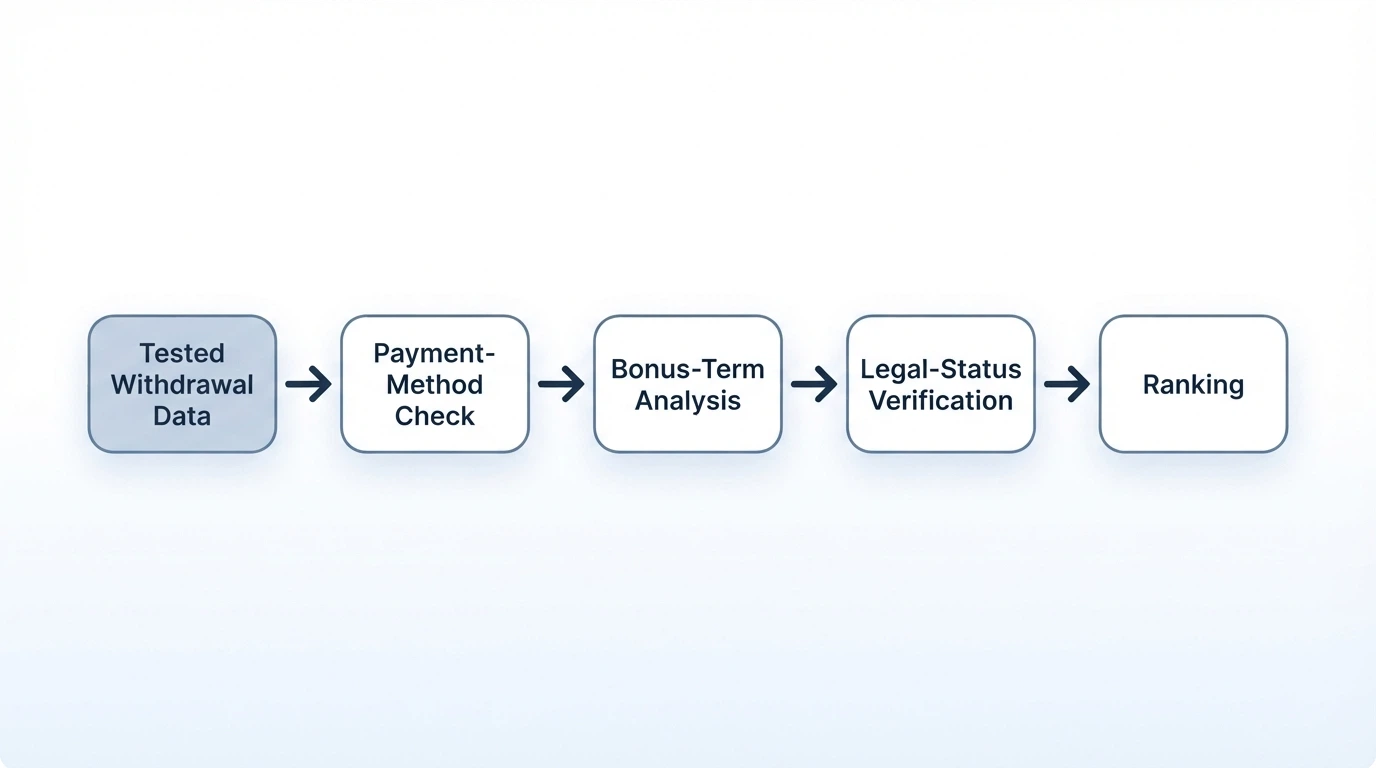
Tested withdrawal speed was the primary input. The ranking separated operators with independent tested times (SkyCrown eleven minutes, BitStarz twelve to thirty minutes, Royal Reels four hours twelve minutes, RocketPlay under one hour) from operators with claimed or unverified times. Where a tested time existed, it carried the ranking position. Where it didn’t, the operator was placed lower and the gap was named.
Payment-method range was the second input. Operators supporting PayID were preferred for the Australian audience, since PayID is the fastest fiat option and AUD-native. Operators supporting multiple crypto coins ranked well for the crypto-comfortable reader. Operators with no confirmed fiat or crypto methods were placed lower and the gap was named.
Bonus fairness was the third input. The 30×–35× wagering band was treated as reasonable; 40× was acceptable; above 50× was treated as practically unclearable. Max cashout caps were considered — A$50 to A$200 for NDBs, varying for deposit bonuses. Operators with published, reasonable terms ranked above operators with unpublished or excessive terms.
Game library breadth was the fourth input. Royal Reels’ 40+ providers and 5,400+ pokies ranked highest; Fair Go’s 280 RTG games ranked lower for library breadth but not for focused RTG experience.
Operator track record was the fifth input. Trading volume, VIP programme depth, and time in market were the signals. Stake’s US$1.86B volume and 15-level VIP programme carried weight; Rainbet’s US$301M volume and 1,000-position monthly race carried weight differently.
The legal-status check was applied uniformly. Every operator was verified against the IGA prohibition — all are offshore, none holds an AU licence. This was not a ranking criterion because it was true for every operator; it was a frame for the entire page.
What the ranking does not measure: game experience (subjective), customer support responsiveness beyond published data, mobile app quality (unverified this run), and long-term operator solvency (no operator on this page has been independently audited for solvency under Australian standards).
What Australian Players Should Know Before They Deposit
The honest summary runs this way. Fast payouts exist at offshore casinos, tested and verified by independent reviewers with amounts and dates published. The fastest tested fiat result is eleven minutes at SkyCrown; the fastest tested crypto processing is twelve to thirty minutes at BitStarz. These are real numbers from real withdrawals at real operators.
The frame around those numbers is what makes the page worth reading. Online casino is prohibited in Australia. Every casino on this page is offshore and operating illegally under the IGA. No Australian consumer protection applies. No BetStop coverage. The ACMA can block the casino at any time, and the ACMA cannot recover a player’s money. From 1 January 2027, banks gain express authority to refuse PayID transfers to illegal operators — a concrete near-term risk to the payment rail itself.
The practical takeaway for a player who decides to proceed: verify the operator’s reputation independently before depositing. Pre-complete KYC after the first deposit and before any withdrawal request. Withdraw winnings frequently — do not leave more on deposit than you can afford to lose to an ACMA block. Read the bonus terms carefully, particularly wagering multiples above 35× and max cashout caps. Treat the payment method as confirmation of the operator’s unlicensed status.
The helpline reminder is the closing beat for a reason. The National Gambling Helpline is 1800 858 858 — free, confidential, 24/7. About 430,000 Australian adults experience problem gambling. The infrastructure exists because the harm is real, and it exists for anyone who needs it, regardless of where they have been playing.
Frequently Asked Questions
Why do some casinos say “instant” but take hours to pay out?
“Instant” at most offshore casinos means you get paid as soon as the operator’s processing period ends, not as soon as you click withdraw. The processing period covers KYC checks, bonus-wagering verification, withdrawal-cap enforcement, and fraud screening — and at most operators in 2026, that processing ran twelve to eighteen hours for PayID. The payment rail underneath (PayID/Osko, USDT on TRC20) is near-instant; the operator holds the request before releasing it. The gap between “instant” and “in your account” is what the marketing word obscures.
What happens to my money if an offshore casino gets blocked in Australia?
The ACMA can block the casino’s domain at the ISP level, cutting off the player’s access. The casino may set up mirror domains to circumvent the block, but those can be blocked in turn. The ACMA’s role is enforcement against the operator — it cannot recover player funds. No Australian consumer protection applies to offshore casinos, and no Australian complaints body has jurisdiction over them. A player whose casino is blocked with a balance still on it has no recourse through Australian channels.
What is the maximum you can withdraw from an instant payout casino in Australia?
Withdrawal caps vary by operator. SkyCrown caps at A$7,500 daily, A$15,000 weekly, A$45,000 monthly, with crypto transactions capped at A$6,000 each. RocketPlay’s daily limit is around A$5,000. Royal Reels runs A$10,000 weekly at the standard tier, climbing to A$25,000 and A$50,000 at higher VIP tiers. Bonus-related max cashout caps are separate and tighter — A$50 to A$200 for no-deposit bonuses in 2026, varying for deposit bonuses. The operator’s cashier page carries the current caps.
Does BetStop cover online casinos that offer instant payouts?
No. BetStop, the National Self-Exclusion Register, binds Australian-licensed wagering services only. Offshore casinos are not connected to the register and have no obligation to check it. A player who has self-excluded through BetStop can still register and play at every casino on this page. BetStop’s 67,480 registrations as at 31 July 2026 protect players within the licensed wagering market, not the offshore casino market.
Which payment method gives the fastest withdrawal at Australian-facing online casinos?
Crypto is the fastest at the network level — USDT on TRC20 handles transactions in minutes with fees capped below A$2, and the fastest operator-side processing is BitStarz at twelve to thirty minutes. PayID is the fastest fiat option, settling in seconds on the New Payments Platform once the operator releases the funds; SkyCrown’s eleven-minute PayID result is the fastest tested fiat withdrawal on this page. Bank transfers and card withdrawals sit at three to five business days regardless of operator. The spread is operator discipline, not rail speed.