
Real money pokies on Android in Australia, in : the offshore market the search results tidy away
Most Australians who reach for a pokie game on their phone have no idea the act of providing that game to them is, on paper, a civil offence. The screen looks no different from any other app store product. A reel spins, a balance ticks down, a withdrawal arrives. The law underneath is the part that stays out of the marketing — and it is the part that decides what protections you hold when things go wrong.
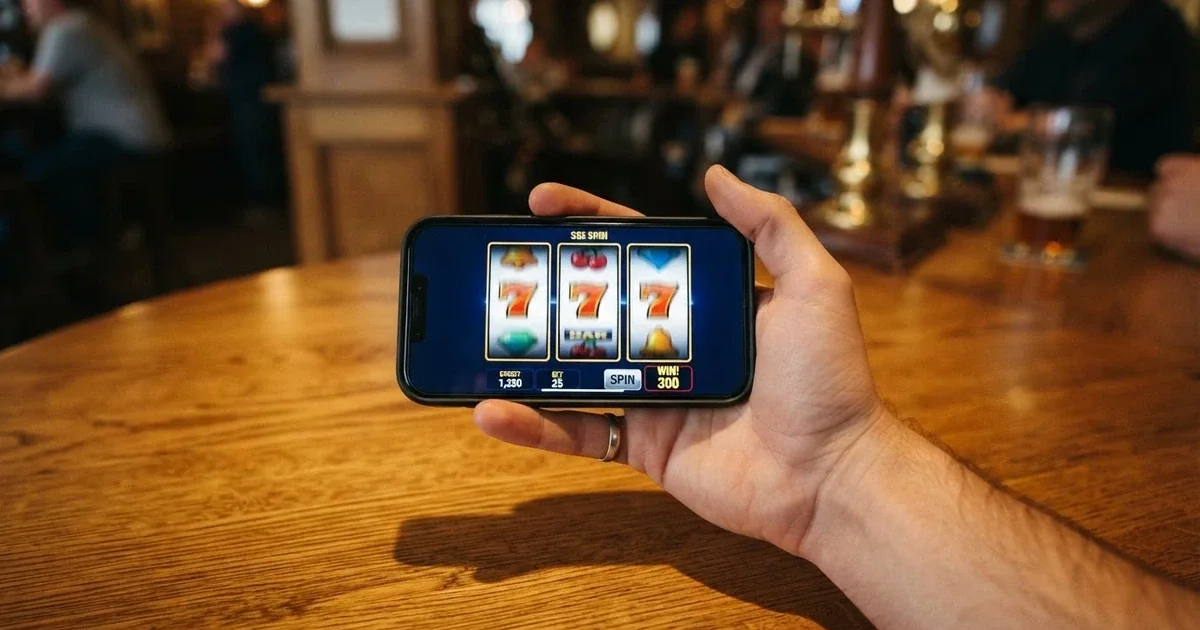
This is the page that puts that underneath the headline. The Interactive Gambling Act 2001 makes it an offence to provide prohibited interactive gambling services—specifically online casino games, pokies, and in-play betting—to any person in Australia. No licence for it exists anywhere in the country — federally, or in any state or territory. The brands reached in this article are offshore. Every one of them is the product the law was written against. Understanding that tension is the reason this page exists.
Data current as of 13 September 2026, verified against the official position that no Australian online casino licence exists, and against ACMA’s BetStop and site-blocking figures.
Table of Contents
- Android pokies in Australia: a market built on a prohibition
- Why real-money pokies apps never appear in the Google Play Store
- Free pokies on Android: spinning the classics with nothing on the line
- Aristocrat on Android: the titles Australians actually recognise
- The 10 offshore pokies sites Australians are reaching in CY, ranked by traffic
- Staying on the right side of the IGA from an Android phone
- Playing without harm: the tools that reach you and the register that doesn’t
- How we checked every operator on this page
- What your Android pokies decision should actually come down to
- Frequently asked questions about real-money pokies on Android in Australia
Android pokies in Australia: a market built on a prohibition
What “real-money pokies on Android” means for an Australian player
A “pokie” is the Australian word for a slot machine — the spinning-reel game found in clubs, pubs and casinos, and on the web. “Real money” means the spins cost the player something: a deposit of AUD, deducted from a balance, wagered on a single spin, and either lost or paid out according to the game’s return-to-player figure. “On Android” narrows the access to a phone — the dominant way Australians now play.
For an Australian, the term carries a structural irony. The Interactive Gambling Act 2001 makes providing online casino or pokies to a person in Australia an offence. No licence for it exists federally or in any state or territory. The minimum age for any commercial gambling in Australia is 18 — but the offshore sites this page ranks do not check Australian licences, because there is no Australian licence to check against. The player is not the target of the Act; the provider is. That distinction matters for what protection the page is about to show you have, and what you don’t.
The honest framing: every brand in the offshore shortlist below is operating against the letter of the IGA in the Australian market. They are reachable because enforcement takes the form of civil penalty proceedings against the provider and ISP-level site blocking, not prosecution of individual players. The site can be blocked tomorrow. The withdrawal can be refused. The balance can sit there while the domain vanishes. The page is written so the reader sees those facts before clicking through.
Real money versus free play: the two games behind one screen
The same reel set runs in two modes at almost every offshore operator: a play-for-fun mode, where the game gives you a non-redeemable demo balance, and a real-money mode, where the same reels cost actual AUD. The mathematics underneath — the symbols, the bonus features, the RTP, the volatility curve — does not change between the two. The only difference is what the spin costs.
For most Australian players, the smartphone is the primary device. Recent operator-side data puts the share of Australian real-money pokies players using a smartphone as their main device at 60–70%. The free-play share is higher again, because free play costs nothing to enter — a few taps in a browser, no deposit, no commitment, no KYC. Both routes use the same reel engine.
That symmetry is what makes free play useful. A player can sit with a title — Indian Dreaming, 5 Dragons, Buffalo — for an hour in demo mode and learn what its bonus round actually does, what a near-miss looks like on this particular game, how often the feature lands. None of that knowledge transfers a dollar of house edge. What it transfers is the difference between a player who knows what they are spinning and a player who finds out at A$1 a pop.
Where Australian pokie games are actually played from
Three routes exist for an Australian reaching an Android pokie game today. The first is a sideloaded APK — a direct download from the operator’s own website, installed after the user flips an Android setting that permits apps from outside the Play Store. The second is a browser tab — Chrome, Samsung Internet, Firefox — pointed at the operator’s mobile site, no install required. The third is a Progressive Web App — a website the player can “install” to their home screen, behaving much like an app while updating from the server like a web page.
There is no fourth route that works inside Australian law. As one industry page puts it plainly: “There is no Australian-licensed real money pokies app. None.” The Google Play Store restricts real-money gambling apps for Australian users, so the standard path is the APK or the browser. The Play Store contains demo versions of some titles, social-casino apps that use in-app currency rather than AUD, and licensed wagering products from Australian bookmakers — none of which is a real-money pokie game for Australian players.
Why real-money pokies apps never appear in the Google Play Store
How real-money play works on a handset
The mechanics of real-money play on an Android handset are the same as on a desktop, just compressed into a touchscreen. A player opens the operator’s site or app, registers an account, deposits AUD, picks a pokie, sets a stake, and spins. Wins credit to the balance; losses debit it. A withdrawal request moves money back to a chosen payment method.
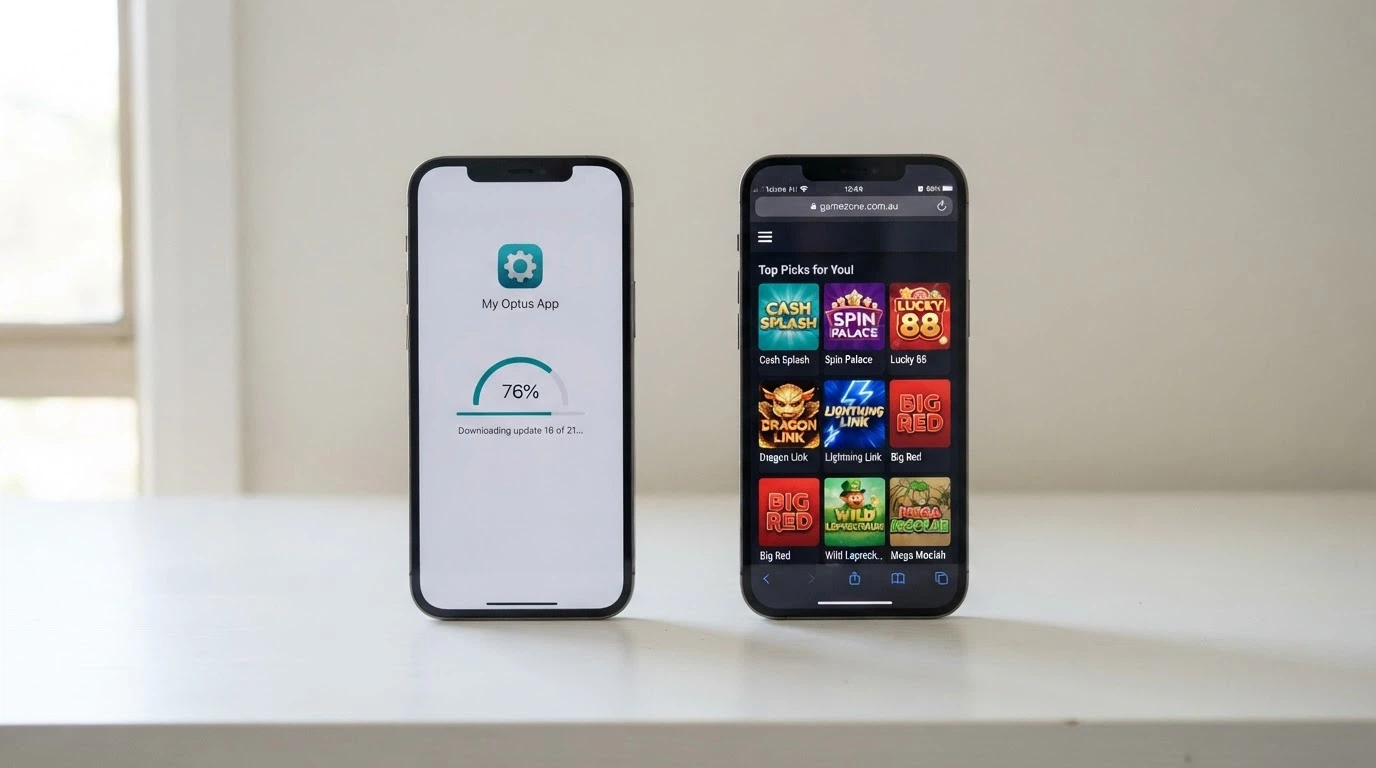
The deposits are modest. Typical minimum deposits at Australian-facing pokies apps run from A$5 to A$30 depending on the operator and the payment method. A player does not need a big bankroll to enter — A$10 will get most of them on a real-money session at the lowest stake size. The exit is the part that has changed most over the last few years. PayID withdrawals at some platforms are processed in under 15 minutes. Crypto withdrawals (BTC, USDT) have been confirmed within 45 minutes at tested operators. Same-day payouts via PayID or crypto are the working benchmark for AU-facing pokies apps in — meaning the old story of waiting three business days for a withdrawal no longer reflects the top of this market. It still reflects the bottom.
APK sideloading versus the browser, and Google’s limits
Google’s policy on real-money gambling apps in Australia is simple in its effect: the Play Store does not list them. The route to a real-money pokie on Android therefore runs around the store, not through it. Two paths exist.
The first is the APK. The player visits the operator’s site on the Android phone, taps a download link, and receives an installer file. Android will refuse to install it by default — the OS requires the user to enable installs from “unknown sources” for that specific app. Once enabled, the APK installs, and the icon sits alongside the player’s other apps. Updates arrive the same way: a fresh APK from the operator’s site, downloaded and re-installed.
The second is the browser. The player navigates to the operator’s mobile site, signs in, and plays in a Chrome tab. Nothing installs. Nothing updates. The site is the product. Google Play’s restriction has no bearing on it. Most casino APK apps require Android 8.0 (Oreo) or later — a phone from 2017 or newer — and the supported device set covers Samsung, Google Pixel, Oppo and Xiaomi, the brands Australians actually carry.
Browser play and PWA installs with nothing to download
The browser route has a quiet variant worth knowing. A Progressive Web App — a PWA — is a website the player can add to their Android home screen as if it were an app. From the home screen, it opens full-screen, no browser chrome. From the server, it updates the moment the operator changes a game or a payment option. No APK. No Play Store. No “unknown sources” toggle.
For an Australian player, the PWA route closes most of the gap between “downloaded APK” and “nothing to download”. The site still carries the same risk profile — offshore, unlicensed, no BetStop coverage, blocking-vulnerable — but the technical friction is lower. For anyone uncomfortable toggling an Android setting to allow sideloaded apps, the browser or the PWA is the better answer, not because it is safer, but because it is simpler.
Which of these routes Australian players can actually use
The browser and PWA routes work on any Android phone with a modern browser — Chrome 90 or newer handles the HTML5 reel engines the offshore operators use. The APK route works on Android 8.0 (Oreo) or later, which covers Samsung Galaxy phones from 2017 onward, every Google Pixel, recent Oppo handsets and most Xiaomi models sold in Australia. Older devices will run the browser route fine; the APK install will be refused by the OS.
The “real-money” part is what makes the device question relevant. Free demo versions of these titles — the same reel sets, the same bonus features, a non-redeemable demo balance — run on even older handsets and through any browser, with no install required. The smartphone share of real-money play, at 60–70% of Australian players, sits on top of a wider free-play share that has been mobile-first for years. The phone is not the new device for pokies; it is the device for pokies, period.
Free pokies on Android: spinning the classics with nothing on the line
Where the free and demo versions actually sit
Free pokies on Android live in three places. The first is the operator’s own site — every brand on the offshore shortlist ships a demo mode for almost every title in its lobby. The player opens the site, picks a game, and a toggle switches between real-money and play-money. The reels are the same. The bonus features are the same. The only difference is the balance: a demo balance resets at every reload, costs nothing, pays nothing.

The second is the social-casino apps on the Google Play Store — products that look like pokie games but use in-app coins or credits rather than AUD. These sit inside Google’s policy because no real money changes hands. They are not a substitute for a real-money session; they are a way to spin Aristocrat-style reels on a commute without touching a deposit.
The third is aggregator sites — pages that host hundreds of free Aristocrat-style titles in-browser, no account required, no app to install. The catalogue varies; the experience is consistent: tap, spin, learn the bonus round, close the tab.
Playing for fun without downloading an app
For a player who wants the titles without the friction, the browser is the answer. No APK. No home-screen icon. No Android settings toggle. The reel loads inside the browser tab. The bonus round triggers the same way it would on the APK. When the player is done, they close the tab.
The trade-off is convenience: a browser tab needs a network connection on every session, and the operator’s mobile site has to re-authenticate the player (or skip the login entirely for demo mode). The browser route sacrifices app-like convenience for immediate, no-download access — a trade-off that suits players who prefer not to manage APK installs or permission toggles.
The strongest free options on an Android phone
Two titles stand out for a player learning the Aristocrat-style genre in demo mode. Indian Dreaming, released in 1999, is the five-reel, 243-ways-to-win game that defined the format for Australian players — fifteen free spins with a 3x multiplier as the headline feature, and a max payout of 2,000 coins. It is the title a generation of pub-goers learnt the genre on, and the one most free-play catalogues lead with.
5 Dragons is the second. Also five reels and 243 ways to win, with free-spin multipliers that climb to 30x. Where Indian Dreaming is the slower, more recognisable classic, 5 Dragons is the punchier one — medium-to-high volatility, a feature round that can either land nothing for ten spins or pay out a stack of multipliers in a row. Together, those two titles cover most of what a player needs to know about Aristocrat-style reel design before risking AUD on the real-money version.
Free games across Samsung, Pixel and other devices
Free and demo versions of these titles run on the same Android 8.0 (Oreo) floor as the real-money APKs, because the underlying HTML5 reel engine is the same in both modes. Samsung Galaxy phones from the S8 forward, Google Pixel from the original forward, current Oppo handsets and most Xiaomi models sold in Australia all run these titles without issue in either mode. A PWA install of an operator’s demo lobby behaves identically across all four.
The free route is also where a player can stress-test a phone. A slow or stuttering reel on a free title at the same stake size the player intends to use for real money is a real signal. A phone that drops frames on a demo spin will drop them on a real spin; the difference is which balance pays for the dropped frame.
Aristocrat on Android: the titles Australians actually recognise
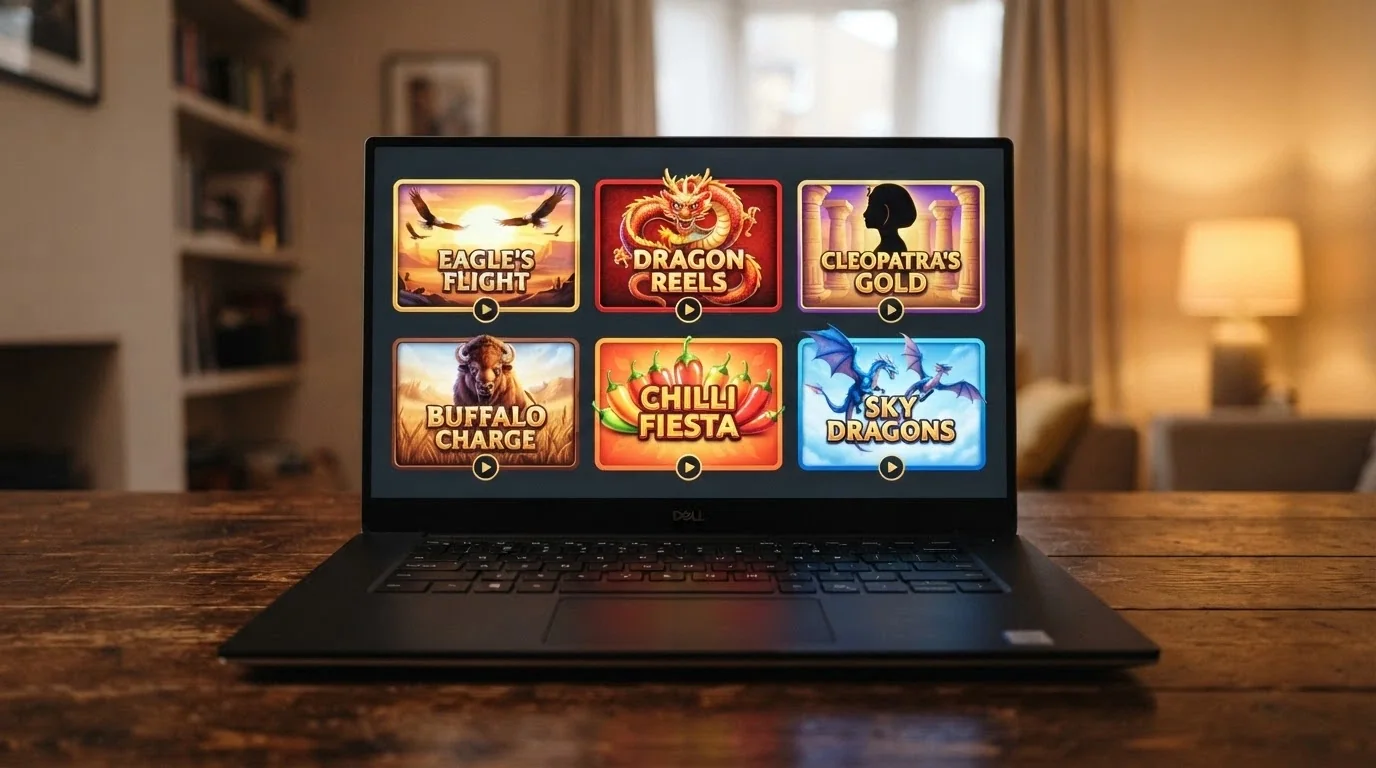
The Aristocrat titles Australians recognise from the pub are mostly the same titles they can find on an Android phone today, through an offshore operator’s lobby or a free-play aggregator. The list below covers seven of the most-played games with the figures research backs. Where a per-title figure is not carried, the cell carries an em dash rather than a guess.
| Slot title | Provider | RTP | Volatility | Standout feature / max win |
|---|---|---|---|---|
| Indian Dreaming | Aristocrat | 98.99% (disputed) | — | 5 reels, 243 ways, 15 free spins with 3x multiplier; max payout 2,000 coins |
| 5 Dragons | Aristocrat | 95.17% | Medium-to-high | 5 reels, 243 ways, free-spin multipliers up to 30x |
| Queen of the Nile | Aristocrat | 94.9% | Medium | 5 reels, 20 paylines |
| 50 Lions | Aristocrat | 94.71% | Medium | 5 reels, 50 paylines; top win 1,000x |
| More Chilli | Aristocrat | 95.25% | High | Stacked wilds in free spins, multi-level bonus; max win 2,000x |
| Buffalo | Aristocrat | 95.95% | High | Max win 2,500x |
| 50 Dragons | Aristocrat | 94.70% | — | 5 reels |
Indian Dreaming’s reported RTP of 98.99% is the outlier on the table, and the figure is disputed across sources. Treat it as a range, not a quote. The other six titles cluster between 94.7% and 95.95%, which is the band Aristocrat-style reels have settled into. A player who walks into any of these with the expectation that a 95% return means a steady drip of small wins is reading the figure correctly — and reading the volatility wrong. High-volatility titles like Buffalo and More Chilli pay out less often and in larger clumps. Medium-volatility titles like Queen of the Nile and 50 Lions pay more often and smaller. The RTP is the same shape over a long session; the experience of a single session is not.
Which Aristocrat games run on an Android phone
Aristocrat’s online catalog is built in HTML5, which is the same engine the offshore operators run inside their lobbies. The result is that every title in the table above runs in a modern mobile browser — Chrome, Samsung Internet, Firefox — and through any APK or PWA that wraps the same library. iOS runs them equally well; for an Android reader, the point is that the phone is not the bottleneck. The title is.
The titles most operators carry are the ones the table lists. Some lobbies include older Aristocrat-style games (Queen of the Nile II, the Buffalo Deluxe variants) and exclude others. A free-play aggregator will usually carry more, because the licence question is different for a demo balance than for an AUD one.
Indian Dreaming and the rest of the featured lineup
Indian Dreaming is the headline title for a reason: it is the game most Australians over 30 learnt the genre on. Released in 1999, five reels, 243 ways to win, fifteen free spins with a 3x multiplier and a top payout of 2,000 coins. The 98.99% RTP figure attached to it is the highest of any title in the table, and the most disputed. Different aggregators list it as 95%, others as 94.5%, others as the disputed higher figure. The honest reading is to treat Indian Dreaming’s RTP as a range in the mid-to-high 90s, not a number to memorise.
The rest of the lineup sits in the 94.7% to 95.95% band. 5 Dragons is the medium-to-high volatility pick — the free-spin round can climb to a 30x multiplier, which is a more volatile experience than Indian Dreaming’s flat 3x. Buffalo is the high-volatility pick, with a 2,500x top win — long quiet stretches punctuated by a single feature round that returns a session’s worth of stake in one go. These titles illustrate why high-volatility games have become the industry standard for offshore players: the potential for a large, single-session payout is what defines the gameplay experience.
Free and demo Aristocrat games
Free and demo versions of these titles are reachable through three channels: the operator’s own demo toggle (where one is offered), free-play aggregators, and social-casino apps on the Play Store that licence Aristocrat-style games under a different name. The reels are the same; the balance is a demo balance; nothing pays out in AUD.
A player who wants to learn what 5 Dragons’ free-spin round actually does — how often the feature triggers, how the multipliers stack, what a near-miss looks like — is better off spending an hour on the demo version than reading about it. The free-play share of this market is large precisely because the cost of testing is zero.
The 10 offshore pokies sites Australians are reaching in , ranked by traffic
The table below ranks the ten brands an Australian player is most likely to encounter, ordered by traffic share. The order is traffic, not endorsement. None of these brands holds an Australian casino licence, because no Australian casino licence exists. Market-share figures come from operator-side traffic data, not from a licence register, and they do not indicate licensing.

| Operator | Market share — traffic only | Australian licence status |
|---|---|---|
| Rocket Play | 9.4% | Offshore — not Australian-licensed |
| Skycrown | 8.55% | Offshore — not Australian-licensed |
| Royal Reels | 2.51% | Offshore — not Australian-licensed |
| WinSpirit | 1.55% | Offshore — not Australian-licensed |
| Stake | 1.28% | Offshore — not Australian-licensed |
| Rainbet | 1.28% | Offshore — not Australian-licensed |
| Scream Casino | 0.99% | Offshore — not Australian-licensed |
| FairGO | 0.8% | Offshore — not Australian-licensed |
| Bizzo Casino | 0.57% | Offshore — not Australian-licensed |
| Rocket Casino | 0.57% | Offshore — not Australian-licensed |
The traffic ordering is the honest basis for ranking. It is not a quality ordering. A brand with a larger share of Australian clicks has more Australians depositing with it, which means more Australians potentially exposed to the offshore risk profile — not a higher quality of game or service. The columns research covers do not support a per-operator bonus or wagering comparison, so the table does not carry one; the operator write-ups that follow cover what the inputs do carry.
The criteria that ordered this shortlist
Three things decided which brands made this list and where they sat. The first is Australian traffic share — the operator-side figures that put these ten ahead of every other offshore brand an Australian reached in . The second is the offshore status — every brand in the list is offshore, because every brand offering real-money pokies to an Australian is offshore, by definition, under the IGA. The third is coverage in the offshore shortlist research surfaced.
The order is honest in one specific way: it does not claim a licence. A ranking that put a “licensed” brand at the top would be ranking something that does not exist for this product category in Australia. The traffic share is a measure of reach, not a measure of trustworthiness, and the write-ups below describe what each brand does — not whether to use it.
Withdrawal speed and safety across the ten
The benchmark for an Australian-facing pokies site is same-day payout via PayID or crypto. PayID is the fastest route at the top of this market — under 15 minutes at some platforms. Crypto (BTC, USDT) is the next fastest, with withdrawals confirmed within 45 minutes at tested operators. The bottom of this list, and any operator outside the offshore shortlist, falls back to bank transfer and 2–5 business days, which is the legacy baseline.
The catch is that speed is not the same as safety. A PayID withdrawal that arrives in twelve minutes is convenient; it is not a consumer-protection framework. The operator can still refuse a payout, the site can still be blocked mid-session, the regulator that has your back does not exist. Speed is what makes a withdrawal feel like money; safety is what makes the money stay yours.
Rocket Play
Rocket Play sits at the top of the traffic share, at 9.4%. It is an offshore brand, not Australian-licensed, because online casino is prohibited under the IGA. The app format is mobile browser plus APK — the standard pairing for an AU-facing pokies product, where Google Play does not list real-money gambling apps for Australian users.
The traffic share is what this brand is known for; specific bonus terms, wagering multipliers and free-spin counts were not confirmed in the research sweep this page is built on, so they are not stated here. Figures for this operator remain unconfirmed in current research; players should check the site’s terms page for current bonus and wagering requirements before deciding to register.
Skycrown
Skycrown is the second-largest traffic share, at 8.55%, and is one of two brands in the list where research surfaced a concrete payment detail. The minimum deposit starts from A$30; PayID is supported as a payment and withdrawal method. The app format is Android plus iPhone browser — no APK route confirmed in this research.
For a player whose decision comes down to PayID availability and a known minimum, Skycrown is a more legible option than most of the rest of this list. The same offshore caveats apply — no Australian licence, no BetStop coverage, blocking-vulnerable — but the payment-method shape is clearer than the unnamed-default many competitors carry.
Royal Reels
Royal Reels holds 2.51% of Australian traffic. It operates as an unlicensed offshore brand. Bonus terms, free-spin counts and app formats were not verified in this research and remain unavailable.
A 2.51% traffic share is the upper-middle of the offshore market — large enough that the brand has Australian-facing support. The honest framing of any brand at this tier is the same as the rest: an offshore product, no BetStop coverage, no Australian consumer protection, a withdrawal that depends on the operator’s own terms.
WinSpirit
WinSpirit holds 1.55% of Australian traffic and operates as an unlicensed offshore entity subject to the same IGA prohibitions. Research did not surface specific bonus or wagering data for this brand.
The same caveats apply. A player who lands on WinSpit’s site will see a real-money pokie lobby and a deposit box. What the page does not say is also true: there is no Australian regulator to appeal to if the operator refuses a withdrawal, no BetStop exclusion covering the brand, no Australian consumer-protection framework behind the welcome offer.
Stake
Stake holds 1.28% of Australian traffic — and is the one brand in the list where the app-format picture is sharper than the rest. The product is mobile-browser only. There is no native AU app. Stake is a globally known brand, recognised by crypto-first players, and the browser-only shape is consistent with its offshore status and its crypto-native payment stack.
For a player who prefers crypto deposits and is comfortable with a browser tab over an installed app, Stake is one of the more legible options in the list. The 1.28% share is modest; what is unusual is that the brand is known well beyond that share, which means an Australian reaching for it is doing so for the brand-name recognition as much as the marketing.
Rainbet
Rainbet captures 1.28% of Australian traffic. Like other offshore brands, it lacks an Australian licence. Bonus and wagering terms remain unverified in our latest data sweep.
A player who arrives at Rainbet through the offshore shortlist rather than through a search results page is, on average, more deliberate — the brand does not advertise heavily inside Australian channels because Australian channels do not permit that advertising. The traffic is largely inbound from players who already know the brand or who arrived via an affiliate link. The same IGA-driven caveats apply to every aspect of the product.
Scream Casino
Scream Casino accounts for 0.99% of Australian traffic and operates as an unlicensed offshore provider. No specific bonus or wagering information for this brand was confirmed in our research.
The 0.99% tier is the lower-middle of the offshore shortlist — brands large enough to have a recognisable name, small enough that they do not appear in the top-three traffic comparisons. The same offshore caveats apply in full.
FairGO
FairGO holds 0.8% of Australian traffic, and is the one brand in the list where research surfaced a concrete offer shape: a welcome bonus plus free spins is reported, though specific amounts and wagering terms were not confirmed. The app format is Android and iPhone web app. Payment methods include Bitcoin and Neosurf — two methods that signal offshore status clearly.
The credit-card ban matters here. Since 11 June 2024, credit cards, credit-related products and crypto have been banned as payment for online wagering in Australia. A site asking for Bitcoin deposits from an Australian is operating outside that ban — it is offshore, not licensed under Australian rules. The payment method itself is the tell.
Bizzo Casino
Bizzo Casino holds 0.57% of Australian traffic. As an unlicensed offshore operator, it operates outside the IGA-permitted framework. Specific bonus and wagering details were not retrieved in this sweep.
A 0.57% traffic share is the lower tier of the offshore shortlist. The same IGA-driven caveats apply: no Australian licence, no BetStop coverage, no consumer-protection framework, a withdrawal that depends on the operator.
Rocket Casino
Rocket Casino shares the 0.57% traffic tier with Bizzo. It is an offshore brand without an Australian licence. Current bonus and wagering data for this site remains unconfirmed.
The honest position of any brand at this tier is the same as the rest of the list: it is reachable, it is offshore, and the protections the page lists under the IGA section do not apply to it. The decision to use it belongs to the player; the framework the player uses to make that decision is what this page is for.
Staying on the right side of the IGA from an Android phone
The Interactive Gambling Act 2001 — strengthened by the Interactive Gambling Amendment Act 2017 — is the centre of the legal picture. It makes providing interactive casino entertainment, real-money pokies, and in-play sports wagering to a person in Australia an offence. Under section 15 of the IGA, it is a civil offence to provide a prohibited interactive gambling service; the Act does not create a criminal offence for individual players. Government guidance is explicit: the IGA “targets the providers of interactive gambling, not their potential or actual customers.”
What the Act permits is narrower than what is reachable. Wagering on races and sports placed before the event begins is licensable, as are lotteries and keno. In-play online betting is not. Online casino is not. The brands on the offshore shortlist above are the prohibited category, not the permitted one.
Licensed wagering versus offshore pokies: two different worlds
The licensable world — Australian wagering on races and pre-event sport — runs through state and territory regulators. The de facto national licensor is the Northern Territory Racing and Wagering Commission (NTRWC), administered through Licensing NT. NT-licensed bookmakers hold licences running for terms of up to 20 years. The NT levies a 5% wagering tax on wagers minus payouts, plus a 0.05% racing levy; each state sets its own point-of-consumption tax of typically 10–15% of net wagering revenue. This is the world the offshore pokies brand is not in.
What the offshore pokies brand offers — slots, table games, live dealer — is prohibited under the IGA. The NT-licensed bookmaker offers sports and racing. They are different products, governed by different rules, licensed in different jurisdictions. A player who treats the offshore pokies site as if it were a SportsBet account is misreading both.
ACMA, site blocking and the reform that starts in 2027
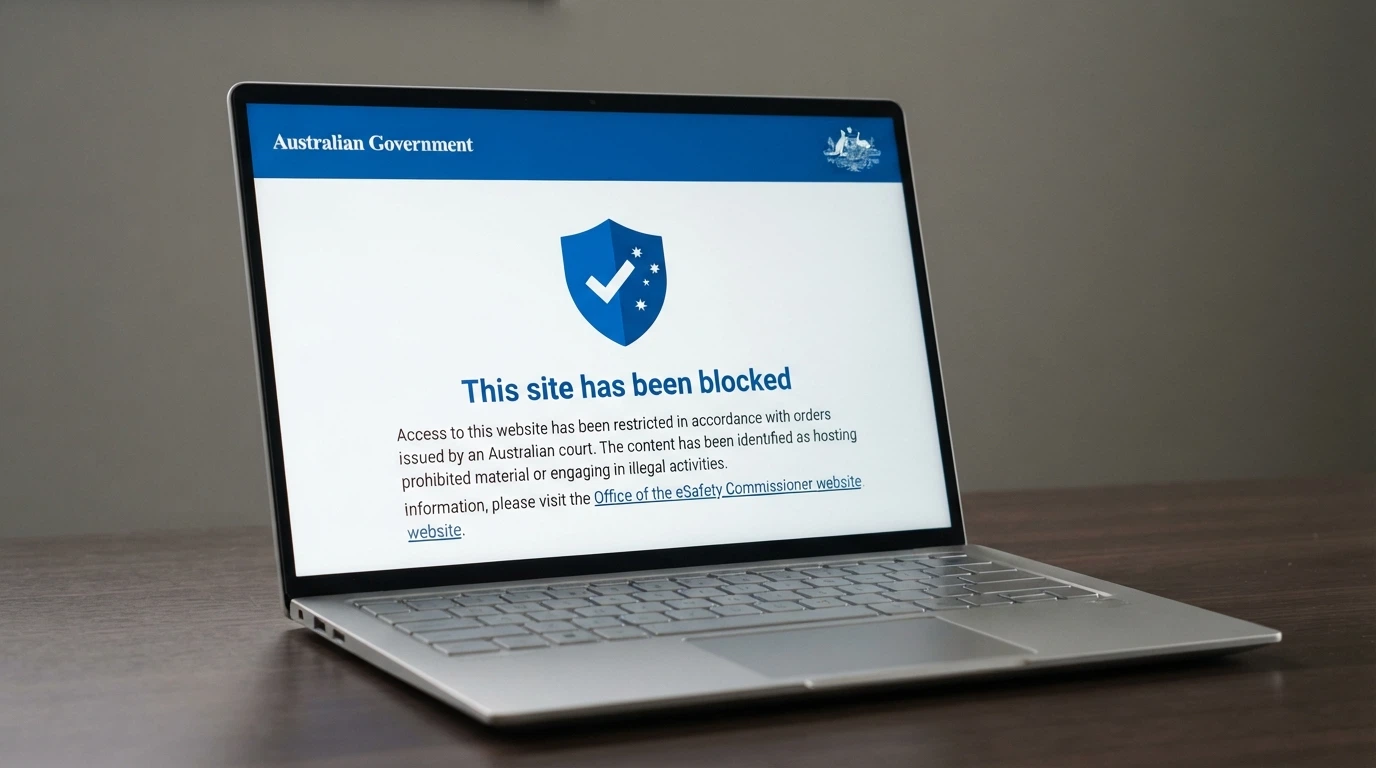
The regulator is the Australian Communications and Media Authority — the ACMA. The ACMA investigates complaints, issues formal warnings and civil penalty proceedings, directs Australian ISPs to block illegal sites, and refers operators for enforcement. Since November 2019, the ACMA has had 1,564 illegal gambling and affiliate websites blocked by Australian ISPs. More than 225 illegal services have withdrawn from the Australian market since enforcement was strengthened in 2017.
The next tightening is dated and specific. From 1 January 2027, banks and payment providers gain express authority to block transactions to illegal gambling operators. The Interactive Gambling Amendment (Gambling Reform) Bill 2026 was introduced 2 July 2026 and passed both Houses on 18–19 August 2026; its measures commence 1 January 2027. This is law with a start date — the advertising and inducement rules are not yet binding in but will be from January 2027. The payment-blocking authority is the part that matters most for an Australian player: an offshore site that the bank refuses to send money to is unreachable in practice, even if the ACMA has not blocked its domain yet.
The payment-side rules are already in force. Since 11 June 2024, credit cards, credit-related products and digital currency (crypto) are banned as payment for online wagering. Penalties of up to A$247,500 apply. A pokies site asking an Australian for a Visa deposit or a Bitcoin transfer is asking for a payment method that is illegal under the IGA amendment, which is itself a tell about where the site sits relative to Australian rules.
On the player’s tax position: gambling winnings are not assessable income under section 6-5 of the ITAA 1997, and losses are not deductible under section 8-1 — unless the person is carrying on a business of betting or gambling. No Australian case has held the winnings of an ordinary punter assessable. The tax point is one fewer thing on the player’s side of the decision; the offshore prohibition is the bigger one.
What an unlicensed app means for your money
The list of things an Australian player forfeits at an offshore site is short and concrete:
- No Australian consumer protection. The Australian consumer law framework applies to licensed Australian businesses. An offshore casino is not one. A complaint to ACMA is not a complaint a court will hear for a payout dispute.
- No BetStop coverage. BetStop — the National Self-Exclusion Register — binds approximately 150 licensed wagering providers. An offshore casino is not connected to the register, and a player who has registered with BetStop can still deposit and play at any of the offshore brands on the shortlist above.
- No recourse if the operator refuses a withdrawal. The withdrawal is a contractual question between the player and the operator, governed by the operator’s own terms and the jurisdiction the operator is licensed in. Australian courts have limited reach over an offshore brand.
- The site can be blocked at any time, with a balance on it. ACMA blocks do not compensate balances. A player who has A$200 sitting in an offshore account when the ACMA issues a blocking request to Australian ISPs can find their next withdrawal attempt is the moment the domain stops resolving.
That list is not a recommendation against the offshore brands; it is a description of what a player gives up when they choose one. The page’s job is to make that description legible before the click.
Playing without harm: the tools that reach you and the register that doesn’t
The responsible-gambling framework in Australia is built around licensed wagering. BetStop is the centre of it. The National Self-Exclusion Register — BetStop — launched on 21 August 2023. To the end of Q3 FY 2025–, 59,830 people had registered to self-exclude; as of 31 March , 37,247 had active exclusions. The minimum exclusion period is three months; the maximum is lifetime. The demographic shape of the register is striking: 78% of registrants are under 40, and 38% chose lifetime exclusion.
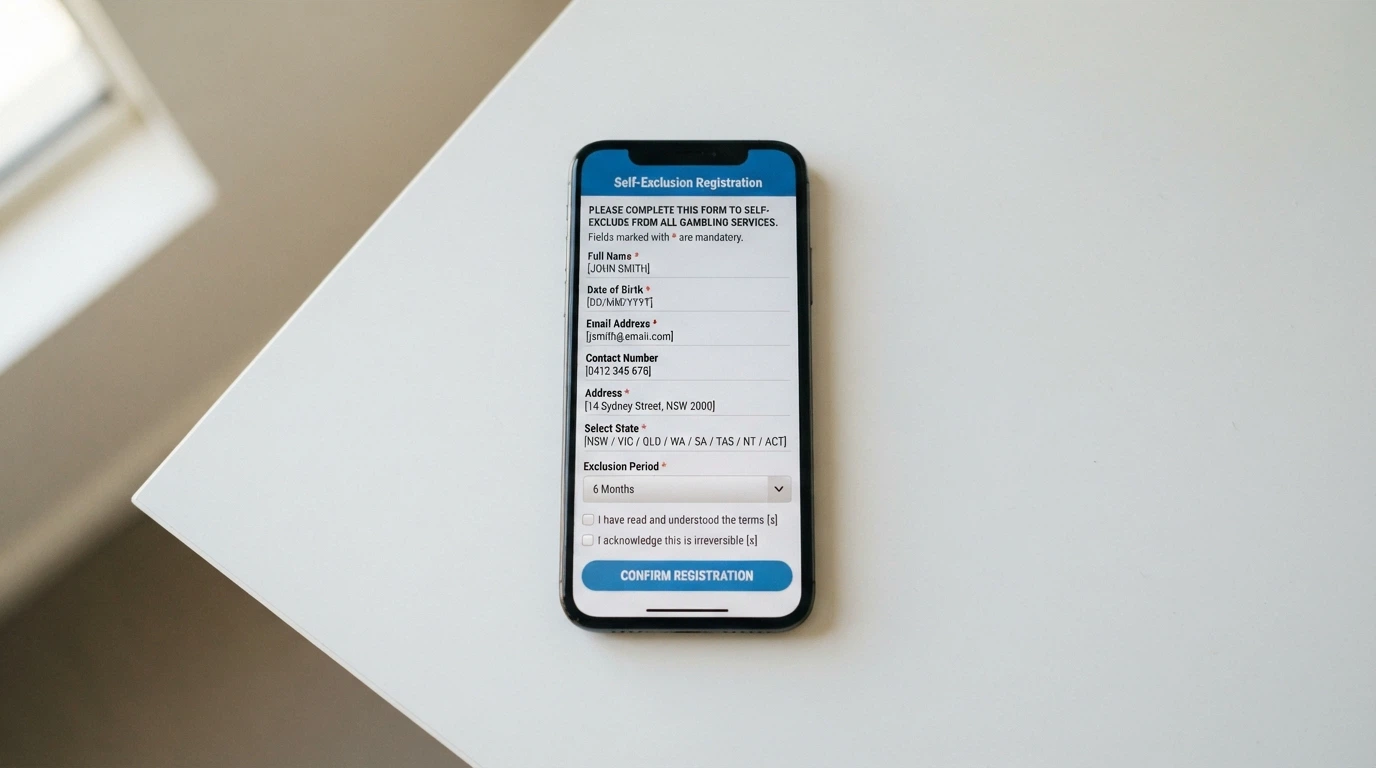
The same BetStop that excludes a person from every Australian-licensed wagering service excludes them from nothing at an offshore casino. BetStop binds approximately 150 licensed wagering providers; an offshore casino is not connected to the register. A self-excluded Australian who logs into an offshore pokies site and deposits AUD is doing so without any register-level block stopping them.
Deposit and balance tools inside the app
The licensed wagering side of the Australian market ships deposit-limit tools, balance-viewing settings, take-a-break periods, and the BetStop self-exclusion itself. These are required tools at the licensed operators. At offshore pokies sites, the operator decides which tools to expose — and most expose some, but the regulatory framework behind them is not Australian. A deposit limit set on an offshore site is a setting on a site that is not bound by Australian consumer law.
What this means in practice: a player who wants a deposit limit that an Australian regulator can enforce must play at a licensed wagering operator, not an offshore casino. A player who wants a self-exclusion an Australian register enforces must register with BetStop and accept that the offshore sites will not honour it.
BetStop, waiting periods and self-exclusion
A BetStop registration excludes the person from every Australian-licensed online and phone wagering service. The minimum period is three months; the maximum is lifetime. The register binds the operator side, not the player side: it is the operator’s obligation to refuse the self-excluded player’s deposits and bets.
The offshore gap is the practical bite. A self-excluded Australian who wants to keep playing on pokies can do so through any of the offshore brands on the shortlist above, none of which is connected to BetStop. That is the single most concrete harm of the offshore route from a responsible-gambling perspective — and the reason BetStop is named on every page about online gambling in Australia, not because it solves the offshore problem, but because the offshore problem is the gap the register does not close.
Harm figures and where Australians get help
The numbers are large enough to deserve their own paragraph. More than 3.3 million Australians — 15.1% of the adult population — are experiencing some form of gambling harm. Of those, an estimated 2,857,000 are affected by their own gambling and 1,177,000 by someone else’s. Approximately 2.1% of Australian adults — roughly 430,000 people — experience problem gambling.
The help lines exist and are reachable:
- National Gambling Helpline: 1800 858 858 — free, confidential, 24 hours a day, 7 days a week.
- Gambling Help Online: gamblinghelponline.org.au — free 24/7 chat and email counselling.
- BetStop: betstop.gov.au — National Self-Exclusion Register; minimum 3 months, maximum lifetime; binds approximately 150 licensed wagering providers.
- National Debt Helpline: 1800 007 007 — financial counselling, 9:30 am to 4:30 pm Monday to Friday.
- Lifeline: 13 11 14 — crisis support, 24/7.
A player who is reaching for the offshore shortlist because licensed wagering does not offer pokies — and that is the structural fact this page exists to describe — should know that the help lines above do not require the player to be at a licensed operator to use them. They are free, confidential, and reachable from any phone.
How we checked every operator on this page
Every operator on this page was checked against the official position that no Australian online casino licence exists. The Interactive Gambling Act 2001 makes providing these services—online casino, pokies, and in-play betting—to a person in Australia an offence; no licence for online casino exists federally or in any state or territory. The de facto national wagering licensor — for the licensed product this page is not about — is the Northern Territory Racing and Wagering Commission.
The basis for the ranking is Australian traffic share. The basis for the per-operator write-up is the research sweep surfaced through the operator-side data plus the figures research carried. Where a per-operator figure — bonus terms, free-spin count, wagering multiplier, bonus validity — was not confirmed in the research, the write-up does not state one. The audit that fact-checks this page will read it against the research notes, and an invented figure on a page like this is worse than an empty cell.
Two caveats deserve to be named. First, the research sweep did not confirm licence dates for any operator in the shortlist; the dates are not stated because they were not carried. Second, the bonus shape for FairGO — a welcome bonus plus free spins — is reported, but the amount, wagering and validity are not. A player who wants those figures should read the operator’s own terms page before claiming any offer; the terms change, the prohibition does not.
What your Android pokies decision should actually come down to
The page’s figures support a single honest call. There is no Australian-licensed real money pokies app. None. Every brand on the offshore shortlist above is offshore, and an offshore casino is not connected to BetStop. The same-day PayID and crypto payouts are real — under 15 minutes and within 45 minutes respectively — and they make the financial side of the offshore route faster than the licensed alternative. The cost is everything else: no Australian consumer protection, no BetStop coverage, no recourse if the operator refuses a withdrawal, a site that can be blocked at any time with a balance on it, and from 1 January 2027 a bank that can refuse to send money to it at all.
For a player with the budget and the appetite to absorb those costs, the offshore shortlist is a real market with real games — Indian Dreaming, 5 Dragons, Buffalo and the rest — and the same-day payout is a genuine improvement on the legacy three-to-five-day baseline. For a player who wants the protections that an Australian licence would provide, the answer is that no such licence exists for this product. The licensed Australian wagering operators offer sports and racing, not pokies. The choice is between the offshore product and not playing pokies online at all.
The page’s job is to make that choice legible, not to make it for the reader. The figures support the framing; the framing is that the offshore shortlist is a real market, the prohibition is real, and the two coexist because enforcement targets providers, not players. A reader who wants the offshore product knows what they are giving up. A reader who does not has the same numbers in front of them, and the same prohibition underneath.
Frequently asked questions about real-money pokies on Android in Australia
Can I be prosecuted as a player for using a real-money pokies app?
No. Under the Interactive Gambling Act 2001, the prohibition targets providers of online casino games, online pokies and in-play betting — not the individual player. Government guidance is explicit that the Act “targets the providers of interactive gambling, not their potential or actual customers.” Civil penalty proceedings and ISP-level site blocking are aimed at operators, not at Australian players who deposit at offshore sites. The risk to a player is not prosecution; it is the absence of Australian consumer protection if a withdrawal goes wrong.
If the ACMA blocks a pokies site, can I still withdraw my balance?
Not through the blocked domain. ACMA blocking requests are sent to Australian ISPs and take effect at the network level — a player in Australia cannot reach the site’s URL while the block is in force. Any balance left in the account is held by the operator, and recovery depends on the operator’s own terms and the jurisdiction the operator is licensed in. ACMA does not compensate balances on blocked sites. This is the practical reason an offshore player should not leave a large balance sitting unused in an offshore account.
I’m registered with BetStop — why does an offshore pokies app still accept my deposits?
BetStop binds approximately 150 licensed wagering providers in Australia. The register excludes a person from every Australian-licensed online and phone wagering service. An offshore casino is not one of those services and is not connected to the register — it has no obligation to check BetStop before accepting a deposit from a self-excluded Australian. The BetStop exclusion closes the licensed side of the market; the offshore side stays open unless the player enforces it themselves by not depositing.
What’s the minimum deposit on an Australian-facing pokies app?
Typical minimum deposits at AU-facing pokies apps run from A$5 to A$30 depending on the operator and the payment method. A player who wants the lowest floor can usually find A$5–A$10 deposit options; a player who wants a known fixed minimum should read the operator’s terms page for the specific payment method they intend to use, because the minimum often varies by method rather than by operator.
Why do some pokies apps ask for a credit card or crypto from an Australian?
Because those sites are operating outside the Australian rules. Since 11 June 2024, credit cards, credit-related products and digital currency (crypto) have been banned as payment for online wagering in Australia under the Interactive Gambling Amendment (Credit and Other Measures) Act 2023. Penalties of up to A$247,500 apply to operators that accept those payment methods from Australian customers. A pokies site asking an Australian for a Visa deposit or a Bitcoin transfer is asking for a payment that is illegal under the IGA amendment — a structural tell that the site sits outside Australian rules.
Do I pay tax on pokies winnings from an offshore app?
No, not as an ordinary player. Gambling winnings are not assessable income under section 6-5 of the ITAA 1997, and gambling losses are not deductible under section 8-1. The exception is a person carrying on a business of betting or gambling — for whom the ordinary income and deduction rules apply. No Australian case has held the winnings of an ordinary punter assessable, whether the win came from a licensed Australian operator or from an offshore site. The tax position is the same on both sides; the prohibition is what differs.