
$2 Minimum Deposit Casinos in Australia: What the Two-Dollar Entry Point Actually Gets You
A $2 deposit at an Australian-facing online casino looks like a small commitment, and it is — but the gap between listed and cleared at this level is wide enough to make the difference worth measuring. Of 32 sites tested for genuinely low entry points, only 4 accepted a true $1 deposit; $5 is described as the market “sweet spot” with 18 operators offering it. Two dollars is rarer again, and the routes that reach it are narrower than the marketing suggests.
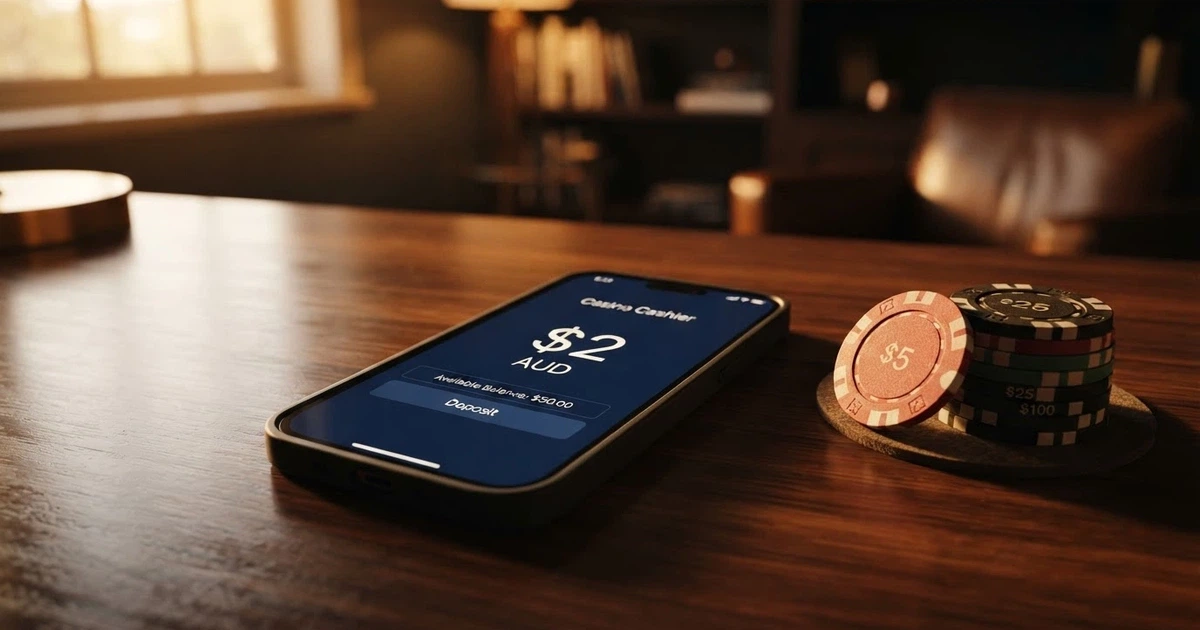
This is a guide to what a $2 deposit really buys at an offshore casino in 2026, written for an Australian reader who wants the figure, the route, and the catch on one page. The currency is AUD throughout, and the prices are what the cashier pages actually process — not what a banner claims.
Currency of the data below: verified as of 28 October 2026 against the ACMA register, current operator cashier terms, and the third-party Australian low-deposit testing data from the sources cited.
Table of Contents
- Why a $2 Deposit Is the Smallest Real-Money Entry Point in Australia
- The Operators That Genuinely Accept a $2 Deposit — and Those That Don’t
- The Payment Methods That Actually Process $2 — and the Ones That Can’t
- Your $2 Doesn’t Go Far on the Pokies — Here’s What It Actually Buys
- $2 Deposit Casino Apps: Mobile Play Without the $10 Floor
- New $2 Deposit Casinos in 2026: Fresh Brands, Same Offshore Reality
- No $2 Deposit Casino Is Licensed in Australia — Here’s What That Means
- Responsible Gambling at the $2 Level: The Protections That Exist — and the One That Doesn’t
- How We Selected and Ranked These $2 Deposit Casinos
- What a $2 Deposit Actually Buys You — and What It Doesn’t
- Frequently Asked Questions
Why a $2 Deposit Is the Smallest Real-Money Entry Point in Australia
Two dollars is the floor below which almost no operator bothers to build a payment flow. Australian-facing casinos set their minimum deposit by what their payment processor can clear, not by what looks generous on a banner. The two routes that genuinely process at $2 are prepaid vouchers (Neosurf, Paysafecard at the casino level) and cryptocurrency wallets. Credit cards and bank transfers sit at $10 to $20. PayID and POLi, the two Australian bank-linked options most players reach for first, sit at $10 or higher at most tested operators.
That is why $2 is the entry point rather than $1. Below two dollars, the processors don’t run. Above it, the floor rises in steps: $5 is common enough to be described as a sweet spot, $10 is the welcome-bonus trigger at most operators, and $20–$30 is where most mainstream payment methods pick up. A reader chasing the genuine two-dollar option is choosing between a small handful of prepaid and crypto routes, and accepting that most of the wider casino experience — bonus eligibility, withdrawal floors, mainstream payment methods — sits above where they’ve deposited.
The AUD currency of the deposit: why two dollars lands differently than $5 or $10
Two dollars is small in absolute terms, and the appeal is precisely that. A punter testing a new casino for the first time, or one who wants to feel a real-money reel spin without committing a $20 note, can do so for the cost of a cup of coffee. The same logic doesn’t apply at $5 or $10: at $5 the deposit becomes the kind of amount a reader might actually lose without noticing, and at $10 the welcome-bonus machine starts to engage — at which point the player’s psychology is no longer “test the platform” but “extract value from the bonus.”
The arithmetic of the welcome bonus explains why two dollars is also a kind of dead zone. Most welcome offers trigger at $10 minimum, and many at $20 or $25. A deposit match on $2 yields $4 in bonus funds at a 100% match — a sum that becomes useless given the wagering requirements attached to it. A player depositing $2 with bonus intent is paying the deposit cost for almost no promotional return. The honest reading of a $2 deposit is that it is a platform test, not a bonus play.
Real-money play from a $2 deposit: what you can and cannot stake
On the pokies, the minimum bet at the games most $2 bankrolls will reach runs from $0.01 on NetEnt’s Starburst up to $0.20 or more on most standard five-reel titles. Starburst is the floor case: a $2 bankroll at $0.01 buys two hundred spins of the lowest-volatility high-RTP game in the mainstream NetEnt catalogue, which is enough for a session rather than a strategy. At $0.20 per spin — the kind of minimum a reader will hit on most other pokies — two dollars buys ten spins. That is a session measured in minutes, not hours, and the volatility reality at that stake is that a $2 bankroll cannot absorb a dry run of any length.
At the tables, Wild Tornado’s table-game minimums of $1 to $5 sit above the deposit floor — meaning a $2 bankroll can place one or two chips at most tables, and is functionally locked out of anything beyond a single hand. The bankroll is real-money, the experience is brief, and the choice of game is narrowed by what the deposit can actually cover at the minimum bet.
The Operators That Genuinely Accept a $2 Deposit — and Those That Don’t
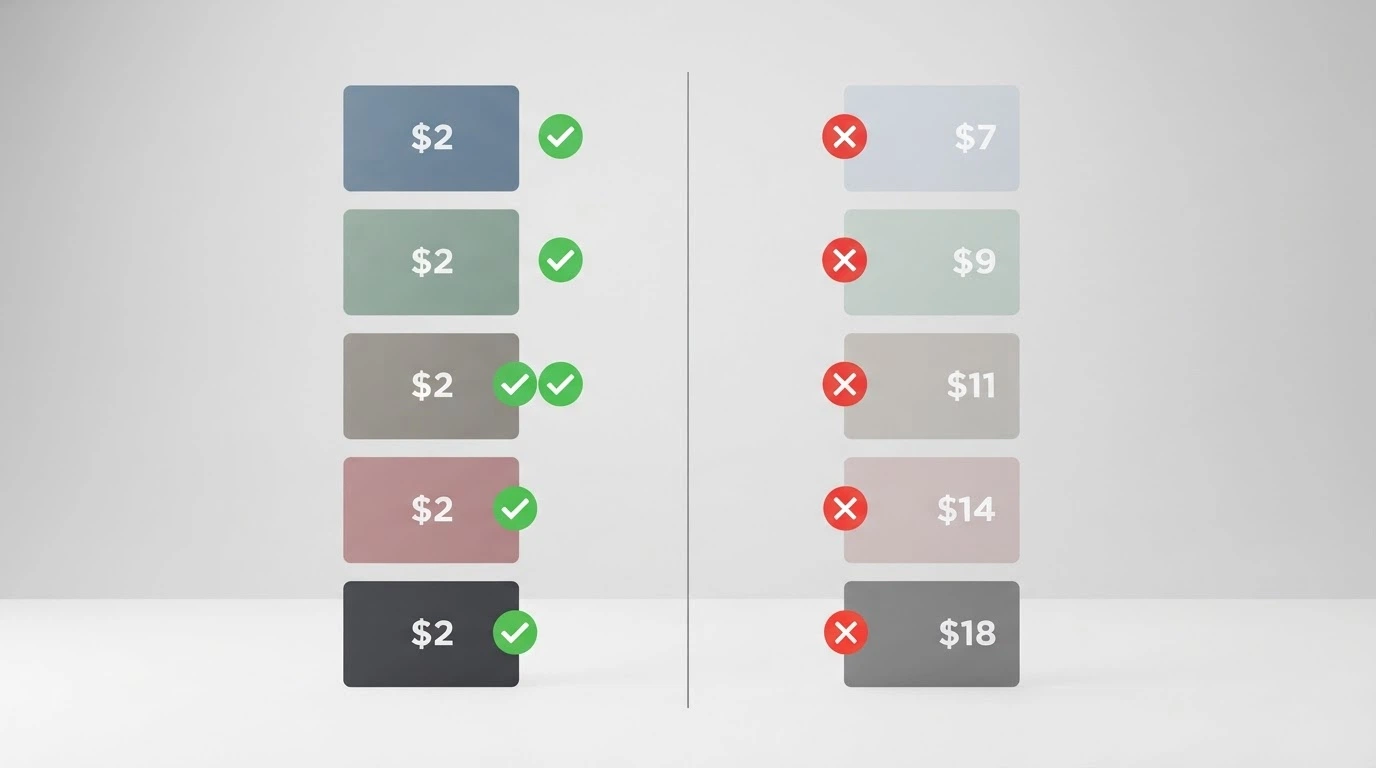
The table below ranks the ten operators by whether a $2 deposit genuinely clears. Three operators — The Pokies, Wild Tornado, and Rocket Play — have a verified A$2 minimum via third-party cashier testing. KatsuBet accepts an even lower A$1 minimum. The rest are listed in low-deposit directories, with their $2 status either unconfirmed or only theoretical.
| Operator | Licence Jurisdiction | Minimum Deposit (AUD) | Market Share |
|---|---|---|---|
| Rocket Play | Offshore (no AU licence) | A$2 via crypto and e-wallets | 9.4% |
| Skycrown | Offshore (no AU licence) | Unconfirmed for $2 specifically | 8.55% |
| Royal Reels | Offshore (no AU licence) | Unconfirmed for $2 specifically | 2.51% |
| WinSpirit | Offshore (no AU licence) | Listed as $2-capable | 1.55% |
| Stake | Offshore (no AU licence) | Crypto-native, low minimums possible | 1.28% |
| FairGO | Offshore, Curaçao licence (no AU licence) | Unconfirmed for $2 specifically | 0.8% |
| Bizzo Casino | Offshore, Curaçao licence (no AU licence) | Listed as $2-capable | 0.57% |
| The Pokies | Offshore (no AU licence) | A$2 via PayID and Bitcoin | — |
| Wild Tornado | Offshore (no AU licence) | A$2 via crypto and sometimes Neosurf | — |
| KatsuBet | Offshore, Curaçao licence (no AU licence) | A$1 (lower than $2) | — |
A genuine two-dollar option in Australia is rare, and usually tied to PayID, crypto, or a time-limited promotion — the gap between an advertised $2 minimum and a $2 deposit that actually clears is the one variable this table makes visible. Five of the ten operators have a $2 figure from third-party testing; two of those five have it confirmed via PayID specifically. The other half of the ranking is built on directory mentions rather than cashier verification, which is why the table reads “unconfirmed” rather than a higher number for those rows.
The market-share figures also need a reading. Rocket Play at 9.4% is the highest-volume operator on this page, and its PayID minimum is listed as “no limits” at one third-party comparison — but the $2 reality there is unconfirmed this run, and the listing may reflect a promotional position rather than a tested cashier floor. Everything below the top two is a thinner proposition.
Rocket Play
Rocket Play accepts A$2 via crypto or e-wallets, and runs over 4,000 games from providers like Pragmatic Play and BGaming. The library offers significant depth — the kind of selection that means a $2 bankroll can reach the same pokie catalogue as a $200 one. The welcome offer includes a deposit match plus free spins, with the minimum to claim the bonus typically A$10 or more, so a $2 deposit doesn’t trigger the welcome package but does give full access to the games. Rocket Play is the highest-volume entry point on this page; the trade-off is that the welcome bonus, the main reason most readers are comparison-shopping, sits above where a $2 deposit lands.
Skycrown
Skycrown sits at 8.55% offshore casino market share and lists PayID as “no limits” in one third-party comparison. The implication is a very low PayID minimum — possibly $2, possibly lower. But the $2 figure is unconfirmed by cashier testing, and the bonus terms, wagering, and game providers for a $2 deposit are unconfirmed this run. Skycrown is the operator where a reader should expect to do their own checking at the cashier before depositing — the listing suggests $2 is reachable, the verification doesn’t confirm it.
Royal Reels
Royal Reels is a recognised offshore brand with 2.51% market share, but the $2 deposit claim is untested. Welcome bonus, wagering, and game-provider details are unconfirmed this run, which is why Royal Reels sits in the middle of the ranking rather than at the top: a known operator with an unknown low-deposit position. The brand familiarity is real; the $2 verification is not.
WinSpirit
WinSpirit appears in third-party low-deposit listings as $2-capable, with 1.55% offshore market share. The rest is thin: bonus and game details unconfirmed. WinSpirit is the kind of operator a reader sees named in a directory and then has to verify at the cashier themselves.
Stake
Stake is the crypto-native platform where low minimums are part of the architecture — a Bitcoin or Ethereum deposit can clear at very small amounts, and the platform’s design treats micro-stakes as a normal case rather than a promotional gimmick. Market share is 1.28%, and the absence of a traditional welcome bonus is a feature rather than a gap: Stake operates on cashback and rake mechanics rather than deposit matches, which means a $2 deposit at Stake isn’t gated by a $10 bonus trigger. The trade-off is no AU licence and a platform whose game providers and bonus terms for a $2 deposit are unconfirmed this run.
FairGO
FairGO is pitched at Australian players and holds a Curaçao licence. It carries 0.8% market share, and its minimum deposit at the $2 level is unconfirmed this run. The Australian-facing positioning is the strongest of the smaller operators here, but the $2 claim isn’t tested. A reader choosing FairGO is choosing the brand familiarity over the verified deposit floor.
Bizzo Casino
Bizzo Casino holds a Curaçao licence and sits at 0.57% market share. It appears in third-party low-deposit directories as $2-capable. The bonus and game-provider specifics are unconfirmed this run, which is the same gap WinSpirit carries — directory-listed rather than cashier-verified.
The Pokies
The Pokies is the most openly Australian-focused offshore casino on this page, with an A$2 minimum via PayID and Bitcoin confirmed by third-party testing. The welcome package splits across the first three deposits, with a higher minimum to trigger the full bonus than the $2 entry point — meaning a $2 deposit gets a player onto the platform but doesn’t unlock the welcome offer in full. Aristocrat-style pokies and live dealer tables are the game-mix. For a $2 AUD deposit specifically through PayID, The Pokies is the clearest match in this ranking.
Wild Tornado
Wild Tornado accepts A$2 for selected methods — mainly crypto and sometimes Neosurf — and includes free spins with the welcome offer. The wagering on those free spins is described as steep for a low roller, and the table-game minimums of $1 to $5 mean a $2 bankroll can sit at most tables for a hand or two. The library is pokies-heavy. Wild Tornado is the entry-level crypto and Neosurf pick, and the catch is in the bonus terms rather than the deposit floor.
KatsuBet
KatsuBet accepts an A$1 minimum — even lower than the $2 this page is built around — and holds a Curaçao licence. The welcome package includes a bonus plus 50 free spins with 45x wagering and a maximum cashout of A$1,000 on free-spin winnings. KatsuBet is the operator where the bonus terms are most clearly stated among the featured set, and the sub-$2 minimum is real rather than theoretical. For a reader chasing the lowest possible entry with transparent terms, this is the strongest match — provided Curaçao-licence-only status is acceptable, which it is for every operator on this page because no Australian online casino licence exists.
The Payment Methods That Actually Process $2 — and the Ones That Can’t
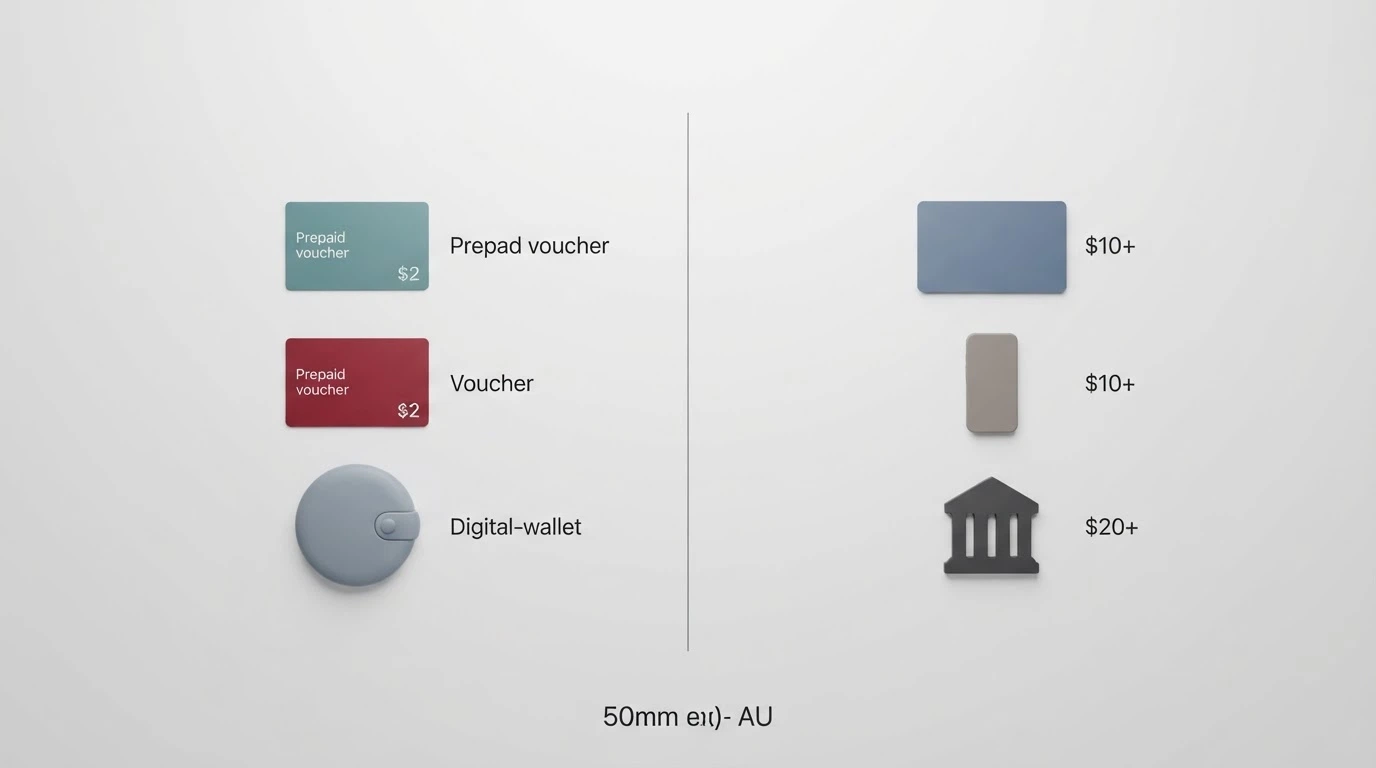
The payment method is the variable that decides whether a $2 deposit clears. Prepaid vouchers and crypto wallets process at $2; PayID, POLi, cards, and bank transfers mostly do not. A reader who chooses a $2 bankroll is also choosing a narrow set of deposit routes — and a separate set of withdrawal constraints that may not match the deposit method.
| Payment Method | $2 Deposit Capable? | Typical Minimum (AUD) | Processing Time | Notes |
|---|---|---|---|---|
| Neosurf | Yes | $2 at the casino level | Instant | Voucher purchase is a separate step |
| Paysafecard | Yes | $2 at the casino level | Instant | Vouchers start at A$10 to purchase |
| Crypto (BTC, ETH, USDT, LTC) | Yes | $2–$20 depending on coin | Instant deposit; 8–18 minutes for USDT TRC-20 withdrawals | Lowest practical minimums |
| PayID | Rarely | $10–$50 at most operators | Instant | Confirmed at $2 only at The Pokies |
| POLi | No | $10+ | Instant | Bank-linked processing floor |
| Visa / Mastercard | No | $10–$20 | Instant | Credit cards banned for online wagering since June 2024 |
| Bank Transfer | No | $20+ | 1–2 hours | Highest floor on this list |
Two practical notes sit beside that table. First, the voucher purchase floor for Paysafecard is A$10 — a reader buying a voucher to deposit $2 is buying more voucher value than they’re spending, which leaves an unused balance. Second, the credit card and crypto ban under Australian law applies to licensed wagering operators. An offshore casino accepting crypto or credit card payments is, by definition, outside the Australian regulatory framework, which is itself a useful tell about the operator.
Prepaid vouchers and cryptocurrency: the genuine $2 routes
Neosurf and Paysafecard both process at the $2 level once the casino accepts the voucher. Neosurf is the smoother flow: the player buys a voucher at a retail outlet, enters the code at the cashier, and the deposit clears instantly at $2. Paysafecard works the same way at the casino end, but the voucher itself starts at A$10 to purchase — so a $2 deposit from Paysafecard means buying a A$10 voucher and spending $2 of it, leaving the rest for later or losing it on the way out.
Cryptocurrency is the other $2 route, and the one with the fastest withdrawal. A BTC, ETH, or USDT deposit at the $2 level clears the cashier. USDT TRC-20 withdrawals at tested PayID casinos clear in 8 to 18 minutes — meaningfully faster than PayID withdrawals, which Goldenbet tested at 28 minutes and Lucky7 at 35 minutes. Crypto is the route for a reader who wants the deposit and the withdrawal to move at the same speed.
Bank-linked methods: why PayID and cards rarely work at $2
PayID, POLi, Visa, Mastercard, and bank transfers all carry processing minimums that put them above the $2 niche. PayID sits at $10 to $50 at most tested operators, and at The Pokies — where the $2 PayID minimum is confirmed — it is the exception rather than the rule. POLi sits at $10 and up. Visa and Mastercard at $10 to $20. Bank transfer at $20 with one-to-two-hour processing on top.
National Casino gives a useful concrete example: PayID minimums of A$50 to A$500, cards and vouchers at A$30. Wild Pokies sets PayID at A$10, Visa and Mastercard at A$20, POLi at A$10, bank transfer at A$20. Caswino holds most methods at A$10 minimum and crypto at A$20. The bank-linked floor is well above the $2 entry point at every operator tested — which is why the $2 deposit player ends up on prepaid or crypto routes by default.
Withdrawal minimums: the catch at the two-dollar entry point
A $2 deposit that wins is a $2 bankroll multiplied by luck, and the winnings are subject to a separate minimum at the cashier. Most $2-deposit casinos enforce withdrawal minimums of $50 to $100, regardless of how little was deposited. The mismatch is the trap: a player can deposit $2, win $20 on the pokies, and find that the cashier won’t let them cash out until the balance hits the withdrawal floor. A player who reads the small print first avoids the frustration; a player who doesn’t reads it the hard way. This is the single most concrete UX cost of the $2 entry point, and the gap between the deposit minimum and the withdrawal minimum is what makes it a cost.
Your $2 Doesn’t Go Far on the Pokies — Here’s What It Actually Buys
A $2 bankroll reaches the pokies, and the catalogue available is the same catalogue a $200 bankroll sees. What $2 changes is the choice within that catalogue — the games where the minimum bet sits low enough to give the bankroll a session rather than three spins. NetEnt’s high-RTP catalogue is the strongest match: Starburst at $0.01 minimum and 96.09% RTP is the floor case, and Gonzo’s Quest at 96% RTP and medium volatility sits just above it with its avalanche-reel mechanic. Play’n GO’s average RTP of 95% across its catalogue is the industry benchmark for the kind of medium-volatility, high-variance experience a $0.10 minimum stake buys.

The provider landscape matters because the RTP and volatility figures a reader sees are tied to specific games, not to whole studios. A NetEnt slot at 96%+ is meaningfully different from a Play’n GO slot at 95% on average. A $2 bankroll should not chase the highest-variance game on the platform; it should chase the highest RTP at a minimum bet it can afford.
The best-value pokies for a $2 bankroll: RTP, volatility and what they mean at micro-stakes
The table below ranks the titles a $2 bankroll can actually reach by their RTP, volatility, minimum bet, and maximum win. Starburst is the session-length pick — the lowest volatility and the lowest minimum stake. 9 Masks of Fire is the balanced pick — medium volatility, the highest RTP among the Gameburger Studios titles. Book of Dead is the high-risk pick — high volatility, large maximum multiplier, but the bankroll can disappear quickly. Reactoonz is the highest-RTP option in the standard Play’n GO catalogue. Mega Moolah is the caution — low RTP but a progressive jackpot starting from roughly A$1M, with a 3x free spins multiplier.
| Pokie Title | Provider | RTP | Volatility | Minimum Bet (AUD) | Max Win |
|---|---|---|---|---|---|
| Starburst | NetEnt | 96.09% | Low | $0.01 | — |
| 9 Masks of Fire | Gameburger Studios | 96.24% | Medium | — | 2,000x stake |
| Book of Dead | Play’n GO | 96.21% | High | — | 5,000x stake |
| Reactoonz | Play’n GO | 96.51% | — | — | — |
| Mega Moolah | Microgaming | 88.12% | Medium | — | Progressive from ~A$1M |
Two readings sit on top of that table. First, the volatility column is what decides whether a $2 bankroll survives long enough to be evaluated: low volatility buys spins, high volatility buys the chance of a single big hit that the bankroll may not reach. Second, the Mega Moolah row is doing a different job — its 88.12% RTP is the lowest on the page, well below the Play’n GO average of 95%, but its progressive jackpot is the reason a player accepts that gap. A reader depositing $2 with bonus intent and a Mega Moolah session plan is paying a 7% RTP tax for the chance at a seven-figure outcome.
Real-money pokies from $2: what the experience actually feels like
A $2 deposit at Starburst’s $0.01 minimum buys two hundred spins. At $0.20 per spin on a standard pokie, the same deposit buys ten spins. The gap between those two numbers is the gap between a session and a brief encounter, and it sits inside the player’s choice of game rather than inside the deposit. A $2 bankroll on Starburst is a quiet afternoon’s play. A $2 bankroll on Book of Dead is five minutes and a coinflip.
The volatility reality at micro-stakes is that a $2 bankroll cannot absorb a dry run of any length. A high-volatility game at $0.20 per spin will eat a $2 bankroll in ten spins, almost all of them losing, with the chance of a payout concentrated in the small minority that hit a feature. The session at low-volatility Starburst will run longer, return more of the bankroll in small wins, and feel closer to a real-money experience of the game. Neither is “better” in an abstract sense — they are different games for different reasons, and the deposit size decides which one the player can afford.
$2 Deposit Casino Apps: Mobile Play Without the $10 Floor
Mobile play at the $2 deposit level runs in the browser rather than the app. The reason is structural: most offshore casinos targeting Australian players do not publish a dedicated app on the Australian Apple App Store or Google Play Store, because the IGA makes it risky to do so. The casino’s mobile site is therefore the casino’s mobile product, and the experience between the two is close enough at this deposit level that the distinction doesn’t change what a $2 bankroll can do.

A reader landing on an offshore casino from a phone in 2026 is using the mobile web version of the platform. The cashier, the pokie lobby, the live dealer tables — all of it runs through the browser. There is no parity gap to worry about between an app that doesn’t exist and a browser that does.
Dedicated casino apps versus mobile browser: which route works for a $2 deposit
No featured operator in this ranking has a confirmed dedicated app available in Australian app stores this run. Mobile browser is the practical route for $2-deposit casino play in Australia, and the experience parity between a hypothetical app and the mobile browser is high at the $2 level — what the player sees in the cashier, what minimums the payment methods process at, and what the pokies look like are the same either way. The bonus terms are the same either way too, which is the more important point.
Mobile bonuses at the $2 threshold: what carries over from desktop
Mobile bonuses at the $2 level carry over from desktop because the bonus is tied to the deposit amount, not the device. A $2 deposit on a phone triggers the same welcome-package logic as a $2 deposit on a laptop: it doesn’t trigger most welcome bonuses at all, because most trigger at $10 minimum. The mobile-specific offer at the $2 level is one no featured operator confirmed this run.
New $2 Deposit Casinos in 2026: Fresh Brands, Same Offshore Reality
The pattern at the new-casino end of the $2 deposit market follows the established-operator pattern closely. New casinos offering low deposits are still offshore, still licensed in Curaçao or another non-Australian jurisdiction, and still subject to the same gap between an advertised $2 minimum and a verified one. The genuine two-dollar option is rare, and usually tied to PayID, crypto, or a time-limited promotion — that holds for new brands as much as for established ones.
No featured operator in this ranking has a confirmed 2026 launch date. The “new” angle at the $2 deposit level is mostly about casinos in their first year or two of operation, where the welcome bonus is more aggressive but the track record is shorter. A reader comparing a new casino against an established one is comparing a sharper offer against a thinner payment history.
Newly launched operators and the $2 deposit: what to expect
A new casino offering a $2 deposit is, by definition, a casino without a long history of paying out $2-deposit players. The verification challenge is the central one: there is no third-party cashier testing data yet, no withdrawal-speed benchmark, no complaint history. A reader who chooses a new casino for the $2 deposit is choosing the welcome bonus over the verification.
New versus established: what the two-dollar player gains and risks with a fresh brand
The trade-off at the new-versus-established axis is between welcome-offer aggressiveness and payment-record depth. A new casino will offer more bonus value to compensate for the lack of reputation. An established casino has a track record of paying out (or not) at the cashier, but a less aggressive welcome offer. The licence check matters more than the launch date: an unlicensed operator offering a casino minimum deposit of $2 is a scam risk, not a bargain. The licence is the first thing to confirm, regardless of how new the brand is.
No $2 Deposit Casino Is Licensed in Australia — Here’s What That Means
Online casino is prohibited in Australia. The Interactive Gambling Act 2001 makes it an offence to provide online casino games, online pokies, or in-play sports betting to a person in Australia. There is no licence for it anywhere in the country — not federally, not in any state or territory. Every operator on this page is offshore because no Australian online casino licence can exist.
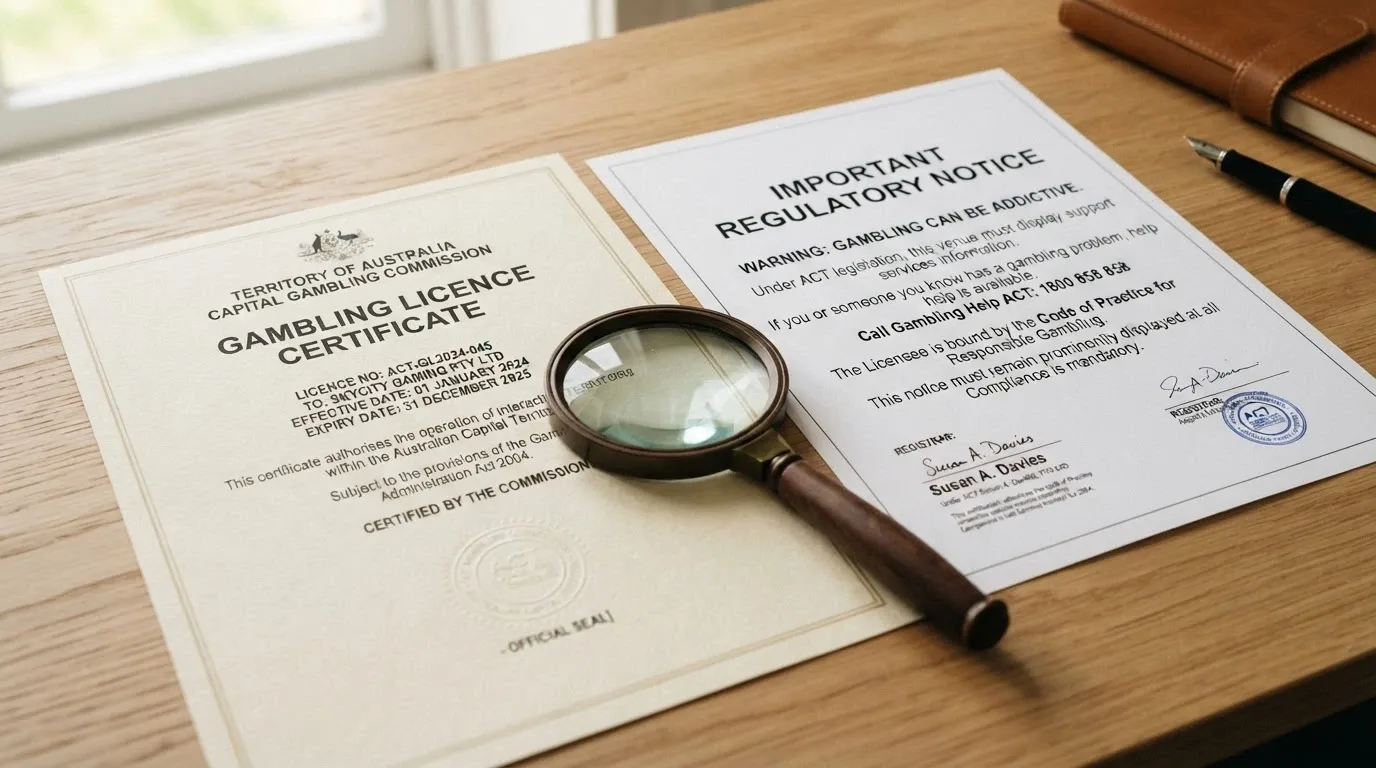
The 2017 amendments to the IGA closed loopholes used by offshore operators and gave the ACMA enforcement and blocking powers. Since November 2019, the ACMA has had 1,564 illegal gambling and affiliate websites blocked by Australian internet service providers, and more than 225 illegal services have withdrawn from the Australian market since enforcement strengthened. Civil penalties for providing prohibited interactive gambling services reach up to $2,475,000 per day for an individual and $12,375,000 per day for a corporation.
The 2026 reform — the Interactive Gambling Amendment (Gambling Reform) Bill 2026, passed 19 August 2026, commencing 1 January 2027 — adds new pressure. From that date, banks and payment providers gain express authority to block transactions to illegal gambling operators. Wagering advertising is restricted to no more than three ads per hour between 6:00am and 8:30pm, with a live-sport blackout from 15 minutes before an event until 5 minutes after. Direct marketing of inducements is prohibited for 14 days after a customer signs up, three months after a person deregisters from BetStop, and indefinitely for customers identified as at-risk.
The reform doesn’t change the underlying prohibition: online casino was illegal in 2026 and remains illegal in 2027. What it changes is the friction at the payment and the marketing layer. From January 2027, an Australian player depositing at an offshore casino via an Australian bank may find the transaction blocked.
The Interactive Gambling Act and the online casino prohibition: what the law actually says
The Interactive Gambling Act 2001 prohibits the provision of online casino games, online pokies, and in-play sports betting to persons in Australia. The 2017 amendments gave the ACMA the power to issue formal warnings, infringement notices, and civil penalties, and to seek injunctions that result in Australian ISPs blocking offshore gambling and affiliate websites. The minimum age for all commercial gambling in Australia is 18.
What is licensable under the IGA is wagering on races and sport placed before the event begins, lotteries, and keno. The licensed wagering market in Australia runs through state and territory regulators, with the Northern Territory Racing and Wagering Commission (administered through Licensing NT) operating as the de facto national licensor. Sportsbet, bet365, Ladbrokes, and around 150 other licensed wagering providers operate under this regime. None of them offers online casino games, because they can’t.
Offshore operators: what a Curaçao or other offshore licence actually means for an Australian player
All are offshore, licensed in jurisdictions like Curaçao, because Australia does not license online casino operators. A Curaçao licence is what most $2-deposit casinos hold, with Malta (MGA) the other major jurisdiction. Neither is an Australian licence. Neither provides Australian consumer protection, and neither is connected to any Australian regulatory framework.
The credit card and crypto ban that commenced on 11 June 2024 is a useful tell. The ban applies to licensed Australian wagering operators: they cannot accept credit cards, credit-related products, or cryptocurrency for online wagering. An operator that accepts any of these payment methods is, by definition, outside the Australian regulatory framework. A reader who sees a casino accepting crypto or credit card payments from an Australian IP address is seeing an unlicensed operator, and the payment-method menu is the most reliable indicator of licence status.
What you give up when you play outside the regulated market
The concrete losses for an Australian player at an offshore $2 casino are real and specific. There is no ACMA recourse if the operator refuses a withdrawal or voids a win — the ACMA enforces the prohibition against the operator, but it cannot recover money for individual players. There is no Australian consumer-law protection. The site can be blocked at any time with a balance on it, and the player loses access to the funds. BetStop does not reach offshore casinos: a self-excluded person who has registered with BetStop can still deposit and play at an offshore casino, because BetStop binds Australian-licensed wagering services only.
On the tax side, betting and gambling winnings are not assessable income under section 6-5 of the ITAA 1997, and losses are not deductible under section 8-1 — unless the person is carrying on a business of betting or gambling. No Australian case has held the winnings of an ordinary punter assessable. The tax treatment is favourable. The catch is that the tax treatment only matters if the player can actually withdraw the winnings, which is the point at which the offshore regulatory gap re-enters the picture.
Responsible Gambling at the $2 Level: The Protections That Exist — and the One That Doesn’t
The scale of gambling harm in Australia makes responsible gambling a concrete issue at every deposit level, including $2. Roy Morgan research published in March 2026 found that 13.0% of the Australian population — an estimated 2,857,000 people — were experiencing some form of gambling harm from their own gambling behaviours, with another 5.4% (1,177,000 people) affected by someone else’s gambling, for a total of 15.1% or 3,320,000 Australians. The Australian Institute of Health and Welfare estimates that around 2.1% of Australian adults — roughly 430,000 people — experience problem gambling specifically. An estimated 1,970,000 Australian adults are classified as at-risk or problem gambling. The annual health loss associated with gambling harm in Australian adults is estimated at over 400,000 Years Lived with Disability.

The harm prevalence figures are the reason this page has a responsible gambling block at all. A $2 deposit is a small amount in dollar terms, and the marketing of low-deposit casinos leans into that smallness as a safety feature. The Roy Morgan and AIHW figures are the counter: the harm is not concentrated in the high-deposit segment of the market, and a reader who treats $2 deposits as “safe” because they’re small is missing the mechanism of harm at the lowest-deposit end, which is frequency rather than stake.
The scale of gambling harm in Australia: what the numbers say
Roy Morgan’s 3.32 million figure represents 15.1% of the Australian population affected by gambling harm in some form — directly or through someone close to them. The AIHW’s 430,000 figure represents the narrower problem-gambling estimate, where harm is severe enough to meet clinical criteria. The 1.97 million at-risk-or-problem figure sits between the two. None of these figures distinguish between licensed and offshore gambling, and the offshore segment’s contribution to the harm total is unmeasured — a research gap, not an absence of harm.
Practical tools: BetStop, deposit limits and where to get help
The practical tools available to an Australian player are:
- BetStop — the National Self-Exclusion Register, live since 21 August 2023. One registration excludes a person from every Australian-licensed online and phone wagering service in a single step. To the end of Q3 FY 2025–2026, 59,830 people had registered; as of 31 March 2026, 37,247 had active exclusions. If you self-exclude, you will be excluded from all of the approximately 150 licensed wagering providers in Australia. BetStop binds Australian-licensed wagering services only — an offshore casino is not licensed here, is not connected to the register, and will keep taking a self-excluded person’s money.
- National Gambling Helpline — 1800 858 858 — free, confidential, staffed 24 hours a day, 7 days a week.
- Gambling Help Online (gamblinghelponline.org.au) — online chat and counselling.
- Operator-level deposit limits — a first-line defence at any operator that offers them.
The offshore gap is the one that matters most for this page. BetStop is the strongest single self-exclusion tool available to an Australian player, and it is exactly the tool that doesn’t reach the operators covered here.
How We Selected and Ranked These $2 Deposit Casinos
The ranking on this page is built from the operators skill market-share shortlist for Australia, filtered for casinos reported to accept $2 AUD deposits or very low minimums, and cross-checked against third-party cashier testing data from sources like Ssswheels.com.au, Auspokies.com, pokiesaustralia.com, and Dotesports.com. The ACMA register and enforcement records frame the legality column, and the AIHW and Roy Morgan figures frame the responsible-gambling block.
The criteria, in order: genuine $2 deposit acceptance verified by third-party cashier testing where possible; licence jurisdiction transparency; game-library depth; bonus-term clarity where available. Licensed wagering operators (Sportsbet, TAB, bet365, Ladbrokes, and the rest of the ~150 licensed wagering providers) are excluded — they offer sports betting, not online casino games, and the IGA does not licence online casino products anywhere in Australia.
An unlicensed operator offering a casino minimum deposit of $2 is a scam risk, not a bargain. When you’re evaluating any Australian online casino at this level, the licence is the first thing to confirm.
What a $2 Deposit Actually Buys You — and What It Doesn’t
A $2 deposit is a real entry point and a narrow one. The genuine routes to clear it are prepaid vouchers and cryptocurrency, with PayID confirmed at the $2 level only at The Pokies. The pokies session the deposit buys is measured in minutes at typical minimum bets, and at Starburst’s $0.01 floor it stretches to two hundred spins. The bonus value at $2 is negligible because most offers trigger at $10 or higher, and the bonus funds a $2 deposit earns become useless given the wagering requirements attached.
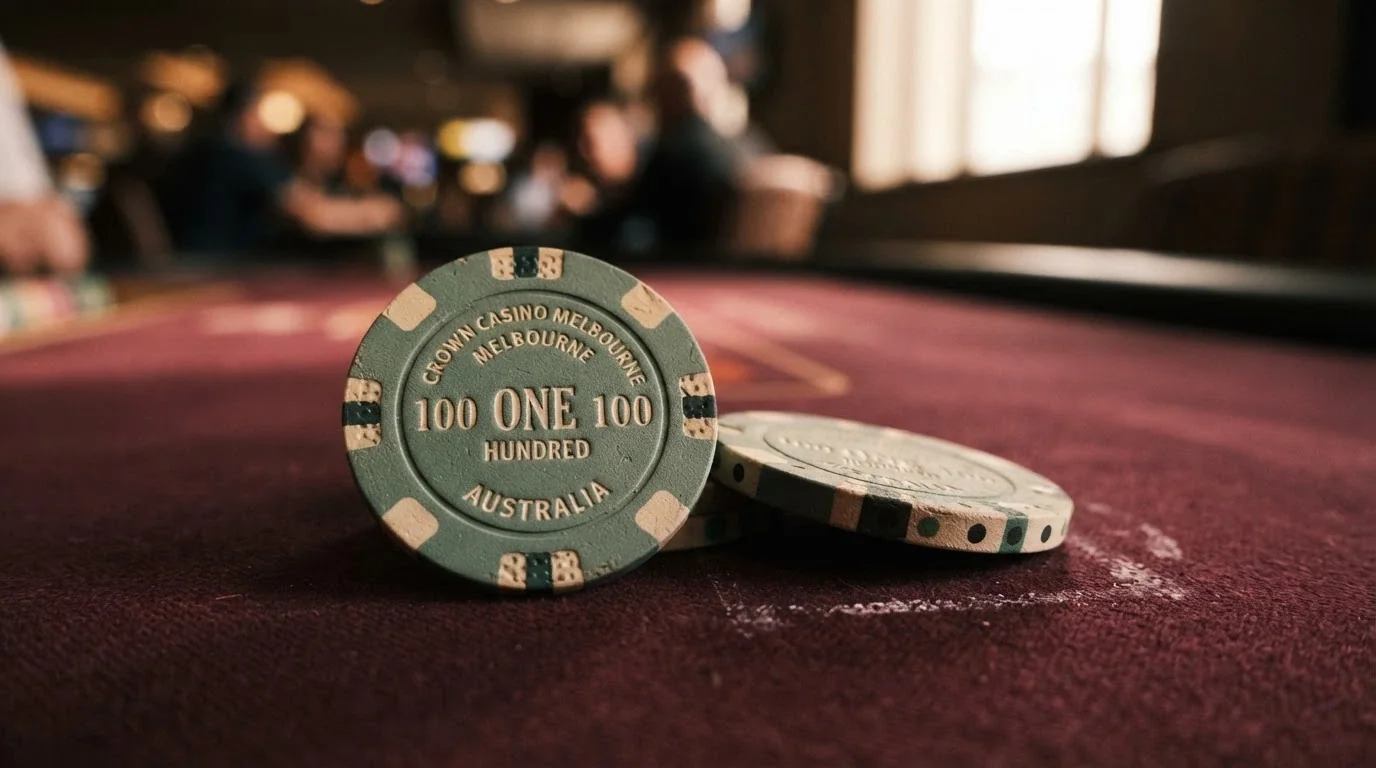
The withdrawal floor creates a real trap: depositing $2 and finding the cashier requires a $50 to $100 balance to cash out. The offshore reality means no Australian consumer protection, no BetStop coverage, and no ACMA recourse. From January 2027, Australian banks and payment providers gain express authority to block transactions to illegal gambling operators — meaning the friction at the $2 deposit is rising, not falling.
The honest verdict on a $2 deposit at an offshore casino in 2026: it is a low-risk way to test an operator’s platform and payment flow, not a route to building a bankroll. The pokies session is brief, the bonus is dormant, and the protections an Australian player is used to at a licensed wagering operator do not apply. Never deposit more than you can afford to lose at an unregulated operator, and treat the $2 deposit as the platform test it actually is — not the bargain the marketing presents.
Frequently Asked Questions
Can I actually deposit just $2 at an Australian online casino?
Yes, but only at a small number of offshore operators and only via specific payment methods. Prepaid vouchers (Neosurf, Paysafecard) and cryptocurrency wallets are the routes that clear at $2; PayID is confirmed at $2 only at The Pokies. Most other payment methods enforce $10+ minimums. Every operator that accepts a $2 deposit is offshore, because no Australian online casino licence exists.
What bonuses or free spins can I get with a $2 deposit?
Almost none. Most welcome bonuses trigger at $10 minimum, many at $20 or $25. A 100% deposit match on $2 yields $4 in bonus funds — useless given the wagering requirements attached. KatsuBet is the exception in the featured set, offering a bonus plus 50 free spins with 45x wagering at a sub-$2 entry point. For most operators, the welcome bonus sits above where a $2 deposit lands.
Is there a catch — what are the minimum withdrawal limits at $2 deposit casinos?
Yes. Most $2-deposit casinos enforce withdrawal minimums of $50 to $100 regardless of how little was deposited. A player who deposits $2, wins $20 on the pokies, and tries to cash out may find the cashier won’t release the funds until the balance hits the floor. The deposit minimum and the withdrawal minimum are set independently, and the gap between them is the trap.
What is the difference between a $2 deposit casino and a $5 or $10 deposit casino?
$5 is the market “sweet spot” — 18 of 32 sites tested offer $5 minimum deposits with full game access and bonus eligibility. $2 is rarer again and limited to a narrow set of payment routes. $10 is the standard welcome-bonus trigger. The payment-method menu widens as the deposit floor rises: $5 opens up most prepaid and crypto routes; $10 opens PayID and POLi at most operators; $20 opens cards and bank transfer.
How does BetStop protect me if I gamble at an offshore casino?
BetStop does not reach offshore casinos. The National Self-Exclusion Register binds Australian-licensed wagering services only — approximately 150 licensed providers. An offshore casino is not connected to the register and will keep taking a self-excluded person’s money. BetStop is the strongest self-exclusion tool available to an Australian player, and it is exactly the tool that does not apply to any operator on this page.