
A$5 Deposit Casinos in Australia: The Page Every Affiliate Won’t Write
Every “best $5 deposit casino Australia” listicle on the search results page treats offshore online casinos as a normal product category. They rank them, score them, hand them a star rating and send the reader off to deposit. None of them opens with the line this page opens with: online casino is prohibited in Australia under the Interactive Gambling Act 2001, and there is no Australian licence — federal, state or territory — for the product this page is about to compare.
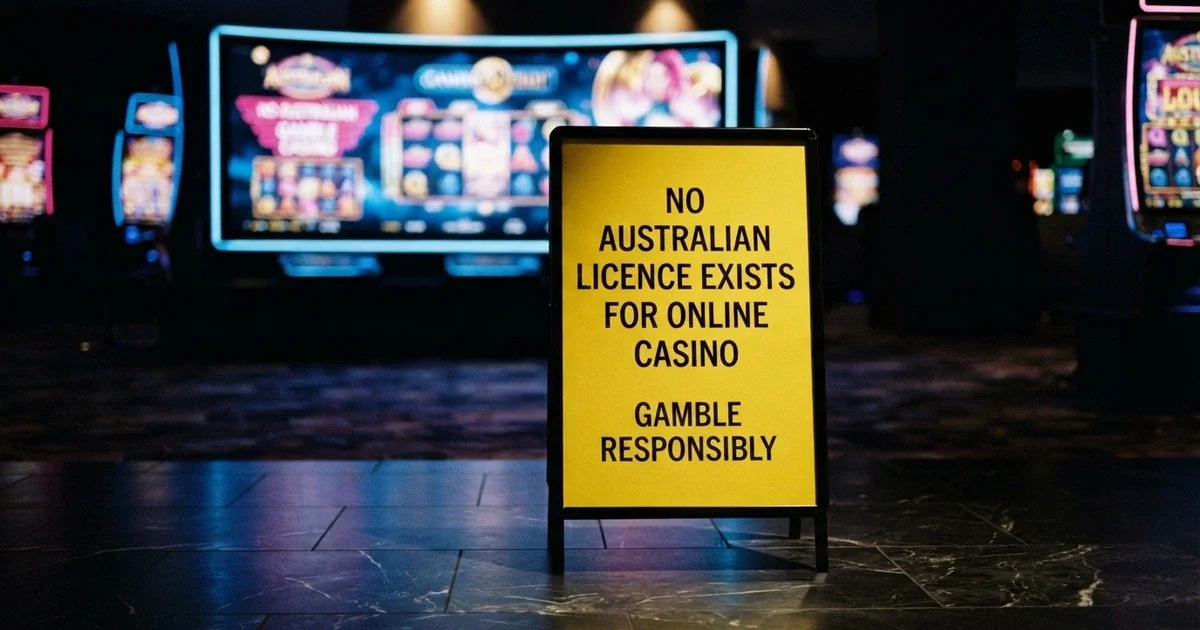
That is not a throat-clearing caveat. It is the central fact. The ACMA has directed Australian ISPs to block 1,564 illegal gambling and affiliate websites since 2019, and the operator count keeps climbing. The ten brands further down this page all carry Curaçao licences because Curaçao is the only licence any of them can carry. None of them holds an Australian licence because none exists to hold. A reader who skips the first third of this page will reach the operator table without the context they need to read it honestly.
Current as of 22 November 2026 · Operator licence claims checked against the ACMA prohibited-services register and the Curaçao Gaming Authority register where verifiable.
Table of Contents
- The Law Australia’s Online Casino Sites Won’t Mention
- What a ‘Low Deposit’ Casino Actually Costs to Join in 2026
- Low-Deposit Offshore Casinos Australians Actually Use in 2026
- Which Payment Method Lets You Deposit the Least
- Why Your 2026 Welcome Bonus Is Smaller Than the Number on the Banner
- Pokies You Can Actually Play on a $5–$10 Balance
- The Safety Net That Doesn’t Catch Offshore Players
- How We Assessed Every Casino on This List
- What Your $10 Actually Buys You at an Offshore Casino
- Frequently Asked Questions
The Law Australia’s Online Casino Sites Won’t Mention
The Interactive Gambling Act 2001 is the federal statute that shapes the entire Australian online gambling market. It does three things at once: it prohibits a defined set of products, it gives the regulator teeth to enforce that prohibition, and it leaves the individual player untouched. A reader of a $5-deposit listicle in Australia is browsing, depositing and playing within that legal frame whether they realise it or not, and most affiliate pages never say so.
What the Act prohibits is online casino games, online pokies and in-play sports betting. It is a product prohibition, not a player prohibition. There is no Australian licence for any of these products — not federal, not in any state or territory. What the Act does NOT prohibit is pre-event wagering on races and sporting events, lotteries and keno, all of which are licensed by a state or territory body, with the Northern Territory Racing and Wagering Commission acting as the de facto national licensor for online bookmakers. Land-based casinos (Crown Melbourne, The Star Sydney) are state-licensed. Online casino is not.
What this means for the rest of this page: every A$5 minimum, every welcome bonus, every free-spin package further down is being offered by an operator that the Australian regulator has, by definition, no authority over. That is the lens through which the rest of this article reads.
What the Interactive Gambling Act Actually Prohibits
The prohibition runs along three product lines and stops sharply there.
Online casino games — blackjack, roulette, baccarat, craps, live dealer tables, game shows — are prohibited as a category. Online pokies are prohibited as a category. In-play sports betting — a wager placed after a sporting event has started — is prohibited as a category. There is no carve-out for offshore-licensed brands, no carve-out for Curaçao-licensed brands, no carve-out for brands registered in the European Union. The test is whether the service is being provided to a person in Australia, and the prohibition attaches to that test.
What IS legal, and therefore licensed through the state and territory system, is wagering on horse races, harness races and greyhound races placed before the event begins; wagering on sporting events placed before the event begins; and lotteries and keno. The Northern Territory is the practical home of most online bookmaker licences — Sportsbet, bet365 Australia, Ladbrokes Australia are all NT-licensed — because the NT’s regulatory regime was the first to accommodate online wagering and remains the most flexible. State and territory regulators (Liquor & Gaming NSW, the Victorian Commission for Gambling and Casino Regulation, the Queensland Office of Liquor and Gaming Regulation) handle their own retail and licensed-product oversight.
This is the shape of the legal Australian market. The shape of the illegal one is everything else.
ACMA Enforcement — 1,564 Sites Blocked and Counting
The Australian Communications and Media Authority is the federal regulator that enforces the online prohibition. It investigates complaints, issues formal warnings, refers operators for civil penalty proceedings and — the power that has reshaped the market — directs Australian ISPs to block illegal services.
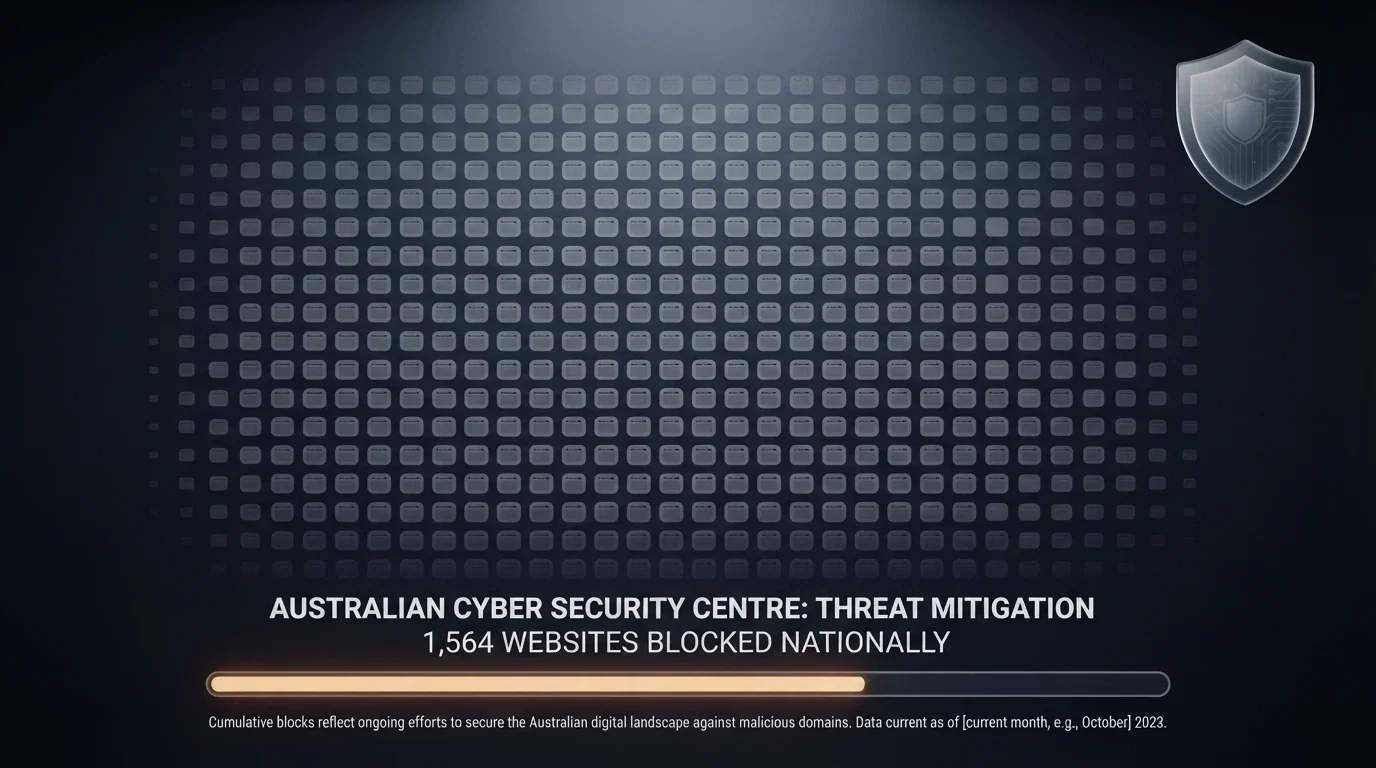
Since its first blocking request in November 2019, the ACMA has had 1,564 illegal gambling and affiliate websites blocked by Australian ISPs, as at March 2026. The blocking is technically a domain-name and IP-address action: the ACMA orders Telstra, Optus, Vodafone, TPG and the smaller ISPs to cut resolution so Australian households cannot reach the prohibited site. It is not a perfect block. A reader who knows where to look can still reach many of these sites via mirror domains, virtual private networks or offshore routing. The point of the block is friction, not absolute prevention — and the ACMA has kept the list moving.
More than 225 illegal services have withdrawn from the Australian market entirely since the 2017 amendment closed the loopholes and gave ACMA its enforcement powers. A withdrawal is not the same as a prosecution. It is the operator deciding that an Australian market it cannot advertise into, cannot collect payments into without scrutiny, and cannot guarantee Australian access to, is not worth serving. The number is a quiet measure of how the regulatory pressure has reshaped what Australians see in search results.
The 2017 amendment was the inflection point. Before it, offshore operators argued that they provided a service from outside Australia and were governed by the laws of their home jurisdiction. The amendment closed that loophole by attaching liability to providing a prohibited service to a person in Australia, regardless of where the operator is incorporated. The 2026 reform package builds on that base.
The Interactive Gambling Amendment (Gambling Reform) Bill 2026 passed Parliament on 19 August 2026 and its measures commence on 1 January 2027. The headline change for anyone reading this page is express authority for banks and payment providers to block transactions to illegal gambling operators — a payment-layer block to complement the existing domain-layer block. From 1 January 2027, the path that an AU$10 deposit takes from a player’s bank account to an offshore casino can be interrupted at the bank. A player who has been depositing through PayID to a Curaçao-licensed site may find that the PayID no longer settles.
You’re Not the One Being Prosecuted — But You’re Not Protected Either
A reader who deposits at an offshore casino is not at risk of prosecution under the Interactive Gambling Act. The Act targets the provider of the prohibited service. That is the legal position, and it has been confirmed in the ACMA’s own published guidance: enforcement runs against operators, not against individuals.
What that legal position is NOT is “safe for the player”. The IGA’s structure means that a player is simultaneously outside the regulator’s reach and outside the regulator’s protection. There is no Australian consumer-law standing for an offshore casino transaction, no ACMA complaints process for a player who cannot withdraw, no BetStop coverage for a person who has self-excluded from Australian wagering and then opened an offshore casino account, and no guarantee that the site they deposited with will still be reachable next week.
That last point is not theoretical. The ACMA blocks illegal sites on a rolling basis. A player who has deposited, played, won and is waiting for a withdrawal may find the domain blocked while the balance is still on the operator’s books. The operator is offshore. The funds are offshore. The Australian regulator has no authority to compel payment. The Australian consumer-law framework does not reach the relationship. The player is, in plain English, on their own.
Five Protections You Forfeit the Moment You Play Offshore
The list below is what an Australian player gives up when they move from a licensed wagering operator or a licensed land-based casino to an offshore online casino. Each item maps to a protection an Australian reader might assume they still have.
- No ACMA complaints recourse. The regulator that handles complaints about Australian-licensed wagering has no authority over an offshore casino. A dispute about a refused withdrawal, a voided bonus or a closed account is a private dispute with an offshore entity.
- No BetStop self-exclusion coverage. The National Self-Exclusion Register, which excludes a person from every Australian-licensed online and phone wagering service in a single registration, does not connect to any Curaçao-licensed site. A person who has registered with BetStop can still deposit and play at the offshore operators reviewed further down this page.
- No guarantee of payout. An offshore casino has no Australian obligation to pay a winning player. The terms and conditions it writes for itself are the only terms that apply, and the enforcement mechanism is whatever the operator’s own complaints process provides.
- No Australian consumer-law standing. The Australian Consumer Law (Competition and Consumer Act 2010, Schedule 2) does not reach a gambling service provided from outside Australia to an Australian consumer. There is no ACL guarantee, no ACCC complaint path, no state-based fair-trading remedy.
- Potential mid-play site blocking. The ACMA can direct ISPs to block the site the player is using. The block takes effect without notice to the player. Funds on the operator’s books are not refunded by the block, recovered by ACMA or guaranteed by anyone.
That is the protective gap. None of these five points is invented; each maps to a documented limit on the Australian regulatory framework.
What a ‘Low Deposit’ Casino Actually Costs to Join in 2026
A “low deposit casino” in the Australian search results page is, on the face of it, a casino that lets a player open an account with a small first deposit. The search-result pages advertise $1, $5 and $10 floors as though these are tiered entry points with meaningful differences between them. The reality, in 2026, is that the advertised floors and the floors an Australian player actually meets are two different sets of numbers, and the gap between them is where the niche lives.
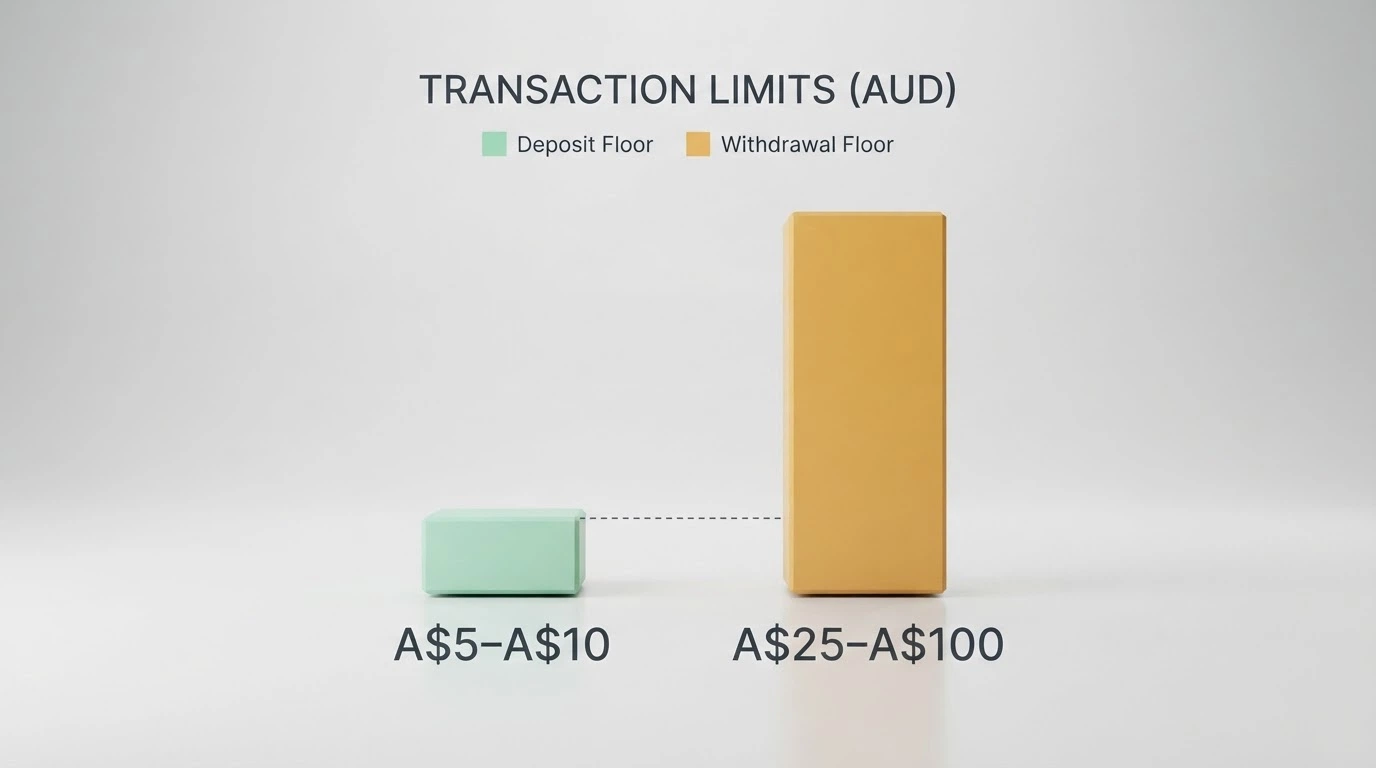
What “low deposit” means in practice: a deposit floor low enough that a player can test the casino with a stake they would happily write off as entertainment spend, not a deposit floor low enough that they can profitably run a session. The distinction matters because every AU-facing offshore casino reviewed on this page carries a minimum withdrawal floor that is several times higher than its minimum deposit — a gap that converts “low entry” into “trapped balance” once a player tries to cash out. The numbers below are the actual floors an Australian player meets in 2026, not the floors the affiliate banners advertise.
The Deposit Tiers — and Why AU$1 and AU$5 Are Mostly Fiction
The Australian search results page splits low-deposit casinos into three tiers: $1 deposits, $5 deposits and $10–$20 deposits. In 2026, only the third tier is honestly available across payment methods, and the first two are partly fictional.
The AU$1 deposit does not exist for Australian players using fiat currency. No offshore casino serving Australian players accepts a one-dollar deposit by PayID, by card or by Neosurf voucher. The figure lives in affiliate banners because it converts well, not because the operator supports it. A reader who clicks through a $1 banner will find either a payment-method minimum that disqualifies them or a bonus-eligibility minimum that disqualifies them, often both.
The AU$5 deposit is real for one method only — PayID at one operator (VegasNow), where A$5 genuinely activates the full welcome bonus — and is otherwise fiction for fiat. The AU$5 Neosurf voucher is an EU-only denomination; in Australia, Neosurf vouchers start at AU$10, and the AU$5 figure on an Australian-facing banner is either an EU promo misapplied or a payment-method minimum that has been quietly raised. Card processors impose a AU$10–AU$20 floor. PayID casinos enforce a AU$20 minimum at most operators. Where a banner says “from AU$5”, what it usually means is “AU$5 is the minimum we’d need to keep the casino competitive in the search results” — and the casino itself sets the real minimum at AU$10, AU$15 or AU$20.
The AU$10–AU$15 tier is the honest fiat floor for Australian players in 2026. Operators with AU$10 minimums via Neosurf or card include Asino (A$10 across methods) and Spin Samurai (first deposit Neosurf at the A$10–A$15 range). Casino Rocket’s PayID minimum is AU$15. These are the numbers a reader will actually meet at the cashier, and these are the operators a $10-banner can honestly be pointing at.
The Bonus Trap — When Your $10 Doesn’t Qualify for the Offer
The single largest gotcha in the low-deposit niche is the gap between a casino’s play minimum and its bonus-eligibility minimum. Eight of fifteen AU-facing brands quietly enforce a higher minimum for welcome-bonus eligibility than for general play. The player deposits AU$10, opens a pokie, plays a few spins, then notices the bonus never activated — or, worse, activates only at a fraction of the headline match.
The mechanism is straightforward and not illegal. The terms and conditions specify a minimum deposit for the welcome offer. The general cashier accepts deposits from a lower floor. The two figures are different numbers on the same site. A player who has not read the bonus terms will deposit the cashier minimum, not the bonus minimum, and the bonus either does not trigger or triggers at a rate below the headline.
VegasNow is the counterexample that proves the rule. Its AU$5 PayID minimum genuinely activates the full welcome bonus — 100% up to A$3,000 across the first three deposits, plus 200 free spins on Big Bass Splash, at 35x bonus-only wagering. The AU$5 player gets the same bonus structure as the AU$3,000 player. That is the rare case. At most of the other operators reviewed below, the bonus-eligibility minimum is set high enough that a low deposit misses it.
The check before depositing is simple: read the welcome-offer terms. The cashier minimum and the bonus minimum are two different numbers, and only the bonus minimum is what determines whether the banner figure matters.
Deposited $5? You Probably Can’t Withdraw It
The withdrawal floor at low-deposit casinos is usually A$25–A$50, and at some operators it sits at A$50–A$100. Against a minimum deposit of A$5–A$10, that is a five-to-ten-times gap. A player who deposits A$5 and runs a session needs to either win enough to push their balance past A$25 before withdrawing, or deposit again to bring the cumulative balance above the withdrawal floor, or leave the balance on the operator’s books.
VegasNow’s withdrawal minimum is A$30, against a deposit minimum of A$5 — a 6× gap that is narrower than most but still real. BetCove is the operator where the deposit minimum, the bonus minimum and the withdrawal minimum are all the same number — A$10 — and that is the narrowest gap found in the reviewed set. At most other operators, the gap is wider.
The practical consequence for a player depositing A$5 or A$10: the deposit is easy, but the withdrawal is a separate problem. The player who treats the deposit as entertainment spend and never plans to withdraw is fine. The player who plans to withdraw their balance is now navigating a threshold they did not know about when they deposited. A reader who wants the deposit floor and the withdrawal floor to be the same number should look for operators that publish identical figures in both places — a small set.
Crypto Casinos — the Only Genuine Sub-$10 Route for Australians
Cryptocurrency bypasses the AU$10–AU$20 fiat floor entirely. The deposit floors across the major crypto casinos serving Australian players in 2026 are the lowest in the market: Stake accepts deposits down to roughly AU$0.10 BTC-equivalent, BC.Game starts at about AU$1 USDT and Bitcasino is near-zero on most networks. The practical floor for an Australian player buying crypto and depositing it to an offshore casino is around AU$5 — what an Australian can reasonably purchase on an exchange and transfer in a single transaction.
The trade-off is volatility. A player who buys AU$10 of BTC, deposits it, plays, and then withdraws in BTC has carried price risk on the BTC through the session. A 5% BTC move against them during a one-hour pokie session is not unusual. The fiat equivalent of the balance at withdrawal may be lower than the fiat equivalent at deposit, regardless of how the session ran. The crypto route also offers a withdrawal speed advantage: LuckyDreams’ USDT TRC-20 withdrawals process in under 15 minutes 90% of the time, a speed that fiat methods cannot match.
The Australian credit-card and crypto wagering ban does not reach offshore casinos. The Interactive Gambling Amendment (Credit and Other Measures) Act 2023, which commenced 11 June 2024, banned credit cards and cryptocurrency as payment for online wagering — but the ban applies to Australian-licensed operators. An offshore Curaçao-licensed casino is not an Australian-licensed operator and is not bound by the ban. This is why crypto deposits remain the genuine sub-AU$10 route for Australian players in 2026: the ban that prohibits the same payment at an Australian-licensed bookmaker does not touch the offshore product. From 1 January 2027, the bank-blocking authority in the 2026 reform package will give Australian banks a new tool, but the bank-blocking authority is also a layer on licensed and unlicensed alike — the offshore casino will be reached through the bank’s refusal to settle, not through the casino’s own compliance.
Low-Deposit Offshore Casinos Australians Actually Use in 2026
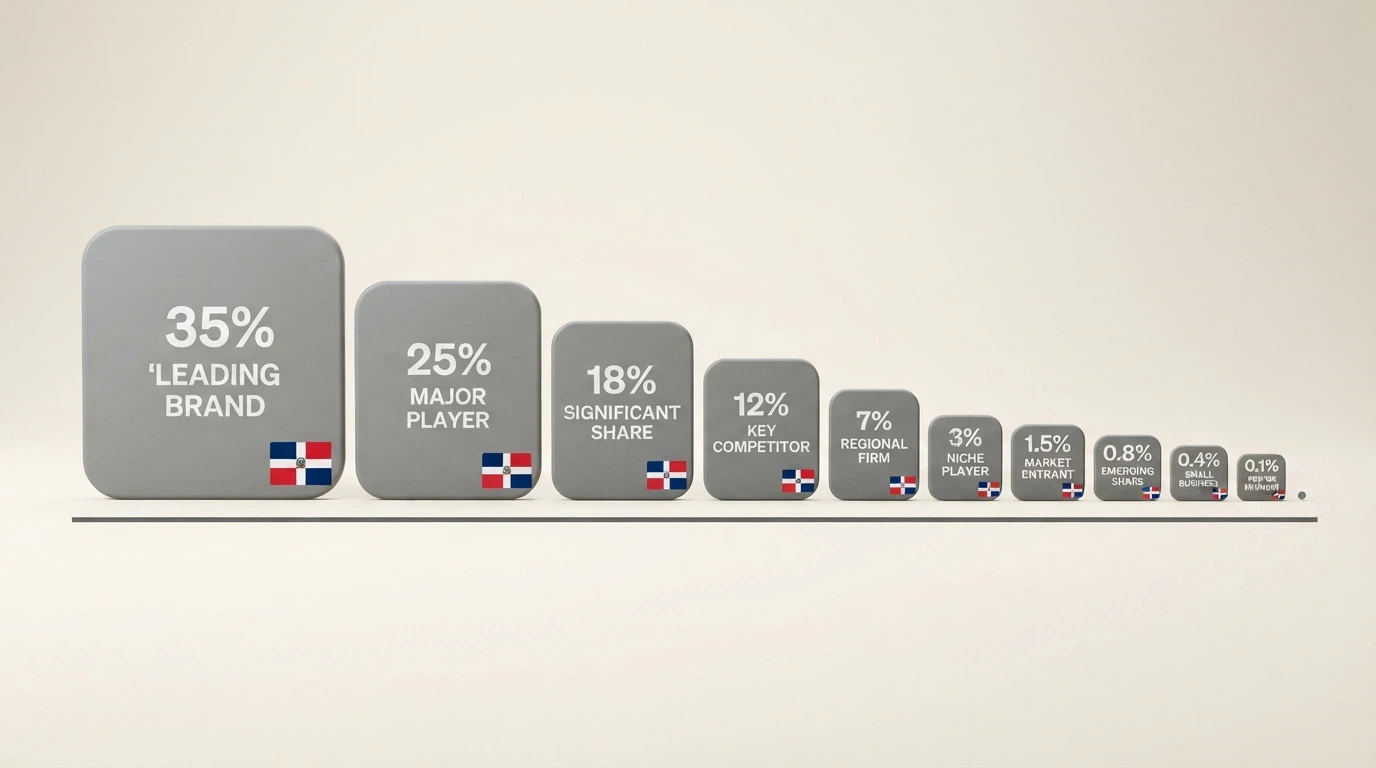
The operators below are ranked by their AU-facing market share as measured by the operators skill data for 2026. None of them holds an Australian licence, because no Australian licence exists for online casino. The table is a ranking of where Australian players already go, not a ranking of licensed casinos. A reader comparing these operators is comparing unlicensed brands serving an Australian market that the ACMA actively blocks and that no Australian regulator oversees.
| Casino | Licence | AU Legal Status | Market Share (AU) |
|---|---|---|---|
| Rocket Play | Curaçao (not confirmed at regulator level) | Offshore — no AU licence | 9.4% |
| Skycrown | Curaçao (not confirmed) | Offshore — no AU licence | 8.55% |
| Royal Reels | Curaçao (not confirmed) | Offshore — no AU licence | 2.51% |
| WinSpirit | Curaçao (not confirmed) | Offshore — no AU licence | 1.55% |
| Stake | Curaçao (not confirmed) | Offshore — no AU licence | 1.28% |
| Rainbet | Curaçao (not confirmed) | Offshore — no AU licence | 1.28% |
| Scream Casino | Curaçao (not confirmed) | Offshore — no AU licence | 0.99% |
| FairGO | Curaçao (not confirmed) | Offshore — no AU licence | 0.8% |
| Bizzo Casino | Curaçao (not confirmed) | Offshore — no AU licence | 0.57% |
| VegasNow | Curaçao (confirmed by independent testing) | Offshore — no AU licence | not in top-20 |
The licences above carry the qualifier they carry for a reason. A Curaçao licence is not equivalent to an Australian licence because no Australian licence exists for online casino. It is also not equivalent to a UK Gambling Commission or Malta Gaming Authority licence because the regulatory standards, dispute-resolution mechanisms and player-funds protection differ across all three. The Curaçao licence is what most offshore operators carry because it is the lowest-friction licence to obtain; it is also the licence the ACMA’s blocking list most often targets.
VegasNow — A$5 PayID Deposit That Genuinely Works
VegasNow is the only operator in the reviewed set with independently verified low-deposit terms. The verification comes from testing published between March and April 2026, not from the operator’s own marketing.
The minimum deposit is A$5 via PayID, and that A$5 genuinely activates the full welcome bonus — 100% match up to A$3,000 spread across the first three deposits, plus 200 free spins on Big Bass Splash (Pragmatic Play, 96.71% RTP). The wagering requirement is 35x bonus-only, which means only the bonus amount carries the playthrough, not the deposit. PayID withdrawals in testing averaged 12 minutes. The pokies library is 6,400+ titles from 70+ providers. The minimum withdrawal is A$30. The licence is Curaçao and was confirmed against the operator’s own published details during testing. The weekly withdrawal cap is A$5,000 unless the player is on the VIP tier.
What VegasNow is worth to which reader: an Australian player who wants to test an offshore casino with the smallest possible fiat stake, who is comfortable with PayID as a deposit method and who reads the bonus terms before depositing. The AU$5 floor is not a marketing number; it is what the cashier accepts and what the bonus activates against. The A$30 withdrawal floor is the trade-off — a player who runs their A$5 to a small win below A$30 cannot withdraw. For a player planning to deposit A$20 or A$30 anyway, VegasNow’s structure is the cleanest low-deposit offering reviewed on this page.
Stake — Crypto Deposits From Ten Cents
Stake is the operator where the deposit floor essentially vanishes. Crypto deposits are accepted down to roughly AU$0.10 BTC-equivalent, which is effectively a sub-dollar entry point. For an Australian player willing to fund a crypto wallet, transfer in BTC, USDT or another coin and play, the deposit floor is whatever the network fee plus the exchange minimum allows.
Stake is known for a crypto-native product model rather than a conventional welcome-bonus structure. The operator runs ongoing promotions, race-style competitions and rakeback rather than the A$3,000 + 200 free spins match-bonus pattern that dominates the rest of the reviewed set. Specific welcome-bonus terms for Australian players were not independently confirmed this review; the operator’s own site carries the current offer structure.
What Stake is worth to which reader: an Australian player who already holds crypto, who is comfortable with on-chain deposits and withdrawals, and who values the speed and anonymity of a crypto-native product over the match-bonus structure of a fiat casino. For a player whose only deposit method is PayID or card and who is unwilling to set up a crypto wallet, Stake is not the right fit. For a player who already lives in crypto, the deposit floor is the lowest in the reviewed set by an order of magnitude.
Rocket Play — 9.4% AU Market Share, Terms Unconfirmed
Rocket Play is the highest-AU-market-share offshore casino in the reviewed set. The market-share figure means a measurable share of Australian online casino traffic reaches Rocket Play; it does not mean the operator holds an Australian licence (none does) and it does not mean the operator’s terms are competitive in any particular way.
Specific low-deposit terms, welcome-bonus structure and wagering requirements for Rocket Play were not independently verified this review. The operator’s own site carries the current figures; a reader considering a deposit should check those figures at the time of deposit, not rely on figures from affiliate listicles or older reviews.
What Rocket Play is worth to which reader: an Australian player who is already comfortable at the operator and is comparing on the basis of market position rather than verified terms. A player who wants independently verified deposit and bonus terms should weight VegasNow more heavily in their comparison.
Skycrown — 8.55% AU Share, Unverified Deposit Terms
Skycrown carries the second-highest AU-facing market share among the offshore operators reviewed on this page. As with Rocket Play, the market-share figure is a measure of where Australian players go, not a measure of regulatory standing or competitive terms.
Specific deposit floors, welcome-bonus structure and wagering requirements for Skycrown were not independently verified this review. The licence claim is Curaçao and was not confirmed at the regulator level. A reader should check the operator’s current terms at deposit time.
What Skycrown is worth to which reader: a player making a market-position comparison among offshore operators. For independently verified terms, the comparison should weight VegasNow. For market presence, Skycrown sits behind Rocket Play and ahead of the rest of the set.
Royal Reels — 2.51% AU Market Share
Royal Reels is a mid-tier offshore operator in the AU-facing set, with a market share that places it behind the two market leaders and ahead of the long tail. The market-share figure is structural rather than evaluative — it indicates where Australian players already go, not what they get for going there.
Specific terms for Royal Reels were not independently verified. The Curaçao licence claim also remains unconfirmed.
What Royal Reels is worth to which reader: a player who already plays at the operator. A reader comparing low-deposit options on independently verified terms will find more substance at VegasNow.
WinSpirit — 1.55% AU Market Share
WinSpirit sits in the lower half of the AU-facing market share among the reviewed set. The market position is real but small.
Specific terms for WinSpirit were not independently verified. The Curaçao licence claim remains unconfirmed.
What WinSpirit is worth to which reader: a player for whom the operator is already a known quantity. A new player making a low-deposit comparison will find clearer verified terms elsewhere.
Rainbet — 1.28% AU Market Share
Rainbet is tied with Stake on AU-facing market share. The market position is real and the operator carries the standard Curaçao licence claim, not confirmed at the regulator level this review.
Specific deposit and bonus terms for Rainbet were not independently verified.
What Rainbet is worth to which reader: a player for whom the operator is already part of their rotation. The market-share figure is the only verified signal; everything else is the operator’s own self-report.
Scream Casino — 0.99% AU Market Share
Scream Casino sits at the smaller end of the AU-facing offshore market among the reviewed set. The market-share figure is below 1%.
Specific terms for Scream Casino were not independently verified. The Curaçao licence claim remains unconfirmed.
What Scream Casino is worth to which reader: a player who has already chosen the operator and is comparing for completeness. A reader building a comparison from scratch will find the more substantial verified data at VegasNow.
FairGO — 0.8% Share, .com.au Domain, Offshore Reality
FairGO is the only featured operator using a .com.au domain despite being an offshore Curaçao-licensed casino with no Australian licence. The .com.au domain is a registration choice, not evidence of Australian licensing. Australian domain registration is open to any business, including an offshore casino, and the domain suffix carries no regulatory weight.
A reader who sees a .com.au domain and assumes the operator is Australian-licensed is making an assumption the operator’s own terms do not support. FairGO’s licence is Curaçao (not confirmed at regulator level). The .com.au domain is a marketing signal, not a regulatory one.
What FairGO is worth to which reader: a player who is attracted by the local-domain branding and accepts that the operator is still offshore, still Curaçao-licensed, and still outside the Australian regulatory framework. The domain is an asset for trust signalling; it is not a substitute for an Australian licence.
Bizzo Casino — 0.57% AU Market Share
Bizzo is the smallest-market-share operator in the featured set. The market-share figure is below 0.6%.
Specific terms for Bizzo Casino were not independently verified. The Curaçao licence claim remains unconfirmed.
What Bizzo is worth to which reader: a player who is already familiar with the operator. A reader making a fresh comparison on verified terms will find more substance at the higher-verification end of the reviewed set.
Which Payment Method Lets You Deposit the Least
The deposit method dictates the deposit floor more than the operator does. An AU$20 PayID minimum at one operator is not negotiable; a different deposit method at the same operator can move the floor to AU$5, AU$10 or near-zero. The table below is a comparison of the deposit methods Australian players actually use in 2026, ranked by the minimum they enforce.
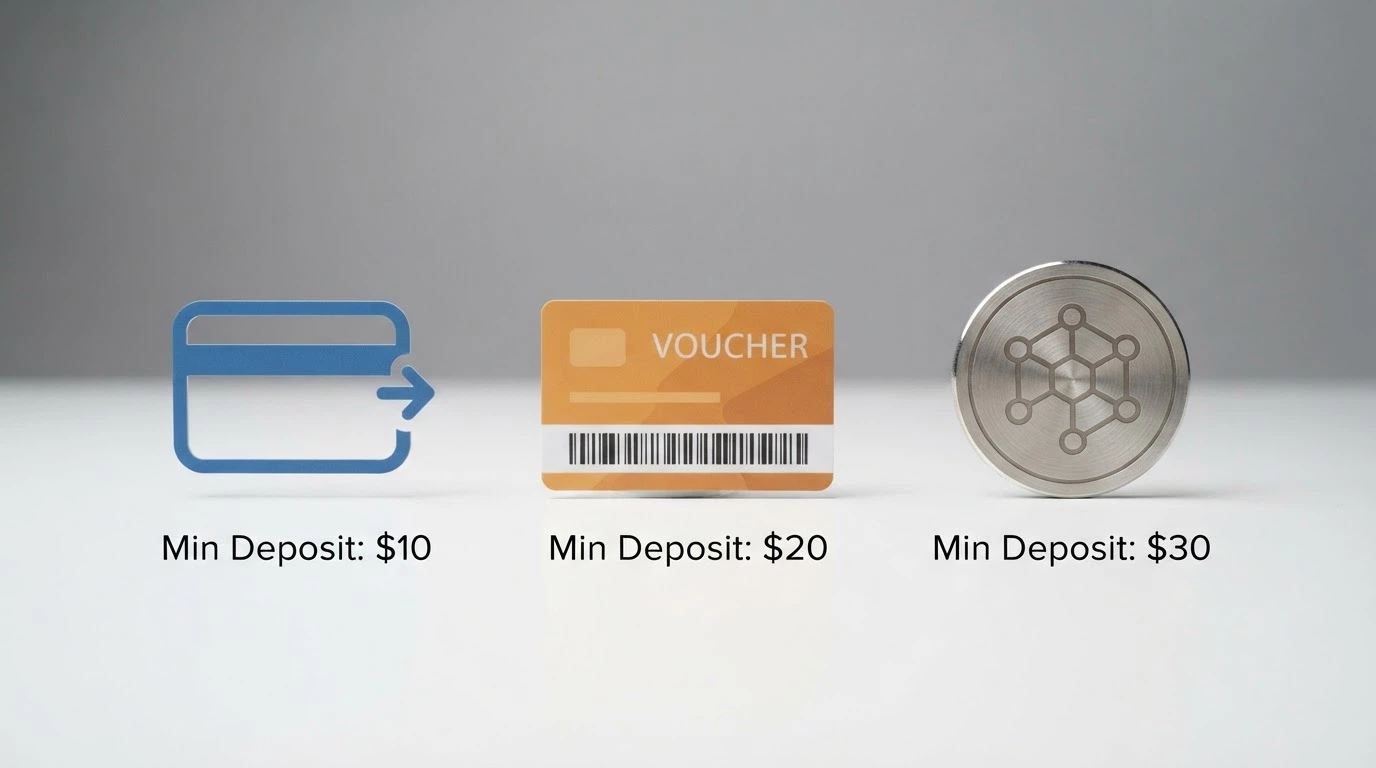
| Payment Method | Typical Minimum Deposit (A$) | Fee | Settlement Speed | Accepted at Featured Casinos |
|---|---|---|---|---|
| Cryptocurrency (BTC, USDT, ETH) | ~0.10–5 | Network fee only | Minutes | Stake, BC.Game, Bitcasino, LuckyDreams |
| Neosurf (AU voucher) | 10 | 4.5% deposit fee + ~A$2 inactivity | Instant | Spin Samurai, VegasNow, others |
| Debit card (Visa/Mastercard) | 10–20 | None typically | Instant | Most operators |
| PayID / Osko | 5–20 (mostly 20) | None | Minutes | VegasNow (A$5), Casino Rocket (A$15), most others (A$20) |
| Bank transfer | 20+ | None typically | Hours to days | Most operators |
The table reads honestly only if a reader treats “Typical Minimum Deposit” as a starting figure and not a promise. The actual minimum at any given operator is set by the operator’s own cashier configuration, which can move without notice. A reader depositing the table minimum at one operator may find the next operator has set the same method’s minimum higher or lower.
PayID and Osko — Fast, Australian, but Not as Low as Advertised
PayID is the most Australian-native deposit method in the offshore casino cashier. It uses the New Payments Platform, settles through Osko, and reaches the player’s bank account in real time. For an Australian player, it is the deposit method that feels the least foreign.
The PayID minimum at most offshore casinos is A$20, not A$5. The A$20 floor is what PayID casinos enforce generally — the operator sets the figure, and most have settled on A$20 as a balance between “low enough to look competitive” and “high enough to be commercially viable on the transaction cost”. Casino Rocket’s PayID minimum is A$15, the lowest in the conventional PayID set.
VegasNow is the exception that proves the rule. Its PayID minimum is A$5, and that A$5 genuinely activates the welcome bonus. The operator has chosen to compete on the absolute lowest fiat deposit in the market, and the cashier and the bonus-eligibility minimum are aligned at A$5. PayID withdrawals at VegasNow averaged 12 minutes in independent testing. That is the PayID product working as an Australian player would expect it to work.
For a reader comparing PayID operators, the floor to look for is below A$20. Above A$20, PayID is simply another deposit method, not the lowest one.
Neosurf — the $10 Voucher With a Hidden Fee
Neosurf is the prepaid voucher method most heavily advertised to Australian players in the low-deposit niche. The marketing positions it as the “anonymous” deposit — no bank account, no card, just a voucher code bought at a retail outlet and redeemed at the cashier.
The honest version in 2026: Neosurf vouchers sold in Australia start at AU$10. The AU$5 voucher is an EU-only denomination; it does not exist on Australian retail shelves. A reader who clicks an “AU$5 Neosurf” banner and finds the cashier minimum at AU$10 is not being cheated — the banner was wrong, and the cashier is right.
The fee is the second issue. Neosurf charges a 4.5% deposit fee on every deposit, plus a ~A$2 inactivity fee every six months on unused prepaid cards. A player depositing AU$10 through Neosurf is paying AU$0.45 in fees to move AU$10 to the casino. A player depositing AU$100 is paying AU$4.50. The fee is not the dominant cost of a low deposit, but it is real and it is not advertised in the banner. Spin Samurai’s first deposit Neosurf minimum sits in the A$10–A$15 range.
For an Australian reader who wants the anonymity of a voucher and the lowest possible entry stake, Neosurf is the right product. The fees are the trade-off, and the AU$10 floor is the honest minimum.
Cryptocurrency — the Cheapest Deposit That Comes With Its Own Risk
Cryptocurrency is the only deposit method that drops the floor below AU$10. The floors across the major crypto casinos in 2026: Stake accepts deposits down to roughly AU$0.10 BTC-equivalent, BC.Game starts at about AU$1 USDT, Bitcasino is near-zero on most networks, LuckyDreams’ USDT TRC-20 deposits floor at the equivalent of A$5. The practical crypto floor for an Australian player in 2026 is around AU$5 — the amount a player can reasonably purchase on an exchange, transfer through a wallet, and deposit in a single transaction without the network fee eating the deposit.
The withdrawal speed advantage is significant. LuckyDreams’ USDT TRC-20 withdrawals process in under 15 minutes 90% of the time. A player depositing in crypto and withdrawing in crypto is operating on a different time scale from a player depositing by PayID and waiting for an A$30 minimum to clear.
The volatility risk is real. A player who buys AU$10 of BTC, deposits it, plays for an hour and withdraws in BTC has carried BTC price risk through the session. A 5% BTC move against the player during a one-hour pokie session is not unusual. The fiat-equivalent of the balance at withdrawal may be lower than the fiat-equivalent at deposit, regardless of how the session ran. The volatility is not a casino charge; it is the medium.
The Australian credit-card and crypto wagering ban does not reach the offshore casino. The ban, which commenced on 11 June 2024, prohibits credit cards and cryptocurrency as payment for online wagering — but the prohibition applies to Australian-licensed operators. An offshore Curaçao-licensed casino is not an Australian-licensed operator. The same crypto deposit that is illegal at Sportsbet is permitted at Stake, not because crypto is legal in Australia for this purpose but because the offshore operator is not bound by the Australian regulatory framework. From 1 January 2027, the bank-blocking authority in the 2026 reform package will give Australian banks the express ability to refuse settlement to illegal operators — a path that runs through the player’s bank, not through the casino’s compliance.
Why Your 2026 Welcome Bonus Is Smaller Than the Number on the Banner
The headline bonus figure on an AU-facing offshore casino banner — A$3,000, A$5,000, “200 free spins” — is sized for a maximum deposit. The same banner read by a player depositing AU$10 triggers a fraction of the headline match, and that fraction is then multiplied by wagering requirements that make withdrawing it a long statistical shot.
The mechanism is not hidden. It is in the bonus terms. A 100% match up to A$3,000 means a deposit of A$3,000 unlocks A$3,000 of bonus money. A deposit of A$10 unlocks A$10 of bonus money. A deposit of A$5 unlocks A$5 of bonus money. The banner figure is the maximum, not the minimum. A player who has read only the banner has not read the bonus.
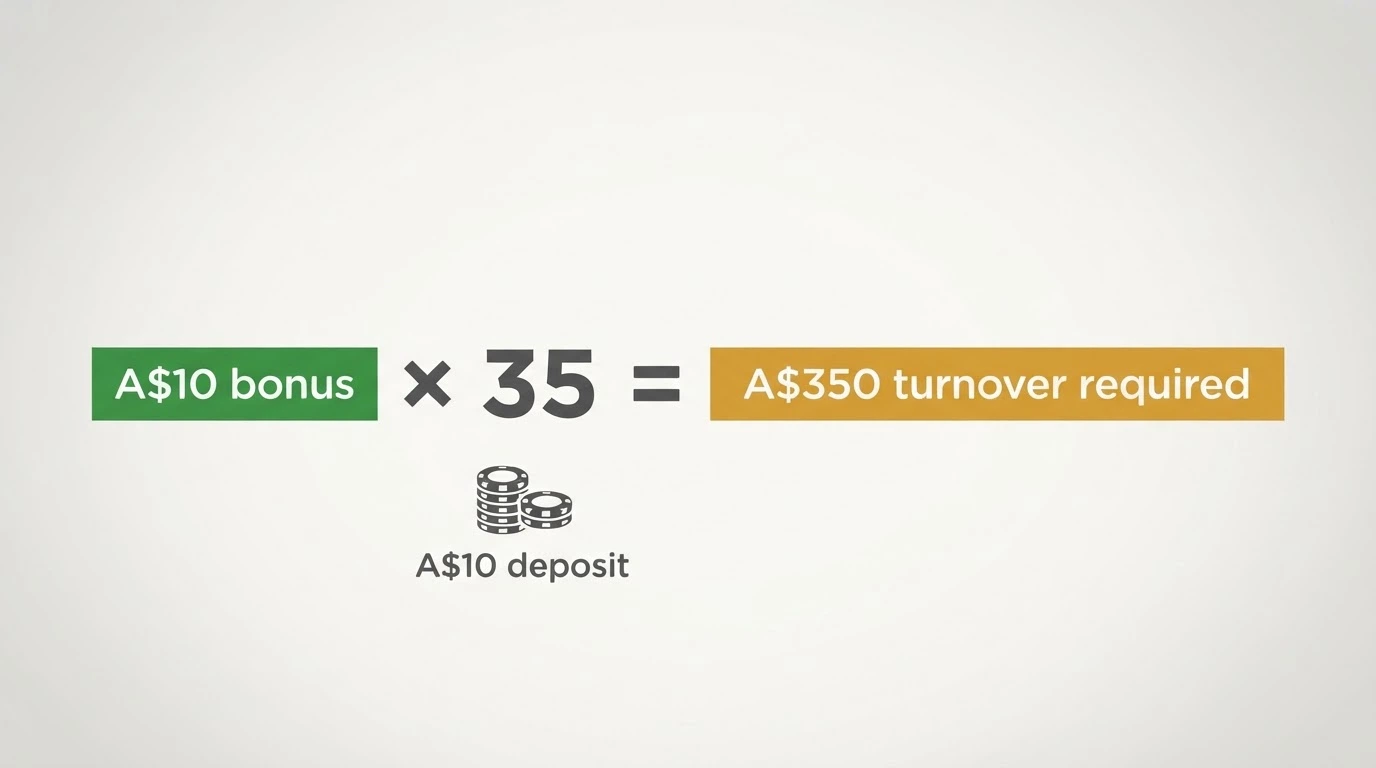
The wagering multiplier is where the banner figure stops being relevant at all. A 35x bonus-only wagering requirement on an A$10 bonus means A$350 in turnover before a single dollar of the bonus is withdrawable. The deposit is untouched by wagering in a bonus-only structure; only the bonus carries the playthrough. But the turnover still has to happen, and at a pokie RTP of around 96–97%, every A$350 in turnover carries an expected house edge of roughly A$10–A$14. The bonus is paid for in expected loss before it converts.
The Wagering Maths on a $10 Deposit — What 35x Actually Means
Wagering requirements come in two shapes. Bonus-only wagering applies the multiplier to the bonus amount. Deposit-plus-bonus wagering applies the multiplier to the deposit and the bonus combined.
Bonus-only at 35x on an A$10 bonus: A$10 × 35 = A$350 in turnover required before the bonus converts to withdrawable cash. The deposit is not part of the turnover. The player who deposited A$10 and received an A$10 bonus must turn over A$350 through eligible games at a 35x multiplier on the bonus amount alone.
Deposit-plus-bonus at 35x on an A$10 deposit and an A$10 bonus: (A$10 + A$10) × 35 = A$700 in turnover. The deposit doubles the multiplier’s effect. The structure is materially harder to clear.
VegasNow’s welcome offer runs at 35x bonus-only. A player who deposits A$5 and receives an A$5 bonus must turn over A$175. At the higher end of the matched deposits (the first deposit up to A$3,000 spread across three deposits), the same 35x bonus-only structure applies, but the absolute turnover figure scales with the bonus.
The turnover is not free. A pokie at 96.71% RTP (Big Bass Splash is the bonus-linked title at VegasNow) carries a house edge of 3.29%. A$350 in turnover at 3.29% house edge means an expected loss of A$11.52 over the clearing process. That expected loss comes out of the bonus balance. The player who clears the bonus has converted A$10 of bonus money to withdrawable cash by paying A$11.52 in expected house edge. The bonus is not free money; it is a stake against the house edge, structured so that the edge eats most of the bonus before it converts.
Wazamba’s crypto welcome offer runs at 35x deposit-plus-bonus, with the bonus crab requiring a minimum of 0.50 mBTC / A$15 and the deposit bonus requiring a minimum of 1 mBTC / A$30. The deposit-plus-bonus structure at 35x on an A$30 deposit and bonus means A$2,100 in turnover before conversion. The structure is materially heavier than VegasNow’s bonus-only.
Free Spins on a $5 Deposit — Worth Less Than They Look
Two hundred free spins on Big Bass Splash sounds generous on a banner. At minimum spin value, with a 40x wagering requirement on winnings and a typical max-cashout cap of A$50–A$100, the realisable value is a fraction of the advertised figure.
The spin value at minimum stake on a typical Pragmatic Play pokie is around A$0.10–A$0.20. Two hundred spins at A$0.10 is A$20 in nominal turnover. The actual winnings from those 200 spins at Big Bass Splash’s 96.71% RTP will land somewhere below A$20 in expectation — the spin outcomes average toward the house edge. A typical 200-spin session produces a small handful of line wins and scatter triggers, returning well below the A$20 turnover.
The wagering requirement on free-spin winnings is a separate multiplier from the deposit-bonus multiplier. A 40x playthrough on free-spin winnings means that whatever the spins return must be turned over 40 times before conversion. A$5 of free-spin winnings at 40x means A$200 in additional turnover. A$10 of free-spin winnings at 40x means A$400.
The max-cashout cap is the boundary. Slots Gallery’s no-deposit 20 free spins carry a typical max cashout of A$50–A$100. VegasNow’s 200 free spins on Big Bass Splash carry the same general ceiling — the bonus is generous on volume, capped on conversion. A player who has triggered 200 free spins at minimum stake, won A$10, turned it over at 40x and reached A$400 of additional turnover has, in expectation, lost a meaningful share of the A$10 to the house edge on the way to conversion.
Bonus Offers That Don’t Need a Big Deposit — the No-Deposit and Token-Deposit Exceptions
A handful of AU-facing offshore casinos offer bonuses that trigger at zero or near-zero deposit. Slots Gallery’s 20 no-deposit free spins on Zeus the Thunderer (Mascot Gaming) are a representative example — 30x wagering on winnings, a 3-day validity window, a typical max cashout of A$50–A$100. The bonus converts a small free-spin win into a withdrawable amount only if the player meets the wagering and stays within the cashout cap.
AU$10 no-deposit bonus offers in the AU-facing offshore market arrive as either a small bonus balance or a fixed free-spin package worth roughly A$10. The wagering requirement is commonly 35x–50x on pokies before conversion. Free-spin winnings carry a separate 40x playthrough rule. Max cashout sits between A$50 and A$100. The bonus exists; it is small, time-bounded, and structurally designed so that the cashout cap limits what the player can take from it.
No-deposit offers were not independently verified for most of the operators reviewed on this page. Slots Gallery’s 20 free spins structure is the verified example; the rest of the no-deposit landscape at the reviewed operators should be checked at the operator’s own site before being relied on.
For an Australian player, a no-deposit offer is the lowest-cost way to test a casino — no stake, no deposit, only time. The trade-off is that the offer is small, time-bounded and capped, and the player should treat any cashout as a windfall rather than as the start of a session.
Pokies You Can Actually Play on a $5–$10 Balance
A deposit sets the budget. The pokie sets the pace. On a AU$5–AU$10 balance, the difference between Book of Dead at A$0.01 minimum bet and a high-minimum pokie at A$1.00 minimum bet is the difference between a hundred spins and ten spins — and on a small bankroll, the spin count is what determines whether the bonus wagering gets done.

The Australian word for the product is pokies. The international word is slots. The two terms refer to the same product category, and the offshore casinos reviewed on this page use “slots” in their lobbies. A reader who searches for “pokies” in an offshore casino lobby will find the same product listed as “slots”.
Pokies Where Your $10 Lasts 100 Spins or More
The minimum bet is the single most important number on a small balance. Book of Dead (Play’n GO) accepts a minimum bet of A$0.01, which means a A$1 balance buys 100 spins and a A$10 balance buys 1,000. That is the deepest low-minimum offering in the reviewed set. Starburst (NetEnt) takes a minimum bet of A$0.10, so a A$10 balance buys 100 spins. Rich Wilde and the Tome of Dead (Play’n GO) takes 0.10 coins per spin at minimum, comparable to Starburst.
On a A$5 deposit, Book of Dead stretches the bankroll to 500 spins. Starburst stretches it to 50. The difference between the two is what determines whether a session runs long enough for any bonus wagering to clear at all.
The slot lobby at most offshore casinos lets the player filter by minimum bet. A player depositing A$10 should look at the lobby filter before choosing a title, not after. Book of Dead at A$0.01 is the longest-session option in the researched set; Starburst at A$0.10 is the cleanest mid-tier option; Sweet Bonanza at higher minimums is for players with deeper bankrolls.
RTP and Volatility — Why They Bite Harder on a $10 Balance
Return to Player (RTP) is the percentage of wagered money a pokie returns to players over a very large number of spins. A 96% RTP means that for every A$100 wagered across all players over all spins, the pokie returns A$96 in winnings and keeps A$4 as house edge. On any individual session, the realised return can be far higher or far lower than 96%; over millions of spins, it converges on the published figure.
The expected loss on a session is straightforward. A player wagering A$10 at a 96.71% RTP pokie — Big Bass Splash is the title — has an expected loss of A$0.33 over the session, before any bonus. The formula is wagered amount × (1 − RTP): A$10 × (1 − 0.9671) = A$0.33.
The same calculation on a 97.07% RTP pokie (Book of Panda Megaways, BGaming) gives an expected loss of A$0.29 on a A$10 wager. The 0.4 percentage point difference in RTP translates to an A$0.04 difference in expected loss over the session — small on a A$10 stake, multiplied across thousands of sessions.
Volatility is the speed at which the house edge arrives. A high-volatility pokie (Sweet Bonanza, Sugar Rush, Book of Panda Megaways) returns most of its payout in a small number of large wins, with long dry spells between. A low-volatility pokie (Starburst, Piggy Bank) returns most of its payout in a large number of small wins, with shorter dry spells. On a A$10 balance, a high-volatility pokie can wipe the balance in a dozen spins if no win lands; a low-volatility pokie produces a steady drip of small returns that extends the session.
For a player clearing a 35x wagering requirement on an A$5 bonus at minimum bet, low-to-medium volatility is the structural advantage. The bankroll survives long enough for the turnover to happen. A high-volatility pokie on the same bankroll produces the same turnover in fewer spins at higher stakes, with a wider range of outcomes — and a higher probability of going broke before the wagering clears.
Researched Pokies With Confirmed RTP — 2026 Table
The titles below are the pokies the research carries a confirmed RTP for in 2026. Titles without a confirmed RTP are not in the table. Provider and volatility are listed where confirmed; cells without confirmed figures carry the em-dash marker.
| Slot Title | RTP | Provider | Volatility | Max Win |
|---|---|---|---|---|
| Big Bass Splash | 96.71% | Pragmatic Play | Medium-high | 5,000x |
| Bigger Bass Splash | 96.50% | — | — | 5,000x |
| Starburst | 96.09% | NetEnt | Low | ~500x |
| Sweet Bonanza | 96.51% | Pragmatic Play | High | 21,100x |
| Rich Wilde and the Tome of Dead | 96.21% | Play’n GO | Medium | 5,000x |
| Book of Panda Megaways | 97.07% | BGaming | High | 10,000x |
| Valley of the Gods | 96.2% | Yggdrasil | — | — |
| Piggy Bank | 96.98% | — | Low-to-medium | 2,500x |
| Sugar Rush | 96.50% | Pragmatic Play | High | 5,000x |
The table is a reference, not a recommendation. The title a player chooses depends on the balance, the wagering requirement, the minimum bet the title accepts and the volatility the bankroll can survive. A reader who has deposited A$10 and is clearing an A$10 bonus at 35x bonus-only has different needs from a reader who has deposited A$100 and is playing without a bonus.
The Safety Net That Doesn’t Catch Offshore Players
Australia runs some of the strongest player-protection infrastructure in the world for the products it does license. The National Self-Exclusion Register — BetStop — excludes a person from every Australian-licensed online and phone wagering service in a single registration. The National Gambling Helpline — 1800 858 858 — runs 24 hours a day, seven days a week. Gambling Help Online offers counselling through online chat. Licensed wagering operators offer customer-set deposit limits, activity statements and take-a-break functions as standard tools.
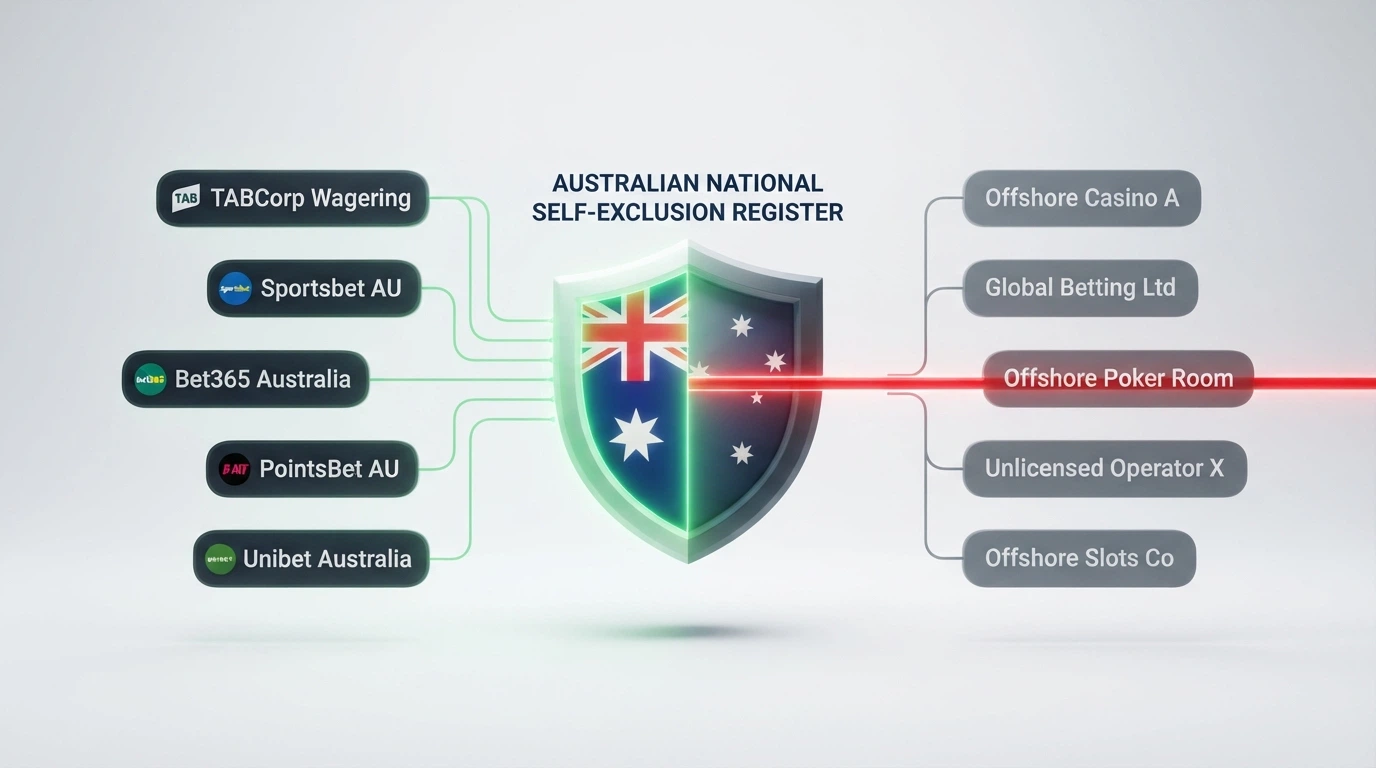
None of it reaches an offshore casino.
The Australian Institute of Health and Welfare estimated that about 2.1% of Australian adults — roughly 430,000 people — experience problem gambling, with high-risk gambling at 1.8% as of 2022. The help infrastructure exists because the problem is real. The infrastructure is built around Australian-licensed services because that is where the regulator can compel it. The same player walking into an offshore casino walks out of the infrastructure.
BetStop Won’t Stop an Offshore Casino Taking Your Money
BetStop, the National Self-Exclusion Register, went live in August 2023 and had 67,480 registrations as at 31 July 2026, of which 41,290 exclusions were still active — more than 60% of everyone who had ever registered. The figures are a measure of how many Australians have decided, formally, to stop. 78% of registrants were under 40. 38% chose lifetime exclusion.
The register binds every Australian-licensed online and phone wagering service in a single step. One registration, every licensed operator. A person who has registered with BetStop cannot open a new account, cannot deposit at an existing account and cannot be sent marketing material from any Australian-licensed wagering operator.
What BetStop does NOT do is connect to offshore casinos. A Curaçao-licensed site is not connected to the register and will keep accepting money from a self-excluded person. The Australian Communications and Media Authority confirms this as a documented limitation: the offshore gap is structural, not a bug. A person who has registered with BetStop in good faith and then opens an offshore casino account is unprotected by the registration. The offshore casino has no obligation to honour the Australian self-exclusion register, no obligation to check it, and no penalty for accepting the deposit.
For a person who has registered with BetStop and is still gambling, the offshore gap is the path the problem is travelling through. The infrastructure that was designed to stop them stops at the licensing border.
Where to Get Help — 1800 858 858, Gambling Help Online and Deposit-Limit Tools
The National Gambling Helpline — 1800 858 858 — is free, confidential and staffed 24 hours a day, seven days a week. The number is the single point of contact for Australian readers who need help with a gambling problem now, today, at any hour. Gambling Help Online — gamblinghelponline.org.au — provides online chat and counselling for readers who prefer text-based support or who are not in a position to make a phone call.
The help infrastructure exists for any Australian reader who needs it, regardless of whether the gambling is happening at a licensed wagering operator, a land-based casino or an offshore online casino. The self-exclusion, the deposit-limit tools and the activity statements apply to licensed services. An offshore casino does not run a deposit-limit tool that an Australian regulator enforces; it does not produce an activity statement; it does not connect to BetStop.
The licensed wagering operators do offer deposit-limit tools, time-out functions and activity statements as standard features, and these are enforced by state and territory regulators. A reader who wants deposit limits as a structural control over their gambling should be playing at an Australian-licensed wagering operator or a licensed land-based casino, where those tools are mandated and enforced — not at an offshore online casino, where they are either absent or unenforced.
How We Assessed Every Casino on This List
The operators reviewed on this page were selected to cover both the brands with the largest Australian player base and those that consistently appear in low-deposit listicles for Australian readers.
Each operator’s licence status was checked against the ACMA prohibited-services register and against the Curaçao Gaming Authority register where a Curaçao licence was claimed. None of the featured operators holds an Australian licence, because no Australian licence exists for online casino. Curaçao licences were confirmed at the regulator level for one operator (VegasNow, through independent testing published in March–April 2026) and could not be confirmed at the regulator level for the remaining nine. The licence-status column in the operator table reflects the level of verification.
The terms that affect a reader’s deposit-and-play decision — minimum deposit, minimum withdrawal, welcome-bonus structure, wagering requirement, payment-method availability, withdrawal speed — were independently verified for one operator (VegasNow) through testing data. For the remaining nine operators, the terms were not independently verified, and the operator’s own published terms should be the source a reader relies on at deposit time.
What was prioritised in the ranking: AU-facing market share as the primary signal of where Australian players already go, and independently verified low-deposit terms as the differentiator between operators whose figures could be checked and operators whose figures could not. What was not prioritised: operator self-reported claims of low-deposit floors and welcome-bonus structures where independent verification was unavailable.
What Your $10 Actually Buys You at an Offshore Casino
A AU$10 deposit at an offshore casino buys access to a product the Australian regulator has no authority over. It buys time on a pokie at minimum bet — a hundred spins on Starburst, a thousand on Book of Dead. It buys a chance at clearing a 35x bonus-only wagering requirement on whatever bonus the casino was willing to attach to a AU$10 deposit, against an expected house edge that eats most of the bonus before it converts. It buys none of the protections an Australian consumer expects from a gambling transaction.
The arithmetic of a AU$10 deposit session, on a 96.71% RTP pokie at minimum bet, runs to an expected loss of roughly A$0.33 over the session before any bonus. The arithmetic of clearing an A$10 bonus at 35x bonus-only runs to A$350 in turnover, against an expected house edge of roughly A$11.52 over the clearing process. The bonus is paid for in expected loss before it converts. The cleared bonus converts to a withdrawable balance that may not reach the casino’s minimum withdrawal floor of A$25–A$30, and may not reach it without a further deposit.
The reader’s decision is not whether an offshore casino is fun — that is a matter of taste, and the operators reviewed on this page run real products with real game libraries. The reader’s decision is whether the offshore gap — no ACMA recourse, no BetStop coverage, no guaranteed payout, no Australian consumer-law standing, possible mid-play site blocking — is the price they want to pay for the deposit floor the offshore product offers. A AU$5 deposit at VegasNow is a real, working entry point; it is also an entry point to an unregulated product with no Australian protection infrastructure behind it.
The checklist the page has built is the one to use. Deposit method sets the floor — PayID A$20 most places, A$5 at VegasNow, crypto near-zero at Stake and BC.Game, Neosurf A$10 with a 4.5% fee. Bonus-eligibility minimum is the next number to check, because eight of fifteen AU-facing brands separate it from the play minimum. Withdrawal minimum is the third, because the gap between deposit and withdrawal is where a small balance gets trapped. Licence status is the fourth, because none of these operators holds an Australian licence and the protections an Australian licence would provide are absent.
A low deposit lowers the entry barrier. It does not lower the offshore risk. The two are separate, and a reader who has read this page to the end knows the difference.
Frequently Asked Questions
Is it legal to play at an online casino in Australia?
Online casino is prohibited in Australia under the Interactive Gambling Act 2001. There is no Australian licence for it — federal, state or territory. The individual player is not prosecuted, but the player has no Australian consumer protection, no ACMA complaints recourse and no BetStop coverage at an offshore casino. The Act targets the provider of the prohibited service.
What is the lowest deposit I can make at an online casino in Australia?
The lowest fiat deposit an Australian player can make at an offshore casino in 2026 is AU$5 via PayID at VegasNow, where that AU$5 genuinely activates the full welcome bonus. Most other operators enforce a AU$10–AU$20 minimum by PayID, card or Neosurf. Cryptocurrency drops the floor further: Stake accepts deposits down to roughly AU$0.10 BTC-equivalent, BC.Game starts at about AU$1 USDT, and the practical crypto floor is around AU$5.
Do $1 and $5 deposit casinos actually exist for Australian players?
The AU$1 deposit does not exist for Australian players using fiat currency. The AU$5 fiat deposit is real at one operator — VegasNow via PayID — and is otherwise marketing fiction. The AU$5 Neosurf voucher is an EU-only denomination; Australian Neosurf vouchers start at AU$10. A reader who clicks an “AU$5” banner and arrives at a AU$20 cashier is not being deceived by the casino — the banner was wrong.
What happens if an offshore casino refuses to pay my winnings?
The player has no Australian regulatory recourse. The ACMA has no authority over the offshore operator. The Australian Consumer Law does not reach the gambling service. The dispute is a private dispute with an offshore entity, governed by the operator’s own terms and complaints process. The player can pursue a complaint through the Curaçao Gaming Authority if the operator holds a verified Curaçao licence, but the practical enforcement mechanism is whatever the player can organise themselves.
Are winnings from online casinos tax-free in Australia?
Betting and gambling winnings are not assessable income under section 6-5 of the ITAA 1997, and gambling losses are not deductible under section 8-1, unless the person is carrying on a business of betting or gambling. For the overwhelming majority of Australian players, recreational gambling winnings are tax-free and recreational losses are not deductible. The ATO’s IT 2655 is the published guidance.
What is BetStop and does it cover offshore casino sites?
BetStop is the National Self-Exclusion Register, live since August 2023. One registration excludes a person from every Australian-licensed online and phone wagering service. BetStop does not cover offshore casino sites. A Curaçao-licensed operator is not connected to the register and will keep accepting money from a self-excluded person. The Australian Communications and Media Authority confirms the offshore gap as a structural limitation.
Do I get a welcome bonus if I only deposit $5 or $10?
It depends on the operator. VegasNow’s A$5 PayID deposit genuinely activates the full welcome bonus — 100% up to A$3,000 across three deposits plus 200 free spins on Big Bass Splash, at 35x bonus-only wagering. Most other AU-facing offshore casinos set the welcome-bonus eligibility minimum above the cashier minimum, so a AU$10 deposit at those operators may miss the bonus trigger. Eight of fifteen AU-facing brands surveyed enforce a higher minimum for bonus eligibility than for play.
Why do casinos advertise $1 deposits but the bonus requires $20?
Because the advertised deposit figure is the cashier minimum, not the bonus-eligibility minimum. The two figures are set independently by the operator, and most operators set the bonus minimum higher than the play minimum to control the cost of the welcome offer. A player who has read only the banner has not read the bonus terms. The check before depositing is to read the welcome-offer terms for the specific minimum that activates the bonus.