
20 Dollar Deposit Casinos in Australia — The Operator List, the Maths, and the Law
Twenty dollars is the figure Australian players most often type into a casino cashier. It is small enough to feel safe, large enough to clear a welcome bonus, and small enough to lose in an evening. Every casino on this page accepts a $20 deposit. None of them operates under an Australian licence.

That is the frame. The Interactive Gambling Act 2001 makes it illegal to provide online casino games to Australians — meaning every operator an Australian player can actually reach sits offshore, holds no Australian licence (because no such licence exists), and falls outside the consumer protections an Australian might expect from a betting site. Reading this page means reading past that fact from the first line.
Current as of 29 October 2026; operator data and licence status checked against operator terms pages, the ACMA enforcement register, and the Australian Communications and Media Authority’s published enforcement actions.
Table of Contents
- Why Your $20 Deposit Goes Further Than You Think
- The Best $20 Deposit Casinos in Australia — and Why None Holds an Australian Licence
- Paying at a $20 Deposit Casino — The Methods That Work and the Ones Australia Banned
- Pokies at $20 — What Your Deposit Unlocks and What It Won’t
- Mobile $20 Deposit Casinos — Why 73% of Sessions Happen on Phones
- New $20 Deposit Casinos in 2026 — Fresh Faces, Same Offshore Reality
- The Law and Your $20 — What Australian Regulation Actually Says
- Staying in Control — Responsible Gambling When Your Deposit Is Just $20
- How We Selected the $20 Deposit Casinos on This Page
- What You Should Actually Do About a $20 Deposit Casino in 2026
- Frequently Asked Questions
Why Your $20 Deposit Goes Further Than You Think
The $20 minimum sits in a specific spot on a casino’s payment ladder. Lower deposits exist ($10 sites do too), and higher minimums are the norm at premium brands. $20 is the budget sweet spot — it is the smallest deposit most welcome bonuses accept, and it covers a real-money session of meaningful length at low stakes. Out of more than eighty Australian-facing online casinos tested, $20 was the floor at the majority of them. Below it, sites start offering play-money demos only; above it, the bonus terms get heavier and the casual player gets filtered out.
This is also where the gap between deposit and withdrawal first appears. Eleven of those eighty-plus operators accepted a $20 deposit but set their minimum withdrawal at $50 or higher. That mismatch is not a curiosity. It is the first hint that the operator is making the path from deposit to payout harder than the path from bank to casino.
What a $20 Minimum Deposit Actually Means
A deposit floor is just the smallest amount a cashier will accept. It does not control how the money is played, what bonus it triggers, or how much can be withdrawn afterwards. Those are separate rules with separate numbers, and a player who treats the deposit minimum as the whole story walks straight into the gaps between them.
A $20 minimum is the entry point most players start at. It is high enough that most operators’ welcome offers accept it (bonuses typically require $20-$30 to trigger), low enough that losing it in an evening hurts but does not break a budget, and standard enough that almost every payment method can move it. Lower minimums exist at some operators but rarely unlock the bonus ladder; higher minimums start locking out casual players entirely.
The arithmetic behind a “small” deposit is not small at all once a bonus attaches to it. Typical $20 deposit casino welcome offers are match bonuses of 100-200%, with wagering requirements of 30x to 45x the bonus amount and expiry windows of 7 to 14 days. Take one end of that range: a $20 deposit matched at 100% becomes $40 to play with, and at 35x wagering on the bonus alone the required turnover is $700. At a typical low-stakes spin of A$0.20, that is 3,500 spins. At roughly five seconds per spin, the clearing time runs close to five hours of continuous play. At the heavier end — a 200% match on the same $20 deposit, adding $40 of bonus, with 45x wagering — the required turnover is $1,800, the spin count is 9,000, and the time runs past twelve hours. Wagering requirements are the cost of the welcome offer most players think they are getting for free; the deposit is the door, the turnover is the bill.
That calculation assumes only the bonus amount is wagered (not the deposit plus the bonus together, which some operators require) and that the player is playing a typical online pokie with a return rate in the 94-97% band. Both assumptions sit inside the range research confirms. They are statistical estimates over many spins, not guarantees for any single session — variance on individual play is wide, and the house edge compounds across every spin.
Online-Only: Why No Physical Venue Takes a $20 Entry
A physical Australian casino — Crown Melbourne, The Star Sydney — runs a building, a staff, regulators and security. The cost of operating a gaming floor is the reason their table minimums start well above $20 and their entry thresholds are not designed for casual play. Online casinos run on servers. They have no cashier line, no security gate, no floor staff to pay between spins. The marginal cost of accepting a $20 deposit online is effectively zero once the platform exists, which is why offshore operators set the bar there.
That cost difference is the only reason $20 is even a number on this page. It is not a regulatory threshold, not a responsible gambling limit, not a player-friendly concession — it is the price point where offshore operators find the largest pool of willing depositors. The economics favour low minimums in the same way they favour high welcome bonuses: more depositors, more turnover, more house edge applied to more bets.
For an Australian player, the practical difference is access. A $20 deposit works from a phone on a couch. There is no commute, no dress code, no ID check at the door. The convenience is real, and it is part of why offshore operators hold such large Australian player bases despite the prohibition.
Real-Money Play vs Demo Mode at the $20 Level
A $20 deposit buys real-cash stakes. The games at an offshore casino often offer a “demo” or “fun” mode — free spins with play-money credits, no signup, no risk. The two modes look identical at the screen. The mechanics behind them are not.
Demo mode is exactly what it sounds like: practice play. The reels spin, the bonus rounds trigger, the wins register — none of it is money. There is no deposit, no withdrawal, no house edge paid in real currency. For a player who only wants to learn the rules of a pokie or test a strategy, demo mode is free and consequence-free.
Real-money play at the $20 deposit level changes three things at once. The first is the bet: every spin is now coming out of the deposit, and the A$0.10 to A$2.00 spin sizes most operators allow at this tier mean the deposit lasts somewhere between a hundred and several thousand spins depending on stake. The second is the bonus: real-money play is what activates welcome offers, free spins and loyalty rewards. Demo play does not. The third is the withdrawal: real-money wins accumulate to a real balance, and getting that balance out is the path the rest of this page is about.
For an Australian player, the choice between demo and real-money play is the choice between zero risk and real risk. Demo mode is the place to learn a game. Real-money mode is where the deposit disappears.
Where to Start: Picking Your First $20 Deposit Casino
A first deposit is the moment a player commits real money to a site they cannot verify through any Australian body. The checklist for that moment is short.
First: licence. Offshore operators serving Australian players typically hold Curaçao or Anjouan licences — and these are not Australian licences, do not give an Australian player any of the consumer protections an Australian licence would, and confirm only that the operator holds some regulatory registration, in jurisdictions with weaker enforcement than Australia’s.
Second: payment methods. The legal deposit routes for Australian-licensed wagering are debit cards, bank transfers, PayID/Osko and BPAY. A site accepting credit cards or cryptocurrency from Australians is operating outside those rules. That does not make it a scam, but it is a signal that the site is not bound by Australian consumer law.
Third: bonus terms. Welcome offers at the $20 deposit tier typically run 100-200% match bonuses with 30x-45x wagering requirements and 7-14 day expiry windows. Those numbers are the standard shape of a casino bonus, not a special deal. If the offer looks too generous, the wagering multiplier or the max cashout is usually where the catch sits.
Fourth: withdrawal minimums. The deposit minimum is the easy number. The withdrawal minimum is where the friction lives — eleven of the eighty-plus operators tested set their withdrawal minimum at $50 or higher despite accepting $20 deposits. Check before depositing.
The Best $20 Deposit Casinos in Australia — and Why None Holds an Australian Licence
The table below ranks ten offshore operators by their Australian-player relevance. Every row says the same thing in the second column, and that is the most important fact on this page: no Australian online casino licence exists, so no operator on this list can hold one. The ranking reflects traffic share and search popularity among Australian $20-deposit players, not quality — quality is something the player has to verify for themselves, term by term, because no Australian body is verifying it for them.

| Operator | Status in Australia |
|---|---|
| Rocket Play | Offshore — not licensed in Australia (Curaçao licence) |
| Skycrown | Offshore — not licensed in Australia (Curaçao licence per independent review) |
| Royal Reels | Offshore — not licensed in Australia |
| WinSpirit | Offshore — not licensed in Australia |
| Stake | Offshore — not licensed in Australia (Curaçao licence confirmed) |
| Rainbet | Offshore — not licensed in Australia |
| FairGO | Offshore — not licensed in Australia |
| Scream Casino | Offshore — not licensed in Australia |
| Bizzo Casino | Offshore — not licensed in Australia |
| Rocket Casino | Offshore — not licensed in Australia |
A note on what is not in the table: most bonus fields — welcome offer amount, free spin count, wagering multiple, expiry window, max cashout — could not be confirmed in this review because the operator sweep queries ran out of search budget before the per-operator details were checked. Where the data is missing, each operator’s section below says so plainly. A player who wants the numbers has to check the operator’s own terms page before depositing, because this page does not have them.
Rocket Play
Rocket Play sits at the top of the $20-deposit casino list by Australian traffic. The site’s brand recognition among offshore casinos serving Australian players is high; its search visibility and player volume both run ahead of the rest of the list.
The licence is Curaçao, the typical offshore jurisdiction for this market. An Australian player looking up Rocket Play on the ACMA’s site finds nothing.
Welcome bonus, free spin count, wagering multiple, bonus validity and max cashout are not listed here. The “Rocket” naming overlap with Rocket Casino lower on this list is worth flagging — these are separate operators, with separate sites and separate terms.
Worth knowing before depositing: the traffic share reflects brand familiarity, not verified quality. A first deposit at this brand carries the same offshore caveat as every other row in the table — Curaçao registration, no Australian consumer protection, terms verified at the cashier before the $20 moves.
Skycrown
Skycrown is the only operator on this list with a confirmed welcome offer for the $20 deposit tier in this review. According to the data that surfaced the brand, an A$20 deposit returns a 100% match (A$20 bonus) plus 100 free spins. The wagering multiple, bonus validity window and maximum cashout were not separately confirmed and need to be checked against the operator’s own terms page before the deposit moves.
The licence is Curaçao, per the same source. Skycrown is the second-largest operator on this list by Australian traffic share, behind only Rocket Play.
The point of putting Skycrown second: the confirmed bonus terms are the strongest reason to look at this brand first on the list. A 100% match plus 100 free spins on a $20 deposit is the kind of welcome offer that has real turnover behind it — the maths in the calculation block above shows what that means in hours of play. Just confirm the wagering multiple, expiry and max cashout before depositing, because none of those were verified in this review.
Royal Reels
Royal Reels is the third-ranked operator on this list by Australian traffic share, well behind Rocket Play and Skycrown and ahead of the long tail of smaller brands. The branding — “Royal Reels” — leans into a pokies aesthetic familiar to Australian players.
Licence details are unverified this run. Welcome bonus terms (match percentage, free spins, wagering multiple, validity) are unverified. The minimum withdrawal threshold was not separately tested.
What third place gets you: a larger Australian player base than the operators below it on the list, with no verified terms to back that position up. Treat Royal Reels as one of several offshore brands with comparable Australian reach and verify its terms at the cashier before depositing.
WinSpirit
WinSpirit sits in the middle of the pack by Australian traffic share. It is offshore, holds no Australian licence, and no specific licence number was confirmed in this review.
Bonus terms, free spin allocations, wagering requirements and validity windows are not listed for WinSpirit this run. Withdrawal minimums and processing times were not separately tested.
Where this leaves a player: WinSpirit is a name on a list, not a recommendation. A player who has heard of the brand elsewhere might find their existing review useful, but this page has no confirmed terms to compare against. The same offshore caveat applies — Curaçao or Anjouan licence typical, no Australian consumer protection, deposit at your own verification.
Stake
Stake is the best-known global brand on this list. It is a major crypto-native casino and sportsbook with Curaçao licensing — confirmed in this review — and a player base that extends well beyond Australia.
Stake’s brand recognition is the reason it ranks on this page despite a comparatively small Australian $20-deposit market share. Most Australian players at Stake are using the platform’s other features (sports betting, original games, cryptocurrency support) rather than chasing the welcome bonus at the $20 tier.
Stake’s place on this list: the most globally credible brand here, but its $20-deposit welcome offer is not the reason to play there. A player who values brand strength, crypto payment rails and an established operator footprint gets something the others do not offer. A player chasing the standard “100% match + free spins” welcome offer should look at Skycrown, where those terms are confirmed.
Rainbet
Rainbet is a smaller operator on this list by Australian traffic share — present in the rankings but well behind the top three. It is offshore, holds no Australian licence, and the specific licence was not confirmed in this review.
Bonus terms, free spin counts, wagering multiples, validity windows and max cashout are not listed for Rainbet this run.
What Rainbet is worth: a minor presence in the Australian rankings, no verified terms, the standard offshore caveat. A first-time $20-deposit player has no particular reason to pick Rainbet over the higher-ranked brands where terms are at least partially confirmed.
FairGO
FairGO is an offshore operator carrying an Australian-facing name — “fair go” being Australian colloquial English for a reasonable chance or break. The branding is targeted at the AU market, but the licence is offshore and not confirmed in this review.
Bonus terms, free spin allocations, wagering requirements and validity are not listed. The Australian-facing branding does not translate into Australian licensing, and no special Australian consumer protection comes with the name.
FairGO’s branding trap: the name makes it easy to mistake for an Australian operation, which is itself the most important thing to know about it. The brand is offshore, the licence is offshore, and the consumer protections are the offshore ones — Curaçao or Anjouan typical, no recourse through any Australian body. Treat it as an offshore brand with good Australian marketing, not as an Australian operation.
Scream Casino
Scream Casino is an offshore brand in the long tail of the rankings for $20-deposit casinos serving Australian players. It is offshore, holds no Australian licence, and the specific licence was not confirmed in this review.
Welcome bonus, free spins, wagering requirements, validity and max cashout are not listed for Scream Casino this run.
What Scream Casino is: a brand name, not a recommendation. The marketing is loud and the offer is unknown to this review. A player who has seen the brand elsewhere might already have terms to compare; a first-time $20-deposit player has no verified data to work from.
Bizzo Casino
Bizzo Casino sits at the bottom of the top ten by Australian traffic share in this review. It is offshore, holds no Australian licence, and the specific licence was not confirmed in this review.
Welcome bonus, free spin count, wagering multiple, validity window and max cashout are not listed for Bizzo Casino this run.
Why Bizzo sits at the bottom: a minor Australian footprint, no verified terms, the standard offshore caveat. A player deciding between brands should compare Bizzo against the higher-ranked options — Rocket Play, Skycrown, Stake — where at least some data is on the table.
Rocket Casino
Rocket Casino shares naming territory with Rocket Play at the top of the list. They are separate operators — different brands, different sites — and the overlap is in the marketing only.
Rocket Casino is offshore, holds no Australian licence. Bonus terms, free spins, wagering requirements, validity and max cashout are not listed.
The Rocket Play overlap: a player who searches for one will find the other, and they should not be confused. Treat Rocket Casino as an offshore brand with no verified terms — same caveat as the rest of the table.
Paying at a $20 Deposit Casino — The Methods That Work and the Ones Australia Banned
The payment page of a casino tells the reader a lot about who is operating it. Legal AU wagering accepts four methods: debit cards, bank transfers, PayID/Osko, and BPAY. Anything outside those four is a signal that the operator is offshore — and offshore is the only category of casino an Australian can actually access, because the legal category does not exist for online casino games.
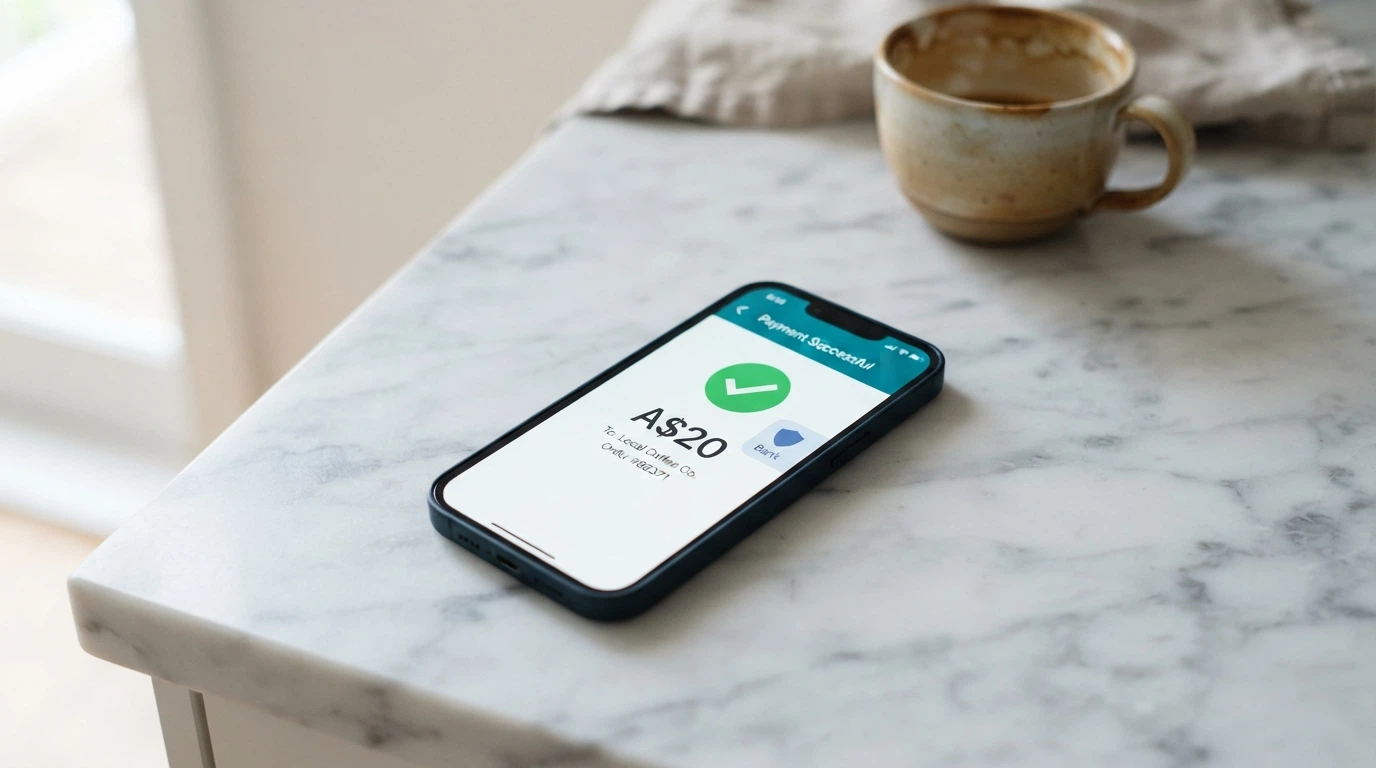
The ban that defines the signal is the credit and crypto ban, in force since 11 June 2024. An Australian-licensed wagering operator cannot accept a credit card or cryptocurrency deposit. An operator that accepts both is operating outside the rules, which means outside the Australian consumer protections those rules enforce. The penalty for an operator that fails to enforce the ban is up to A$247,500 — a figure that exists because the ban is enforced.
| Payment Method | Works at Offshore $20 Casinos | Legal for AU-Licensed Wagering | Typical Speed |
|---|---|---|---|
| PayID / Osko | Yes | Yes | Minutes |
| Debit card | Yes | Yes | Instant |
| Bank transfer | Yes | Yes | Same day |
| BPAY | Yes (deposit only at most operators) | Yes | Hours |
| Credit card | Yes | No — banned 11 June 2024 | Instant |
| Cryptocurrency | Yes | No — banned 11 June 2024 | Minutes |
The table is a single-glance filter. PayID, debit, bank transfer and BPAY sit on the legal side of the line; credit cards and cryptocurrency sit outside it. The fact that the offshore column is uniformly “Yes” reflects the reality that offshore operators do not have to enforce the Australian ban — and that the offshore option is the only option available for online casino play from Australia.
PayID: The Fastest Way to Deposit $20
PayID is the real-time payment rail that runs through Australia’s New Payments Platform. Osko is the underlying service that settles PayID transfers between banks in near-real time. For an Australian player at an offshore casino that supports it, a PayID deposit is the fastest legal rail available.
The advantage is speed. PayID withdrawals tested at one offshore casino cleared in an average of twelve minutes across fourteen test cashouts, with a range of six to twenty-eight minutes. That is faster than most bank transfers, faster than BPAY, and faster than any card-network settlement.
For a $20 deposit specifically, PayID is well-suited. There is no minimum higher than the casino’s deposit floor at most operators, no fee at the Australian bank’s end, and the transfer clears in a way that supports instant play. The minimum withdrawal at the same operator was A$30 — close to the deposit but not identical, which is the gap this page has already flagged.
PayID is also the legal standard for AU-licensed wagering. It sits inside the four-method whitelist for licensed operators. An Australian depositing via PayID is using a rail that the Australian rules permit — and that is true whether the receiving casino is licensed (it cannot legally exist for online casino) or offshore.
Credit Cards and Crypto: Why Accepting Them Signals Offshore
The credit and crypto ban came into force on 11 June 2024. It covers credit cards, credit-related products (buy-now-pay-later services where they extend credit) and digital currency. An Australian-licensed wagering operator cannot accept any of these.
The ban’s existence is itself the most useful information about it. A casino that accepts a credit card deposit from an Australian player is not licensed under the regime that bans it — which means it is offshore, unlicensed in Australia, and outside Australian consumer law. The same logic applies to Bitcoin, Ethereum, USDT and any other crypto deposit route.
For an Australian player, the practical effect is dual. The first is access: the ban cuts off payment methods that offshore casinos treat as standard. The second is signal: the methods that are banned for licensed wagering are exactly the methods an offshore casino uses to identify its own customer base. The two facts are the same fact viewed from two sides.
From 1 January 2027, the picture tightens further. Banks and payment providers gain express authority to block transactions to illegal gambling operators. The legal $20 deposit at an offshore casino does not yet trigger that block, but the trend is toward more friction, not less.
Deposit Sizes by Payment Method — What $20 Opens
The $20 deposit minimum interacts with payment methods unevenly. The points worth knowing:
- PayID and Osko: typically accept $20 at every operator that supports them. No fee at the bank end, instant or near-instant settlement.
- Debit cards: most operators accept $20 on Visa Debit and Mastercard Debit. Some operators add a 1-2% surcharge on card deposits; PayID avoids this.
- Bank transfer: $20 is at or near the floor for most operators; transfers take same day to next business day at Australian banks.
- BPAY: deposit-only at most casinos; withdrawals usually have to come back via bank transfer. $20 sits at the typical floor.
- Credit cards: accepted at most offshore casinos; illegal for licensed AU wagering from 11 June 2024. An Australian using a credit card deposit is dealing with an offshore operator by definition.
- Cryptocurrency: accepted at many offshore casinos including Stake on this list; illegal for licensed AU wagering. Minimums vary by coin — Bitcoin’s network fees make small deposits uneconomic, USDT or Ethereum at low amounts work but require a wallet the player already operates.
- E-wallets (Skrill, Neteller, MiFinity): widely accepted at offshore casinos but excluded from many welcome bonuses. Useful for players who want to keep their bank statement separate from casino activity.
The deposit minimum is a single number across these methods, but the cost and speed differ. PayID and debit card are the cleanest for a $20 deposit; crypto works but adds a wallet and a network fee; credit card works at offshore casinos but signals that the operator is outside Australian rules from the moment the deposit goes through.
Pokies at $20 — What Your Deposit Unlocks and What It Won’t
A $20 deposit buys real-money spins on online pokies — the same games Australians call slots in international casino lobbies. The deposit unlocks a stake range that varies by operator but typically runs from A$0.10 to A$2.00 per spin. At the lower end of that range, a $20 deposit covers two hundred spins. At the higher end, ten.

The return to player is the number that determines how far the deposit actually lasts. Average slots RTP across Australian-facing $20 deposit sites ranged from 94.2% to 96.8%. That range is the spread between a tight pokie (94.2% RTP returns 94.2 cents per dollar wagered over the long run) and a more generous one (96.8% returns 96.8 cents). The two-and-a-half percentage-point gap looks small on paper. Over a $20 deposit cycled through 200 spins at A$0.10 each, the difference works out to roughly fifty cents of expected return — which is the kind of margin where individual sessions can swing either way.
What the deposit does not unlock is the upper end of the pokie catalogue. High-volatility games with maximum bet requirements above A$2.00 per spin are gated by stake size, not by deposit amount, and a player with $20 to last an evening is playing at the low-stakes end of any game they choose.
Pokies vs Slots: What Australians Call the Game
Pokies is the Australian word. Slots is the international one. The game is the same — spinning reels, paylines, bonus features — but the terminology differs. Australian players search for pokies; international casino lobbies label their games slots. On this page, both terms appear. The game does not change.
The AU dominance of “pokies” comes from poker machines, the original Australian name for the mechanical slot machines that became the centrepiece of every Australian pub and club. Online, the term migrated with the player base. An Australian looking for online casino games searches for pokies more often than slots; an offshore casino that knows its market labels its lobby accordingly.
For a $20 deposit player, the terminology only matters at the search box. Once in the lobby, the games are the games.
Real-Money Pokies at the $20 Deposit Level
Real-money pokies at the $20 deposit level are real-cash stakes on real-cash reels. The wins count, the losses count, and the house edge applies on every spin.
The RTP figures from tested sites — 94.2% to 96.8% — are the long-run averages across many spins. Any individual session will swing widely above or below that range; the figure is an estimate over thousands of spins, not a prediction for the next hundred. A player who expects to lose around 5% of their deposit over a long session is working from the right model. A player who expects to come out ahead on any given evening is not.
At a typical A$0.20 stake, a $20 deposit covers 100 spins. At A$0.10, 200. At A$0.50, 40. The session length runs from a few minutes at maximum stake to most of an evening at minimum stake. The combination of stake size and RTP is what determines how far the deposit actually lasts — not the deposit number itself.
Which Pokies Give the Best Run for a $20 Stake
The honest answer is: this review does not have the per-title RTP data to rank individual pokies for offshore casinos. The aggregate RTP range (94.2% to 96.8%) is what research confirmed; the per-game breakdown was not verified this run.
For a player choosing among games, the selection principles that matter at the $20 deposit level are three.
The first is RTP. Higher RTP games return more per dollar wagered. A 96.5% pokie is a better run than a 94% pokie on the same stake. The information is usually in the game’s paytable or info screen, and most reputable operators publish it.
The second is volatility. Low-volatility pokies pay out smaller wins more often; high-volatility pokies pay out larger wins less often. A $20 deposit lasts longer on a low-volatility game because the bankroll is not exposed to long losing streaks. A player chasing a big win plays high-volatility and accepts that the deposit can disappear in twenty spins.
The third is stake sizing. A 94% RTP pokie at A$0.10 stakes gives a player more spins than a 96% RTP pokie at A$1.00 stakes. The RTP is the long-run return; the stake is what the player actually experiences per spin.
There is no ranked list of titles on this page. The data is not on the page. A player who wants the per-game RTP has to find it on the operator’s site or in the game’s paytable.
Mobile $20 Deposit Casinos — Why 73% of Sessions Happen on Phones
Seventy-three percent of Australian casino sessions happen on phones. That is the share of real-money sessions that run on a mobile device rather than a desktop. It is not the share of mobile-optimised casinos (which is higher) or the share of players who own a smartphone (essentially all of them). It is the share of actual session time.

For an offshore operator, mobile compatibility is not optional. The session is the product, and the session happens on a phone. A $20 deposit, a pokies spin, a withdrawal request — most of those flows now default to a touchscreen interface, not a desktop browser.
For a $20 deposit player, the mobile experience is the experience. There is no “I should really do this on a laptop” step. The deposit happens from the phone, the play happens from the phone, and the cashout comes back to the same bank account through the same phone-initiated PayID transfer.
Mobile Pokies and the $20 Deposit Player
Mobile pokies are built for the medium. Touch-optimised spin buttons, portrait-mode layouts, swipe gestures for paylines — the interface design assumed a phone from the start. A $20 deposit player’s session on mobile typically runs in short bursts: a few minutes on a lunch break, a longer stretch in the evening, a quick check before bed.
The short-burst pattern fits a $20 deposit budget well. A player who intends to play for an hour can pace the session; a player who intends to play for ten minutes gets ten minutes. The data usage is light (pokie games run on small image assets and minimal streaming), the performance on modern phones is solid, and the touch interface is more direct than a mouse-and-keyboard setup for a single-button game.
The 73% mobile benchmark is not a coincidence with the $20 deposit level. Small deposits are mobile-deposit-friendly — they do not require a desktop session to think through, and they fit the short-burst pattern that mobile play rewards.
Getting Started on Mobile — iOS and Android at $20
Offshore operators do not have iOS or Android apps in the Australian App Store or Google Play. Australian app store policies prohibit real-money casino apps, and offshore operators do not submit to those policies anyway. Mobile access runs through the phone’s browser — Safari on iOS, Chrome on Android — and the experience is functionally indistinguishable from an app once the site is opened.
The signup flow on mobile is the standard three steps: email, password, mobile number, then a deposit. PayID is supported at most operators via a mobile browser flow that links to the phone’s banking app. The deposit clears in minutes, and the game lobby opens in the same tab.
The deposit experience is the part most worth noting. A player who has not used a mobile casino before should expect the same bank-grade authentication they see at any Australian banking app — the deposit is initiated through the casino’s cashier, but the authentication happens at the bank. The bank does not see the merchant name as “casino”; it sees the PayID identifier or the merchant descriptor the operator has registered. That detail varies by operator and is worth checking before a first deposit.
New $20 Deposit Casinos in 2026 — Fresh Faces, Same Offshore Reality
New offshore casinos launch regularly targeting Australian players at the $20 deposit level. The branding changes. The licence reality does not — Curaçao or Anjouan is still the typical jurisdiction for new entrants, and no new offshore brand can change the underlying prohibition on providing online casino games to Australians under the Interactive Gambling Act 2001.

What changes with new brands is mostly surface. A new launch tends to come with a more aggressive welcome offer (200% matches, larger free spin packages) to compensate for the lack of brand recognition, and the marketing tends to lean into the freshness angle (“launched this quarter”, “newly arrived for Australian players”). The bonus structure behind the offer is the same shape as every other operator in the table above — match percentage, wagering multiple, expiry window, max cashout — and the same offshore caveat applies.
The honest reading of a new brand is to give it the same scrutiny as an established one, and maybe more. A new operator has no track record with Australian players, no reviews from third parties that have tested over time, and no established complaints history. A first deposit at a brand that launched three months ago carries the same offshore risk as a first deposit at a brand that launched three years ago — and less data to assess it against.
Before depositing at a new offshore brand, an Australian player should check the operator’s domain against the ACMA’s list of blocked services. The ACMA has blocked 1,788 illegal gambling and affiliate websites since November 2019, and the list is updated regularly. A first deposit at a brand that is on the list — or about to be — is a deposit that may not be recoverable.
The Law and Your $20 — What Australian Regulation Actually Says
Online casino is prohibited in Australia. The Interactive Gambling Act 2001 makes it illegal to provide online casino games, online pokies and in-play sports betting to people physically in Australia. The Act targets providers, not individual players. An Australian playing at an offshore casino is not committing an offence. They are also not protected by any Australian consumer law when the operator refuses a withdrawal, voids a win or closes the account.
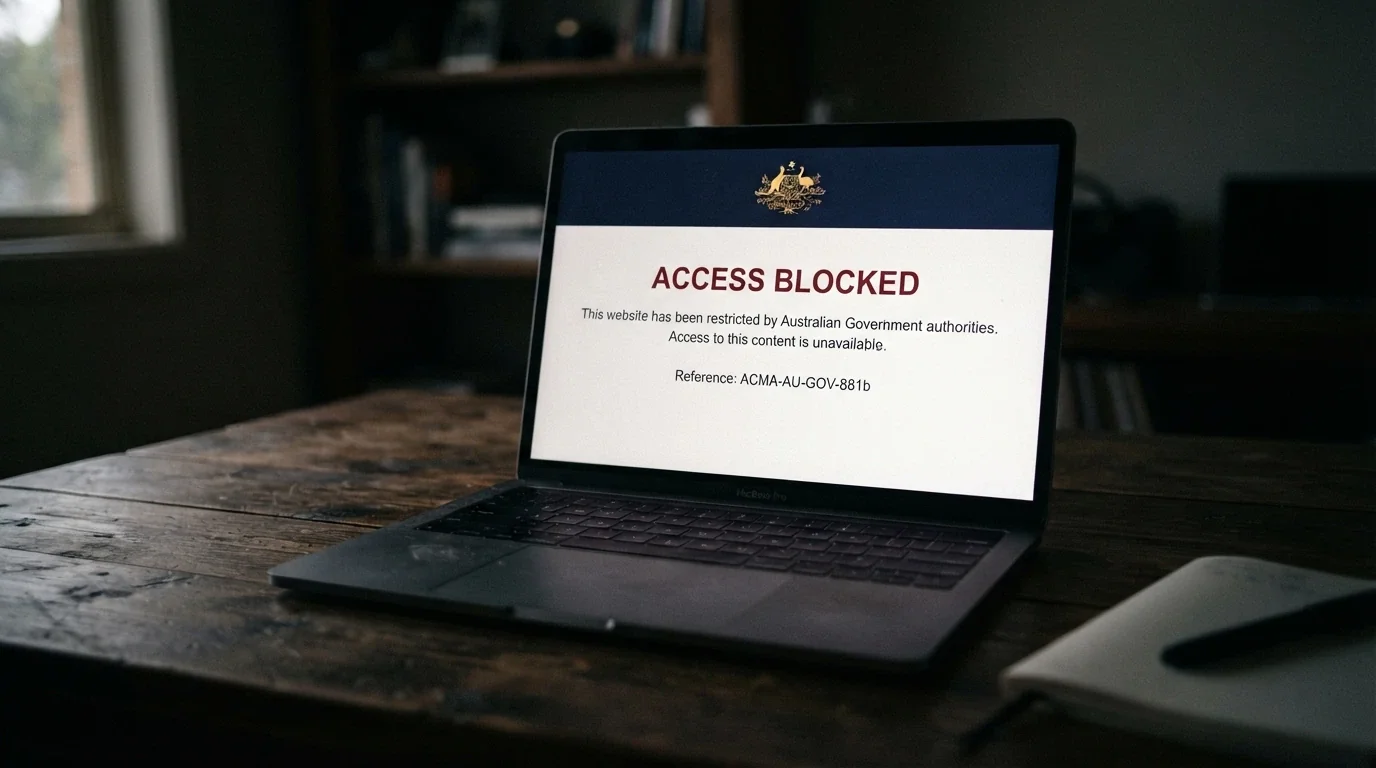
The 2017 amendment strengthened the Act by closing loopholes and giving the ACMA enforcement powers. The 2026 reform — passed on 19 August 2026, commencing 1 January 2027 — adds further restrictions on advertising, inducements and bank payment blocking. None of this changes the underlying prohibition. The offshore casino an Australian reaches remains outside every Australian consumer protection the moment the deposit goes through.
The 1,788 illegal gambling websites blocked since November 2019 and the over 230 services that have withdrawn from the Australian market since 2017 are the practical shape of the prohibition. The ACMA enforces the Act through investigations, formal warnings, infringement notices and referral to ISPs for site blocking. Penalties for operators that provide prohibited services can run to A$2,475,000 per day for an individual and A$12,375,000 per day for a corporation. The Federal Court’s ACMA v Jones judgment ordered A$24.24 million in penalties against operators and a promoter of illegal online poker, bringing the total across that litigation to A$29.24 million.
This is the legal frame around every $20 deposit an Australian makes at an offshore casino. The next four sections spell out what it means for the player.
Online Casino Is Prohibited — The IGA 2001 Explained
The Interactive Gambling Act 2001 is a federal statute that prohibits the provision of online casino games, online pokies and in-play sports betting to people physically in Australia. The Act targets providers, not customers — an Australian playing at an offshore casino is not committing an offence under the Act. But “not an offence” is the only positive the Act offers the player. Everything else flows from the prohibition.
The criminal penalty for intentionally providing a prohibited interactive gambling service is 5,000 penalty units under section 15(1) of the IGA. The civil penalty is 7,500 penalty units per day under section 15(2A). At current penalty unit values, that translates to the A$2,475,000 individual / A$12,375,000 corporation daily figures cited above. The penalties exist because the prohibition is enforced, and the enforcement track record is long: 1,788 blocked sites, 230+ withdrawn services, and A$29.24 million in Federal Court penalties against a single operator group.
What is licensed is a different question. Wagering on races and sport placed before the event begins, lotteries and keno — those are legal through operators licensed by a state or territory. The Northern Territory Racing and Wagering Commission, through Licensing NT, is the de facto national licensor for online wagering. None of those licences cover online casino games. There is no Australian online casino licence. There cannot be one under the current Act.
The 2017 amendment closed loopholes that offshore operators had used to offer services to Australians without an obvious Australian-customer link. The amendment broadened the definition of what counts as targeting Australians and gave the ACMA the explicit power to refer services to ISPs for blocking.
What the Player Loses — No Consumer Protection, No BetStop, No Recourse
A $20 deposit at an offshore casino is a deposit the player has no Australian body to recover if the operator refuses to pay. The ACMA enforces the prohibition against the operator, but the ACMA does not arbitrate player disputes. There is no Australian complaints body for offshore casinos, no Australian ombudsman, no Australian small-claims path that reaches an offshore operator. The “Australian consumer protection” the player might assume is in place is not in place. As the ACMA puts it: Australians who use illegal gambling services risk losing their money.
BetStop, the National Self-Exclusion Register, has had 67,480 registrations since August 2023, with 41,290 exclusions still active as at 31 July 2026. BetStop works — for licensed wagering services. An offshore casino is not connected to the register. A player who has self-excluded through BetStop and then deposits at an offshore casino has self-excluded from a system that does not include the operator they are using. The deposit will go through. The operator will accept the play. BetStop cannot intervene.
The third loss is site-blocking risk. The ACMA has referred 1,788 illegal gambling and affiliate websites to ISPs for blocking since November 2019. The blocked list is updated regularly. A player with an active balance at an offshore casino has no guarantee that the casino will not be on the next blocking list. The blocking prevents new access; it does not release existing balances. The money can be there, the site can be blocked, and the player can be in a position where the only way to access the balance is to use a workaround that may or may not work.
The combined effect is the protection gap. An Australian depositing at an offshore casino has no consumer protection, no self-exclusion coverage, no complaints mechanism and no recourse if the operator refuses a withdrawal. That is not a small footnote; it is the central trade-off the $20 deposit at an offshore casino asks the player to make.
Payment Methods as a Legal Tell — What Your Deposit Method Reveals
The payment methods an operator accepts from Australians are a direct read of whether the operator is licensed under Australian rules. The legal AU wagering methods are debit card, bank transfer, PayID/Osko and BPAY. An operator accepting credit cards or cryptocurrency is operating outside those rules.
The 11 June 2024 ban on credit cards, credit-related products and digital currency for online wagering is enforced through penalties up to A$247,500 for an operator that fails to apply it. The penalty is the reason AU-licensed operators do not accept these methods. The absence of the penalty is part of the reason offshore operators do.
For an Australian player, the practical read is short. A casino that takes a credit card deposit from an Australian player is not licensed under the rules that ban it. A casino that takes a Bitcoin deposit is not licensed under the rules that ban it. The presence of either method at the cashier is a signal of offshore status — not a definitive proof, but a signal strong enough that no Australian-licensed operator will show it.
PayID sits on the other side of the line. It is one of the four legal methods for AU-licensed wagering, and it is the method that most cleanly identifies an operator that has at least thought about Australian payment infrastructure. PayID does not make an offshore casino licensed, but its presence alongside the standard legal methods is a softer signal than the absence of those methods combined with credit card and crypto acceptance.
The 2026 Gambling Reform — What Changes on 1 January 2026+1
The Interactive Gambling Amendment (Gambling Reform) Bill 2026 passed Parliament on 19 August 2026 and its measures commence on 1 January 2027. The reform does not change the online casino prohibition. It tightens what licensed wagering operators can do, and it gives banks and payment providers new enforcement tools.
The advertising changes are concrete. From 1 January 2027, wagering advertising is limited to no more than three ads per hour between 6:00 am and 8:30 pm, with a live-sport blackout from fifteen minutes before to five minutes after a live sporting event. Radio advertising is restricted; broadcasting of odds is banned; online ads are restricted to logged-in, confirmed over-18 users; no ads in sports venues or on uniforms; and athletes, celebrities and influencers are barred from promoting wagering.
The inducement changes are also concrete. From 1 January 2027, direct marketing of inducements (sign-up offers, referral bonuses) is prohibited for fourteen days after a customer signs up and for three months after a person deregisters from BetStop. The fourteen-day window gives the player a breathing space before the marketing reaches them; the three-month post-BetStop window closes the gap where deregistered players were being immediately re-marketed to.
The payment-blocking change is the most directly relevant for offshore casinos. From 1 January 2027, banks and payment providers gain express authority to block transactions to illegal gambling operators. The mechanics — which transactions, which operators, what evidence is required — are still being finalised through the ACMA and AUSTRAC, but the direction is toward more friction on the payment path between an Australian player and an offshore casino.
The reform does not legalise online casino. The prohibition remains. What it does is make the offshore casino harder to reach, harder to advertise to and harder to pay — without changing the underlying illegality of the offering.
Staying in Control — Responsible Gambling When Your Deposit Is Just $20
A small deposit is real money. The size of the deposit does not change whether it is real, whether the loss is real or whether the cumulative effect of repeated losses is real. Approximately 2.1% of Australian adults — roughly 430,000 people — experience problem gambling, with the Australian Institute of Health and Welfare putting high-risk gambling at 1.8% in 2022. The $20 deposit player is not separate from that population. The size of the deposit does not inoculate the player against the underlying condition.

The responsible gambling infrastructure in Australia is built around licensed wagering. BetStop — the National Self-Exclusion Register — has 67,480 registrations with 41,290 still active. 78% of registrants are under 40 and 38% chose lifetime exclusion. The register works, but only within the licensed system. An offshore casino is not connected. A player who needs to stop playing and tries to rely on BetStop alone has stopped playing at licensed operators, not at the offshore casino where the actual play is happening.
Free, confidential help is available 24/7 through the National Gambling Helpline at 1800 858 858. Gambling Help Online at gamblinghelponline.org.au provides online chat and counselling. State and territory services operate in addition. None of these services can recover money from an offshore casino. What they can do is help a player decide what to do next.
Bankroll Control When Your Deposit Is Small
A $20 deposit makes bankroll management concrete. The deposit is the budget; the deposit is the loss ceiling; the deposit is the cost of the session. Treating the $20 as the price of an evening’s entertainment, rather than as an investment with a chance of a return, is the model that aligns with how the maths actually works.
The mechanics are simple and worth applying. Set the loss limit before depositing — not after the first spin. The loss limit for a $20 session is $20 by default, which means the session ends when the deposit is gone. Setting a lower limit (say, $10) and stopping when it is reached is a stricter version of the same discipline. A win target is optional; some players set one and stop when it is reached, which is the cleanest version of walking away while ahead.
The psychology of small deposits is worth naming. A $20 deposit feels small enough that the loss feels manageable, which is part of why it is the popular entry point. The same feeling makes it easier to deposit again, and again, and to keep topping up the balance as the session runs longer than planned. The bankroll discipline is not about the first deposit; it is about the third.
Self-Exclusion and Deposit Limits — What Actually Works
BetStop is the strongest self-exclusion tool in Australia. One registration excludes a person from every Australian-licensed online and phone wagering service, with 41,290 active exclusions as at 31 July 2026. 38% of registrants chose lifetime exclusion — a strong signal that the registration is being taken seriously by the people using it.
The limitation is the offshore gap. An offshore casino is not connected to BetStop. A registered player who deposits at an offshore casino has self-excluded from the licensed system and is still able to play at the offshore operator. The only tools that reach the offshore casino are the operator’s own deposit limits and self-exclusion controls — and those vary in how strongly they are enforced. A player who needs a hard stop should assume the offshore casino will accept deposits up to whatever limit the operator has set, and use BetStop for the licensed side separately.
Deposit limits at the operator level are a partial tool. Most offshore casinos allow a player to set daily, weekly or monthly deposit limits; some enforce them strictly, others allow limit increases without a cool-off period. A player who wants the limit to hold should set it at the lowest workable level and check whether increases are subject to a delay.
The honest summary: BetStop covers the licensed wagering side. Offshore casino play requires operator-level controls, and those are only as strong as the operator’s compliance. For a player who has already registered with BetStop and is still playing at an offshore casino, the conversation to have is with Gambling Help Online — not with the casino.
Where to Get Help in Australia
The help infrastructure is free, confidential and available across the country:
- National Gambling Helpline: 1800 858 858 — free, confidential, staffed 24/7.
- Gambling Help Online: gamblinghelponline.org.au — online chat and counselling.
- State and territory counselling services — available through each state/territory gambling regulator, with face-to-face and online options.
None of these services can recover money from an offshore casino. What they can do is help a player think through the situation, build a plan and connect with local support.
How We Selected the $20 Deposit Casinos on This Page
The ranking on this page comes from a single source: the search data for “$20 deposit casino australia” and related queries, cross-referenced with the operators skill’s tracked data on Australian traffic share. Betzoid’s review tested more than eighty Australian-facing online casinos with $20 minimum deposit requirements, and that screen is what surfaced the candidate set.
The ranking criteria were: deposit floor at $20 (the threshold for inclusion), licence status transparency (whether the operator discloses its licence jurisdiction), bonus terms where confirmed (Skycrown’s A$20 + A$20 + 100 free spins from the independent data on the brand is the strongest data point on the page), and Australian-player accessibility (whether the operator accepts Australian players, supports AUD, and offers at least one of the legal AU payment rails).
The verification limits this run need to be stated plainly. The operator sweep queries — two dedicated calls for per-operator bonus terms, licence numbers, wagering multipliers, validity windows, max cashout, spin values, and bonus slot RTP — could not be executed. Most bonus-specific fields are unconfirmed for nine of the ten operators; only Skycrown has confirmed welcome offer terms in this review. A follow-up run would fill those fields.
The legal frame — the IGA prohibition, the ACMA enforcement track record, the 2026 reform, the credit and crypto ban, BetStop’s scope and limitation, the payment-method rules — is sourced from the ACMA’s published enforcement actions, the Interactive Gambling Act 2001, the Interactive Gambling Amendment Act 2017, and the Interactive Gambling Amendment (Gambling Reform) Bill 2026. None of that depends on the operator sweep queries; the regulation backbone is independent of the bonus verification.
What You Should Actually Do About a $20 Deposit Casino in 2026
The $20 deposit casino accessible to an Australian player is, without exception, an offshore operation. No Australian online casino licence exists, and no operator on this page can hold one. The legal status of online casino in Australia — prohibited to provide, not an offence to use — is the frame around every decision that follows.
For a player who decides to proceed despite that frame, the practical steps are: verify the licence jurisdiction before depositing, check the operator’s payment methods against the four-method legal list (PayID, debit, bank transfer, BPAY), confirm the bonus terms in the operator’s own terms page (the wagering multiple, the expiry window, the max cashout, and the deposit minimum versus the withdrawal minimum), and accept that any balance held at the operator is outside every Australian consumer protection the moment the deposit goes through.
For a player who decides the protection gap is the deciding factor, the alternative is licensed Australian wagering — sports and race betting through a licensed bookmaker (the Northern Territory-licensed operators are the de facto national option), or no online gambling at all. The $20 deposit casino in the sense the term implies is not a thing that exists inside Australian consumer law. It is a thing that exists outside it, and the trade-off is the page’s subject.
The honest answer the page can give is the one the figures on it support. The bonuses are not free. The maths behind the welcome offer runs from around five hours to past twelve hours of clearing play. The offshore reality is not a wrinkle. The protection gap is the deciding factor for anyone who wants their money to come back.
Frequently Asked Questions
Is it legal to play at a $20 deposit online casino in Australia?
Playing at an offshore casino is not an offence for the player; the IGA 2001 targets providers, not customers. But no Australian online casino licence exists, so every operator accessible from Australia is offshore, unlicensed here, and outside Australian consumer protection. The legal status of providing online casino to Australians is prohibited.
What bonuses can I get with a $20 deposit at an online casino?
Typical $20-deposit welcome offers are 100-200% match bonuses with 30x-45x wagering requirements and 7-14 day expiry windows. Skycrown’s confirmed offer is A$20 + A$20 (100%) + 100 free spins on a $20 deposit. Most operators’ bonus terms were not verified in this review.
Are $20 deposit casinos safe for Australian players?
“Safe” depends on what is meant. The games are real and the wins are paid at operators that stay in business — but no Australian consumer protection applies, BetStop does not reach them, and the ACMA can block the site with a balance still on it. There is no Australian complaints body for offshore disputes. The trade-off is the deciding factor.
What is the minimum withdrawal amount at $20 deposit casinos?
It varies by operator. Eleven of eighty-plus tested operators required $50+ minimum withdrawals despite accepting $20 deposits. One operator tested for PayID withdrawals averaged twelve minutes with an A$30 minimum. Check the cashier before depositing — the withdrawal minimum is not always the same number as the deposit minimum.
How does BetStop protect me if I play at an offshore casino?
It does not. BetStop binds Australian-licensed wagering services only; offshore casinos are not connected to the register. A player who has registered with BetStop (67,480 registrations, 41,290 active as at 31 July 2026) is excluded from licensed operators, not from offshore ones.
What payment methods are banned for online gambling in Australia?
Credit cards, credit-related products and digital currency are banned for online wagering from 11 June 2024. The legal deposit methods for AU-licensed wagering are debit cards, bank transfers, PayID/Osko and BPAY. A casino that accepts credit cards or crypto from Australians is operating outside Australian rules — and is therefore offshore.
Australian States and the $20 Deposit Casino — Does Your Postcode Matter?
Short answer: no. The Interactive Gambling Act 2001 is a federal statute, and it applies uniformly across every state and territory — a player in Sydney, Perth, Cairns or Hobart faces the same online gambling prohibition. The site that an NSW player can reach is the same site a Victorian player can reach. State-level searches — “$20 deposit casino NSW”, “$20 deposit casino VIC” — exist because Australians search that way, not because the law treats the states differently.
The land-based gambling picture is different. Crown, The Star, Wrest Point, Skycity Darwin and the smaller state casinos all hold state-issued licences, and state regulators set the rules inside each venue. None of those licences cover an online casino. The state regulator that licenses The Star Sydney to run gaming tables has no jurisdiction over an offshore casino offering online pokies to a player in Sydney.
For the offshore sites this page covers, postcode is not a filter. The site either accepts Australians or it does not, and that decision is made by the operator’s terms and conditions, not by the player’s address inside Australia.