
Same-Day Payout Casinos in Australia: What Tested Speeds Actually Look Like in 2026
The promise of a same-day payout at an Australian online casino comes with conditions almost no marketing page states. A withdrawal can clear in under five minutes on a crypto rail at one site and crawl through PayID at a sister site for up to five business days. The casino on the banner is rarely the variable that decides it. The payment method, the verification queue and the licence jurisdiction underneath the brand are.
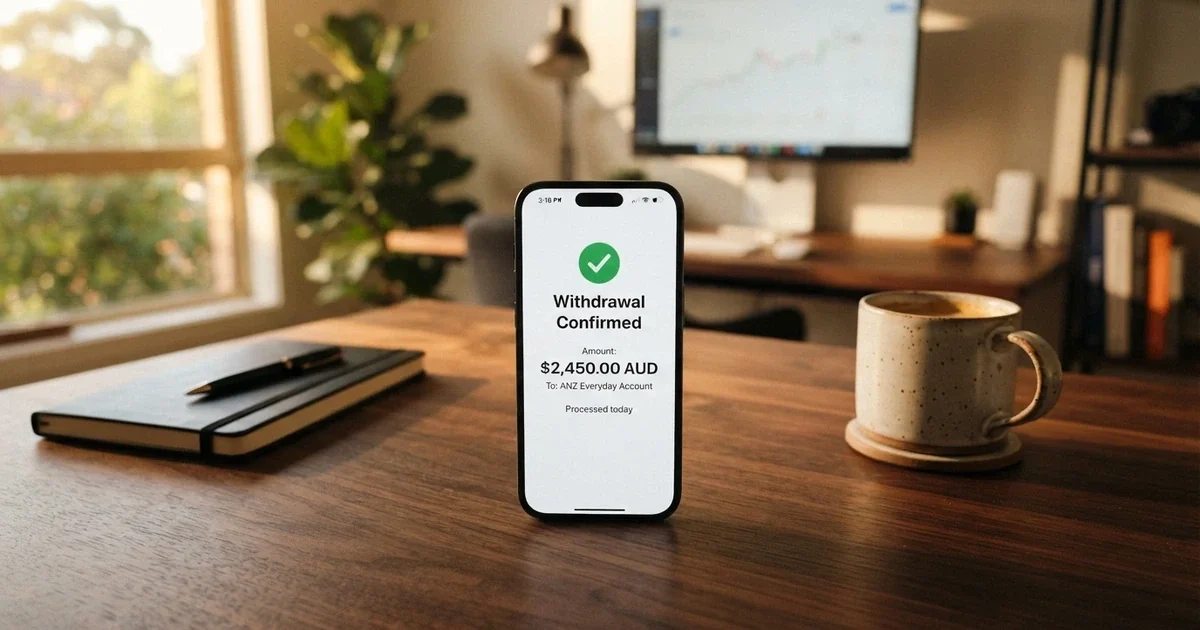
This page works through what same-day actually delivers in 2026, where the bottlenecks sit, and what an Australian player gives up when the casino accepting their deposit is licensed somewhere other than Australia — which, as it happens, is every single one of them.
Currency line: data current as of 22 November 2026; licence and operator claims cross-checked against the ACMA register and the Interactive Gambling Act 2001 as published.
Table of Contents
- “Same-Day Payout” Is a Promise, Not a Guarantee
- The Payment Rails That Actually Deliver Same-Day Payouts in 2026
- The Pokies Worth Playing When You Want Your Winnings Fast
- Online Casinos Are Prohibited in Australia — Here Is What That Actually Means
- Staying in Control — Responsible Gambling When the Safety Net Is Thinner
- The 10 Offshore Casinos Australian Players Use for Same-Day Payouts in 2026
- How We Evaluated and Ranked These Casinos
- What Australian Players Should Actually Do With This Information
- Frequently Asked Questions
“Same-Day Payout” Is a Promise, Not a Guarantee
The phrase has loosened into marketing wallpaper. Eight of the ten top-ranking pages in the Australian search results use “instant” and “same day” as if they meant the same thing. They do not. A clean line between them matters because it changes how a player reads every claim that follows.
What a Casino Means When It Says “Same Day”
A same-day payout is a withdrawal that lands in the player’s account within 24 hours of the request being approved. It is not instant. The processing stages between “I clicked withdraw” and “money is in my account” are three: the casino’s internal approval queue, the payment rail’s transit time, and any verification check that fires on the way through.
Independent testing published in August 2026 put the median for crypto payouts across Australian-facing offshore casinos at 42 minutes, PayID at around two hours, and e-wallets longer. The single fastest payout on record across a 217-cashout dataset was one minute 40 seconds — a USDT-TRC20 transfer to a fully verified account. The same dataset showed a worst-case crypto withdrawal stalling at four hours, suggesting that the headline figure is real but not guaranteed.
A casino that promises “same day” on a bank transfer is being optimistic. Bank-to-bank transfers in Australia run one to three business days regardless of which casino approved them. Same-day on bank transfer is the rail equivalent of promising a same-day parcel from a depot on the other side of the country.
Same-Day vs Instant — Two Different Payout Speeds
Two speeds are doing the work in this market, and confusing them costs the player money in expectation, not in cash.
“Instant” in the Australian market means under one hour. That speed is achievable, but only on crypto rails — USDT-TRC20 most reliably, with Solana and Litecoin as runners-up — and on PayID once the casino has approved the request. E-wallet payouts from operators like King Billy land in one to two hours. Everything slower than that, up to 24 hours, sits in the same-day bracket.
The fastest single transaction on record was a USDT-TRC20 withdrawal at one minute 40 seconds. The fastest median belongs to SkyCrown at four minutes via crypto. Both figures sit comfortably inside the “instant” band. They also depend on verification having been completed before the request was made — a point that the headline numbers quietly bury.
How We Picked the Casinos on This Page
The selection leans on tested payout speed first, payment-method range second, and Australian player fit third. Operators with no published independent test data appear on this page anyway, with the gap marked, because Australian-facing offshore casinos as a category are what the page is about — but the ranking within the list gives weight to operators whose claims have been measured.
A meaningful qualification runs through the whole page: every casino here is offshore-licensed. No Australian casino licence exists for online casino games, online pokies or in-play betting. A reader who values Australian consumer protection, the BetStop register and the ACMA complaints pathway should read the legality section before deciding whether to proceed at all.
The Payment Rails That Actually Deliver Same-Day Payouts in 2026
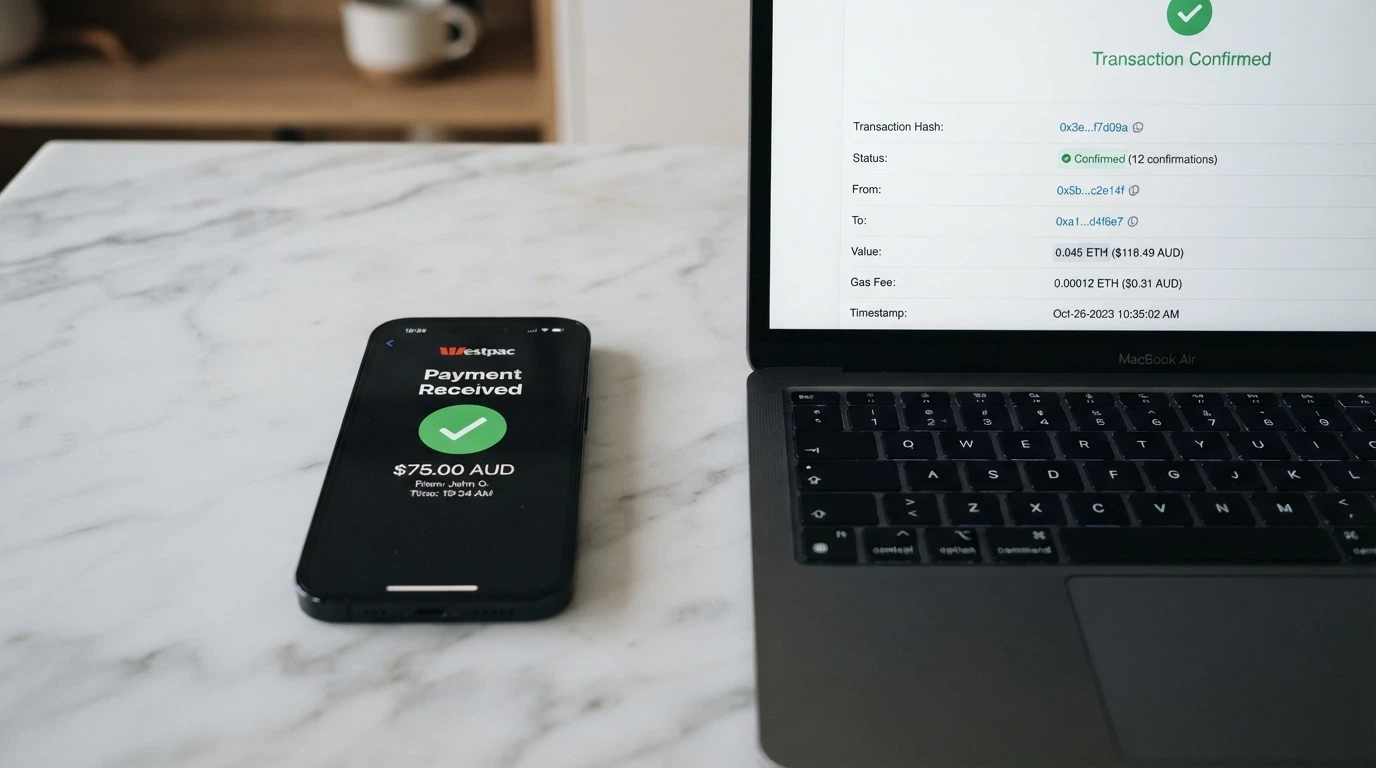
The rail is the variable that decides. Three of the four rails covered here can deliver same-day at most operators; the fourth cannot, at any of them.
Why PayID Is the Fastest AUD Rail — and When It Isn’t
PayID is the headline Australian-native rail: payments settle through the New Payments Platform’s Osko service in seconds between participating banks. After a casino has approved a withdrawal, the PayID leg itself usually completes within minutes. The headline is deserved.
It is also conditional. Two factors push a PayID withdrawal out of the same-day window. First, the casino’s approval queue: PayID transactions are flagged for a fraud-screen review more often than crypto, and the review can take hours. Second, some operators list PayID withdrawal times that look nothing like the deposit side. Bizzo’s deposit pipeline runs near-instant on PayID; its withdrawal pipeline lists PayID at two to five business days. The asymmetry is real and disclosed in the operator’s own terms.
The pattern of a fast deposit paired with a slow withdrawal at the same operator is not unique to Bizzo. It reflects a practical reality: deposit fraud is checked once, on the way in; withdrawal fraud is checked twice, on the way out. A player who reads only the deposit speed has read the wrong half.
Crypto Withdrawals — Under an Hour, but Not Without Trade-offs
Crypto is the raw speed leader. Median payout times across the dataset for USDT-TRC20 sit at two to ten minutes; SkyCrown’s tested median was four minutes. The August 2026 dataset showed Bitcoin and Litecoin settling at 30 to 60 minutes at most operators, with Solana occasionally faster.
Two trade-offs qualify the figure. First, network congestion. Bitcoin transaction times balloon during peak load, and a payout submitted at the wrong moment can wait hours in mempool. USDT-TRC20’s Tron network sidesteps most of this, which is why it leads the field. Second, the Australian legal frame. The credit-card-and-crypto payment ban that took effect at Australian-licensed wagering operators on 11 June 2024 does not bind offshore casinos. The crypto deposit option at any casino on this page is itself a signal that the operator sits outside Australian rules.
A punter who wants the speed and accepts the offshore reality has the fastest rail in the market. A punter who wants the speed and a regulated framework does not have an option in this category — because the regulated framework bans the product.
The Withdrawal Bottleneck Is Usually You, Not the Casino
The fastest rail in the world is irrelevant if the casino has not approved the withdrawal. Across the published testing, the largest cause of a slow payout was not the payment method or the operator’s processing speed. It was the player’s own KYC verification.

The mechanics are plain. Some operators verify the player’s identity at sign-up, document upload included. At those operators, withdrawals typically clear in minutes once requested. Other operators defer verification to the first withdrawal. At those operators, the first cashout adds a 24 to 72 hour review window, on top of which any sub-threshold auto-approval logic does not apply. The second withdrawal, after the first one is verified, is fast.
A practical threshold sits behind this. Operators that auto-approve verified-account withdrawals under a cap — typically around A$2,000 — skip manual review entirely. Above the cap, manual review kicks in and the clock resets. The published advice from one testing outlet summarises it bluntly: the biggest cause of a slow payout is the player’s own KYC, not the casino. Complete it at sign-up.
Cashout Caps, Processing Fees and the Fine Print That Holds Up Your Money
A same-day rail hits a wall at the operator’s withdrawal terms. Three constraints recur across the offshore casino set.
Minimum withdrawals start at A$20 across most operators — small enough that a player can test a rail with a token amount before committing. Per-transaction caps are where the rule bites harder. Neospin caps each crypto withdrawal at A$7,500, which is generous against the market but means a larger win needs multiple transactions spread across processing windows. Bank transfer limits sit lower at most operators, typically A$5,000 or below per transaction.
Withdrawal fees vary. Moonbet settled a crypto cash-out on-chain with zero platform fees and no identity check under A$2,000. Other operators charge a flat fee per withdrawal or a percentage on currency conversion. Weekend and public-holiday processing is the last variable: some operators batch weekend withdrawals into Monday morning’s queue, which technically delivers within 24 hours but only if Monday counts as “same day.”
The Pokies Worth Playing When You Want Your Winnings Fast
A pokie’s RTP — return to player — is the share of every wagered dollar the game returns to players across millions of spins. The percentage sounds abstract until it is set against an actual stake. On a session of 200 spins at A$1 each, an RTP gap of one percentage point moves the expected loss by about A$2 across that session. Over a heavier session at A$5 a spin, the same gap moves the expected loss by A$10. The number stops being academic once the stake rises.
The calculation behind this: a session of 200 spins at A$1 per spin on Big Bass Bonanza (default RTP 96.71%) produces an expected loss of 200 × 1 × (1 − 0.9671) = A$6.58. On a hypothetical 95.71% version of the same game, the expected loss over the same session would be A$8.58 — a A$2 difference for one percentage point. The gap is what game choice and casino choice together decide.
Every Percentage Point of RTP Counts — the Top-RTP Pokies for 2026
| Pokie Title | Provider | Default RTP | Volatility | Max Win |
|---|---|---|---|---|
| Mega Joker | NetEnt | 99.00% | — | — |
| Bonanza Billion Xtreme | BGaming | 96.97% | High | 20,000x |
| Big Bass Bonanza | Pragmatic Play / Reel Kingdom | 96.71% | Medium-High | 2,100x |
| Dog House Megaways | Pragmatic Play | 96.55% | — | — |
| Bubble Up | Pragmatic Play | 96.52% | Medium | 10,000x |
| Gates of Olympus 1000 | Pragmatic Play | 96.50% | High | 15,000x |
| Sleeping Dragon Ultra Dark | Pragmatic Play | 96.50% | High | — |
| Sweet Bonanza | Pragmatic Play | ~96.49% | High | 21,100x |
Mega Joker sits alone at the top of the table. Its 99.00% RTP is the highest published figure for any real-money pokie accessible to Australian players in 2026, and it operates in a different bracket from the rest of the field — closer to the return profile of a table game than a slot.
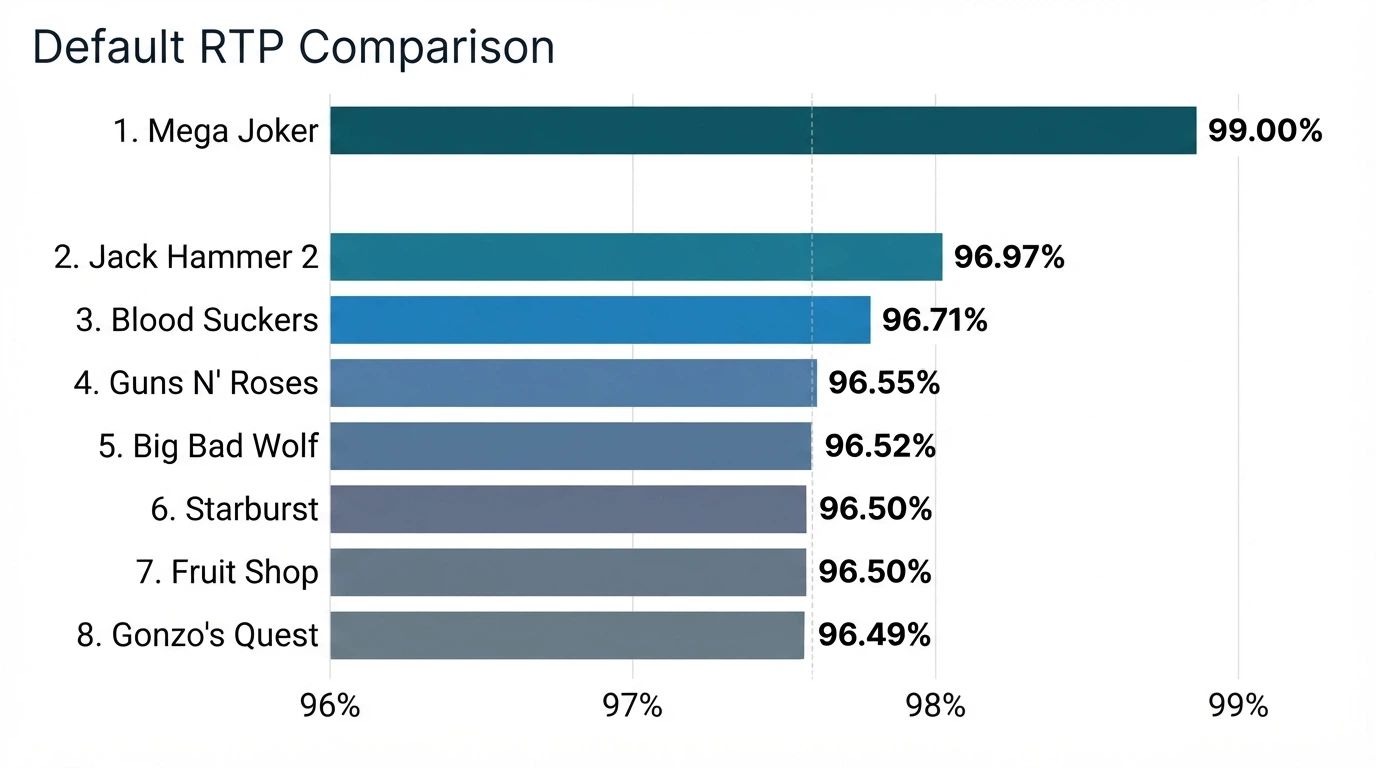
Bonanza Billion Xtreme comes second on RTP at 96.97%, with a maximum win of 20,000x stake. The high volatility means long dry stretches between hits, which makes the headline RTP less meaningful for a short session than for a sustained one. The gap between Bonanza Billion Xtreme and the Pragmatic Play cluster below it is small — fractions of a percentage point — but the cluster itself sits in a narrow band between 96.49% and 96.71%, and that band is what most Australian players will actually encounter.
Why the Same Pokie Pays Differently at Different Casinos
Pragmatic Play ships multiple RTP versions of its most-played titles, and the casino selects which version goes live. Sweet Bonanza is the clearest example: versions exist at 96.51%, 95.45%, 94.51% and 91.51%. The five-point spread between the top and bottom versions changes expected loss per dollar wagered from 3.49 cents to 8.49 cents. That is not a rounding error.
The same versioning applies elsewhere in the Pragmatic Play catalogue. Bubble Up ships at 96.52%, 95.55% and 94.51%. Sleeping Dragon Ultra Dark ships at 96.50%, 95.50% and 94.50%. The default figure on the developer’s site is the highest of the available versions; the figure a player actually faces depends on which version the casino has deployed.
There is no shortcut to knowing which version is live at a given casino without testing it. A player who cares about the number asks the casino’s support team which Pragmatic Play RTP configuration they run on the specific title. A player who doesn’t ask is rolling on whatever the casino chose.
Online Casinos Are Prohibited in Australia — Here Is What That Actually Means
The Interactive Gambling Act 2001, strengthened by the 2017 amendment, makes it an offence to provide online casino games, online pokies or in-play sports betting to a person in Australia. There is no Australian licence for any of those products. None can exist. The state and territory wagering licences — held by SportsBet, Tabcorp, Ladbrokes, Bet365 and the rest — cover sports and racing only, and only when the bet is placed before the event begins.
The Interactive Gambling Act — What the Law Prohibits and Who It Punishes
The IGA targets providers, not players. An individual punter is not prosecuted for placing a bet at an offshore casino. The civil penalties attach to the operator: up to A$2,475,000 per day for an individual provider, and up to A$12,375,000 per day for a corporation. The penalty scale is built to deter entry, not to chase individual players.
Enforcement runs through the Australian Communications and Media Authority. The ACMA investigates complaints, issues formal warnings, files civil penalty proceedings and directs Australian ISPs to block illegal sites. Since the first blocking request in November 2019, 1,564 illegal gambling and affiliate websites have been blocked. More than 225 illegal services have voluntarily withdrawn from the Australian market since 2017. In the second quarter of 2025 alone, the ACMA found 30 breaches, issued 10 formal warnings and blocked 73 sites.
The tab on enforcement is a moving target because the prohibited services keep changing their domain names. The pattern — provider takes a site live, ACMA blocks it, provider launches a mirror — repeats monthly. The volume is high because the underlying market is large.
Offshore-Licensed Does Not Mean Licensed in Australia
Every casino on this page is licensed somewhere. The somewhere is not Australia. The common licences — Curaçao, Anjouan, the Malta Gaming Authority — let a casino operate in jurisdictions that recognise those regulators. None of those regulators extends jurisdiction to Australia, and none of them is empowered to enforce Australian consumer law on behalf of an Australian player.
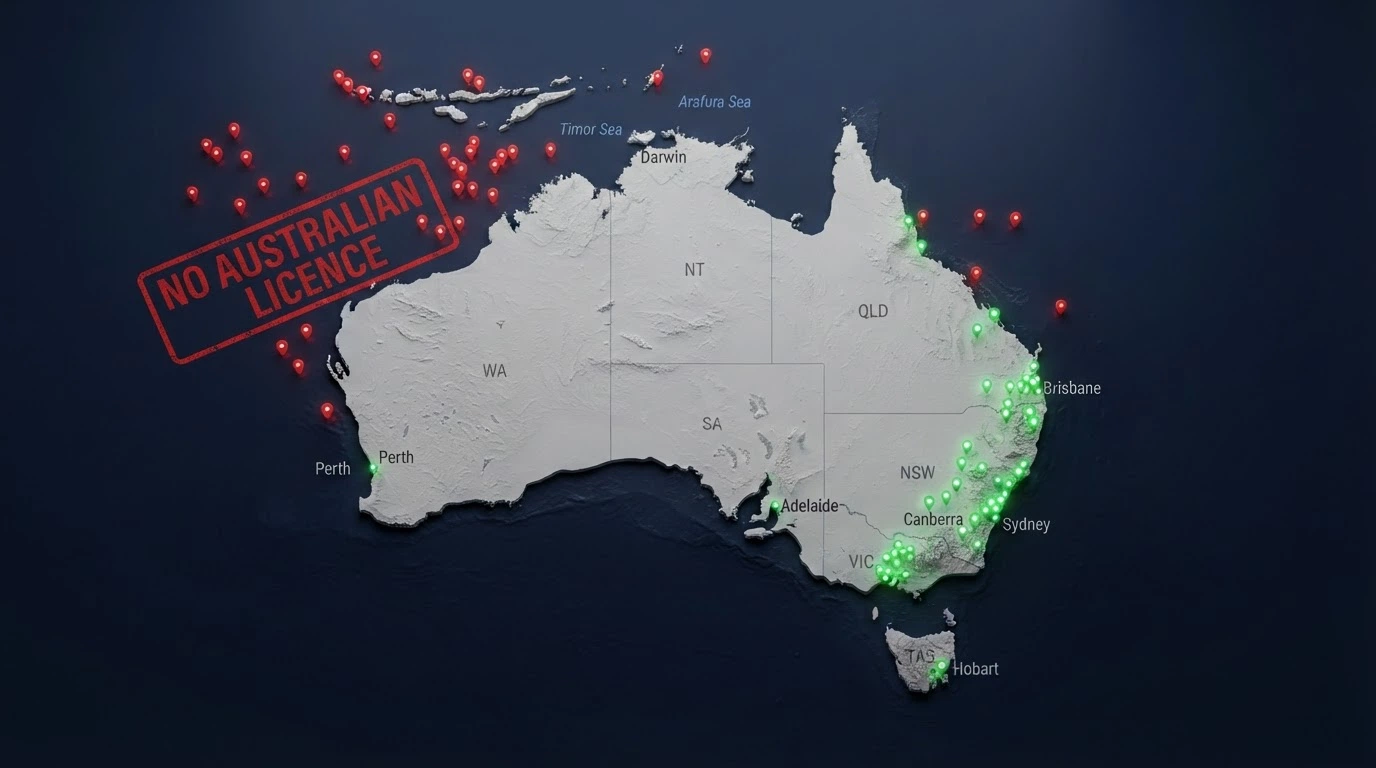
Two operational signals mark an offshore operator out. The first is the deposit menu: a casino offering credit-card deposits and crypto deposits is operating outside Australian rules, because both are banned at Australian-licensed wagering operators since 11 June 2024. The second is the brand name. “Royal Reels,” “FairGO,” “WinSpirit” and similar AU-coded branding typically signals offshore origin with an Australian marketing wrapper.
A player who treats an offshore Curaçao licence as equivalent to an Australian one has misread the document. The licence permits the casino to operate; it does not promise recourse to the player.
What You Lose When You Play Offshore — No BetStop, No ACMA, No Recourse
An offshore casino sits outside every Australian consumer protection framework. Three losses recur.
First, BetStop does not reach offshore casinos. A player who has registered with BetStop has been excluded from every Australian-licensed wagering service — but a Curaçao-licensed casino is not connected to the register and will continue to accept deposits and wagers from that player. The exclusion is real at SportsBet; it is invisible at Stake.
Second, the ACMA is not a complaints body for offshore disputes. A player who has been refused a withdrawal at an offshore casino cannot lodge an ACMA complaint that produces a refund. ACMA’s enforcement powers end at the Australian border.
Third, there is no Australian financial ombudsman or tribunal with jurisdiction over an offshore operator. A casino that voids a win or closes an account has, in practice, the last word — subject only to the dispute mechanisms the casino itself offers, which are typically tilted in the operator’s favour.
The pattern is consistent: an offshore licence permits the casino to operate; it does not promise the player a remedy.
The 2026 Reforms — Advertising Caps, Payment Blocks and What Changes in 2027
The Interactive Gambling Amendment (Gambling Reform) Bill 2026 passed Parliament on 19 August 2026. Its measures commence on 1 January 2027. Several changes bear on the offshore-casino question directly.
First, banks and payment providers gain express authority to block transactions to illegal gambling operators from 1 January 2027. The practical effect is that an Australian player who tries to deposit at an offshore casino via a major Australian bank may find the transaction declined at the bank level, not the casino level. Second, advertising caps apply to licensed wagering: no more than three wagering advertisements per hour between 6:00 am and 8:30 pm, a live-sport blackout from 15 minutes before an event until five minutes after, and a ban on broadcasting sporting odds outright. Athletes, celebrities and influencers are barred from promoting wagering products. Third, BetStop is strengthened: direct marketing of inducements is prohibited for 14 days after sign-up and for three months after BetStop deregistration, indefinitely for at-risk customers.
None of this changes the offshore casino player’s status. The product they are using is prohibited to be provided to Australians; the new rules strengthen the prohibition rather than legalise the product. What changes is the friction around using it: harder to deposit, harder to ignore in advertising, harder to come back from a BetStop exclusion without being targeted.
Staying in Control — Responsible Gambling When the Safety Net Is Thinner
The safety net is thinner offshore. BetStop does not bind the operator, the ACMA cannot arbitrate a dispute, and there is no Australian tribunal with jurisdiction over a Curaçao licence. The player carries more of the responsibility, and the player-side tools that work at any casino — deposit limits, session reminders, take-a-break, voluntary exclusion at operator level — matter more.
BetStop — Why Australia’s National Self-Exclusion Register Does Not Reach Offshore Casinos
BetStop launched in August 2023. One registration excludes a person from every Australian-licensed online and phone wagering service in a single step. The register is comprehensive at the licensed end of the market.
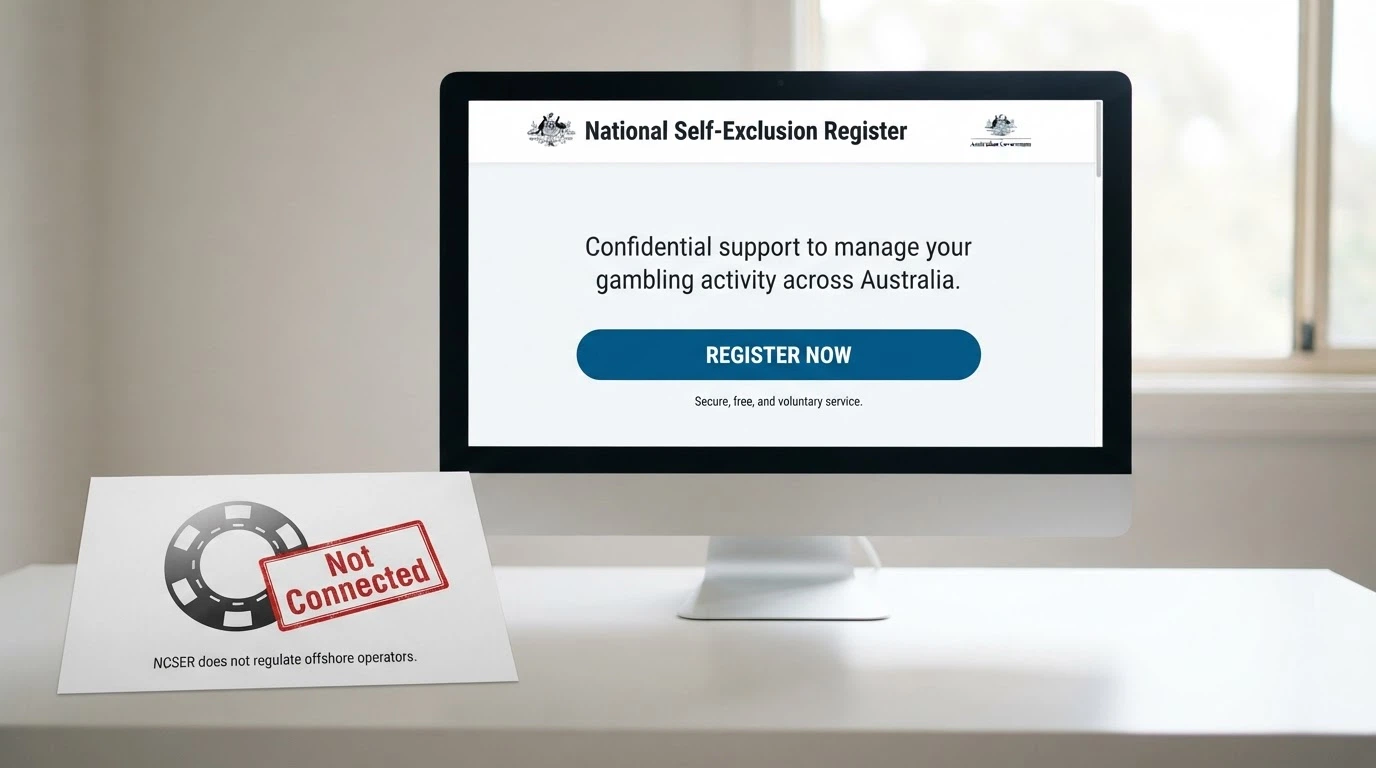
The numbers are large. As at 31 July 2026, BetStop had 67,480 registrations, of which 41,290 exclusions were still active. Seventy-eight percent of registrants were under 40, and 38% had chosen lifetime exclusion. The register’s design — one form, one exclusion, every licensed operator — is what makes it work.
It does not reach offshore casinos. A self-excluded player who signs up at a Curaçao-licensed site has not been excluded from that site. The site will accept the deposit and process the wager. From 1 January 2027, a three-month ban on direct marketing of inducements applies after BetStop deregistration, but it applies to Australian-licensed operators and their marketing partners — not to offshore casinos targeting Australian players from outside the regime.
Tools, Limits and Where to Get Help — Resources That Work Regardless of Licence
Deposit limits and session reminders work at every casino, licensed or not. Most offshore operators offer both in the account settings; the player who sets them sets the boundary, and the casino is bound to enforce them at its own platform level. Take-a-break and operator-level self-exclusion work similarly: the exclusion is real at that operator, even though it is not transferable to others.
The National Gambling Helpline — 1800 858 858 — is free, confidential and staffed 24/7. Gambling Help Online (gamblinghelponline.org.au) provides online chat and counselling. Both services are independent of any casino, licensed or offshore, and both work for an Australian player regardless of where they have been playing.
The minimum age for any commercial gambling in Australia is 18. An offshore casino that accepts a player under 18 is operating outside every Australian rule that exists, including the ones it cannot see.
About 2.1% of Australian adults — roughly 430,000 people — experience problem gambling, and the Australian Institute of Health and Welfare put high-risk gambling at 1.8% in 2022. The figures are not abstractions. They are the population the responsible-gambling infrastructure was built for, and the infrastructure does not lose its usefulness at the offshore border.
The 10 Offshore Casinos Australian Players Use for Same-Day Payouts in 2026
The table below ranks every operator on this page by tested payout speed where data exists, with licence status disclosed for each. No operator holds an Australian casino licence, because none can.
| Casino | Licence | Fastest Payout (Tested) |
|---|---|---|
| SkyCrown | Curaçao (offshore — not licensed in Australia) | ~10 min crypto (median 4 min) |
| Neospin | Curaçao (offshore — not licensed in Australia) | 5–10 min crypto, A$7,500 cap |
| King Billy | Curaçao (offshore — not licensed in Australia) | 1–2 hr e-wallet |
| Casinonic | Curaçao (offshore — not licensed in Australia) | 30–60 min crypto |
| Bizzo Casino | Curaçao (offshore — not licensed in Australia) | 45 min Bitcoin |
| Rocket Play | Offshore (not licensed in Australia) | — |
| Royal Reels | Offshore (not licensed in Australia) | — |
| FairGO | Offshore (not licensed in Australia) | — |
| WinSpirit | Offshore (not licensed in Australia) | — |
| Stake | Curaçao (offshore — not licensed in Australia) | — |
The five operators with a tested payout time share the top half of the ranking. The five without published independent test data sit below them, with the gap marked. Every operator on this page is offshore-licensed and accessible from Australia, but none is licensed in Australia.
SkyCrown — Crypto Payouts Cleared in Under 10 Minutes
SkyCrown holds the fastest median payout on the page: four minutes via crypto, with a typical ceiling around ten minutes. The operator supports ten or more crypto assets including Cardano, Tether and Tron. The Curaçao licence underwrites the operation. AU market share is reported at 8.55%, which is meaningful against the rest of the offshore set.
The verdict is straightforward: for a player whose bankroll is in crypto and whose verification is done, SkyCrown is the fastest operator on this page.
Neospin — High-Limit Crypto Withdrawals With a A$7,500 Cap
Neospin’s tested crypto payouts cleared in five to ten minutes after approval. The per-transaction limit sits at A$7,500 — higher than most operators on the list — which makes Neospin a fit for larger cashouts where the cap matters. Bank transfer and e-wallet fallbacks exist but run at the slower end of the market.
The verdict: a higher-limit option within the same crypto rail that leads the page.
Rocket Play — Established AU Player Base With Offshore Roots
Rocket Play reports the largest AU market share of any operator on this page, at 9.4%. The brand is recognisable to Australian players. Independent test data on payout speed was not produced this run, so the speed claim is not made with a number behind it.
The verdict: the AU market presence signals an operator that has invested in the Australian player, but the absence of published test data is itself information. A minimum-deposit test is the right way to learn the actual speed at this operator.
King Billy — E-Wallet Payouts in 1–2 Hours Without Touching Crypto
King Billy is the standout for a player who wants fast fiat payouts without setting up a crypto wallet. Tested e-wallet payouts (Skrill, Neteller) cleared in one to two hours; crypto runs same-day. The Curaçao licence is standard for the offshore set.
The verdict: the right operator for the e-wallet-first player, and the one to test before going to crypto.
Royal Reels — AU-Branded Offshore Casino
Royal Reels carries an AU-coded brand name and 2.51% AU market share. Independent payout-speed test data was not produced this run. The brand signals offshore origin with an Australian marketing wrapper.
The verdict: AU branding is not the same as Australian licensing. Read the withdrawal terms page before depositing.
Casinonic — PayID Under 4 Hours, Crypto Under an Hour
Casinonic delivered tested MiFinity payouts in under four hours and Bitcoin and other crypto in 30 to 60 minutes. The dual-rail position — PayID and MiFinity for AUD convenience, crypto for raw speed — covers both preferences. Curaçao licence, standard for the set.
The verdict: the most balanced rail coverage on the page, with PayID at the AU-friendly end and crypto at the speed end.
FairGO — AU-Themed Offshore Option
FairGO carries an AU-coded brand and modest AU market share at 0.8%. Independent payout-speed test data was not produced this run.
The verdict: small footprint, no published speed data. A minimum-amount withdrawal test before committing more is the right move.
WinSpirit — Growing AU Presence
WinSpirit reports 1.55% AU market share. Independent payout-speed test data was not produced this run.
The verdict: a newer entrant on the AU-facing list. The market share growth is the signal worth watching; the speed claim is not yet made.
Bizzo Casino — Bitcoin at 45 Minutes, but PayID Takes Days
Bizzo is the clearest demonstration on the page that the payment method matters more than the casino’s marketing. Tested Bitcoin payouts cleared in 45 minutes on two separate occasions. Tested PayID withdrawals sat at two to five business days. Neteller ran zero to 24 hours. The asymmetry inside a single operator is the lesson.
The verdict: choose the rail, not the operator. The same brand is fast on Bitcoin and slow on PayID.
Stake — Crypto-Native Giant With a Curaçao Licence
Stake is the largest crypto-native operator in the global market and carries a Curaçao licence. AU market share is reported at 1.28%. The crypto-native business model implies the speed profile of a crypto-first operator — but the implication is not a measured figure.
The verdict: the brand recognition is real, the crypto-native positioning implies speed, and the speed claim is not made with a number on this page.
How We Evaluated and Ranked These Casinos
The ranking leans on three criteria in order. First, tested payout speed from independent published testing — SlotSpeak, Betsquare, Esports.gg, Ocean Road Magazine, NewCasino.ai, PlayStation Universe, PayoutVerdict and the others cited through the page. Second, payment-method range: an operator with PayID, e-wallet and crypto coverage tested ranks above one with crypto alone. Third, Australian player fit: market share signals where Australian players have already voted, but it is not a payout-speed proxy.
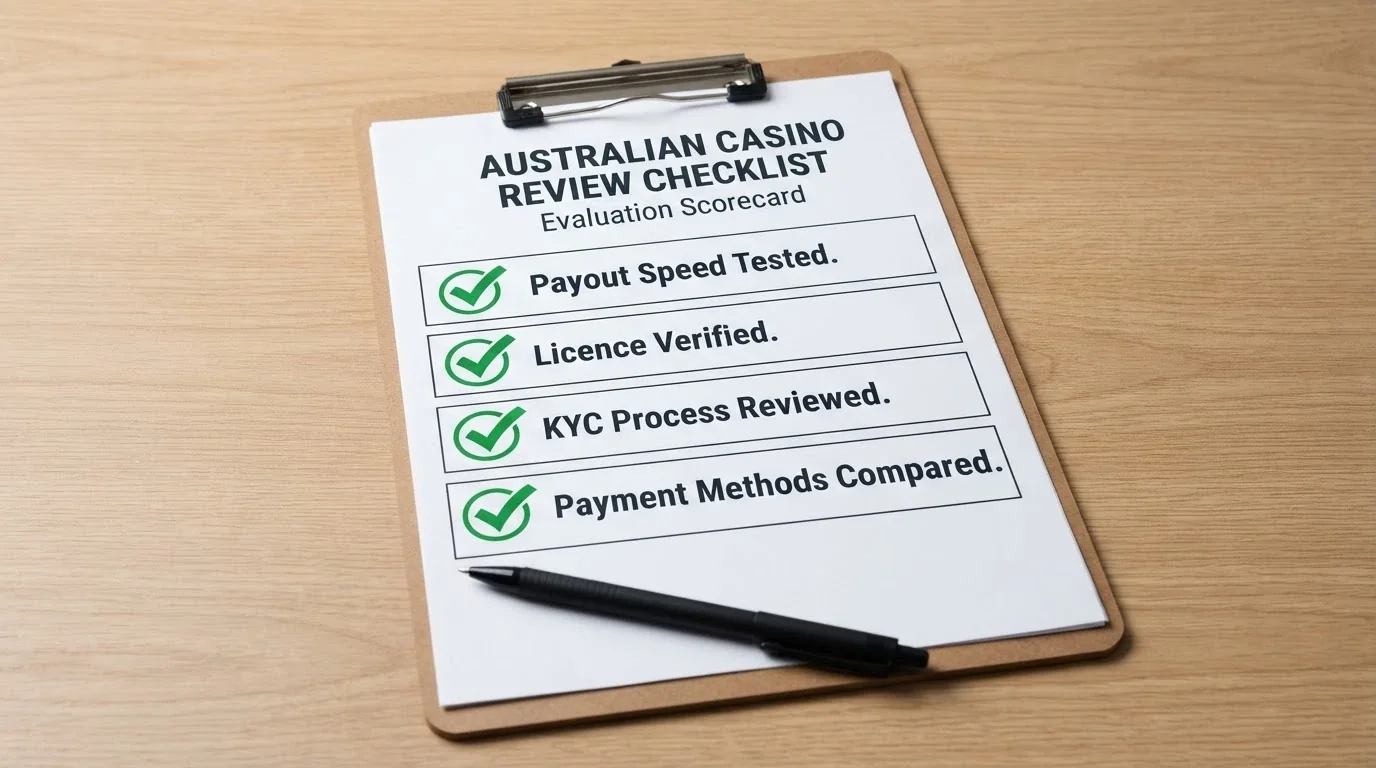
The AU licensing benchmark is the ACMA register and the Interactive Gambling Act 2001. No operator on this page holds an Australian casino licence because no Australian casino licence can exist. The legality section above sets out the regime in detail.
The data has limits. Five of the ten operators have no published independent test data this run. Where the data is absent, the ranking falls back on market share and rail coverage, and the gap is marked in the comparison table. Speeds vary by method and by verification status — the same operator can deliver in four minutes via crypto to a verified account and in 48 hours via bank transfer to a first-time withdrawer. The page’s tested figures reflect the verified-account case, which is the realistic best case for a player who has done the work at sign-up.
What Australian Players Should Actually Do With This Information
The figures carry a clear conclusion.
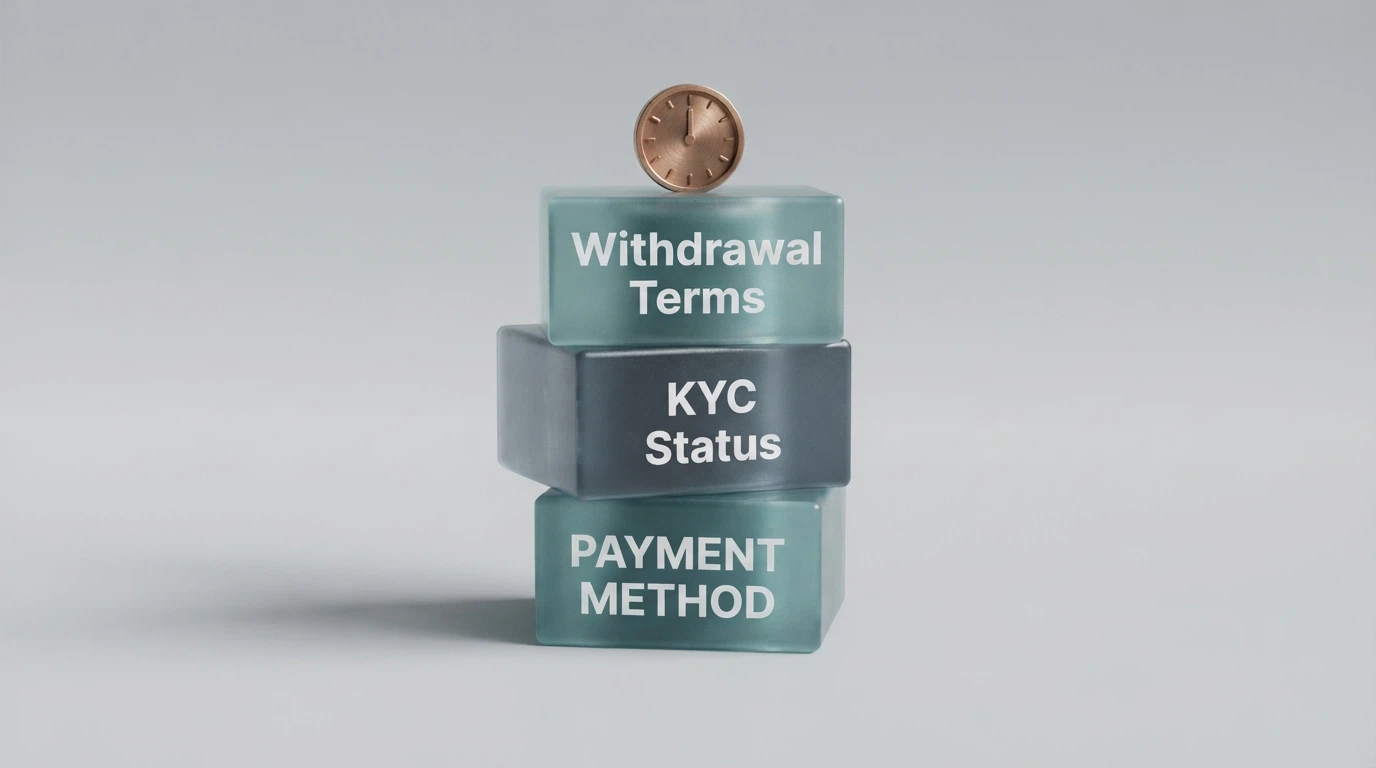
Verification first. A player who completes KYC at sign-up — document upload, identity check, address confirmation — removes the 24 to 72 hour penalty from their first withdrawal. The single largest variable in payout speed is the player’s own verification status, and it is the variable the player controls.
Choose the rail. Crypto is the fastest, with USDT-TRC20 leading the field at a tested median of four minutes at SkyCrown. PayID is the fastest AUD-native rail once approved, with the Bizzo caveat that PayID at some operators runs two to five business days regardless of what the deposit side advertises. E-wallets sit between PayID and bank transfer, with King Billy’s tested Skrill/Neteller at one to two hours. Bank transfer is the slow lane at one to three business days at every operator.
Test small. The minimum withdrawal at most operators starts at A$20. A first-time withdrawal at the minimum amount is the cheapest way to learn what the rail actually does at that operator, with that verification status, on that day of the week. A$20 is also the price of finding out that the operator’s stated times do not match its actual queue.
Read the withdrawal terms before depositing. The operator’s own terms page lists the per-transaction cap, the minimum withdrawal, the fee schedule, and the processing window. Where the deposit pipeline runs fast and the withdrawal pipeline runs slow, the asymmetry is usually disclosed in those terms — it is just not on the marketing page.
Know what is missing. No Australian casino licence exists for the products on this page. BetStop does not reach any operator listed. The ACMA is not a complaints body for offshore disputes. The player carries the entire downside of an unresolved withdrawal, a voided win or a closed account. The same-day payout is real at the operators that have been tested. The Australian consumer protection that would back it up is not.
The central tension: fast payouts are achievable at offshore casinos in 2026. The legal status of those casinos, and every protection an Australian player would otherwise have, is not. A reader who proceeds does so with the rail and the verification done; a reader who values the protection has to accept a market that does not contain the product they want.
Frequently Asked Questions
How long does KYC verification take, and how does it affect withdrawal speed?
KYC verification at sign-up typically completes within hours and unlocks fast withdrawals from the first cashout. KYC deferred to the first withdrawal adds 24 to 72 hours to that first cashout, after which subsequent withdrawals clear quickly. Operators that auto-approve verified-account withdrawals under a threshold (typically around A$2,000) skip manual review entirely. Verification status is the single largest variable in payout speed and the one the player controls.
What is the fastest withdrawal method for Australian casino players — PayID, crypto, or e-wallets?
Crypto is the fastest, with USDT-TRC20 clearing in two to ten minutes at most operators and a tested median of four minutes at SkyCrown. PayID is the fastest AUD-native rail after casino approval, with August 2026 testing showing a median around two hours — though some operators list PayID at two to five business days, so the rail’s speed is operator-dependent. E-wallets (Skrill, Neteller) sit in between, with tested payouts at one to two hours at King Billy.
What happens if an offshore casino refuses to pay out my winnings?
An Australian player at an offshore casino has no ACMA complaints pathway, no Australian financial ombudsman and no Australian tribunal with jurisdiction over a Curaçao or Anjouan licence. The dispute resolution offered by the casino itself is typically the only recourse, and it is structured in the operator’s favour. The practical prevention is to complete KYC at sign-up, read the withdrawal terms, test with the minimum withdrawal, and avoid operators whose terms cap winnings at a level incompatible with the games being played.
Do same-day payout casinos charge withdrawal fees?
Fees vary by operator and method. Some operators — Moonbet among them — settle crypto cash-outs on-chain with zero platform fees and no identity check under a threshold. Other operators charge a flat fee per withdrawal or a percentage on currency conversion. Crypto on a low-fee network (Tron for USDT-TRC20) is typically the cheapest rail; bank transfer is typically the most expensive because the bank-side fee applies on top of any operator-side fee.
What is the minimum withdrawal amount at fast-payout casinos in Australia?
The typical minimum withdrawal at AU-facing offshore casinos starts at A$20. Some operators set higher minimums for specific rails — bank transfer minimums often run higher than crypto minimums. The minimum is low enough that a first-time withdrawal test at the smallest permitted amount is the cheapest way to learn the operator’s actual processing time, queue behaviour and rail reliability before committing a larger balance.