
Best Fast Payout Online Casino Australia: Where the Money Actually Leaves the Building
The screen says “approved.” The bank says “pending.” The difference between those two moments is the only thing this page is about.
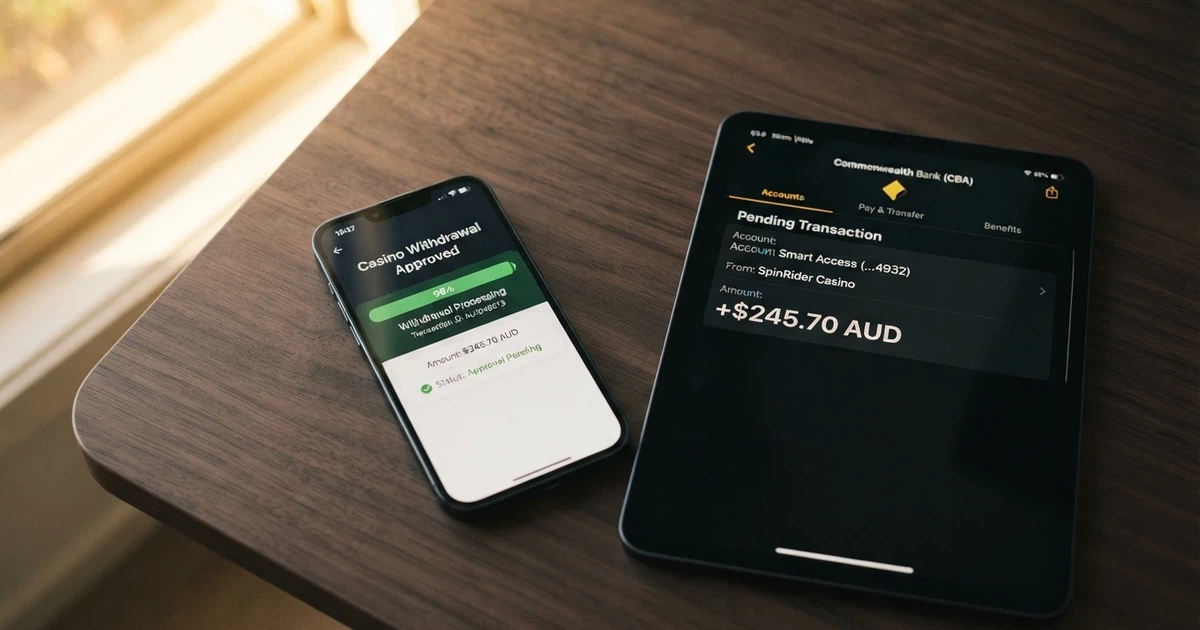
Online casino is prohibited in Australia under the Interactive Gambling Act 2001. No licence exists, in any state, for any online pokie or table game offered to a person in Australia. The “fast payout” conversation that follows is therefore a conversation about offshore operators, not local ones. Every brand ranked below holds a Curaçao or Tobique licence — never an Australian one. The speed is real. The protection is not Australian.
Data current as of 3 November 2026, verified against operator terms and conditions pages and the ACMA’s published blocking list.
Table of Contents
- Why Australian Players Chase Fast Payouts in 2026
- How Casino Payout Speed Actually Works
- Crypto Withdrawals: The Fastest Route Out of an Offshore Casino
- The Fastest-Paying Offshore Casinos for Australians in 2026
- SkyCrown
- Wild Fortune
- Stake
- BitStarz
- RocketPlay
- Royal Reels
- Bizzo Casino
- WinSpirit
- FairGO
- Casino Rocket
- Pokies That Pay — And How Fast Your Winnings Leave
- Fast-Payout Bonuses: When the Offer Slows Your Withdrawal
- How to Pick a Fast-Payout Casino You Can Actually Trust
- The Legal Reality: No Online Casino Is Licensed in Australia
- Staying Safe While Chasing Fast Withdrawals
- How We Evaluated and Ranked These Fast-Payout Casinos
- What This Means for Your Next Withdrawal
- Frequently Asked Questions
Why Australian Players Chase Fast Payouts in 2026
“Fast payout” is marketing shorthand for a specific promise: cashout approved and money in the player’s account inside 24 hours for ordinary methods, and inside an hour for crypto and PayID. Industry testing defines the benchmark plainly: under 24 hours for a fast-withdrawal casino, with crypto and PayID payouts landing in under an hour at the best sites. Most operators are nowhere near that line.
Australians seek speed offshore because the licensed domestic market does not offer online casino at all. The Interactive Gambling Act 2001 makes it an offence to provide online pokies, online casino games or in-play sports betting to anyone in Australia. No licence exists — not federally, not in any state or territory. The licensed product is pre-event wagering on sport and racing, plus lotteries and land-based casinos. Everything else an Australian player sees in a “best online casino” listicle is, by definition, an offshore operator serving a prohibited product.
The trade is harsh and worth naming in advance. Speed offshore comes with the loss of every Australian consumer protection. There is no Australian complaints body to chase a refused withdrawal. There is no BetStop coverage to block a self-excluded person from depositing again. There is no ACMA recourse when a site changes terms after a win. And the site itself can be DNS-blocked overnight, with the player’s balance still on deposit inside it.
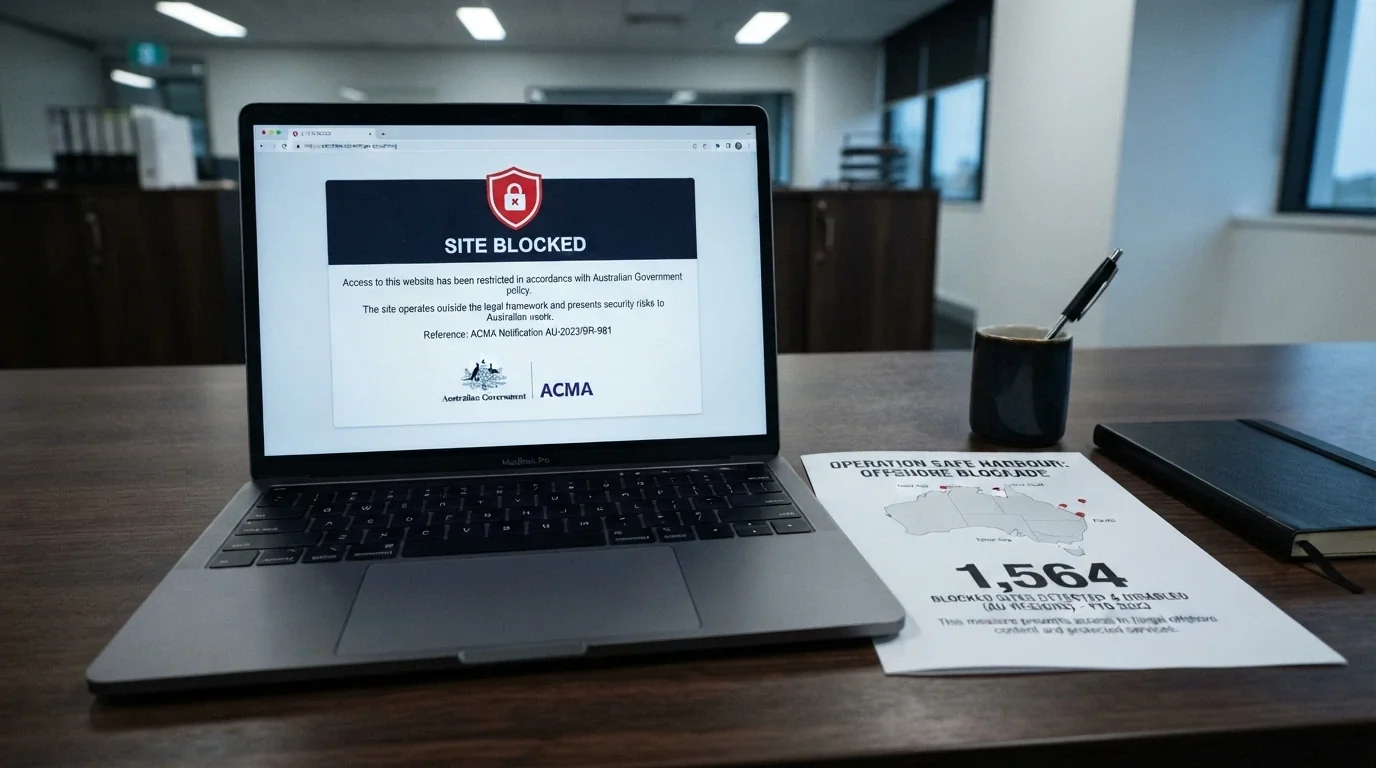
The reform context sharpens the urgency. The Interactive Gambling Amendment (Gambling Reform) Bill 2026 passed the Australian Senate on 19 August 2026. From 1 January 2027, banks and payment providers gain express authority to block transactions to illegal gambling operators. The ACMA, since its first blocking request in November 2019, has had 1,564 illegal gambling and affiliate websites blocked at Australian ISPs (as of March 2026), and more than 225 illegal services have withdrawn from the Australian market since 2017. The window of frictionless offshore access is closing.
What a Fast-Payout Casino Actually Delivers
The industry’s own working definition is clean: under 24 hours for a standard cashout, with crypto and PayID clearing in under an hour at the fastest sites. That number is the floor a “fast payout” claim must clear to be honest.
The mechanics behind the promise matter more than the headline. A genuine fast-payout operator runs two stages efficiently. Stage 1 is the casino’s internal approval — checking the withdrawal against wagering requirements, KYC records and bonus terms. Stage 2 is the payment rail, which carries the money from the casino’s account to the player’s. When Stage 1 is automated and Stage 2 is fast, the cashout is genuinely instant. When a casino markets “instant withdrawals” while only offering bank transfer, it is being misleading — the operator cannot speed up a rail it does not control.
What marketing claims outpace reality is the gap this page measures. Operator-side pages tend to quote the speed of the fastest path at the fastest hour. Real testing shows the spread: some operators clear PayID in under 15 minutes on a good run, others take 26 hours end-to-end to a major Australian bank. Crypto is the most consistent performer, because the casino either has automated its approval pipeline or it has not, and the speed of the blockchain itself is no longer the bottleneck.
The 2026 Landscape for Australian Players
The 2026 reform is already law, even though its substantive measures do not commence until 1 January 2027. What changes first is the way Australians find these sites, and only then the way they pay them.
The reform introduces AdStop, a national wagering advertising opt-out register administered by the ACMA and funded by a cost-recovery levy on wagering companies. From the same commencement date, direct marketing of inducements is prohibited for 14 days after a customer signs up and for 90 days after a person deregisters from BetStop — the kind of “we miss you, here’s a bonus” message that drives return play. Live-sport advertising blackout is extended to begin 15 minutes before a sporting event and end five minutes after it. The combination tightens the funnel Australians currently walk to reach an offshore site through licensed-operator marketing.
The bigger shift is on the payment side. From 1 January 2027, banks and payment providers can block transactions to illegal gambling operators. This is not a guarantee of blocking — it is an authority. Banks will not necessarily activate it for every transaction. But the friction is real, and it arrives in a market that has been built on PayID, debit card and a steady flow of crypto top-ups.
The reform does not legalise online casino. It does not create a licensing pathway. It restricts how licensed wagering operators can advertise and how banks can route funds. Offshore casinos remain prohibited. The market Australians actually access will keep operating in the gap, and the gap is getting narrower.
What You Sacrifice for Speed Offshore
Every Australian consumer protection ends at the moment of deposit.
BetStop binds approximately 150 licensed Australian wagering providers. An offshore casino is not connected to the register and will continue to accept a self-excluded person’s money. The 49,382 people registered to self-exclude on BetStop to the end of Q1 FY 2025–2026 have a real shield against the licensed market. They have none against the operators ranked below.
ACMA blocking is DNS-level, not account-level. When the ACMA directs Australian ISPs to block a site, the URL stops resolving. It does not withdraw the balance a player holds inside. A player who deposited before a block and has not withdrawn has lost practical access to the money — without an Australian complaints body to chase it. More than 225 illegal services have withdrawn voluntarily from the Australian market since 2017. Some carried player balances at the time. There is no recovery mechanism.
Australian Consumer Law does not reach these operators. The Australian Financial Complaints Authority does not. The Office of the Australian Information Commissioner does not, for any privacy breach arising offshore. A player with a refused withdrawal has, in practice, the casino’s internal complaints team and the casino’s terms — and whatever leverage comes from the casino wanting to keep a reputation among affiliates and reviewers.
The player is not prosecuted under the IGA — the Act targets the provider. The legal risk on the consumer side is essentially nil. The financial risk is real.
How Casino Payout Speed Actually Works
A withdrawal travels two stages. Stage 1 is the casino’s internal approval pipeline. Stage 2 is the payment rail that carries the approved funds from the casino’s account to the player’s. Speed is the product of how fast each stage runs and how well they hand off to each other.
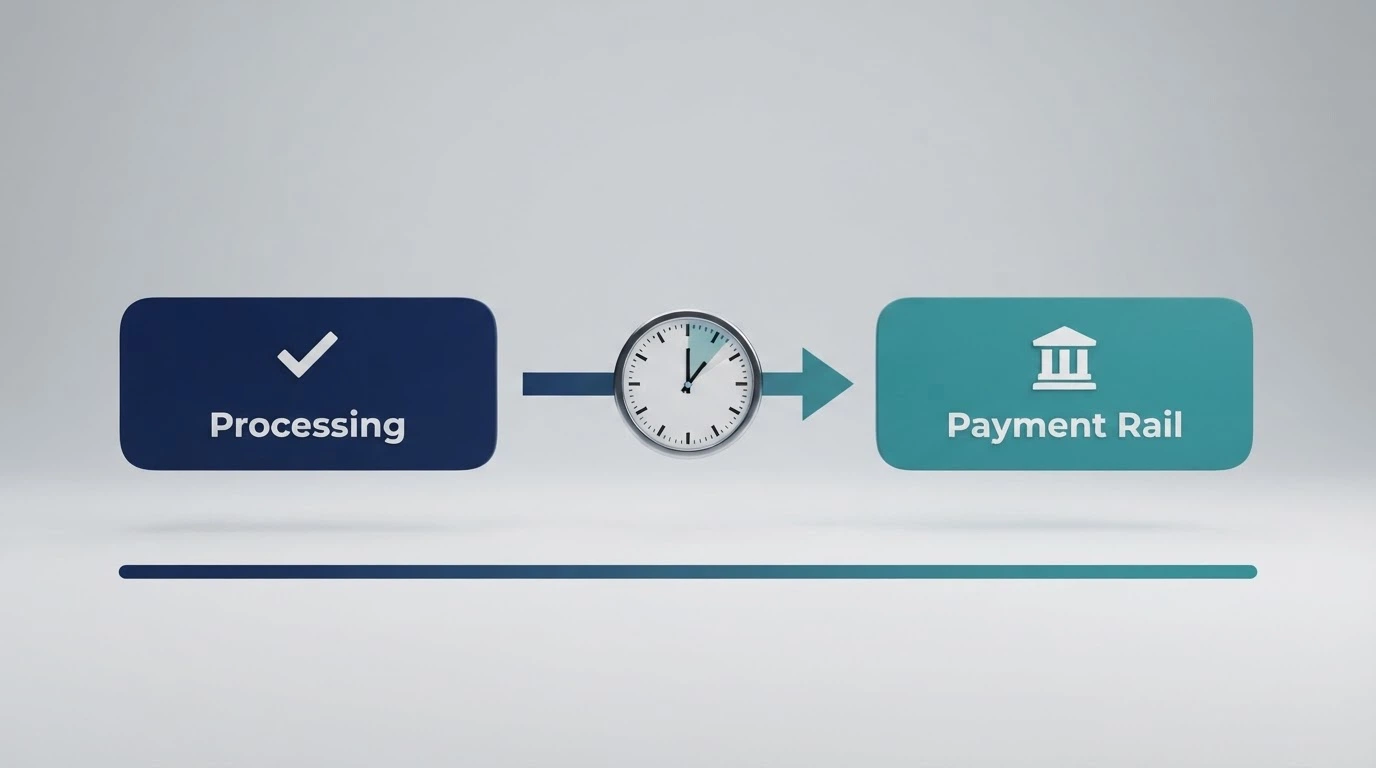
At casinos with automated approval pipelines, the internal processing stage takes 5 to 30 minutes. At casinos using manual review, the same stage takes 2 to 24 hours. The fastest legitimate crypto cashout at an offshore casino serving Australians is around 12 minutes end-to-end; the slowest same-method cashout at a comparable operator can run over four hours. The difference is almost entirely in Stage 1.
Stage 2 is governed by the rail. A PayID transfer settles via Australia’s New Payments Platform (NPP) in under 60 seconds once the casino releases funds — the technology itself is essentially instantaneous. The delay in a PayID withdrawal is rarely the rail; it is the casino’s approval pipeline and the receiving bank’s incoming-batch window.
Real-Money Payouts: What “Fast” Means in Practice
The honest expectation for an Australian player using an offshore casino is 24 to 48 hours for PayID end-to-end, with roughly 12 to 18 hours of that being operator-side processing and 12 to 30 hours being the receiving bank’s PayID batch window. That is the average across multiple operators; the best runs are faster, the worst runs are slower.
Crypto compresses the picture. BitStarz’s crypto payouts have been verified at 0.2 to 2 hours, with a tested average of 4 hours 18 minutes. Stake has been verified at 1 to 4 hours for crypto. Wild Fortune’s average across five real tests was 5 hours 24 minutes for USDT TRC20 — with one PayID run to a Commonwealth Bank account taking 26 hours 11 minutes end-to-end. The casino-side approval pipeline is the variable. The rail speed is mostly settled.
The pending-period reversal window is the operator’s safety valve. Most offshore casinos allow 12 to 24 hours after a withdrawal request during which the player can cancel the withdrawal and return the funds to play. This is standard practice and not, on its own, a red flag. It becomes one when the operator extends the window beyond 48 hours or uses it to push KYC re-verification — at which point the pending period is no longer a safety valve but a delay tactic.
KYC verification is the most common cause of unexpected withdrawal delay on the first cashout. An operator that has not previously asked for source-of-funds documentation will typically ask for it at the first withdrawal. A bank statement, a utility bill, a photo of the payment card used. The first cashout can sit for 24 to 72 hours while this completes; subsequent cashouts usually run on the verified profile.
PayID: The AU Rail That Moves Money in Seconds
PayID is Australia’s dominant fast-payout rail for fiat, and for good reason. The infrastructure underneath — the New Payments Platform, with Osko as its real-time settlement layer — clears individual payments in under 60 seconds once both ends have released funds. A PayID transfer from a major bank’s account to another major bank’s account is, in normal conditions, instant.
The casino is the bottleneck, not the rail. Once a casino approves a PayID withdrawal, the money typically lands within minutes. The 24 to 48-hour end-to-end average that most Australian players experience is operator-side processing plus the receiving bank’s incoming-batch window. A bank that batches its PayID receipts at four-hour intervals turns an instantaneous rail into a half-day wait. A bank that processes PayID continuously turns the same casino approval into minutes.
For most Australian players using offshore casinos, PayID withdrawals are free — A$0 casino fees, A$0 bank fees — at most operators. Bank transfers through the legacy BECS clearing system take 1 to 3 business days regardless of how fast the casino approves the withdrawal, and may carry $0 to $20 in casino fees. POLi, the old fast-payout rail for Australian players, shut down on 30 September 2023 after BPay withdrew support. PayID has filled the gap, and the operators that integrate it cleanly are the operators Australian players reach for first.
E-Wallets and the Payment-Rail Speed Ladder
Ranking every withdrawal method from fastest to slowest at an offshore casino serving Australians:
- Crypto — sub-hour to a few hours; USDT TRC20 typically 0.2 to 8 hours, Bitcoin and Ethereum variable
- PayID — same-day at best, 24 to 48 hours typical end-to-end
- E-wallets (MiFinity, Skrill) — 24 to 48 hours, with wallet-to-bank on top
- Card (Visa, Mastercard debit) — 3 to 5 business days, with bank processing on top
- Bank transfer via BECS — 1 to 3 business days
Crypto sits at the top because the casino approval pipeline is the only real variable. The blockchain itself is fast. PayID sits just below because the rail is fast but the operator and the bank each add their own delay. E-wallets run the same operator-side delay, then add a wallet-to-bank transfer the player has to make separately. Cards and BECS bank transfers run on legacy rails that do not compress.
POLi used to sit above e-wallets. Its September 2023 shutdown removed the only true real-time fiat rail Australia had for online gambling. PayID is the replacement, and the gap is felt.
Why Your Withdrawal Still Takes Hours: Processing vs Rail
A casino that has not automated its Stage 1 pipeline cannot deliver Stage 2 speed. The internal approval process — wagering check, bonus term check, KYC re-verification, fraud flag review — is the bottleneck for every operator in this ranking. Automated pipelines run this in 5 to 30 minutes. Manual pipelines run it in 2 to 24 hours. There is no middle ground that gets the marketing to match the reality.
Telling which type an operator runs is harder than it should be. The clearest tell is the first withdrawal. An operator with automated approval will often process a first cashout — assuming KYC is already complete — inside an hour. An operator with manual approval will quote a 24-to-48-hour processing window on its terms page. The second tell is the pending-period window: 12 hours is typical and acceptable. Anything beyond 48 hours signals manual review, regardless of how the terms page is worded.
Calling a bank-transfer-only casino “instant” is misleading on its face. The rail does not support it. A casino that is genuinely fast clears most withdrawals within an hour, has PayID or crypto support, and quotes its processing window in hours rather than business days.
Crypto Withdrawals: The Fastest Route Out of an Offshore Casino
Crypto is consistently the fastest withdrawal method at offshore casinos serving Australians, with verified times of 0.2 to 8 hours depending on operator. The rail is not the bottleneck. The casino approval pipeline is.
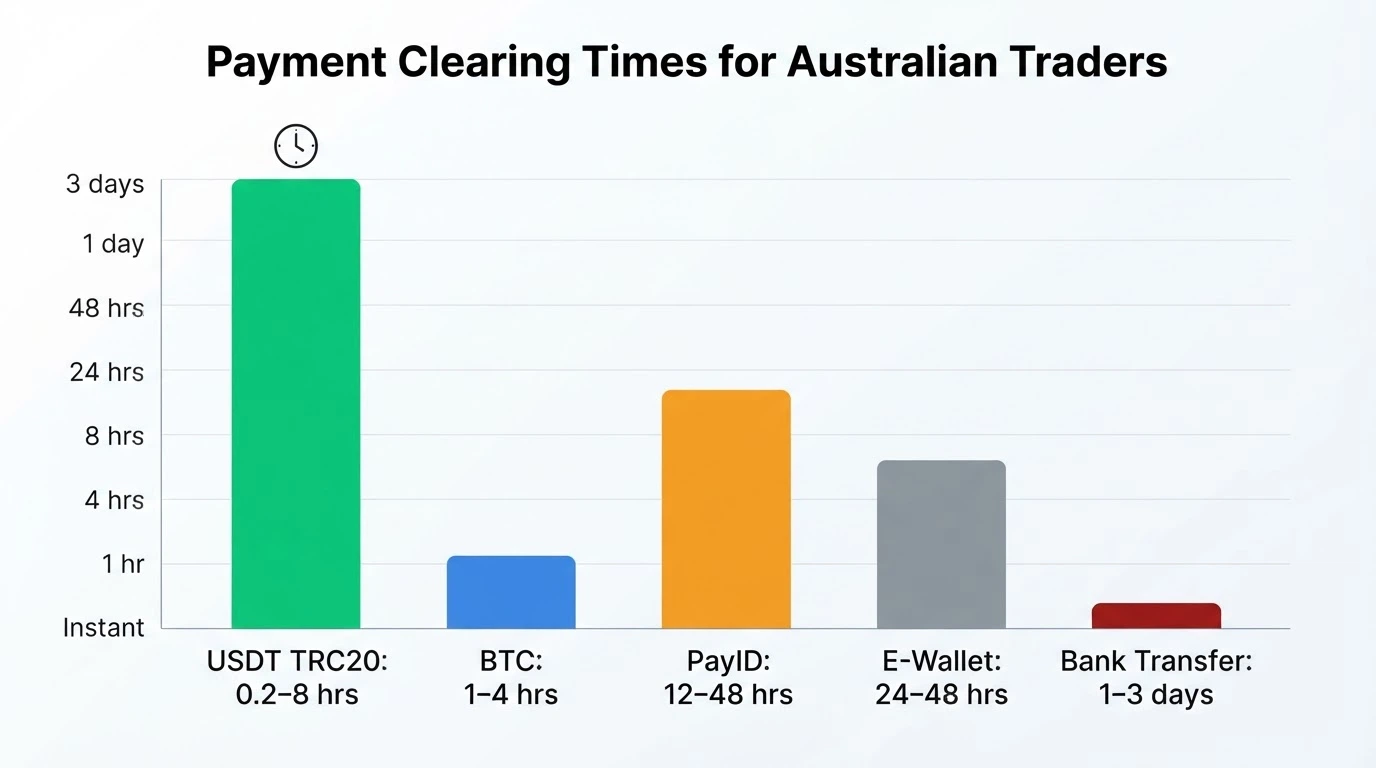
USDT on TRC20 is the dominant fast crypto rail at these operators. Transactions on the Tron network typically confirm in under a minute and carry negligible fees. Bitcoin and Ethereum run on slower networks with higher fees; their casino withdrawals usually clear in 1 to 4 hours once the operator approves, but the confirmation time adds friction that USDT TRC20 avoids. Wild Fortune’s average across five tests was 5 hours 24 minutes for USDT TRC20. BitStarz has been verified at 0.2 to 2 hours per AskGamblers data, with a PayoutVerdict-tested average of 4 hours 18 minutes. Stake has been verified at 1 to 4 hours. Bizzo lists crypto payouts as instant to 24 hours. Casino Rocket sits around 6 hours for USDT TRC20.
The casinos are not faster at crypto because the blockchain is fast. They are faster because their crypto pipelines are typically more automated than their fiat pipelines, and because crypto withdrawals do not run through the same fraud-flag pipeline as cards and bank transfers.
Bitcoin, USDT and the Sub-Hour Cash-Out
USDT TRC20 is the speed leader. It clears in 0.2 to 8 hours at most operators, with sub-hour runs not unusual at the most automated. The trade-off is custodial: holding USDT means holding a stablecoin, not a major cryptocurrency. For a player who wants to move money quickly and is comfortable with the Tether issuer’s structure, TRC20 is the right rail.
Bitcoin is the next tier, slower on confirmation but more liquid. A typical Bitcoin cashout at an offshore casino serving Australians runs 1 to 4 hours end-to-end once the operator approves. Ethereum sits between Bitcoin and USDT TRC20, with the gas fee variability adding a small extra layer of friction. Litecoin is fast and cheap; fewer operators support it for Australian-facing cashouts than USDT or BTC.
The operator-level numbers, drawn from real testing, are these: Wild Fortune averages 5 hours 24 minutes for USDT TRC20. BitStarz has been verified at 0.2 to 2 hours (AskGamblers) with a tested average of 4 hours 18 minutes (PayoutVerdict). Stake runs 1 to 4 hours crypto. Bizzo lists crypto payouts as instant to 24 hours with a minimum of A$20 to A$40 depending on coin. Casino Rocket sits around 6 hours for USDT TRC20.
What You Trade for Crypto Speed: Anonymity vs Protection
Crypto withdrawals are fast and pseudonymous. The Australian regulatory framework treats that combination as a risk, not a feature.
Credit cards, credit-related products and cryptocurrency are banned as payment for online wagering in Australia, commencing 11 June 2024 under the Interactive Gambling Amendment (Credit and Other Measures) Act 2023. An operator that fails to enforce the ban faces penalties of up to $247,500. The ban applies to licensed Australian wagering operators — sportsbooks and racing operators, the legal product. It does not bind offshore casinos, which is why these sites accept crypto and Australian-licensed operators do not. The payment method is itself a tell: a casino that takes crypto from an Australian player is operating outside Australian rules.
The dispute rights a player gives up with a crypto cashout are substantial. A debit card chargeback through an Australian bank gives a player a recovery mechanism when an operator refuses a withdrawal. Crypto has no equivalent. Once the blockchain transaction is confirmed and the funds have left the casino’s wallet, the player has only the casino’s terms and whatever leverage the operator feels. No Australian consumer protection reaches the transaction. No AFSL holder sits between the player and the funds.
The credit/crypto ban is also worth flagging because it shapes how an Australian player funds an account at an offshore casino. Debit cards, PayID and BPAY remain the legal routes for deposits. Crypto is one of the faster routes for withdrawals, but funding the casino account in crypto from an Australian bank account may itself run into the bank’s own compliance filters. The 1 January 2027 bank transaction-blocking authority tightens this further.
The Fastest-Paying Offshore Casinos for Australians in 2026
The table below ranks the 10 offshore operators Australian players use, ordered by verified payout speed. Every operator is offshore and unlicensed in Australia. None holds an Australian casino licence. None can — the product is prohibited.

| Operator | Licence / Regulator | Verified Payout Speed | PayID Support | Wagering Multiple | Welcome Bonus Headline |
|---|---|---|---|---|---|
| Stake | Curaçao (offshore) | 1–4 hrs (crypto) | No | N/A | No traditional welcome bonus |
| BitStarz | Curaçao (offshore) | 0.2–2 hrs crypto (verified); 4 hrs 18 min avg | No | — | Welcome package (details not confirmed) |
| Wild Fortune | Tobique Gaming Commission #0000064 (offshore) | 5 hrs 24 min crypto avg; PayID 26 hrs 11 min to CommBank | Yes | 40× bonus; 0× on free spins | 225% / CA$7,500 + 250 FS |
| SkyCrown | Curaçao (offshore) | Crypto under 1 hr; PayID same day | Yes | 40× | Up to A$8,000 + 400 FS (5 deposits) |
| Bizzo Casino | Curaçao (offshore) | PayID instant to 24 hrs; crypto instant to 24 hrs | Yes | 40× | Up to A$7,250 + 175 FS (4 deposits) |
| WinSpirit | Offshore (not Australian-licensed) | 30 min to 24 hrs | — | 30× | 100% up to A$500 + 50 FS |
| RocketPlay | Curaçao OGL/2024/1307/0748 (offshore) | Crypto fast (reversal window 12 hrs) | — | — | Staged bonus (terms referenced) |
| Casino Rocket | Offshore (not Australian-licensed) | ~6 hrs USDT TRC20 | Yes | — | Welcome package (details not confirmed) |
| Royal Reels | Curaçao (offshore) | — | Yes | 35× bonus only | A$500 + A$750 + A$1,250 across 3 deposits |
| FairGO | Curaçao sub-licence (Deckmedia N.V., offshore) | Crypto fastest; bank wire slow | — | — | Welcome package (details not confirmed) |
The spread in the table is the message. Crypto routes sit at the top end of the speed range; PayID routes sit slightly below; operators without verified data sit lower. Royal Reels has not been independently tested in the sources found this run. Several operators have not confirmed PayID support.
Every operator in the table is offshore. The IGA prohibits the provision of online casino games to a person in Australia. No operator in this ranking holds an Australian licence, and none can hold one for the casino product. Players using these sites have no Australian consumer protection, no BetStop coverage, no ACMA complaints recourse, and risk having their access blocked at any time.
How We Compared These Operators
Ranking was driven by verified payout speed first, then payment-method coverage, then bonus fairness, then licence transparency. Where multiple operators clear crypto inside an hour, PayID support and verified PayID times break the tie. Where verified data is absent, the operator ranks lower regardless of marketing claims.
The data sources were: PayoutVerdict’s “Instant Withdrawal Pokies Australia 2026” testing; AskGamblers’ verified-payout data on BitStarz and Stake; Vegas Aces’ deposit-and-withdraw testing of SkyCrown; AustralianGamblers’s deposit-method testing of Bizzo; Web3Bet’s RocketPlay review; Tech Insider and CasinoAudit’s Royal Reels testing; and the operators’ own terms pages where they govern specific bonus and withdrawal rules. ACMA’s published blocking list was the reference for the offshore-licence context.
“Verified” means a third party ran a real deposit and a real withdrawal through the operator’s pipeline and reported the result. “Operator claim” means the operator’s own terms page or marketing copy. Verified data ranks above operator claims. Where only the operator claim exists, the figure is treated as plausible but not confirmed.
Every licence status in the table is disclosed honestly. No operator is marked as Australian-licensed. None is. The licence column records the actual regulator where research confirmed it, an em dash where the regulator was not confirmed in this run, and “offshore” where the offshore status is the only confirmed attribute.
SkyCrown
SkyCrown is an A$8,000 headline package across five deposits — 1st deposit 100% up to A$300 plus 100 free spins with a A$30 minimum deposit, then four further staged deposits. The headline number is large. The wagering requirement is 40× across all stages.
On speed, SkyCrown is one of the better-rounded operators in this ranking. Crypto clears in under an hour for verified accounts. PayID is same-day. MiFinity runs 24 to 48 hours. Cards run 3 to 5 business days. The PayID under-15-minute figure reported in some operator coverage is the best case, not the typical one.
The withdrawal caps are where SkyCrown’s limits become visible: A$5,000 daily, A$10,000 weekly, A$15,000 monthly. For a player with a small bankroll these caps are not binding. For a player who hits a five-figure win, the monthly cap will throttle the cashout. A player holding A$15,000 in winnings will wait at least a month for it all to leave — and that is at a Curaçao-licensed operator with no Australian consumer protection, where the site itself could be DNS-blocked while the balance sits.
SkyCrown is best suited to a player depositing A$30 to A$300 per session, comfortable with a 40× wagering requirement, and using PayID or crypto for the cashout. The bonus is large enough to be worth the playthrough for a regular player, and small enough to clear in a reasonable session length.
Wild Fortune
Wild Fortune is the most thoroughly tested operator in this ranking, and the data behind that is worth showing.
Real testing across five withdrawals gave Wild Fortune a 5 hours 24 minutes average for USDT TRC20 crypto payouts — fast by the standards of any offshore operator serving Australians. A separate PayID run to a Commonwealth Bank account took 26 hours 11 minutes end-to-end. The casino-side approval was not the bottleneck on either rail; the CommBank PayID batch window was. A player using a different receiving bank may see a faster PayID result.
The licence is the Tobique Gaming Commission (#0000064), operated by Metlait SRL under Costa Rica registration. Tobique is a smaller jurisdiction than Curaçao and a less familiar name to Australian players. It is, like Curaçao, an offshore regulator — not an Australian one.
The bonus is 225% / CA$7,500 plus 250 free spins. The split matters: 0× wagering on free spins, 40× on bonus funds. A player who wins from free spins keeps the winnings without playthrough. A player who spends the bonus funds faces the 40× multiplier on those funds, applied to a CA$7,500 ceiling — a large playthrough target.
The library carries 90+ providers and 3,800+ pokies, the largest in this ranking. PayID is supported both directions — deposit and withdrawal.
Wild Fortune is best suited to a player who values testing depth over marketing headline, who is comfortable with a smaller offshore regulator, and who can use the 0× free-spins wagering to extract value without taking on the 40× bonus playthrough.
Stake
Stake is the purest crypto casino in this ranking. There is no traditional welcome bonus, no free spins, no PayID. There is a Curaçao licence, an extensive crypto-focused library, and a payout pipeline that has been verified at 1 to 4 hours for crypto, with sub-2-hour runs in some sessions.
Stake is the operator a player reaches for when the question is purely speed and the answer is purely crypto. The wagering multiplier column in the ranking table is “N/A” because there is no welcome bonus to wager. The PayID column is “No” because there is no PayID integration.
The absence of a welcome bonus is not a marketing gap. It is a structural choice. Stake’s model is built around crypto-native play, and the operators that build their entire approval pipeline around crypto tend to be the fastest. The trade is the same one every operator in this ranking asks for: no Australian licence, no Australian consumer protection, no BetStop coverage.
Stake is best suited to a player with an existing crypto wallet, no need for a fiat rail, and no expectation of a welcome bonus. For that player, the speed is as good as the offshore market offers.
BitStarz
BitStarz has been operating since 2014, the longest-running crypto casino in this ranking. Verified crypto payouts sit at 0.2 to 2 hours per AskGamblers data, with a PayoutVerdict-tested average of 4 hours 18 minutes. The 0.2-hour figure — around 12 minutes — is the fastest legitimate cashout recorded in this ranking.
BitStarz does not support PayID. The welcome bonus terms are present on the operator’s site but were not confirmed in detail in this run — the headline figure is included in the ranking table with the “details not confirmed” qualifier that reflects what was and was not verified.
The licence is Curaçao, offshore. The library is large. The payout pipeline is the most consistent in this ranking for crypto.
BitStarz is best suited to a player who values the longest operating history in the crypto-casino space and the fastest verified crypto cashouts available offshore. PayID is not a consideration for this player; crypto is the only rail that matters.
RocketPlay
RocketPlay sits behind a Curaçao Gaming Control Board licence (OGL/2024/1307/0748), operated by Scores55 Tech B.V. The number is verifiable on the Curaçao register, which is more than most operators in this ranking can claim about their own licence.
The bonus terms are where RocketPlay is most distinctive. Bonus validity is 5 days from receipt. The maximum bet during wagering is A$7.50. Bonuses are non-sticky, meaning real money plays first and bonus money plays after. A player who wins from real money can withdraw without touching the bonus playthrough. A player who dips into the bonus funds faces the wagering terms in full.
The withdrawal limits are €10,000 per week and €20,000 per month. The reversal window — the period during which a player can cancel a withdrawal and return funds to play — is 12 hours. That is on the short end of the offshore market and a sign of a more disciplined payout pipeline.
The payout speed is described as “crypto fast” without a specific verified average in the sources found this run. PayID support was not confirmed.
RocketPlay is best suited to a player who reads bonus terms carefully and is comfortable with a 5-day validity window and a A$7.50 max bet during wagering. The non-sticky structure rewards players who can extract winnings from real-money play before the bonus funds engage.
Royal Reels
Royal Reels is an AU-facing Curaçao-licensed brand with a three-deposit welcome package — 1st deposit 100% up to A$500, 2nd 75% up to A$750, 3rd 100% up to A$1,250 — and a 35× wagering requirement on the bonus only. The bonus-only structure is meaningful: a player depositing A$500 keeps the A$500 real money free of any playthrough, with the A$500 bonus carrying the 35× multiplier.
The A$5 per-spin cap during wagering is on the lower end of this ranking. Royal Reels’ average wagering requirement across all bonuses is 31×; three bonuses carry maximum cashout caps; eleven carry wagering time limits. The time limits and the cashout caps are the specific terms a player should read before claiming.
PayID is supported. The game library includes Pragmatic Play, Relax Gaming and Yggdrasil — a curated mid-size roster rather than a 3,000-plus catalogue.
Royal Reels was not independently tested for payout speed in the sources found this run, and the entry in the ranking table reflects that. The operator ranks on bonus structure and PayID support, not on verified speed.
Royal Reels is best suited to a player who values a curated library over volume, who is comfortable with bonus-only wagering, and who reads the time-limit and cashout-cap terms before claiming.
Bizzo Casino
Bizzo carries the biggest headline welcome package in this ranking — up to A$7,250 plus 175 free spins across four deposits, with the 1st deposit matching 125% up to A$2,500 plus 125 free spins. There is also a crypto-specific 1st-deposit offer of 200% up to A$800. The headline number is large. The 40× wagering requirement is on the higher end of this ranking.
PayID withdrawals at Bizzo run instant to 24 hours, with a A$100 minimum. Crypto runs instant to 24 hours, with a A$20 to A$40 minimum depending on coin. Bank transfers run 2 to 5 business days, with a A$50 minimum. The PayID and crypto windows are competitive. The bank-transfer window is the legacy reality.
The minimum-withdrawal thresholds at Bizzo are worth noting for low-stake players. A$100 for PayID excludes small winnings from the fastest rail. A$20 to A$40 for crypto covers small winnings cleanly. A player cashing out a A$60 win has only crypto as a fast option at this operator.
Bizzo is best suited to a player depositing A$100 or more per session, comfortable with the 40× wagering requirement, and using crypto for smaller withdrawals and PayID for larger ones.
WinSpirit
WinSpirit carries the lowest wagering multiplier in this ranking — 30× on a 100% up to A$500 welcome bonus plus 50 free spins. The 30× figure is meaningfully lower than the 35× to 40× most operators in this ranking impose. For a player who reads bonus terms, that is the headline.
The withdrawal limits are tight by comparison: €2,000 per transaction, €14,000 per week, €60,000 per month. The per-transaction cap is the binding constraint for a player with a single large win. The weekly and monthly caps are generous in absolute terms but slow for any player trying to move a five-figure balance in a week.
Payout speed is listed at 30 minutes to 24 hours. PayID support was not confirmed in this run. The licence is offshore; the specific regulator was not confirmed.
WinSpirit is best suited to a player who values a lower wagering multiplier over larger bonus headlines and who is cashing out amounts below the €2,000 per-transaction cap. Above that cap, the weekly and monthly limits govern.
FairGO
FairGO is operated by Deckmedia N.V. under a Curaçao sub-licence. The minimum withdrawal is A$100. The bank-wire fee is A$50. The max-bet rule during wagering is A$10 — and exceeding it voids winnings.
The A$50 wire fee is the standout number. A player cashing out via bank transfer at FairGO pays A$50 to the operator for the privilege. A player cashing out via PayID or e-wallet pays nothing. The fee structure makes FairGO fast only for players who avoid the bank-wire route.
The max-bet void rule is the second standout. A$10 is a low cap during wagering, and exceeding it voids winnings. A player who has ever spun above A$10 while a bonus is active is at risk of having the bonus winnings voided. This is a term every player at FairGO should know before claiming.
FairGO is best suited to a player using crypto for withdrawals (avoiding the A$50 wire fee) and observing the A$10 max-bet rule during wagering. For a player using bank transfer, the A$50 fee and the slow rail make FairGO one of the slower cashout paths in this ranking.
Casino Rocket
Casino Rocket carries USDT TRC20 cashouts at approximately 6 hours and PayID support confirmed. Beyond that, the verifiable detail is thin. Welcome bonus terms were not confirmed in the sources found this run. Withdrawal limits were not confirmed. The licence is offshore; the specific regulator was not confirmed.
Casino Rocket sits in the ranking on the strength of the verified USDT TRC20 number and the confirmed PayID support. The thin source coverage is a constraint, not a verdict — the operator may carry terms and features that research did not surface. What is confirmed is the payout speed and the PayID support. What is not confirmed is most of the rest.
Casino Rocket is best suited to a player who is comfortable with limited independently verified detail and who prioritises crypto speed and PayID availability over headline bonus size.
Pokies That Pay — And How Fast Your Winnings Leave
Pokies — slots — are the dominant game type at offshore casinos serving Australians. The withdrawal speed ranking above is the speed at which winnings leave the casino once the player decides to cash out. The pokie itself governs how much money reaches the withdrawal stage.
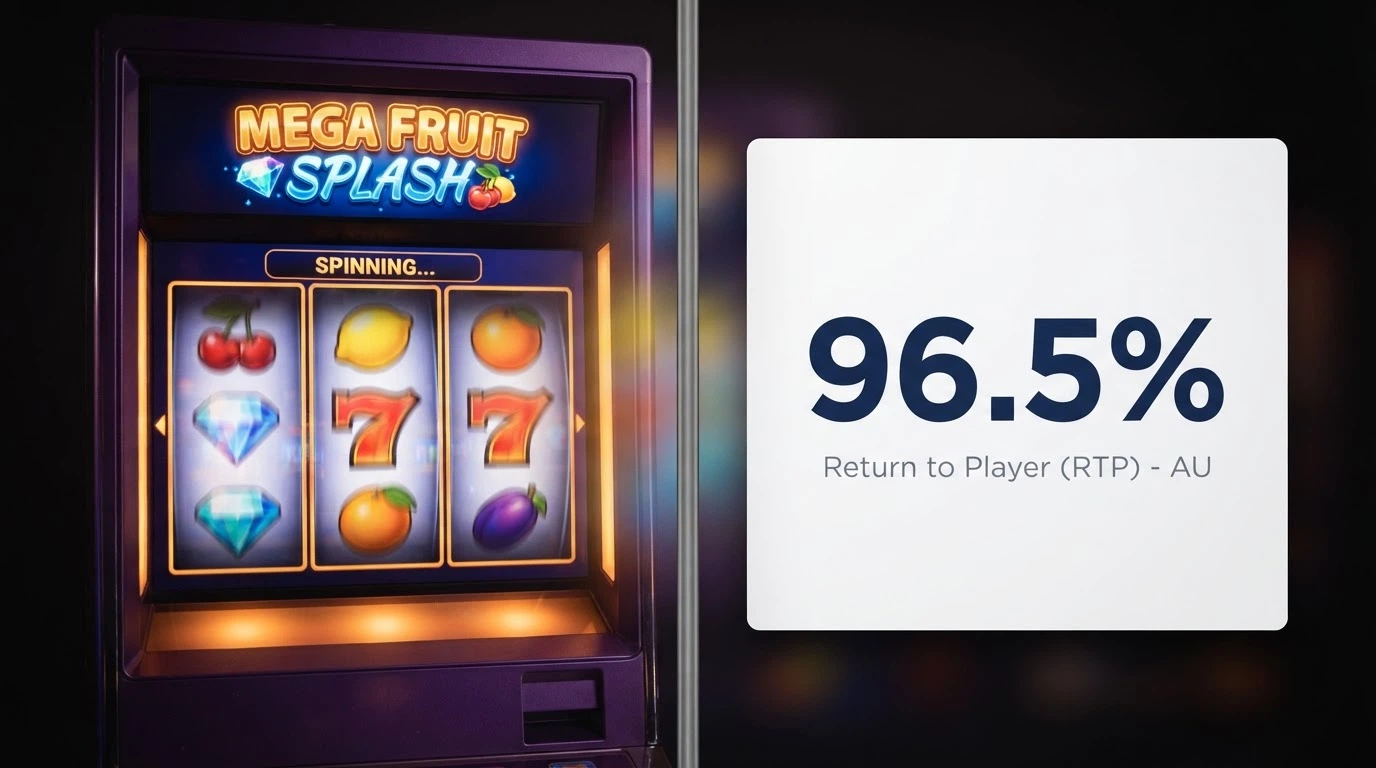
The number that determines that is the Return to Player (RTP) — the percentage of wagered money a pokie returns to players over a long run. A pokie at 96.5% RTP returns A$96.50 for every A$100 wagered, on average. A pokie at 94.5% RTP returns A$94.50 for the same A$100. The A$2 difference per A$100 wagered compounds. Over a A$1,000 session, the difference is A$20. Over a 40× wagering requirement on a A$100 bonus — A$4,000 in required wagers — the difference is A$80 in expected return.
Why RTP Settings Matter for Your Cash-Out
Pragmatic Play games are built with multiple selectable RTP configurations — 96.5% down to 94.5%, depending on the title. The operator selects which configuration to deploy, not the player. Two players at two different casinos playing the same Gates of Olympus can be playing materially different games.
The difference is invisible from the lobby. The pokie looks identical. The reels, the bonus features, the volatility — all the same. What differs is the percentage of each wager the pokie returns to the player over time. A player at a casino deploying the 96.5% configuration keeps A$20 more of every A$1,000 wagered than a player at a casino deploying the 94.5% configuration. Over a 40× bonus playthrough, the gap widens to A$80.
This matters most at high-wagering casinos. A casino with a 40× wagering requirement forces A$4,000 of wagers to clear a A$100 bonus. The RTP configuration the operator selected directly determines how much of the player’s real money survives that playthrough. A player who knows the configuration is at 96.5% is playing a different bonus than a player who unknowingly has 94.5%.
Pragmatic Play RTPs are independently tested and certified by BMM Testlabs, with eCOGRA certification and regular compliance audits. The certification backs the published figure. The published figure is the configuration the operator selected, not the maximum the developer offers. A player who wants to verify the configuration is in front of them has no in-game mechanism to do so — the certification exists, but the configuration disclosure is between the operator and the auditor.
The Slot Titles That Pay — And Where to Play Them
| Slot Title | RTP (verified) | Volatility | Max Win | Provider |
|---|---|---|---|---|
| Gates of Olympus | 96.50% | High | 5,000× | Pragmatic Play |
| Sweet Bonanza | 96.51% | High | 21,100× | Pragmatic Play |
| Big Bass Bonanza | 96.71% | High | 2,100× | Pragmatic Play |
| Wolf Gold | 96.01% | Medium | — | Pragmatic Play |
| Sugar Rush 1000 | 96.53% | Extreme | 25,000× | Pragmatic Play |
Pragmatic Play carries 250+ games with an average RTP of 96.2%. The five titles above are the ones with independently verified RTPs in the sources found this run. Each is available across the operators in this ranking. The configuration the operator selected may differ from the verified figure above.
A reader choosing a pokie should weight RTP first, then volatility, then max win. A 96.71% pokie returns more per wager than a 96.01% pokie. A high-volatility pokie returns less frequently but in larger chunks — a longer session before any meaningful win, then a larger payout. A medium-volatility pokie returns more frequently in smaller amounts. The max-win figure is the ceiling; no pokie returns that figure on average.
Fast-Payout Bonuses: When the Offer Slows Your Withdrawal
A welcome bonus is the single biggest cause of withdrawal delay at an offshore casino. The marketing word is “bonus”; the arithmetic is “playthrough requirement before the operator will release any of your money.”
The wagering requirement is the operator’s claim on the player’s deposited funds. A 40× wagering requirement on a A$100 bonus means A$4,000 of wagers before the bonus funds (and any winnings from them) become withdrawable. A player who deposits A$100, accepts a A$100 bonus, and plays for an hour at A$1 per spin will run 100 spins per hour and need 40 hours of continuous play to clear. A player who plays at A$5 per spin will run 20 spins per hour by spin count but A$100 per hour in turnover — clearing the same A$4,000 in 40 hours.
The expected cost of clearing a bonus can be estimated directly. Taking SkyCrown’s 1st-deposit example — a A$300 bonus with a 40× wagering requirement — the required turnover is A$12,000. Applying a house edge consistent with a 96.5% RTP configuration gives an expected loss of A$420 across the playthrough. Applying a 94.5% configuration gives an expected loss closer to A$660. The difference — A$240 — is the cost of the operator’s RTP choice on the same bonus at the same wagering requirement. That is the calculation that turns a headline “A$300 bonus” into its real cost: roughly A$420 to A$660 in expected loss, depending on which RTP configuration the operator has selected.
The bonus-triggered KYC escalation is a related mechanism. Many operators run light KYC at deposit and full KYC at first withdrawal — and a withdrawal blocked by an unmet wagering requirement is the trigger for the KYC review. A player who has not yet provided source-of-funds documentation will see the cashout sit while the documentation is gathered. The bonus did not cause the KYC escalation; the bonus caused the withdrawal attempt that surfaced it.
Sticky vs non-sticky bonus structures determine which money the wagering requirement applies to. A sticky bonus mixes the bonus funds with the real-money deposit and applies the playthrough to the combined balance. A non-sticky bonus (RocketPlay’s structure) keeps real money and bonus money separate; the player plays real money first and only enters the bonus funds if the real money runs out. A player who wins from real money under a non-sticky structure can withdraw those winnings without touching the bonus playthrough. A player under a sticky structure cannot.
Max-bet rules during wagering are the small-print trap. RocketPlay sets A$7.50. Royal Reels sets A$5. FairGO sets A$10 — and exceeding it voids winnings. A player who does not know the rule and spins above it is at risk of having the bonus winnings voided. A player who knows the rule and respects it loses nothing.
Why No-Deposit Fast-Payout Offers Are Rare
No checked operator in this ranking currently offers a no-deposit fast-payout bonus. The economics explain why.
A no-deposit bonus — a small credit issued without a player depositing — is, by definition, a cashout the operator funds without taking a deposit first. The operator’s incentive to clear that withdrawal fast is muted. A no-deposit bonus that takes three days to clear is, from the operator’s perspective, the same as a no-deposit bonus that takes one hour: the player cannot deposit more to chase losses while the bonus is pending. The marketing value of “instant withdrawal” is, on a no-deposit bonus, almost zero.
A player who encounters a no-deposit fast-payout offer should read the wagering requirement, the max-cashout cap, and the bonus-validity window before claiming. The no-deposit space at offshore casinos serving Australians is thin, and the offers that do appear tend to carry the strictest terms.
How to Pick a Fast-Payout Casino You Can Actually Trust
Speed means nothing if the operator refuses to pay. The trust checklist for an Australian player using an offshore casino is short and unforgiving.
Licence verification is the first step. A Curaçao Gaming Control Board licence number should resolve on the regulator’s register. A Tobique Gaming Commission number should resolve on the Tobique register. A licence number that does not resolve on the regulator’s own site is not a licence — it is a string of characters. Most Curaçao and Tobique licences can be verified at the regulator’s website. A UKGC or MGA licence is a meaningfully higher tier of player protection; offshore operators serving Australians rarely hold either.
Player-review patterns are the second tell. Sustained complaint patterns about refused withdrawals, voided winnings, or unexplained account closures are red flags. A single complaint is noise; a pattern is signal. Independent affiliate sites that deposit and withdraw (PayoutVerdict, AskGamblers, Vegas Aces) carry the most reliable signal because they have skin in the game.
Operator track record is the third tell. BitStarz has been operating since 2014. That is eleven years of accepting crypto deposits and processing crypto withdrawals. The track record is not a guarantee — an operator can change terms, lose its licence, or simply decide to delay — but it is a longer sample than a brand launched this year.
The ACMA blocking risk is the context every Australian player must accept. The ACMA has had 1,564 illegal gambling and affiliate websites blocked by Australian ISPs since November 2019, and more than 225 illegal services have withdrawn from the Australian market since 2017. Any operator on this page could be next. A player who has funds on deposit at the moment of a blocking request loses practical access to those funds. The DNS block does not transfer the balance to a recoverable account.
Red Flags That Signal a Slow — or No — Payout
Unreasonably low withdrawal caps are the first red flag. SkyCrown’s A$5,000 daily cap is a benchmark; WinSpirit’s €2,000 per-transaction cap is a tighter constraint; operators below those numbers are signalling a low cashout ceiling. A player with a five-figure win will wait.
Excessive KYC re-requests are the second. One round of KYC at first withdrawal is normal. Repeated KYC requests at subsequent withdrawals, with new document requirements each time, are a delay tactic.
Pending-period manipulation is the third. A pending period longer than 48 hours, combined with KYC requests issued during the pending window, is a pattern. The pending period is supposed to be a player protection — time to cancel a withdrawal the player regrets. It is not supposed to be a delay tool.
Operators that switch terms after a win are the fourth. A bonus term that was not enforced before a player wins and is enforced immediately after is a structural red flag. The operator’s terms page is the contract; the enforcement pattern is the truth.
No Australian consumer protection means there is no Australian complaints body to escalate to. The casino’s internal complaints team is the entire remedy. A player who has been refused a withdrawal has, in practice, the casino’s terms and whatever leverage comes from the casino wanting to maintain its reputation among affiliates and reviewers. That leverage exists. It is not Australian.
The Legal Reality: No Online Casino Is Licensed in Australia
Online casino games, online pokies and in-play sports betting are prohibited to people in Australia under the Interactive Gambling Act 2001. No licence exists anywhere in the country. Not federally, not in any state or territory. The product an Australian player encounters at every operator on this page is, by Australian law, prohibited.
What is legal in Australia: wagering on races and sport placed before the event begins (licensed by state and territory regulators, with the Northern Territory Racing and Wagering Commission and Licensing NT as the de facto national licensor for online wagering operators); lotteries and keno; land-based casinos (Crown, The Star, and others, state-licensed). The minimum age for any commercial gambling activity is 18.
What is prohibited: online casino games and online pokies; in-play betting on sporting events once started; using credit cards, credit-related products or cryptocurrency for online wagering (since 11 June 2024, under the Interactive Gambling Amendment (Credit and Other Measures) Act 2023, with penalties up to $247,500 for non-enforcement by licensed operators).
The regulator is the Australian Communications and Media Authority (ACMA), which investigates complaints, issues warnings, runs civil penalty proceedings, and directs ISPs to block illegal sites. State and territory regulators license wagering operators and land-based casinos.
The enforcement framework runs through the ACMA. Since its first blocking request in November 2019, the ACMA has had 1,564 illegal gambling and affiliate websites blocked by Australian ISPs (as of March 2026), and more than 225 illegal services have withdrawn from the Australian market since enforcement was strengthened in 2017. From 1 January 2027, banks and payment providers gain express authority to block transactions to illegal gambling operators — a friction the offshore market has not previously faced at the payment-rail level.
The player’s legal position is specific. The individual Australian player is not prosecuted under the IGA — the Act targets the provider. The legal exposure on the consumer side is essentially nil. The financial exposure is real, and it runs through the absence of Australian consumer protection on every other dimension.
Offshore Licensing: What a Curaçao Permit Actually Means
Most fast-payout casinos in this ranking carry a Curaçao licence. Wild Fortune is the exception, holding a Tobique Gaming Commission licence (#0000064). Royal Reels, SkyCrown, Stake, BitStarz, RocketPlay and Bizzo all sit under Curaçao. FairGO sits under a Curaçao sub-licence via Deckmedia N.V.
A Curaçao Gaming Control Board licence is a real licence, issued by a real regulator with a real register. It is not a British Gambling Commission licence, and it is not a Malta Gaming Authority licence. The difference matters.
A UKGC or MGA licence carries with it mandatory player-protection requirements: segregated player funds, dispute resolution through an approved Alternative Dispute Resolution body, affordability checks, and a regulator with the power to revoke the licence and order restitution. A Curaçao licence carries fewer of those requirements. The operator is required to keep player funds segregated in some form, but the dispute resolution pathway is the operator’s internal process and the regulator’s complaint mechanism — not an independent ADR.
What a Curaçao licence does provide: a register where the licence number can be verified; a regulator that can revoke the licence; a baseline of operational standards that excludes the worst operators. What it does not provide: the player-protection regime a UKGC or MGA player expects. No segregated-funds guarantee that survives operator insolvency. No ADR. No affordability checks. No recourse beyond the operator’s own complaints process.
The reason Curaçao dominates the AU-facing offshore market is structural. Curaçao issues licences faster and at lower cost than MGA or UKGC. The application takes weeks rather than months. The annual fees are a fraction of the European equivalents. Operators serving Australian players from Curaçao can accept payment methods that Australian-licensed operators cannot — including crypto — and can advertise in ways that Australian rules forbid. The regulatory gap is the business model.
ACMA Blocking, Player Risk and What Happens to Your Funds
The ACMA’s blocking mechanism is DNS-level. When the ACMA directs Australian ISPs to block a site, the site’s domain stops resolving for Australian users. The site remains live everywhere else. From inside Australia, it appears to disappear.
A player’s funds do not disappear with the block. The balance a player held at the moment of blocking is still on the operator’s books. The player has lost practical access to it. There is no Australian complaints body to chase the operator. There is no segregated-funds guarantee under Australian law. The operator’s own internal process is the entire remedy, and the operator now has no reason to cooperate with a player it can no longer reach.
The 225+ services that have withdrawn voluntarily from the Australian market since 2017 carried player balances at the time of withdrawal in some cases. There is no recovery mechanism. The player’s recourse is whatever the operator chose to return before exiting the market.
The 1 January 2027 bank transaction-blocking authority is the next escalation. Banks will gain express authority to block transactions to illegal gambling operators. The authority is not a mandate — banks will not necessarily activate it for every transaction — but the friction is real. A player depositing from an Australian bank account to an offshore casino may see the transaction blocked or flagged. The blocking authority is a tool, not a guarantee.
Staying Safe While Chasing Fast Withdrawals
The numbers on Australian gambling harm are large and moving in the wrong direction. Roy Morgan reports that 2.9% of Australian adults — an estimated 622,000 people — are classified as problem gamblers under the Problem Gambling Severity Index in 2024–25, up from 2.4% in 2023–24 and 1.9% in 2022–23. That is an increase of 22% year-on-year. The ANU national gambling survey from January 2025 found 19.4% of Australian adults reported gambling at risky levels — almost one in five, the highest in six years — and 56.1% of gamblers mainly participated online. The AIHW’s 2022 figure sat at 2.1% of adults, roughly 430,000 people.
The harm extends beyond the player. Approximately 5.9% of Australian adults reported being harmed by another person’s gambling in the past 12 months.
These numbers describe the licensed market and the offshore market together. The offshore market’s share of online play in Australia is substantial — 56.1% of gamblers participating mainly online, per the ANU survey, captures a population that includes both licensed wagering operators and offshore casinos. The harm data is the context for any decision about how much to deposit, how long to play, and when to stop.
BetStop, Self-Exclusion and Why Offshore Casinos Are Out of Reach
BetStop — the National Self-Exclusion Register — launched on 21 August 2023. To the end of Q1 FY 2025–2026, 49,382 people had registered to self-exclude; as of 30 September 2025, 31,838 people had active exclusions. Self-exclusion is available for a minimum of 3 months up to a lifetime, and registration requires a mobile number, email address, and an Australian driver’s licence or Medicare card.
BetStop binds approximately 150 licensed Australian wagering providers. Every casino on this page is offshore and not connected to the register. A self-excluded person who deposits at an offshore casino will not be stopped by BetStop. The casino has no obligation to check the register, no mechanism to do so, and no incentive to refuse a deposit.
For a player who needs self-exclusion, the offshore gap is the single most important thing to know. BetStop covers the legal Australian wagering market. It does not cover the operators ranked above. A self-excluded person who continues to play offshore is not protected by the register. The decision to stop is a personal one, and the tools that enforce it at licensed operators do not reach here.
Where to Get Help: Helplines, Counselling and Blocking Tools
The National Gambling Helpline is 1800 858 858 — free, confidential, and staffed 24 hours a day, 7 days a week. Online chat and email counselling are available through Gambling Help Online at gamblinghelponline.org.au. Self-blocking software is referenced by Gambling Help Online for players who want device-level blocks on gambling sites. Activity statements — records of what a player has deposited, wagered and lost — are available from licensed wagering operators and can be requested from some offshore operators.
The conversation starts with a phone call or a chat window. It does not require a player to have decided to stop. It does require a player to be honest about what is happening with their gambling. The harm data above describes a population of hundreds of thousands of Australians. The help lines exist for that population. They are free. They are confidential. They answer the phone.
How We Evaluated and Ranked These Fast-Payout Casinos
The selection framework was straightforward: payout speed first, then method coverage, then bonus fairness, then licence transparency. The ranking followed the data, not the marketing.
Sources were: PayoutVerdict’s “Instant Withdrawal Pokies Australia 2026” testing; AskGamblers’ verified-payout data; Vegas Aces’ deposit-and-withdraw testing of SkyCrown; AustralianGamblers’s deposit-method testing of Bizzo; Web3Bet’s RocketPlay review; Tech Insider and CasinoAudit’s Royal Reels testing; the operators’ own terms pages for bonus and withdrawal rules; and the ACMA’s published blocking list for the offshore-licence context. Each operator was checked against the data, not against the marketing.
“Verified” means a third party ran a real deposit and a real withdrawal and reported the result. “Operator claim” means the operator’s own terms page or marketing copy. Verified data ranked above operator claims throughout.
The honesty constraint shaped every entry. No operator in this ranking holds an Australian casino licence. No operator is described as “Australian-licensed” anywhere on this page. The licence column in the ranking table records the actual regulator where research confirmed it. Where the regulator was not confirmed, the cell carries the article-language no-data marker. Where only the offshore status is confirmed, the cell carries “offshore” with the qualifier “not Australian-licensed.”
The data has gaps. Royal Reels’ payout speed was not independently tested. Several operators’ welcome bonus terms were not fully confirmed. Casino Rocket’s licence regulator was not confirmed. The gaps are visible in the table and in the operator write-ups. Where the data is missing, the point is made qualitatively — and the absence is itself information.
What This Means for Your Next Withdrawal
The fastest method is crypto. The fastest Australian fiat rail is PayID. The fastest operators for crypto are Stake and BitStarz, with verified sub-2-hour cashouts and averages under 5 hours. The fastest operators for PayID are SkyCrown (same-day) and Bizzo (instant to 24 hours). Royal Reels supports PayID but has not been independently tested for speed. Wild Fortune’s PayID to CommBank ran 26 hours end-to-end — the rail is fast, the receiving bank is not always fast.
Every operator on this page is offshore and unlicensed in Australia. The IGA prohibits the product. No operator can hold an Australian licence for online casino. The player has no Australian consumer protection, no BetStop coverage, no ACMA complaints recourse, and lives with the risk of a DNS block that takes the access down with the balance inside.
The decision is between speed and protection. The licensed Australian market does not offer online casino. The offshore market offers speed without Australian protection. A player who values speed above all else will land on crypto at Stake or BitStarz, with PayID at SkyCrown or Bizzo as the fiat fallback. A player who values protection above speed will not play at any of these operators — because no Australian protection is available.
The amount to deposit is the amount the player is prepared to lose to a DNS block. That is the arithmetic every other figure on this page sits inside. A$8,000 welcome bonus at SkyCrown, A$7,250 at Bizzo, A$7,500 at Wild Fortune — none of those numbers matter if the operator is blocked before the bonus clears. A player who keeps deposits small enough to absorb a worst-case block has kept the only protection available at this market.
The fastest payout in this ranking is real. The fastest payout in this ranking also comes with no Australian safety net. The reader now knows both. The decision is theirs.
Frequently Asked Questions
What causes delays when withdrawing from an online casino in Australia?
The withdrawal pipeline runs two stages. Stage 1 is the casino’s internal approval, which takes 5 to 30 minutes at automated operators and 2 to 24 hours at operators using manual review. Stage 2 is the payment rail — PayID, crypto, e-wallet, card or bank transfer — and runs on its own clock. KYC verification at the first withdrawal typically adds 24 to 72 hours. An unmet wagering requirement blocks the withdrawal until the playthrough completes. A pending-period window of 12 to 24 hours is standard; longer windows signal a manual pipeline.
Are fast payout online casinos legal in Australia?
No. Online casino games, online pokies and in-play sports betting are prohibited to people in Australia under the Interactive Gambling Act 2001. No Australian licence exists for any of these products. The operators ranked above are offshore — Curaçao, Tobique, and similar jurisdictions — and their product is prohibited. The individual Australian player is not prosecuted; the Act targets the provider. Players using these sites have no Australian consumer protection, no BetStop coverage, and no ACMA complaints recourse.
What is the minimum withdrawal amount at fast payout casinos in Australia?
The minimums vary by operator and method. Bizzo requires A$100 for PayID, A$20 to A$40 for crypto, A$50 for bank transfer. FairGO requires A$100 across methods with an additional A$50 wire fee for bank transfers. SkyCrown, Wild Fortune, BitStarz and Stake list minimums that vary by coin or rail. Most operators set crypto minimums lower than fiat minimums — a player cashing out a small balance will find crypto the more accessible route at most operators on this page.
Do fast payout casinos charge withdrawal fees?
Most do not. PayID withdrawals are typically free at both ends — A$0 casino fees, A$0 bank fees. Crypto withdrawals usually carry only the network fee, which on USDT TRC20 is negligible. The exception is FairGO, which charges a A$50 wire fee for bank transfers. Card withdrawals and some e-wallet routes may carry fees at certain operators. The fee structure is most punitive at operators offering only slow rails — a player at a bank-transfer-only operator is paying both time and money.
Are winnings from online casinos taxable in Australia?
Betting and gambling winnings are not assessable income under section 6-5 of the ITAA 1997, and gambling losses are not deductible under section 8-1 — unless the person is carrying on a business of betting or gambling. For the overwhelming majority of Australian players, casino winnings are tax-free and losses are not deductible. The ATO’s position is settled; the player does not need to declare casino winnings on a tax return. A professional gambler — someone whose gambling activity rises to the level of a business — faces different rules.
Can I use Bitcoin or crypto for fast withdrawals at Australian casinos?
Yes — at offshore casinos. Credit cards and cryptocurrency are banned as payment for online wagering in Australia since 11 June 2024, but the ban applies to Australian-licensed operators. Offshore casinos serving Australian players continue to accept crypto. USDT TRC20 is the fastest rail at most operators, with verified cashout times of 0.2 to 8 hours. Bitcoin and Ethereum also work but with slower confirmation times. The player gives up chargeback rights with a crypto cashout — once the blockchain transaction confirms, the funds have left the casino’s wallet and the player has only the operator’s terms.