Where Australians Play Online Keno in 2026 — and What the Welcome Bonus Really Costs
 Available in AU
Data current as of 19 October 2026, verified against the ACMA interactive gambling register and operator terms pages.
Online casino is prohibited in Australia under the Interactive Gambling Act 2001. There is no Australian online casino licence anywhere — not federally, not in any state or territory. The casino pages that rank offshore brands for Australian keno players are not ranking licensed alternatives; they are ranking different versions of the same illegal product.
That is the opening fact, and the rest of the page sits on top of it. Every bonus number, every keno format, every payout cap that follows applies to a service no Australian operator is permitted to provide. The 10 brands reviewed below are real, they accept Australian players, and they all sit outside Australian law. Knowing which one carries the lightest terms and the deepest keno library matters — but it matters inside a frame, not outside one.
Keno itself occupies an odd spot. The IGA treats it as an excluded lottery service under section 8D, which leaves licensed keno (KenoGO and equivalents) legal while banning everything else. From 1 January 2027, that grey zone closes: the Interactive Gambling Amendment (Gambling Reform) Bill 2026, passed on 19 August 2026, prohibits online keno outright. The clock on offshore casino keno in Australia now has a date on it.
Table of Contents
- Why Most Aussies Play Keno at Offshore Casinos in 2026
- How Online Keno Actually Works — From Spot Picking to the Draw
- Online Keno vs Land-Based Keno — Same Game, Different Speed
- Real-Money Keno vs Free Play — What Changes When You Bet
- Playing Keno on Mobile — Apps, Browsers and What to Expect in 2026
- 10 Offshore Keno Casinos Australians Actually Use in 2026
- Every Type of Online Keno Worth Knowing — And Which Ones Pay Best
- Free Keno Is the Smartest Way to Start — Here’s Where to Find It in 2026
- Why Keno Strategy Is About Picking Spots, Not Predicting Numbers
- Crypto Keno Casinos — A Payment Workaround With Real Risks
- Is Online Keno Legal in Australia? The 2026 Answer Changes Everything
- Staying in Control — The Real Cost of Keno When the Fun Stops
- How We Ranked the Best Keno Casinos for Australians
- What Every Australian Keno Player Should Do Before the 2027 Ban
- Frequently Asked Questions
Why Most Aussies Play Keno at Offshore Casinos in 2026
The reason is simple and worth stating cleanly: the lawful Australian keno product, KenoGO, is not an online casino. It runs under Victorian and Northern Territory lottery licences, draws every three minutes via a random number generator, and pays out up to A$40 million on a jackpot ticket. Australians who want keno inside a casino-style environment — keno sitting next to pokies, blackjack, live tables, hundreds of other number games — cannot find that product inside Australia because the law does not let it exist.
So players go offshore. The Interactive Gambling Act 2001 prohibits the provision of online casino games, online pokies and in-play betting to anyone in Australia, but keno’s status as an excluded lottery service under section 8D means offshore operators treat it as fair game. The same exemption the law uses to permit licensed KenoGO is what an offshore casino reads as permission to offer the game to Australians.
The contrast with the pub or club game is worth marking. A KenoGO draw at a pub runs on a wall-mounted screen, with a printed ticket, on a fixed cadence tied to the venue’s licensing rules. Online casino keno runs on an 80-number grid (or a 36-number grid for some slot-style variants), with the player picking 1 to 10 spots from 80, and 20 numbers drawn by RNG. Draws come every few minutes or run instantly. No venue, no printed ticket, no closing time — and no Australian consumer protection on the other end.
Device access follows from the offshore status. These casinos do not list in the Australian App Store or Google Play storefront; players reach them through a mobile browser, or in rare cases through a sideloaded app (WinSpirit is the one featured brand that offers an incentive to install its app — a small no-deposit free-spin bundle). The WinSpirit app install offer is the kind of detail that reads as a perk and behaves as a tell: a real Australian-regulated gambling app would not need a sideload.
How Online Keno Actually Works — From Spot Picking to the Draw
The structure of a keno round is one of the few things every variant shares:
- The grid carries 80 numbers (or 36 in the slot-style Spribe version).
- The player picks between 1 and 10 spots — the “spot type” — with each spot being a number on the grid.
- The casino draws 20 numbers via a random number generator.
- The payout depends on how many of the player’s spots match the drawn numbers.
Payouts scale with the spot type. A 1-spot ticket wins if that single number lands in the 20; a 10-spot ticket needs at least a handful of matches to pay out anything, and the top prizes require landing most or all of them. The jackpot tier on Microgaming’s Keno Draw stretches to 10,000x the stake on ten numbers at high volatility.
Draw speed varies more than the structure. KenoGO draws every 150 to 210 seconds, with a daily break of up to 60 minutes for system maintenance. Online casino keno tends to run faster — many titles are essentially instant, with the player pressing “draw” and the numbers appearing within a few seconds. The fast cycle is one of the bigger behavioural differences between online keno and the pub version: a player can put through hundreds of rounds in an hour, which changes how losses stack up.
Online Keno vs Land-Based Keno — Same Game, Different Speed
Return to player tells the story. Licensed Australian keno returns about 75% to the player across spot types 1 to 10, 15, 20 and 40 — a house edge near 25%. Side formats (keno racing, heads-or-tails, keno roulette) return closer to 80%, and progressive MegaMillions-style pools sit around 76.5%. Good online keno titles list approximately 94% to 96% RTP, with some slot-style variants such as Spribe’s Keno reaching 97%.
That gap is large. A player running the same bankroll through online keno versus licensed Australian keno keeps, on average, roughly twenty cents on the dollar more per round. The variance between titles matters too — Microgaming’s Keno Draw sits at 88.8% RTP, well below the upper end of the range, and even within a single title the volatility selector shifts the expected return by several percentage points.
The pace difference compounds the RTP gap. A pub KenoGO draw every three minutes versus an instant online draw is roughly a 50-fold increase in rounds per hour. Higher RTP plus faster play plus the absence of venue overhead is why offshore casino keno has eaten into the licensed product’s player base despite being a prohibited service.
Real-Money Keno vs Free Play — What Changes When You Bet
Free demo play teaches the rules and the interface. It does not teach the bonus maths, the win caps, or the withdrawal friction that a real-money player meets on day three. The transition from demo to real money at these offshore casinos is where the marketing language stops and the terms page starts.
The welcome bonus is the most common point of friction. A A$1,000 deposit bonus at 40x wagering — the structure WinSpirit runs — means A$40,000 in turnover before the bonus balance converts to withdrawable cash. At keno’s best-case RTP of 95%, A$40,000 in turnover produces an expected loss of around A$2,000; at an 88.8% RTP (Microgaming’s Keno Draw), it produces an expected loss near A$4,500. The “free” money is rarely free once the maths is done.
Win caps sit on top of the wagering. RocketPlay applies a A$5,000 max win cap to its deposit bonus; WinSpirit caps wins at A$3,000 on its first-deposit match. Free-spin winnings have their own ceiling — A$300 on RocketPlay’s 100 free spins, A$50 per batch on WinSpirit’s no-deposit app-install spins. A player who hits a strong run on keno can find the bonus balance locked under a cap lower than the theoretical payout would suggest.
Withdrawal friction is the third layer. Offshore casinos are not connected to BetStop, the Australian National Self-Exclusion Register — a self-excluded player can deposit, play and try to withdraw from an offshore brand that the exclusion does not bind. Payment methods are also a marker: credit cards, credit-related products and digital currency (crypto) have been banned as payment for online wagering in Australia since 11 June 2024 under the Interactive Gambling Amendment (Credit and Other Measures) Act 2023. An offshore casino that accepts credit cards or Bitcoin from an Australian is taking payment through a channel the law has closed off — the payment method is itself a tell.
Playing Keno on Mobile — Apps, Browsers and What to Expect in 2026
The default path is the mobile browser. Offshore keno casinos run their games through HTML5 in the device’s browser, with no native iOS or Android app listed in the Australian storefronts. That is by design — an app listed on the Australian App Store or Google Play as a casino product would breach platform rules and the IGA simultaneously. The WinSpirit app-install offer (20 no-deposit free spins for installing its app) sits in the sideload category: it works on the player’s device but is not distributed through a regulated app store.
What that means in practice is that the player opens Safari or Chrome, navigates to the casino, and either plays in-browser or downloads an APK or progressive web app from the casino’s own site. Functionally, the experience matches a native app on most modern phones. The downsides are real but mundane: the app does not receive App Store updates, push notifications work inconsistently, and the player accepts the casino’s TLS certificate rather than Apple’s or Google’s vetting.
Device compatibility is not an obstacle at any of the featured brands — iOS 14+, current Android, and any modern desktop browser handle the games without issue. The friction is procedural, not technical.
10 Offshore Keno Casinos Australians Actually Use in 2026
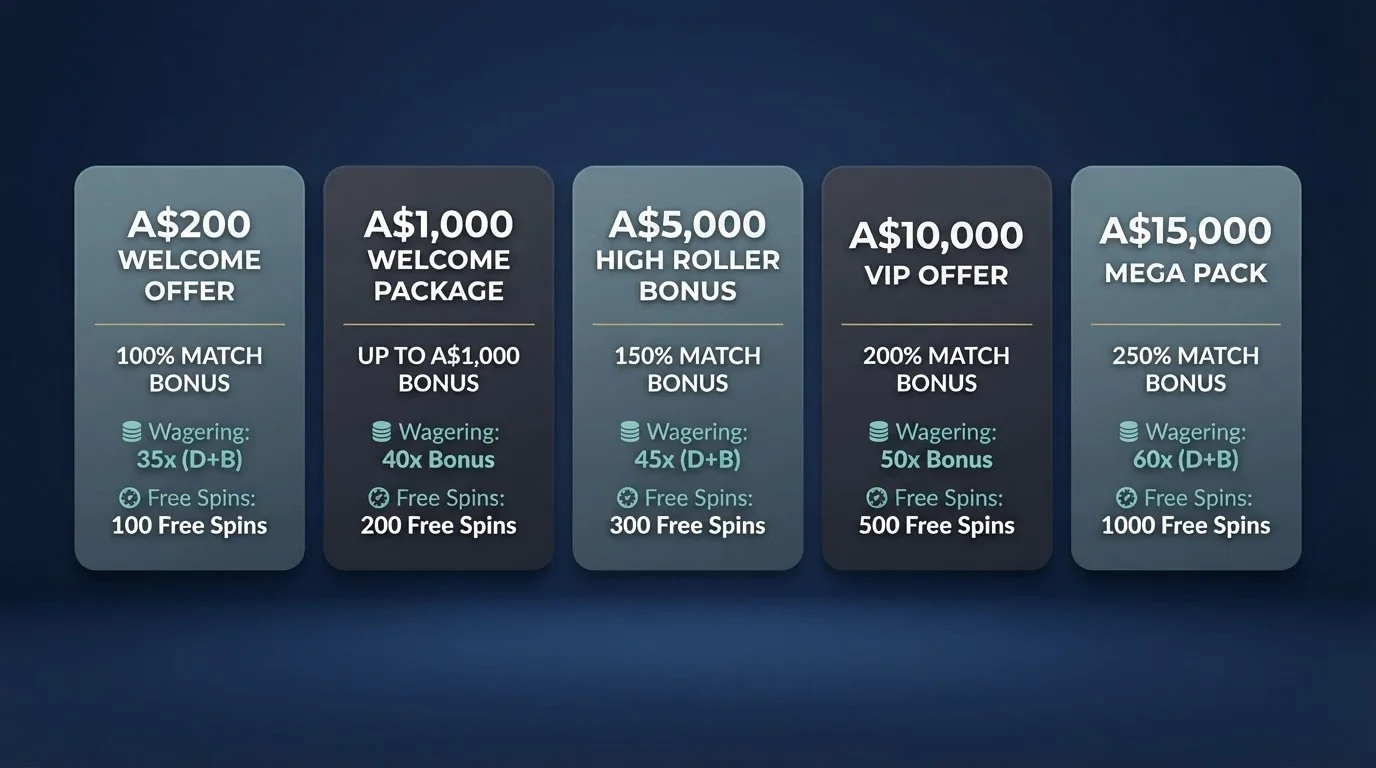
The table below lists every operator that follows. The columns are: the brand, its legal status in Australia (every one is offshore and unlicensed in Australia because no online casino licence exists), the offshore licence on its footer, the welcome bonus in Australian dollars where confirmed, and the free-spin count attached to the welcome package. The numbers in the bonus column reflect what the operator’s terms page states for the Australian version of the site; many of these brands also serve non-AU markets where the same offer is denominated in EUR or USD.
| Operator | Status in Australia | Offshore Licence | Welcome Bonus (AUD) | Free Spins |
|---|---|---|---|---|
| Neospin | Offshore, not licensed in AU | Curaçao | — | — |
| Golden Crown | Offshore, not licensed in AU | Curaçao | A$15,000 (multi-deposit) | — |
| SkyCrown | Offshore, not licensed in AU | Curaçao | A$8,000 (four-tier) | 400 |
| RocketPlay | Offshore, not licensed in AU | Curaçao | A$2,000 (two-deposit) | 100 |
| WinSpirit | Offshore, not licensed in AU | Curaçao | A$1,000 | 100 |
| Fair Go | Offshore, not licensed in AU | Curaçao | A$200 | — |
| Bizzo | Offshore, not licensed in AU | Curaçao | — | — |
| Royal Reels | Offshore, not licensed in AU | Curaçao (likely) | — | — |
| Stake | Offshore, not licensed in AU | Curaçao | — | — |
| Rainbet | Offshore, not licensed in AU | Curaçao (likely) | — | — |
Dashes mean research could not verify the figure against an authoritative source for the AUD-denominated version of the site. They do not mean the offer does not exist — Golden Crown’s multi-deposit package and Fair Go’s modest A$200 match are both real, but their exact match percentage, free-spin allocation, wagering multiplier and validity window require the operator’s terms page to read off before a player claims. Where research confirms a figure, the figure appears; where it does not, the cell is empty.
Neospin — 14 Keno Formats, the Widest Library of Any Featured Casino
Neospin leads on keno variety. Fourteen formats across Classic, Super, Turbo and Video categories, with named titles such as Book of Keno, Keno 10 (1-Minute) and Across the Universe Keno. A player who wants to try every rhythm of the game — slow classic draws, fast turbo cycles, slot-style video keno — finds them on a single platform here. The licence on the footer is Curaçao.
The bonus structure is qualitative rather than headline-grabbing: cashback and loyalty rewards sit at the centre rather than a single deposit-match welcome. For a player who would rather drip value across ongoing play than chase a one-shot bonus, that fits. For a player who wants to know the exact match percentage, wagering multiplier and validity window of any specific offer, the terms page is the source — those numbers did not surface in research for the AUD version of the site. The no-deposit channel is not confirmed.
Neospin’s appeal is depth, not generosity. The widest library of any featured casino, paired with a Curaçao licence and a bonus model built on retention rather than acquisition. A player who treats keno as a long-running hobby rather than a one-off session has the most room here.
Golden Crown — A$15,000 Welcome Package Across 9 Keno Titles
Golden Crown pairs a large multi-deposit welcome — a 100% match up to A$15,000 spread across the first deposits — with a nine-format keno library. Classic and Super categories anchor the offer, with titles like Magic Keno, Amaterasu Keno and a Keno Goldencrown-branded game sitting alongside them. Curaçao licence on the footer.
The bonus number is the headline and the warning. A A$15,000 package spread across multiple deposits sounds generous; what determines its real cost is the wagering multiplier, the validity window and the maximum cashout — and research did not confirm those for Golden Crown’s AUD terms. The headline figure alone tells a player nothing about whether the offer is worth claiming.
The 9-format keno library is a smaller footprint than Neospin’s 14, but still strong. For a player who wants the largest headline bonus and a solid keno spread, Golden Crown presents itself that way — and the terms page settles the question of whether the bonus is worth the wagering.
SkyCrown — 5,000+ Games and a Four-Tier A$8,000 Welcome Offer
SkyCrown competes on library size. Over 5,000 games with keno among them, a four-tier welcome package up to A$8,000 plus 400 free spins, and a minimum deposit of A$20. The headline figure is large; the per-deposit structure is what makes it manageable. Curaçao licence.
The trade-off is breadth versus depth. A 5,000-game library is several times the size of a focused keno casino, which means SkyCrown carries keno and dozens of other number-draw variants without necessarily specialising in any. For a player whose interest is keno specifically, the question is how many of those 5,000 games are keno titles and at what RTP — research did not confirm a specific count.
The 400 free spins are the structural feature. Distributed across the four-tier welcome, they read as the operator’s centre of gravity on player acquisition. Whether they are worth claiming depends on the wagering multiplier and the per-spin value, both of which the terms page holds.
RocketPlay — 40x Wagering on a A$2,000 Two-Deposit Bonus
RocketPlay’s bonus terms are the most transparent of the featured set. The two-deposit welcome — 100% up to A$1,000 on the first deposit and 100% up to A$1,000 on the second — totals A$2,000, and the 40x wagering multiplier and A$5,000 maximum win cap are stated on the terms page rather than buried. The free-spin component is 100 spins on Aztec Magic (BGaming), paid 20 per day over 5 days, with each batch released every 24 hours after at least one real-money wager. Free-spin winnings are capped at A$300. Curaçao licence.
RocketPlay suits the player who reads the terms before claiming. A$80,000 in turnover at keno’s best-case 95% RTP produces an expected loss of roughly A$4,000 — meaning the bonus itself can be expected to cost more than its own headline value before it converts to withdrawable cash. The A$5,000 cap sits below the RTP-implied payout ceiling on a strong run, which means a hot streak on keno can produce a bonus balance the casino will not pay out in full.
The arithmetic, plainly, is the point. RocketPlay is honest about the cost; the cost is still real.
WinSpirit — 100 Free Spins Plus a Rare No-Deposit App Offer
WinSpirit is the only featured brand with a confirmed no-deposit free-spin offer for Australian players. The first-deposit welcome is 100% up to A$1,000 plus 100 free spins, with 40x wagering and a A$3,000 win limit. The free spins are paid 20 per day over 5 days at A$0.10 each. The no-deposit channel is 20 free spins (A$0.10 each) for installing the WinSpirit app, with 40x wagering and a A$50 maximum cashout per batch. Curaçao licence.
The no-deposit offer is the entry point. A$0.10 per spin across 20 spins is A$2 of nominal value — small in cash terms, useful as a way to feel the casino’s interface before committing a deposit. The A$50 cashout cap means even a strong run converts to at most A$50 of withdrawable money, which is the trade-off the terms page enforces.
The first-deposit bonus is more conventional. A$1,000 at 40x wagering means A$40,000 in turnover; the A$3,000 win limit is tighter than RocketPlay’s A$5,000 cap, so a player who clears the wagering with a strong run can still find the bonus balance locked below what the run produced.
Fair Go Casino — 30 No-Deposit Free Spins and a Low 30x Wagering
Fair Go sits at the lighter end of the bonus spectrum. A 100% match up to A$200 with a minimum deposit of A$10, 30 no-deposit free spins on Fu Long Treasures with a A$180 maximum cashout, and a 30x wagering multiplier — the lowest of the featured set. Curaçao licence.
The 30x multiplier is the structural feature. At A$200 deposit and 30x wagering, the turnover requirement is A$6,000 — a fraction of the A$40,000 that RocketPlay and WinSpirit demand. The 30 no-deposit free spins on Fu Long Treasures, capped at A$180 cashout, sit on the same lower-stakes footing. The no-deposit offer’s stated validity runs to 25 August 2026; by publication it may have lapsed.
Fair Go suits a player with a small bankroll and a low appetite for bonus turnover. The headline numbers are modest, and the wagering reflects that.
Bizzo Casino — 14-Day Bonus Window With 40x Wagering
Bizzo’s bonus is the most time-constrained of the featured set. A multi-deposit package with 40x wagering that must clear within 14 days of activation, and a default maximum bet of 5 USD per spin while wagering a bonus. The no-deposit channel is 20 free spins on Lady Wolf Moon MEGAWAYS at €0.10 each with 40x wagering. Curaçao licence.
The 14-day window is the point. A player who does not clear the wagering in two weeks loses the bonus balance — a real risk at keno’s pace, where A$40,000 of turnover in 14 days requires roughly 2,900 turnover per day. The 5 USD per-spin cap means the player cannot chase the turnover with large bets; they must grind it.
The welcome package is denominated in EUR for non-AU markets; the AUD equivalent is not confirmed in research. The terms page on the AUD version of Bizzo is the source.
Royal Reels — What Australian Keno Players Should Verify Before Signing Up
Royal Reels appears in Australian player searches but limited terms are confirmed. The footer is likely Curaçao, the offshore status is clear, and almost everything else is open. Keno availability, specific bonus terms, wagering multiplier and validity window all need verification on the operator’s terms page before a deposit.
For a player considering Royal Reels, the checklist is the same as for any offshore casino with thin public terms: confirm the licence number against the Cura Curaçao’s public register, read the bonus terms end-to-end, check the maximum cashout clauses, look up the keno library count and provider list, and read the withdrawal terms — including which currencies and payment methods are supported for Australian players. A footer badge that says “Curaçao licensed” without a verifiable licence number is not the same as a verifiable licence.
Stake — Crypto-First Casino With Rakeback Instead of Welcome Bonuses
Stake runs a different model. Crypto-focused, Curaçao-licensed, and built around rakeback and a VIP programme rather than a traditional deposit-match welcome bonus. The keno library is part of a large overall catalogue; specific keno counts and providers are not confirmed in research.
The value proposition is structural. A player who would rather earn a percentage back on every wager than chase a single bonus with a wagering multiplier fits Stake’s model. A player who wants a concrete A$X welcome bonus does not — Stake’s offering is ongoing rather than front-loaded.
The crypto-only deposit channel is itself a marker. Credit cards, credit-related products and digital currency have been banned as payment for online wagering in Australia since 11 June 2024. Using crypto at an offshore casino from an Australian IP is not illegal for the player (the IGA targets the provider), but it does sit outside the payment channels the Australian regime permits, and it removes the chargeback protection a debit card carries.
Rainbet — Low A$20 Minimum Deposit for Crypto Keno Play
Rainbet’s profile is accessibility. A A$20 minimum deposit, a crypto-focused payment model, and a Curaçao licence (likely). Specific match percentage, wagering multiplier, keno count and validity window all need verification on the operator’s terms page.
The low entry threshold is the headline feature. A$20 is the lowest minimum deposit of the featured set tied to crypto play, and it lets a player test the casino’s interface and keno library without a large upfront commitment. The trade-off is the same as Stake’s: crypto deposits carry no chargeback, and the offshore licence provides no Australian consumer protection.
Rainbet suits a player who wants to test offshore casino keno with a small first deposit. The smaller the deposit, the less exposure if the casino turns out to be the wrong fit.
Why Your 2026 Welcome Bonus Costs More Than It Pays
The arithmetic on a typical offshore casino keno bonus runs the same way. Take RocketPlay’s two-deposit welcome: A$2,000 total bonus at 40x wagering means A$80,000 in turnover across both deposits before the bonus balance converts to withdrawable cash. At the high end of online keno RTP — 96% on a good title — that turnover produces an expected loss of A$3,200. At the lower end of the range (88.8% on Microgaming’s Keno Draw), the expected loss rises to A$8,960. The bonus is not free money; it is a turnover target with a house edge attached.
The win cap sharpens the picture. RocketPlay’s A$5,000 max win cap means a strong run can produce a bonus balance the casino will not pay out in full — a player clearing the wagering with a 96% RTP run on a A$2,000 bonus could see a theoretical balance north of A$5,000 and receive at most A$5,000. WinSpirit’s A$3,000 cap is tighter still. Bizzo’s 14-day window and 5 USD per-spin max bet are a different kind of cap — a time and stake ceiling that can convert the bonus to zero if the player cannot grind the turnover in two weeks.
The marketing claim of “free” money holds up only against the wagering requirement. Against the house edge, the win cap, the time limit and the per-spin stake ceiling, the same bonus is a high-cost product. The player who treats the bonus as the casino treats it — as an acquisition tool, not a gift — reads the terms and walks away from the offer that does not clear the maths.
Every Type of Online Keno Worth Knowing — And Which Ones Pay Best
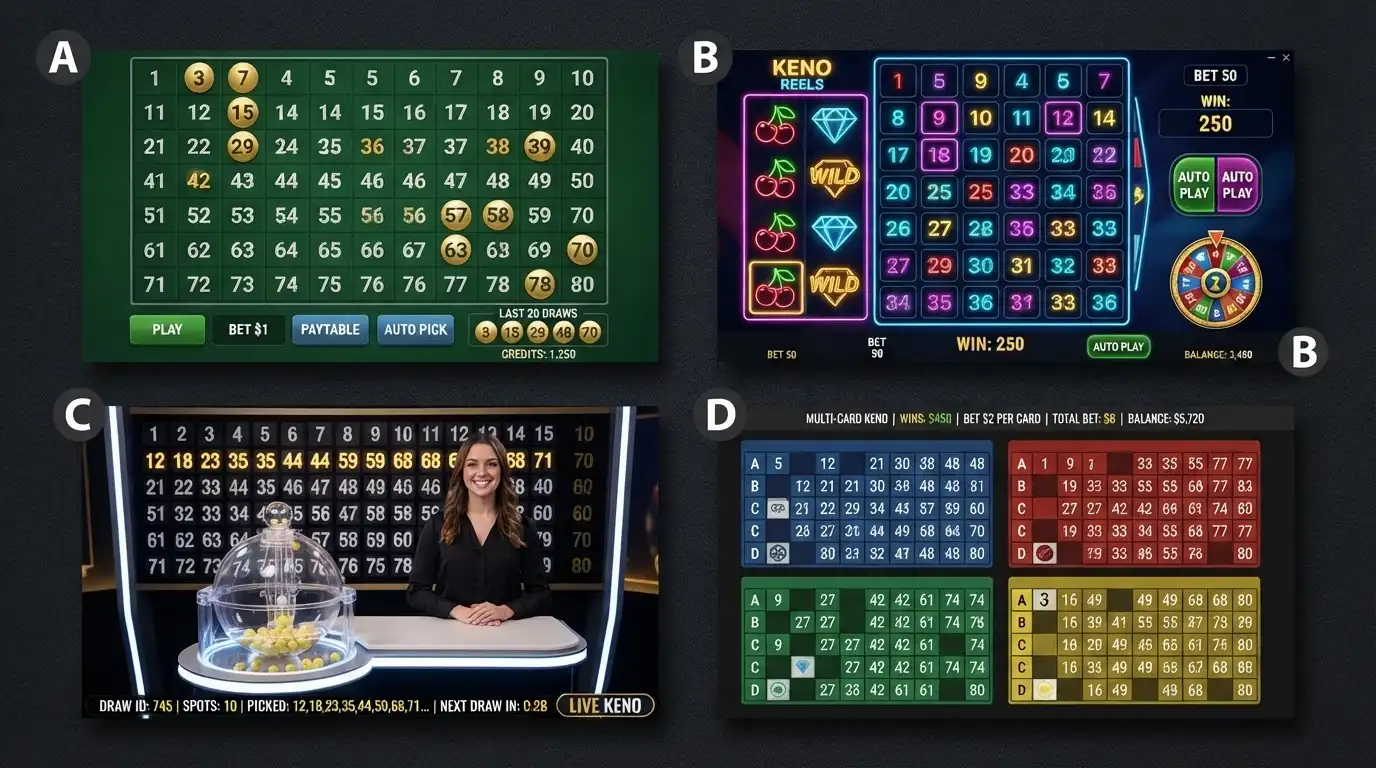
The table below covers the keno variants with researched RTP, provider and volatility data. Where research does not carry a figure for a specific title, the cell is empty.
| Game Title | Provider | RTP | Volatility |
|---|---|---|---|
| Keno | Spribe | 97% | Medium |
| Keno Draw | Microgaming | 88.8% | Low / Medium / High |
| Book of Keno | — | — | — |
| Keno 10 (1-Minute) | — | — | — |
| Magic Keno | — | — | — |
| Amaterasu Keno | — | — | — |
| Keno Goldencrown | — | — | — |
The two titled entries anchor the range. Spribe’s Keno at 97% RTP on a 36-number grid is the high mark — a slot-style variant that runs faster than classic keno and pays back a higher percentage on average. Microgaming’s Keno Draw at 88.8% RTP is the benchmark classic-format title with three volatility levels and jackpots ranging from 2,000x on low to 10,000x on high. The gap between these two is roughly eight percentage points of expected return — large enough that the title choice matters more than the spot strategy.
The remaining entries are names that appear on the featured casinos’ keno pages but lack confirmed RTP data in research. Their relative payback is not known from the figures available; the only honest statement is that they exist at the listed casinos.
Classic Casino Keno — The 80-Number Grid That Started It All
Classic keno runs on the 80-number grid with 20 drawn. The player picks 1 to 10 spots (more on some titles), the RNG produces the draw, and the payout scales with the spot type and the number of matches. Microgaming’s Keno Draw is the benchmark: 88.8% RTP, three volatility levels, jackpots from 2,000x on low volatility to 10,000x on high volatility across ten numbers, and a maximum bet of $10. The 80-number grid is what every “classic” keno title shares; what differs is the volatility profile and the jackpot structure.
The spot-type trade-off runs the same way at every casino. Fewer spots mean a higher hit rate but smaller payouts; more spots mean rarer hits but a chance at the top jackpot tier. The 4-to-6-spot range is the most-played because it balances hit frequency against payout size — a player with 5 spots needs at least 3 matches to pay out anything, and the chances of landing 3 of 5 on a 20-of-80 draw are realistic enough that the round feels alive.
Keno Slots and Pokies — When the Number Grid Meets the Reels
Keno slots blend number-draw mechanics with slot-machine presentation. Spribe’s Keno is the standout: 97% RTP, medium volatility, a 36-number grid (smaller than the classic 80), and a variable max-win. The slot-style framing changes the look without changing the underlying mechanics — the RNG still drives the draw, the player still picks spots, the payout still scales with matches. What changes is the visual rhythm: faster animation, brighter graphics, autoplay features, and the kind of one-click spin cadence that slot players are used to.
The 36-number grid is structurally different. Twenty numbers drawn from 36 is a denser match probability per spot than 20 from 80, which is part of why Spribe’s RTP sits at the high end of the range. The trade-off is that the maximum payout scales differently — the slot-style variants tend to cap winnings at a multiple of stake rather than offering a separate jackpot tier.
Live Dealer Keno — Real Hosts, Real Draws, Real-Time Play
Live keno puts a human host in front of the camera, with the draw shown either via a physical ball machine or an RNG display surfaced to the studio. The pace slows relative to instant RNG keno — a live round takes longer than a fast-turbo keno spin, partly because the host narrates the draw and partly because the production cycle cannot run faster than the camera allows. Where a player finds it depends on the casino’s live dealer catalogue.
The trust factor is the appeal. A player who questions whether an RNG is fair — and at an offshore casino, that question is legitimate, since the licence is not Australian — sometimes finds a live draw more reassuring. The game is still fundamentally the same: pick spots, watch the draw, get paid on matches. The host adds presentation, not different maths.
4-Card and Multi-Card Keno — Playing Several Grids at Once
Multi-card keno lets the player run two, three, four or more cards per draw — each card with its own spot selection, all evaluated against the same draw. The mechanic is simple and the bankroll implication is not. A player running four cards at A$1 each is putting A$4 through per draw, and the expected loss per draw scales linearly with the card count.
The format is offered at casinos with deeper keno libraries — Neospin’s 14-format catalogue is the standout — and it suits a player who wants more action per round without changing the spot selection logic. The risk is the same risk as any faster cycle: more draws, more turnover, more expected loss. A player who treats multi-card as a way to spread spots across several grids is buying variance; a player who treats it as a way to multiply the per-round stake is buying faster bankroll burn.
Free Keno Is the Smartest Way to Start — Here’s Where to Find It in 2026
Demo mode is built into every offshore casino keno title worth playing. The player opens the game, looks for a “Demo” or “Play for Free” toggle, and runs the round on a play-money balance. The maths is identical to the real-money version — same RTP, same RNG, same payout table. What changes is the absence of a wagering requirement, a win cap and a withdrawal step.
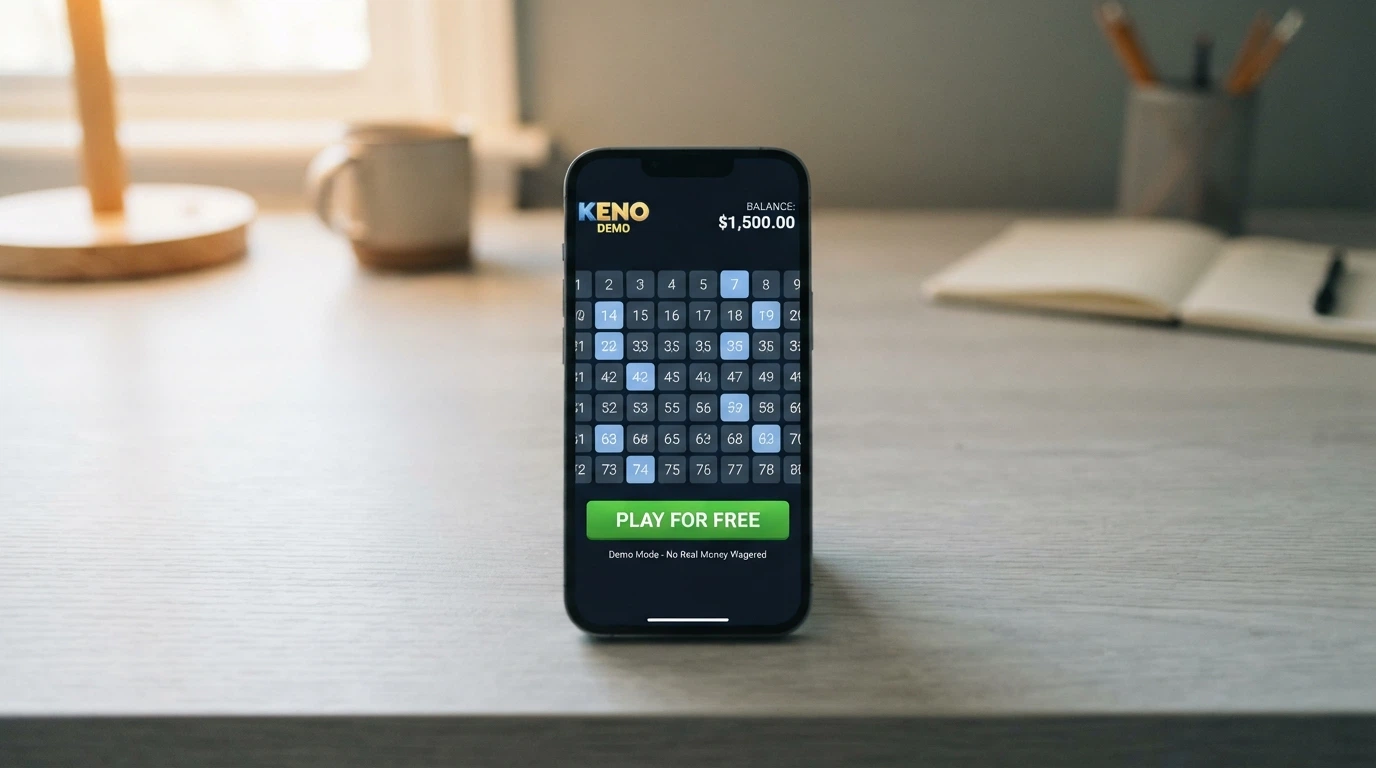
For a new keno player, demo mode answers three questions that real money answers badly. How fast does the game run? How does the spot-picking interface behave on a phone screen? How does the payout table feel when 3 of 5 spots match? Those are usability questions, and the demo answers them in minutes without a deposit.
The honest limit of demo mode is what it does not teach. Wagering requirements, win caps, withdrawal delays, KYC at cashout — none of these show up in a play-money round. A player who treats demo as a substitute for reading the bonus terms is testing the wrong thing. The right sequence is: demo first to learn the game, then read the terms page on the real-money version, then deposit with a loss limit set in advance.
No-Deposit Free Spins on Keno — The Offers That Actually Exist in 2026
The featured set carries three confirmed no-deposit free-spin offers:
- WinSpirit: 20 free spins for installing the app, A$0.10 per spin, 40x wagering, A$50 maximum cashout per batch.
- Fair Go Casino: 30 free spins on Fu Long Treasures, A$180 maximum cashout, with the offer’s stated validity running to 25 August 2026 (which may have lapsed by publication).
- Bizzo Casino: 20 free spins on Lady Wolf Moon MEGAWAYS at €0.10 each with 40x wagering.
These are not keno free spins — they are slot free spins attached to keno-friendly welcome packages. A player who treats them as a keno trial is using them loosely; the games the spins land on are slot titles, not keno grids. The value is in testing the casino’s interface and the withdrawal flow with a small nominal stake, not in turning the free spins into a keno bankroll.
The A$50 to A$180 maximum cashout on these offers is the structural ceiling. Even a strong run on the slot title converts to at most that figure of withdrawable money, and the 40x wagering multiplier on WinSpirit and Bizzo means clearing that ceiling takes turnover the casino controls through its terms.
Free-Play Keno vs Real-Money Keno — What the Demo Hides
The demo teaches the rules. Real money teaches the rest. A player running keno on a play-money balance sees the RNG, the spot-picking interface and the payout table behave identically to the real-money version — because the RNG and the payout table are the same code. What the demo cannot surface is the bonus structure: a A$40,000 turnover requirement, a A$5,000 win cap, a 14-day validity window, a 5 USD per-spin stake ceiling. None of those appear in a play-money round.
The real-money terms matter more than the real-money maths for most players. A player who has done the RTP arithmetic knows the expected loss per round; a player who has read the bonus terms knows how the expected loss scales with the wagering requirement. Demo mode covers the first; the terms page covers the second. Neither alone is enough.
Why Keno Strategy Is About Picking Spots, Not Predicting Numbers
Each draw is independent. The RNG does not remember the previous draw; the 20 numbers drawn this round have no statistical relationship to the 20 numbers drawn last round. A player who picks the same five numbers every round is not playing a strategy — they are picking the same numbers every round. The numbers themselves do not matter; the count of numbers and the size of the bet do.
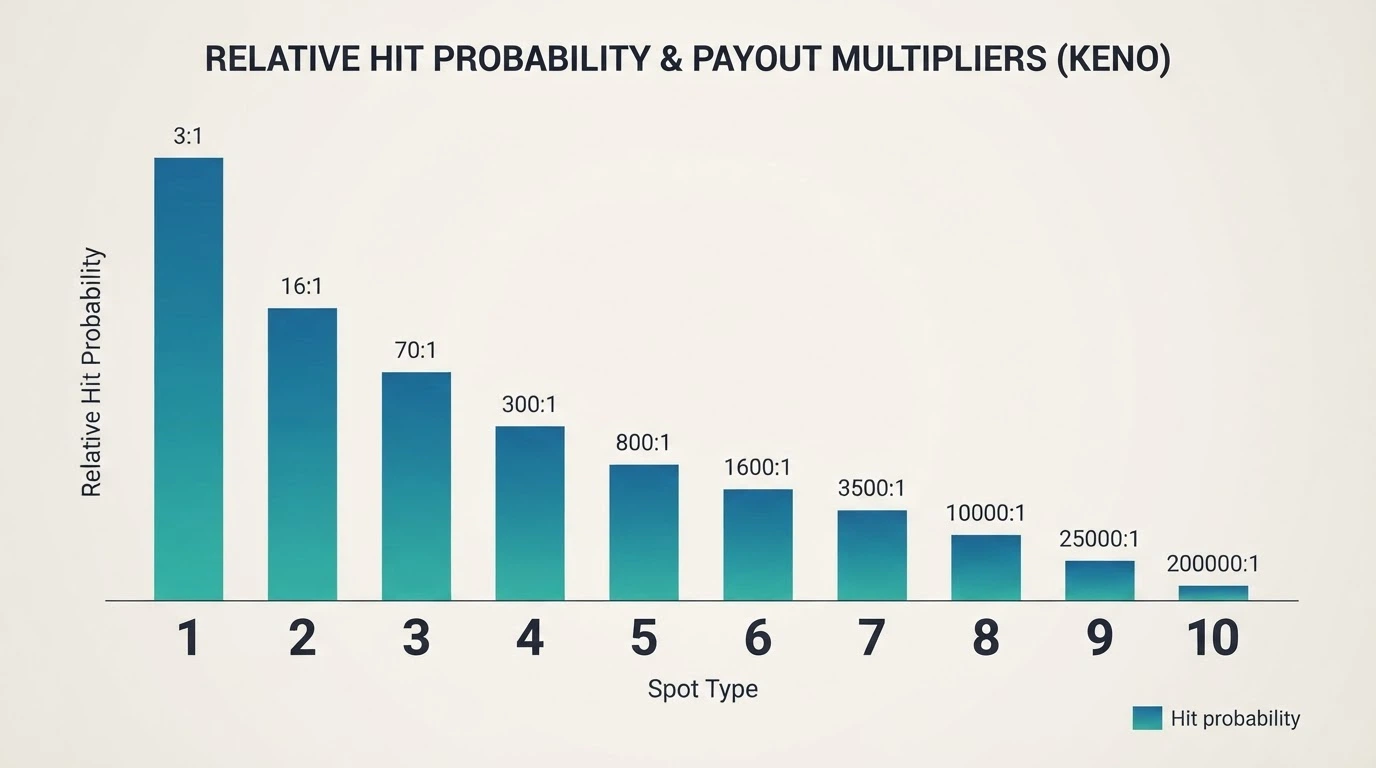
That is what keno strategy actually is. The player’s decisions are: how many spots to pick (1 through 10, with higher counts trading hit frequency for payout size), how much to wager per round, how many rounds per session, and when to stop. The first three are the player’s call; the fourth is the only one that affects long-run outcomes. No spot-selection pattern beats another in any statistically meaningful sense.
What the player can control is variance. Picking fewer spots means smaller, more frequent wins; picking more spots means rarer, larger wins. The bankroll dictates which profile fits. A player with a A$50 session budget who picks 10 spots and waits for the 10,000x jackpot will burn through the budget before the jackpot arrives; the same player picking 4 spots will see more rounds, more small wins, and a longer session. Neither pattern changes the house edge.
Keno Odds and Payouts — What Each Spot Type Actually Returns
On licensed Australian keno, the return to player sits around 75% across spot types 1 through 10, 15, 20 and 40 — a house edge near 25%. Side formats (keno racing, heads-or-tails, keno roulette) return closer to 80%; progressive MegaMillions-style pools sit around 76.5%. On good online keno titles, the RTP range stretches to 94%–96%, which is a 19-to-21 percentage-point swing from the licensed product.
The spot-type structure within a single title is similar. Every spot count carries the same RTP in aggregate, but the variance differs — fewer spots mean a higher hit frequency but smaller payouts, more spots mean a lower hit frequency with occasional large payouts. The house edge is roughly constant across spot types; what changes is how often the player sees a win and how big it tends to be when it arrives.
The choice between spot types is a bankroll decision, not an odds decision. A player with a small bankroll and a long session in mind picks fewer spots and sees more rounds; a player with a larger bankroll and a jackpot chase in mind picks more spots and waits. The expected loss per dollar wagered is roughly the same; the variance is what differs.
Crypto Keno Casinos — A Payment Workaround With Real Risks
The credit card and crypto ban has been in force since 11 June 2024 under the Interactive Gambling Amendment (Credit and Other Measures) Act 2023. The law does not target the player who pays; it targets the operator who accepts. But the practical effect is that an offshore casino offering credit card deposits or Bitcoin deposits to Australians is operating a payment channel the Australian regime has closed off, and the channel itself is a marker of the operator’s offshore and unlicensed status.
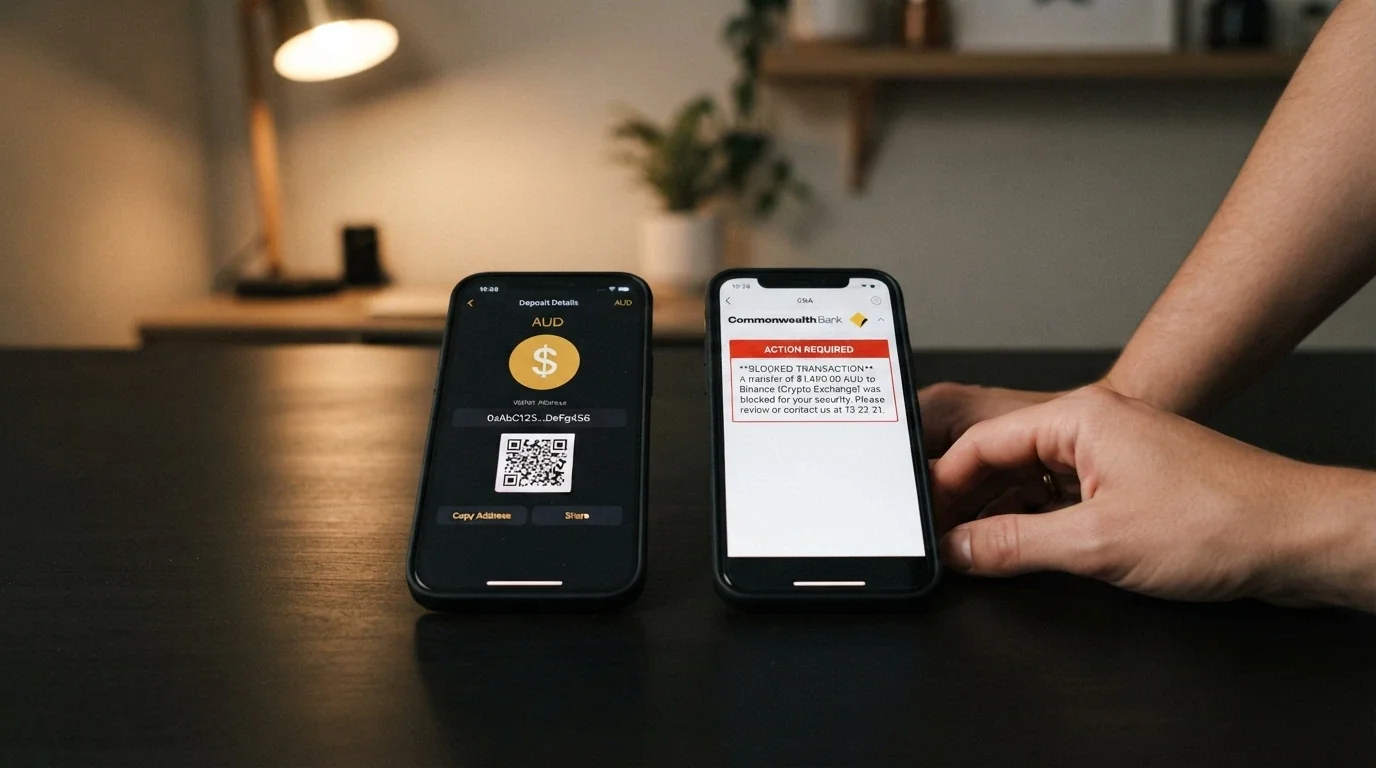
Two of the featured brands lean crypto-first: Stake, which runs a crypto-only deposit model, and Rainbet, which carries a A$20 minimum deposit through crypto channels. Neither is licensed in Australia; neither offers BetStop coverage; neither carries the consumer protections an Australian-licensed wagering service would. The crypto deposit does not change those facts — it changes only how the money moves.
The risk profile is different from a debit card deposit. A debit card carries chargeback rights through the Australian bank; a crypto deposit is irreversible once confirmed on the blockchain. A player who deposits Bitcoin to an offshore casino and the casino refuses the withdrawal has no bank to reverse the transaction through and no Australian regulator to escalate to. The same is true if the casino disappears, gets blocked by ACMA, or simply stops paying.
Bitcoin Keno — The Most Common Crypto Route for Australian Players
Bitcoin is the default cryptocurrency at most offshore keno casinos. Deposit mechanics are standard: the player copies a Bitcoin address from the casino’s cashier page, sends BTC from their wallet, and waits for blockchain confirmations (typically one to three for a deposit to credit). Withdrawal reverses the flow — the casino sends BTC to the player’s wallet address, again subject to blockchain confirmation time.
The risk is irreversibility. Once a Bitcoin transaction is confirmed on the blockchain, no party can reverse it. A player who sends BTC to the wrong casino address, or to a casino that subsequently refuses to pay out winnings, has no recourse through the Australian banking system and no Australian regulator to complain to. The offshore licence (typically Curaçao) provides a complaint channel, but the channel’s effectiveness against an operator that has already taken the money is mixed at best.
Price volatility is the second risk. Bitcoin’s price can move several percent in an hour. A player who deposits A$200 worth of BTC, plays for two hours, and requests a withdrawal in BTC receives the BTC at the price at withdrawal time — which may be lower than the price at deposit time. The “A$200” worth of play can become “A$180 worth of withdrawal” without the house edge changing at all.
Anonymous Keno Play — What Crypto Actually Hides and What It Does Not
Crypto casinos market themselves on anonymity, and the marketing holds up to a point. A player who deposits Bitcoin from a non-custodial wallet does not hand the casino a bank statement or a debit card number — the casino sees a wallet address and a transaction hash. There is no name on the deposit.
What the marketing does not mention is the cashout side. Every reputable offshore casino runs KYC (know-your-customer) checks at withdrawal: a player requesting a cashout must produce ID, proof of address, and sometimes proof of source of funds. The crypto deposit lets the player skip the deposit-side KYC; the withdrawal-side KYC is still there, and the casino still ends up with the player’s identity.
The trade-off is privacy versus protection. A player who values privacy accepts that the operator’s complaint channel is the only one available and that the operator holds their identity documents in the end. A player who values protection accepts that an Australian-licensed service carries stronger consumer protection but does not offer crypto keno — because the law does not let it exist. Neither side is a clean win.
Is Online Keno Legal in Australia? The 2026 Answer Changes Everything
The Interactive Gambling Act 2001 prohibits the provision of online casino games, online pokies and in-play betting to anyone in Australia. There is no online casino licence in the country — not federally, not in any state or territory. Keno’s status as an excluded lottery service under section 8D leaves licensed keno (KenoGO and equivalents) legal but does not authorise offshore casinos to offer keno to Australians; it simply defines the licensed product’s boundary.
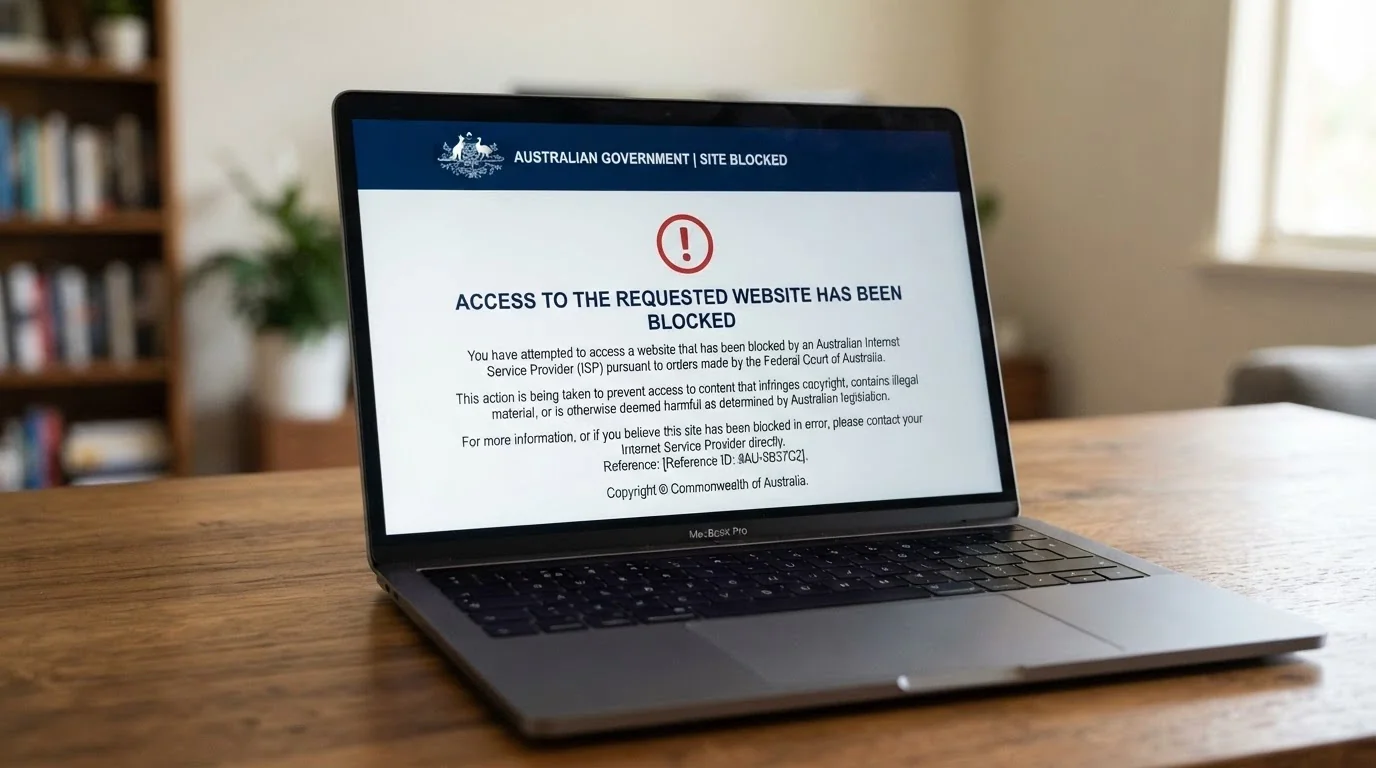
The Interactive Gambling Amendment (Gambling Reform) Bill 2026 was introduced on 2 July 2026, with a Senate committee report due 17 August 2026. The Bill passed Parliament on 19 August 2026, and its measures commence on 1 January 2027. From that date, online keno is prohibited outright — the grey zone that offshore casino keno has occupied closes.
The Bill’s keno-specific provisions are not the only change. Advertising restrictions limit wagering ads to a maximum of three per hour between 6:00am and 8:30pm, impose a live-sport blackout, ban radio restrictions and odds broadcasting, restrict online ads to logged-in over-18 users with opt-out, ban venue and uniform advertising, and prohibit athlete, celebrity and influencer promotions. Inducement restrictions apply for 14 days after sign-up, three months after BetStop deregistration, and indefinitely for at-risk customers. Banks and payment providers gain express authority to block transactions to illegal gambling operators.
The individual player is not prosecuted under the IGA — the Act targets the provider. But the practical effects of using an offshore casino in Australia include no Australian consumer protection, no BetStop coverage, no recourse for refused withdrawals, and the risk of the site being blocked by Australian ISPs with the player’s balance still on it. The ACMA has had 1,788 illegal gambling and affiliate websites blocked since its first blocking request in November 2019.
Who Regulates Keno in Australia — And Who Does Not
The ACMA enforces the prohibition federally. It investigates complaints, issues notices to ISPs to block illegal sites, and takes enforcement action against operators providing prohibited services to Australians. The Q4 2025 enforcement summary alone covers 23 investigations, 45 sites and 69 breaches of the IGA — 38 for providing a prohibited interactive gambling service and 26 for providing an unlicensed regulated interactive gambling service. Tabcorp received 8 infringement notices totalling A$158,400 on 16 January 2026 for providing a prohibited in-play betting service.
State and territory regulators license the legal keno products. Licensed Australian keno runs under Northern Territory, Victorian and ACT lottery licences, with ACT approvals under the Lotteries Act 1964. The KenoGO Classic game was approved under section 6A.2A.1 of the Gambling Regulation Act 2003 (Vic) for conduct by keno licensee Lottoland Australia Pty Ltd. These regulators do not touch offshore casinos — they have no jurisdiction over a Curaçao-licensed operator serving Australian players through a website.
The regulatory gap is the offshore casino’s market. The ACMA can block the website, the state regulators can license the legal alternative, and neither can reach the operator’s bank account or its server. The 230-plus illegal services that have withdrawn from the Australian market since 2017 did so under pressure; the 1,788 blocked sites were blocked by ISPs at the ACMA’s request.
How Australia’s 2027 Ban Changes Keno Forever
The 1 January 2027 commencement date is fixed. The Interactive Gambling Amendment (Gambling Reform) Bill 2026, passed on 19 August 2026, prohibits online keno and foreign-matched lotteries from that date. For Australian keno players using offshore casinos, the change means that the sites they play on become prohibited at the provider level on a fixed date — and the ACMA’s existing blocking infrastructure is the enforcement mechanism.
The advertising restrictions reshape how offshore casinos can market to Australians. The 3-ad-per-hour cap, live-sport blackout, radio restrictions, odds-broadcasting ban, and the prohibition on athlete, celebrity and influencer promotions apply to wagering advertising across Australian media. An offshore casino advertising a welcome bonus to Australians is breaking the prohibition itself once the reform commences.
The bank-blocking authority is the operational change. From 1 January 2027, banks and payment providers have express authority to block transactions to illegal gambling operators. A player who has been routing deposits through PayID, Osko, BPAY or direct debit faces the prospect of their bank refusing the transaction. Crypto deposits were already banned as a payment method for online wagering since 11 June 2024; the bank-blocking authority closes the remaining legal payment channels.
The inducement restrictions sharpen the bonus landscape. From 1 January 2027, sign-up offers are restricted for 14 days after registration, referral bonuses are restricted for three months after BetStop deregistration, and at-risk customers face indefinite restrictions. The welcome-bonus structure that offshore casinos market to Australians — A$15,000 packages, hundreds of free spins, deposit matches across four deposits — sits inside this restriction once the player is identifiable to the Australian regime.
KenoGO vs Offshore Casino Keno — The Legal Distinction Most Articles Miss
KenoGO is a licensed Australian lottery product. KenoGO Classic costs A$1 per ticket with a maximum prize of A$1 million; KenoGO Jackpot costs A$2 per ticket with a maximum prize of A$40 million; KenoGO Bonus multiplies Classic winnings by up to 10x with a maximum prize of A$10 million on a A$2 ticket. KenoGO offers Australia’s biggest keno jackpot at A$40 million, with draws every three minutes.
The mechanics are the same — pick spots from 80, 20 numbers drawn, payout on matches — but the regulatory frame is different. KenoGO is approved under Victorian keno licensing, draws via a regulated random number generator, pays out under lottery rules, and the operator (Lottoland Australia Pty Ltd) holds an Australian licence. The player’s recourse for a dispute is an Australian regulator.
Offshore casino keno runs on a Curaçao (or equivalent) licence, with no Australian regulatory recourse, no BetStop coverage, and a payment channel that may itself be illegal under the IGA. The game is similar; the protections are not. A player who treats both as the same product is missing the part that matters.
Staying in Control — The Real Cost of Keno When the Fun Stops
Approximately 15.1% of the Australian adult population — 3.32 million people — are experiencing some level of gambling harm from their own or others’ gambling as of March 2026. 13.0% (2,857,000 people) are experiencing harm from their own gambling specifically. Problem gambling incidence rose from 1.9% in 2022–2023 to 2.9% in 2024–2025 — a 1.0 percentage point increase. Risky gambling increased from 13.7% in 2024 to 19.4% in 2025, almost doubling since the COVID-19 lockdowns of 2020–2021. More than half (56.1%) of Australians who gambled in 2025 mainly participated online.
The annual health loss from gambling-related harm is estimated at over 400,000 Years Lived with Disability. The five largest gambling operators won A$5.4 billion from Australian customers in 2023–24, paid approximately A$0.1 billion in company tax (about 2% of revenue), and spent around A$600 million on advertising and promotion. The numbers describe a market where the cost falls on the player and the operators’ tax contribution does not.
The help infrastructure exists but is underused. Only 13.5% of moderate-to-high-risk gamblers sought help in the most recent survey period, and fewer than 8% of affected others contact general practice for gambling-related concerns. The gap between the 3.32 million adults experiencing harm and the share who contact a service is the structural problem.
Deposit Limits, Self-Exclusion and the BetStop Gap
BetStop — the National Self-Exclusion Register — launched on 21 August 2023. By 31 March 2026, 59,830 people had registered and 37,247 had active exclusions. For players using Australian-licensed wagering services, BetStop binds the operator: a self-excluded person cannot deposit, bet or open a new account with any connected Australian licensee.
The gap is offshore casinos. BetStop binds Australian-licensed services only — an offshore casino is not connected and will keep taking a self-excluded person’s money. A player who has registered with BetStop and then deposits at an offshore keno casino has not stopped gambling; they have stopped gambling on the Australian-licensed subset of the market. The offshore subset is unaffected.
Deposit-limit tools at offshore casinos are operator-specific. Some offer daily, weekly or monthly deposit caps; some offer session-time reminders; some offer neither. None of these tools are enforced by Australian law, and the offshore casino’s terms page is the only source for what the operator actually enforces. The 2026 reform strengthens BetStop’s operation from 1 January 2027, but the offshore gap remains — the reform binds Australian operators, not Curaçao licensees.
For an Australian keno player who wants to control their gambling, the practical sequence is: register with BetStop if the Australian-licensed subset of their play is meaningful, set deposit limits at the offshore casino through whatever tools the operator offers, and pre-commit a session loss limit before the first deposit of any session. None of these steps substitute for the help lines that follow.
Where to Get Help — Helplines, Counselling and Support Services
Free, confidential help is available around the clock. The National Gambling Helpline is 1800 858 858 — free, confidential, available 24/7, with online chat and counselling through Gambling Help Online. Gambler’s Help Youthline is 1800 262 376. 13YARN (13 92 76) provides crisis support for Aboriginal and Torres Strait Islander people. The National Debt Helpline is 1800 007 007 for the financial side of gambling harm. BetStop registration is available through the federal government’s BetStop service.
The self-test tools available through Gambling Help Online let a player assess their own risk profile anonymously before deciding whether to contact a counsellor. The first call is the hardest, and the gap between experiencing harm and contacting a service is wide — the data on help-seeking shows that most affected Australians never make that call. The line is there. The line is free. The line is staffed.
For someone affected by another person’s gambling — a family member, a partner, a friend — the same services apply. The 13.5% help-seeking rate covers gamblers themselves; affected others have their own pathway through Gambling Help Online and the National Gambling Helpline, and the support is structured around the affected person’s needs, not just the gambler’s.
How We Ranked the Best Keno Casinos for Australians
The ranking is built on three sources: operator terms pages, licensing registers, and independent keno RTP databases. The ACMA’s register of licensed interactive gambling providers (last updated 19 March 2026) was checked against each operator — and because online casino is prohibited in Australia under the IGA, every operator in the ranking is, by definition, not on that register. The Curaçao Gaming Authority’s public register was the cross-check on the offshore licence claims each operator makes on its footer.
Ranking criteria are qualitative, not weighted. The four axes the ordering reflects are keno library depth (Neospin’s 14-format catalogue outranks a casino with three keno titles), bonus terms transparency (RocketPlay’s stated 40x wagering and A$5,000 cap rank higher than an offer whose terms research could not confirm), withdrawal reliability (operators with stated maximum cashout caps rank higher than those without verifiable caps), and AU player accessibility (minimum deposit, payment methods, mobile access). No percentage weights, no star ratings, no fabricated scoring algorithm — the ordering reflects what research could verify and the qualitative judgement of which verified facts matter most to a keno player specifically.
What the ranking does not measure is player experience. Payout speed claims, customer service quality, and dispute resolution outcomes were not independently tested for this page; the operator’s terms page is the source for those, and any operator-specific claim about “instant withdrawals” or “24/7 support” should be read against the actual terms rather than the marketing language. The ranking also does not measure fairness of the games themselves — the RNG certification on each title is the operator’s claim, and the offshore licence is the only formal check.
What Every Australian Keno Player Should Do Before the 2027 Ban
The 1 January 2027 commencement of the Interactive Gambling Amendment (Gambling Reform) Bill 2026 is a hard date. From that day, online keno is prohibited at the provider level, advertising wagering services to Australians is restricted, and banks have express authority to block transactions to illegal gambling operators. A player using offshore casino keno in late 2026 is playing on a site that, three months later, the ACMA has fresh authority to block.
The checklist before any deposit is short. Confirm the operator’s licence status against the Curaçao Gaming Authority’s public register, not just the footer badge. Read the bonus terms end-to-end: wagering multiplier, validity window, maximum cashout, maximum bet per spin, eligible games. Use only payment methods with a paper trail — a debit card with chargeback rights, not crypto and not a credit card. Set a loss limit before the first deposit of any session, in dollars, not in rounds. Know the National Gambling Helpline number (1800 858 858) before the player needs it. Understand that the 2027 ban will block these sites — do not leave a balance on them that the player cannot withdraw.
The arithmetic on the bonus is the hardest check. A$1,000 at 40x wagering is A$40,000 in turnover; at 95% RTP, that turnover produces roughly A$2,000 of expected loss. The bonus is not a gift; it is a turnover target with a house edge. The win cap is the second check — RocketPlay’s A$5,000 cap and WinSpirit’s A$3,000 cap are both below the payout ceiling a strong run implies. The time limit is the third — Bizzo’s 14-day window can wipe the bonus balance if the player cannot grind the turnover in two weeks.
The legal status is the meta-check. Every casino in this ranking is offshore, unlicensed in Australia, and operating in violation of the IGA. The 2027 ban does not legalise them; it tightens the prohibition. A player who treats offshore casino keno as a short-term arrangement rather than a long-term hobby is reading the 2026 legal landscape correctly. A player who plans to keep playing the same offshore casino keno games in 2028 will find the sites blocked, the payment channels closed, and the bonus terms irrelevant — because the product itself will be prohibited at the provider level.
Frequently Asked Questions
Are offshore keno casinos safe for Australian players?
No Australian online casino licence exists, so “safe” in the licensed sense is not an available standard for offshore casinos serving Australian players. The practical safety questions are: does the operator hold a verifiable Curaçao (or equivalent) licence, are the bonus terms stated clearly, does the operator pay out withdrawals, and does the operator connect to BetStop (it does not). The National Gambling Helpline (1800 858 858) and BetStop are the Australian-regime supports regardless of which casino the player uses.
What is KenoGO and how is it different from online casino keno?
KenoGO is a licensed Australian keno product operated by Lottoland Australia Pty Ltd under Victorian keno licensing (Gambling Regulation Act 2003, section 6A.2A.1). It offers KenoGO Classic (A$1 ticket, A$1 million max), KenoGO Jackpot (A$2 ticket, A$40 million max), KenoGO Bonus (10x multiplier, A$10 million max) and KenoGO Heads or Tails, with draws every 150 to 210 seconds. Offshore casino keno is a prohibited interactive gambling service under the IGA — the same game mechanics, no Australian licence, no Australian regulator, no BetStop coverage.
How long do keno withdrawals take at these casinos?
Withdrawal times vary by operator and payment method, and research did not verify specific timeframes for each of the 10 featured brands. Crypto withdrawals typically confirm within hours once the casino processes the request; debit card and bank transfer withdrawals typically take several business days after the casino’s internal processing window. The offshore casino’s terms page is the source for the specific timeframe, and the maximum cashout cap on the bonus is the structural limit on what the player can withdraw in any case.
Will the 2027 ban end online keno in Australia completely?
The Interactive Gambling Amendment (Gambling Reform) Bill 2026, passed on 19 August 2026, prohibits online keno and foreign-matched lotteries from 1 January 2027. The prohibition applies at the provider level — the offshore casino offering keno to Australians is the target, not the individual player. Licensed keno (KenoGO and equivalents) is unaffected by the 2027 commencement; the Bill does not change the legal status of state and territory lottery products.
Do I need to download software to play online keno?
No. Offshore casino keno runs in a mobile browser through HTML5 — the player opens the casino’s website, navigates to the keno section, and plays without installing anything. WinSpirit offers an incentive to install its app (20 no-deposit free spins for the install), and the app is sideloaded from the casino’s site rather than distributed through the Australian App Store or Google Play. No Australian App Store casino app exists because the IGA prohibits the provision of online casino services to Australians.
Created by the ”Free Spins No Deposit AU” editorial team.