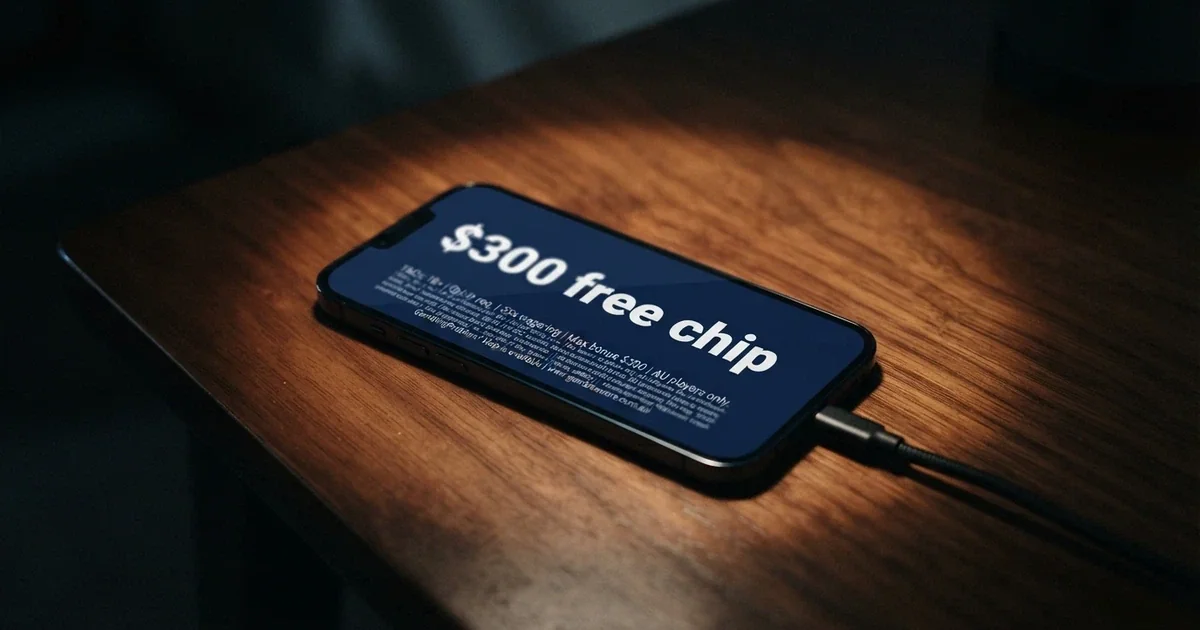
A $100 No-Deposit Bonus at an AU-Facing Casino in 2026: What the Headline Doesn’t Tell You
 Available in AU
The “$100 no deposit bonus” banner keeps showing up in every Australian punter’s search results for online pokies. Most of what sits behind that banner is not what it looks like. The number on the page is the marketing pitch — a number built to draw the eye — and behind it lives a small print that decides whether claiming the offer is worth the time it takes to read. This page is the unpacking of what that small print actually costs an Australian player in 2026: how big the turnover really is, what the cashout cap takes off the top, why pokies do almost all the work and tables do almost none, and what it means that every AU-facing offer sits inside an offshore operation rather than an Australian one.

Data current as of 18 October 2026 and verified against the ACMA public register and the Curaçao Gaming Authority public licensee search.
Table of Contents
- What a $100 No-Deposit Bonus Actually Is in 2026
- Why Your 2026 No-Deposit Bonus Is Smaller Than the Headline
- AU-Facing Casinos Ranked: Who Actually Has a No-Deposit Offer in 2026
- How to Deposit and Cash Out at AU-Facing Casinos
- The Legal Reality: Online Casino Is Prohibited in Australia
- Staying in Control: The Tools That Actually Work for AU Players
- How We Evaluated These AU-Facing Casinos
- What the AU Player Should Actually Do About a No-Deposit Bonus in 2026
- Frequently Asked Questions
What a $100 No-Deposit Bonus Actually Is in 2026
A no-deposit bonus is the casino industry’s way of giving a player something for nothing — usually a small cash credit or a bundle of free spins that activates the moment a new account is opened, with no funding from the player’s side. The “$100” sitting in front of the phrase is one possible ceiling of that free credit. The more common ceiling, in the offers actually advertised to Australian players today, sits well below it.
The difference between this kind of offer and a deposit match is structural. A deposit match doubles — or partially doubles — money the player puts in. A no-deposit chip gives the player a stake they did not put in. That is also the reason the terms behind it pull harder in the opposite direction: because the casino is the one fronting the cash, the wagering multiple, the cashout ceiling and the eligible-games list are all written to recover the chip before any win can move toward a withdrawal. The headline number is the bait. The terms are the balance of the trade.
The offer also exists for a precise commercial reason that has nothing to do with generosity. A no-deposit chip pulls a player through the front door — past the sign-up form, past the KYC step, into the lobby where they will eventually play their own money. From the casino’s point of view, it is acquisition spend. The wagering terms exist to keep most of the bankroll.
The Basic Mechanics of a No-Deposit Casino Bonus
A no-deposit bonus runs through four fixed stages, and at every stage the terms on a $100 chip are tighter than what a deposit match would carry.
Claim first. The credit activates at sign-up, either automatically on completion of the registration or via a code entered at the bonus page. Some operators route chips through account verification rather than registration; some lock them behind a one-time opt-in; and some — particularly the larger chip sizes — bury them in a deposit-code or a loyalty-tier promotion, not the public offer page at all. The $100 versions of chips are the ones most likely to require either a prior deposit or a loyalty status the new account does not yet have.
Restricted play next. Once the chip is live, the credit is not freely spendable across the entire library. Pokies almost always count at 100% toward the wagering requirement. Table games typically contribute 0–10%, and live casino tables are usually set to 0%. The same credit that reads as a free $100 in pokies is, in effect, a $10 credit in blackjack terms, or unusable cash at a live-dealer table.
Wagering hurdle follows. The cash-equivalent of the chip — and in some cases the chip plus any winnings it generates — must be turned over a fixed multiple of times before a withdrawal is possible. At 35× wagering on a $100 chip, the player has to place A$3,500 worth of bets before any of it can move toward a cashout window. The bet sizing on each spin or hand is capped while the bonus is active, typically at A$5–A$6.50 per spin — exceeding the cap voids the bonus and any winnings generated under it.
Cashout gate last. The standard expiry window is 7 to 30 days from activation. When the player does try to withdraw, a separate ceiling — the max cashout — caps the amount of bonus-derived winnings they can take from the session, regardless of what their running balance showed at the moment they cleared wagering. On a $100 chip, that ceiling sits in roughly the A$200 to A$300 range on the offers actually advertised to AU players; where the headline chip is bigger, the ceiling rarely is. The chip itself is not withdrawable. What walks out the door is bonus winnings, and only up to the cap.
How Australian Online Casino Bonuses Are Structured
The headline shape of an Australian-facing no-deposit offer — A$100 chip, 30× to 60× wagering, A$200–A$300 cashout ceiling, pokies-only play — looks similar to what a player in any other unlicensed market gets handed. The structural difference is where the offer comes from, and who, if anyone, oversees its terms.
In Australia, the Interactive Gambling Act 2001 prohibits the provision of online casino games to a person physically in the country. There is no licence for online casino anywhere in Australia — not federally, not in any state or territory. That means every online casino marketing a $100 no-deposit bonus to an Australian player is an offshore operator, almost universally licensed in Curaçao, advertising into a jurisdiction where the regulator has expressly told providers not to serve it.
The consequence for the player is that the terms on these offers are not Australian terms. They are Curaçao terms, drafted to Curaçao standards, enforced — to the extent they are enforced — by a regulator far from the player’s address, in a complaint system that has no Australian arbitration body. ACMA, the regulator that polices the prohibition, has no power to recover a disputed withdrawal. If a Curaçao-licensed operator refuses to honour a winning, the only recourse for the player is in the operator’s own dispute process and, ultimately, in the Curaçao framework. That gap is the central difference between this market and, say, a UK no-deposit offer, where the UK Gambling Commission’s dispute resolution service has reach over the operator.
The single structural thing an Australian player gets from a licensed market is the absence of this kind of offer at all. Online casino and online pokies are prohibited, so no Australian regulator is reviewing, approving or capping these bonuses. The product class exists in a regulatory vacuum, and the terms the player sees reflect that vacuum exactly.
Why Your 2026 No-Deposit Bonus Is Smaller Than the Headline
The arithmetic underneath a no-deposit bonus is what makes the small print worth reading. A $100 chip and A$100 in cash play very different roles once wagering, caps and game eligibility are folded in. Three of the four levers — turnover, the cashout ceiling and the bet cap — are visible in the terms; the fourth, the game-contribution rule, is the silent one.

Wagering cost is the most direct. At 35× on a $100 chip, the player must place A$3,500 in qualifying bets. At a flat A$5-per-spin stake on a 96.5% RTP pokie, that is 700 spins. At A$6.50 per spin — closer to the higher end of the per-spin cap — it is 539 spins. Whatever the player sits down with, the A$3,500 is the floor of what they have to do, and the winnings generated under the chip are not the same money as what they staked. It is house money running through the house’s own games.
A 50× wagering multiple is the line at which a no-deposit offer stops being worth the time. Anything above it inflates the turnover required to the point where the expected loss — the statistical average the house takes from the player across those spins — exceeds a reasonable estimate of the chip itself. The offers worth considering stay under that multiple; the offers above it were never designed to pay out.
Max cashout caps the final amount. Typical cashout ceilings on $100 chips for AU players sit in the A$200 to A$300 range. Above a 35× multiple, even a reasonable run on a high-RTP pokie will produce winnings the ceiling is designed to truncate. On a $100 chip the difference between a A$200 cap and a A$300 cap is 50% of the ceiling, and it is more often the ceiling than the wagering that decides what walks out the door.
Game contribution quietly restricts where the chip can be spent. Pokies contribute 100%; tables 0–10%; live casino 0%. A bonus advertised as a $100 bonus that runs 100% on pokies and 0% on a live-dealer blackjack table is, in practice, a chip the player can only play on pokies. Switching the stake off the pokies during the wagering phase either resets progress or — under stricter terms — voids the bonus outright.
The expiry window raises the cost of all of the above. Most no-deposit chips expire within 7 to 30 days of activation. The wagering requirement that read as “A$3,500” on day one becomes an unaired obligation if the player runs out of time before they reach it. Once expired, the chip and any winnings tied to it are forfeit.
To put a dollar figure on what an “average” run costs the player, take the scenario the rest of this page uses: a $100 no-deposit chip with a 35× wagering multiplier, played on an AU-facing pokie at a 96.5% return to player, with the bonus amount the only thing turned over. Across the A$3,500 in required bets, the expected loss works out as A$3,500 multiplied by the 3.5% house edge that 96.5% RTP represents. The result is an expected A$122.50 in losses across the playthrough — a sum already larger than the chip itself.
That figure is not a worst case. It is an average over many players under the stated assumptions. A player who wins early, switches to a higher-volatility pokie or simply runs hot on a session may walk away ahead of the average. A player who runs cold, leaves a session running longer than the RTP assumes or has the maximum cashout cap applied to a smaller balance will usually finish behind it. The point of running the arithmetic is not to predict one session. It is to show, on a flat screen, that the marketing value of the chip and what it costs the player are two different numbers.
The Elusive $100 Free Chip: What 2026 Actually Offers
Genuine A$100 free chips at AU-facing casinos in 2026 are vanishingly rare. A quarter of bonus-aggregator audits turned up 31 offers advertised as “$100 no deposit bonus Australia” — and of those, 11 were US-only and 9 were free-spin bundles the audit judged worth closer to A$20. The honest count of A$100 chips actually open to an Australian account in 2026 is small.
The closest real offers fall into three buckets. The first are small no-deposit chips at A$10 to A$50. These are the public-facing offers most AU-facing operators run, with the smaller chip paired to less punitive wagering. They are real and claimable, and the cashier page will let the player withdraw bonus-derived winnings inside the cashout ceiling. The second bucket is the genuinely rare $100 chip. The third is a deposit-triggered match — VegasNow’s A$100 match for an A$1 deposit, for example, which carries 40× wagering and an A$200 max cashout. That is the closest thing to a true A$100 in the AU market; the A$1 deposit requirement is small enough to be effectively free, but the offer is not, strictly speaking, a no-deposit chip.
Verified $100-chip cashout caps sit between A$50 and A$100 on the few genuine chips that exist. Where the chip headline is bigger, the cap rarely is. The cap is the figure that decides what the player actually walks away with — bigger than the chip on the way in, smaller than what the chip’s size suggests is possible.
Sign-Up and Welcome Bonuses: What a Deposit Unlocks
Most AU-facing welcome packages demand a deposit before any bonus credit lands. The trade is straightforward: by committing A$20 or A$30 of real money, the player gains access to a larger matched credit and a bundle of free spins than any no-deposit chip will give them.
On the regulated side of the market there is no comparable offer at all. Online casino is prohibited, so the only competing benchmarks sit at offshore operators — Skycrown’s deposit welcome package reaches up to A$5,000 plus 300 free spins, for example, with the structure spread across several deposits rather than fronted on the first. The smaller no-deposit chip and the larger deposit-matched welcome are answering different questions; the cashout ceiling typically cuts the same way on both, because the operator is trying to recover the matched credit through the same wagering mechanics it would use to recover a free chip.
The honest comparison is not “free A$100 chip vs A$5,000 matched welcome.” It is “A$10 no-deposit chip the player can claim right now vs A$5,000 matched deposit they must first fund.” Those two offers have very different value to a player who is testing an operator for the first time. The deposit-gated welcome gives a bigger ceiling on what is reachable, but only after the player has decided to put their own money into an offshore account. The chip gives a smaller, more honest test of the same cashier.
Deposit Match Bonuses: The Real Workhorse of AU-Facing Offers
The bulk of AU-facing promotional credit comes from deposit matches, not no-deposit chips. A match percentage is the workhorse mechanic: the operator commits to a fixed share of whatever the player deposits, up to a cap, and credits the difference in bonus funds.
The strings run in the same shape as no-deposit chips. Wagering multiples sit somewhere between 30× and 50× at the upper end of the offer’s life — the deposit itself is sometimes wagered once over before withdrawal, and the bonus is wagered at the published multiple on top. The cashout cap is the same ceiling structure. The games eligible for the match rollover are almost always pokies, with table games contributing 0–10% if they contribute at all.
The difference for the player is that the matched credit came out of the player’s own deposit. That means the offer’s leverage is more straightforward: the player put A$200 in to get A$200 matched, and the wagering requirement is on the bonus side only. For a casual player this is a clearer deal than a free chip — what is at stake is known from the moment they hit deposit. For a player who would have only played with the free chip and not funded the account otherwise, the match is the larger commitment.
Any match above a 50× wagering multiple is a deal that exists to be advertised, not to be cleared. That kind of multiple on a deposit match inverts the trade: the player is paying the operator to take their deposit, in expected-value terms, and the matched credit is the cost of doing that.
Pokies vs Everything Else: What Your Bonus Actually Covers
Game eligibility is the silent lever on a no-deposit bonus. The terms list pokies at 100% contribution. Table games — blackjack, roulette, baccarat — typically contribute 0% to 10%, with a few operators rating different table games at different rates. Live casino games usually contribute 0%.
For an AU-facing player, that means a $100 chip is — in practical terms — a $100 chip for online pokies. If the player wants to play blackjack with the same bonus credit, the casino will only credit 10% of those bets toward the wagering requirement, meaning the player has to bet ten times as much on blackjack as they would on pokies to clear the same hurdle. Switching to live casino will, on most terms, void the bonus entirely. Yabby Casino’s $100 chip, for example, is restricted to non-progressive slots — the progressive jackpot pool is excluded from the rollover entirely.
The reason for the weighting is straightforward. Pokies return a higher margin to the operator, and a higher house edge translates into a faster recovery of the bonus credit. Table games, where the house edge on basic strategy blackjack is closer to half a percent, would let the player grind through the wagering requirement with very little loss — defeating the offer’s purpose. The weighting drives play toward the games where the operator makes the most money. A player who treats the bonus as free-play credit on any game they fancy is using it wrong by the casino’s standards.
The game contribution rule is also where a careful reader can find hidden loopholes. A small number of operators weight scratch cards and instant-win games at full contribution; keno, by tradition, also contributes 100%. On a tight bankroll with a long wagering requirement, playing a 96.5% RTP pokie is statistically close to playing a similar-RTP keno game — the difference is variance shape, not long-run return. The cashout cap, not the game choice, is what usually decides the outcome.
A Quick Note on the Numbers Behind the Offer
The arithmetic behind any no-deposit bonus depends on three numbers the player has to plug in from the offer’s terms: the wagering multiple, the chip size and the RTP of the games that count 100% toward wagering. The first two are in the offer’s small print; the third comes from the slot’s game information page. With those three, the rest is mechanical.
| Bonus term | Typical range at AU-facing casinos | What it means for your withdrawal |
|---|---|---|
| Wagering multiple | 30× to 60× on the bonus amount | A 35× multiple on a $100 chip sets the turnover floor at A$3,500; above 50×, the deal is hostile to clear. |
| Max cashout on bonus winnings | A$200 to A$300 on $100 chips | This is the ceiling that flattens any winnings above it — typically the single biggest cut to the final withdrawal. |
| Maximum bet per spin while bonus is active | A$5 to A$6.50 | Above the cap, the bonus and any winnings earned under it are forfeit. |
| Game contribution | Pokies 100%; table games 0–10%; live casino 0% | A $100 chip is a $100 pokies chip, a $10 blackjack chip and unusable cash at a live-dealer table. |
| Bonus expiry | 7 to 30 days from activation | If wagering is incomplete at expiry, the chip and any winnings tied to it disappear with no recourse. |
| Restricted games | Progressive jackpots, live casino, often table games | Playing restricted games voids the bonus under most operators’ terms. |
The table is the skeleton; the terms page is the muscle. Each cell is an editable surface in the small print, and the wide spread between 30× and 60× wagering is a useful proxy for the spread on offer value overall.
The next table is the second piece the player needs — the slot RTP and volatility of the pokies a $100 chip is most likely to be spent on. Both numbers are public record on each game’s information page; both decide what an average run across the wagering requirement actually returns.
| Slot title | Provider | RTP | Volatility | Max win |
|---|---|---|---|---|
| Book of Dead | Play’n GO | 96.21% | High | 5,000× stake |
| Sweet Bonanza | Pragmatic Play | 96.51% | High | 21,100× stake |
| Gates of Olympus | Pragmatic Play | 96.50% | High | 5,000× stake |
| Big Bass Bonanza | Pragmatic Play | 96.71% | Medium-high | 2,100× stake |
The four titles in the table are the high-RTP Pragmatic Play and Play’n GO pokies that dominate AU-facing casino lobbies and that most often qualify for full contribution toward wagering requirements. Sweet Bonanza’s 21,100× max win, in particular, sits well above the cashout cap on most no-deposit chips — a $100 chip turned on a single Sweet Bonanza bonus round can in principle produce a six-figure outcome, but the A$200 to A$300 cashout ceiling clips it before any of it walks out the door.
AU-Facing Casinos Ranked: Who Actually Has a No-Deposit Offer in 2026
The current set of AU-facing offshore casinos is long. The ten below are the operators most often named in 2026 affiliate audits of the Australian market, paired with what their actual bonus offerings looked like during the audit window. The table is the quick read; the write-ups that follow are the longer one.
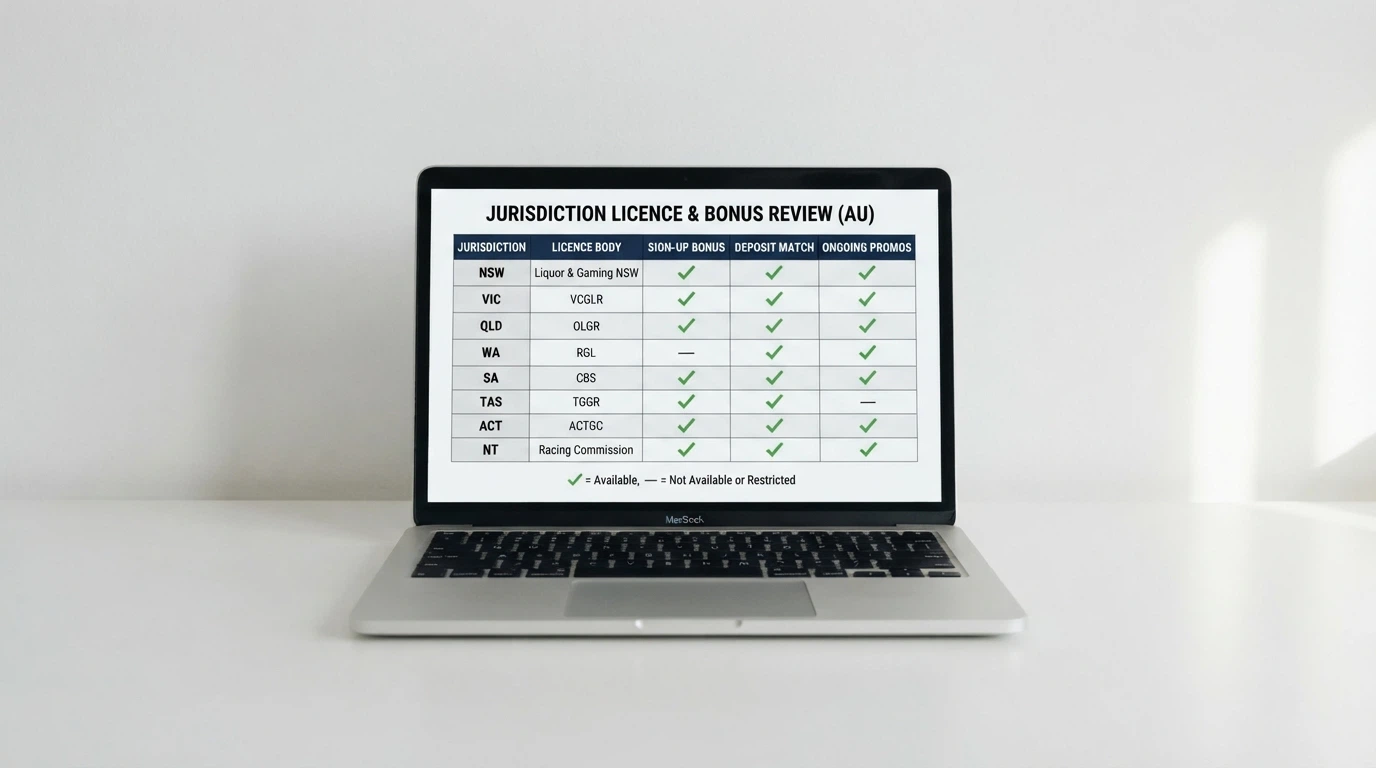
| Casino | Offshore licence | No-deposit offer available to AU players |
|---|---|---|
| FairGO | Curaçao | A$10–A$50 public chips; $100 tied to deposit or loyalty |
| Rocket Play | Curaçao | Not confirmed this run |
| Skycrown | Curaçao | No (welcome bonus requires deposit) |
| Royal Reels | Curaçao | A$10 no-deposit confirmed at 30× wagering |
| Stake | Curaçao | Not confirmed this run |
| WinSpirit | Curaçao | Not confirmed this run |
| Bizzo Casino | Curaçao | Not confirmed this run |
| Rocket Casino | Curaçao | Not confirmed this run |
| Scream Casino | Curaçao | Not confirmed this run |
| Rainbet | Curaçao | Not confirmed this run |
Only two of the ten featured operators carry a confirmed no-deposit bonus for AU players. The rest are either deposit-gated, marketing offers whose AU-specific terms were not verified during this audit window, or terms-page content the public web did not surface in time. The list below is the write-up, in order.
FairGO: The Longest-Running RTG Casino for AU Players
FairGO has been operating as an AU-facing Curaçao-licensed RTG casino since the mid-2010s, and it carries one of the few genuinely public no-deposit chip programs at an AU-facing operator. The public chips themselves are small — typically A$10 to A$50 — and the larger $100 versions are mostly tied to either a deposit code or a player-status promotion rather than a claim from the front page.
The wagering hurdle is the standout number. FairGO’s $100 no-deposit chips carry a 60× wagering requirement on the bonus amount, with a max cashout of approximately A$180 regardless of the chip’s headline size. The two figures together mean that on a $100 chip with 60× wagering, the player has to place A$6,000 in qualifying bets to reach the cashout gate, and once they do, the operator pays out up to roughly A$180 — not the chip, the winnings, and only up to the cap.
The single most important figure on FairGO’s offer is the cashout cap. Whatever the chip’s headline, the ~A$180 ceiling is what decides what the player walks away with. A $25 chip and a $100 chip both run into the same ceiling; on the smaller chip the wagering hurdle is correspondingly lower, and the ratio of expected value to playthrough effort usually favours the smaller one.
The library is single-provider RTG, which is the long-running backbone of FairGO’s catalogue and limits the diversity of slot style and RTP band a player sees compared with multi-provider operators. Progressive jackpots are typically excluded from the chip’s contribution table. The verdict on FairGO is that the chips are real but the headline $100 is bigger than the deal — a player who treats the brand as a test of the cashier rather than a path to a real win is the audience the public offer is built for.
Rocket Play: 3,000+ Pokies, Bonus Terms Unverified This Run
Rocket Play runs on a Curaçao licence with a multi-provider library reported at over 3,000 pokies, dominated by Pragmatic Play and several other studios. The operator’s AU-facing welcome bonuses and AU-specific no-deposit offers were not confirmed during this run’s source check.
What the audit window did surface is the RTP band of the Pragmatic Play pokies the operator runs: 96.48% to 96.71% across the main titles, which is mid-band for AU-facing casino libraries. Sweet Bonanza, Gates of Olympus and Big Bass Bonanza — all in Rocket Play’s catalogue under published third-party reviews — sit inside that band.
Rocket Play’s case for an AU player is the size of the library rather than the terms the audit window returned. Prospective customers should plan to fund their own account, as the lack of a verified AU-facing offer makes any no-deposit headline essentially speculative.
Skycrown: A Deposit Welcome, Not a No-Deposit Offer
Skycrown’s headline welcome package for AU-facing players runs on a Curaçao licence across Pragmatic Play and Play’n GO studios. The package structure is a deposit match, not a no-deposit chip — up to A$5,000 matched credit plus 300 free spins distributed across the first several deposits.
Skycrown’s bonus terms carry an A$80 to A$100 cashout cap on bonus winnings, which is on the lower side of the AU-facing range and tends to clip the bonus winnings above that ceiling regardless of how the bonus progressed. Book of Dead and similar Play’n GO titles run at 96.21% RTP, in line with the multi-provider band.
Skycrown is the deposit-gated welcome rather than the no-deposit test. The right fit is a player who has already decided to fund an AU-facing account, not the player still testing one.
Royal Reels: A$10 No-Deposit With 30× Wagering
Royal Reels runs a confirmed A$10 no-deposit bonus on its Curaçao licence — one of the few audit-verified no-deposit offers in the AU-facing set. The wagering multiple is 30× on the A$10 chip, the lowest verified multiplier across the ten operators on this page.
The lower wagering multiple materially changes the deal. At 30× wagering on an A$10 chip, the turnover requirement is A$300 in qualifying bets — close to one-tenth of what a $100 chip at 35× would ask for. The chip is small in headline terms, but the wagering-to-chip ratio is roughly comparable to what a $100 chip at 35× would set, with a much smaller absolute turnover.
The cashout structure on Royal Reels’ A$10 chip is shown on activation, which is unusual among the AU-facing set — most operators bury the ceiling inside the bonus terms. The disclosure at the activation screen means the player sees the cashout cap before they start playing, which is itself a meaningful transparency signal.
Royal Reels is the cheapest entry into a no-deposit chip on this page, in the strict arithmetic sense of “smallest amount of qualifying play needed to reach a withdrawal decision.” The offer is built for the player who treats it as a free test of the cashier rather than a path to a large win.
Stake: Crypto-First With Pragmatic Play, No AU Bonus Confirmed
Stake runs on a Curaçao licence with a crypto-first cashier and a multi-provider library that includes Pragmatic Play and several other studios. Stake’s AU-facing welcome bonuses and AU-specific no-deposit offers were not confirmed during this run’s source check.
That gap is worth naming explicitly. Stake is a globally recognised operator with a deep game catalogue and a reputation for fast crypto payouts. For an Australian player who would otherwise be drawn in by brand recognition, the missing terms-page confirmation is the gap to fill before depositing. The conservative reading is that no confirmed AU-facing no-deposit chip is being publicly advertised from Stake right now; the welcoming reading is that the verification window for this run did not catch one. Either way, a player should not assume the welcome offer exists in the absence of a current terms-page reference.
Stake is a brand to read the terms page on before clicking through an offer. The crypto cashier makes it harder to recover funds through any Australian complaints body if a withdrawal dispute arises, and that risk premium applies even when the welcome offer is favourable.
WinSpirit: AU Market Presence, Bonus Terms Not Confirmed
WinSpirit is named in AU market-share data and holds a Curaçao licence. Game-provider and bonus-terms confirmation for Australian players were not surfaced during this audit window.
WinSpirit is a known AU-facing operator. What is missing is the offer sheet an Australian player would see at the cashier in 2026.
Bizzo Casino: Offshore Operator, AU-Specific Details Unverified
Bizzo Casino is Curaçao-licensed and AU-facing. Game-provider list and AU-specific bonus terms were not confirmed during this run.
Bizzo is a working AU-facing brand on most counts. A player who lands on Bizzo through an affiliate link should read the AU terms box on the cashier before claiming anything, because the offer sheet for an Australian account in 2026 is not in the verified set.
Rocket Casino: Curaçao-Licensed, No AU Bonus Data This Run
Rocket Casino holds a Curaçao licence and serves AU players. Bonus terms for Australian accounts were not confirmed during this audit window.
On this run’s evidence, Rocket Casino is a name on the AU-facing list rather than a tested entry.
Scream Casino: Offshore Only, Bonus Terms Unconfirmed
Scream Casino is Curaçao-licensed and AU-facing. AU-specific bonus terms were not confirmed during this audit window.
Scream Casino sits alongside Rocket Casino: a Curaçao-licensed operator with an AU-facing footprint, no verified bonus terms to point at this run, and a cashier that an Australian player should read before depositing.
Rainbet: AU-Facing, Bonus Details Not Confirmed
Rainbet rounds out the ten as a Curaçao-licensed operator with AU-facing activity. Game-provider and bonus-term confirmation for Australian players were not surfaced during this run’s sources.
Rainbet closes the list as the operator with the least verified material in this run — present on the AU-facing register, absent from the offer sheet the audit window could pull.
How to Deposit and Cash Out at AU-Facing Casinos
Payment is where the AU-facing market looks most unlike the licensed one. The licensed Australian wagering system uses debit card, bank transfer, PayID/Osko and BPAY, with credit cards and crypto banned since 11 June 2024 and identity verification required at the cashier. AU-facing offshore casinos are running outside that framework entirely. The deposit instruments that work at them are the same PayID and crypto rails the licensed market partly prohibits, routed through a payment processor that knows the operator is offshore.
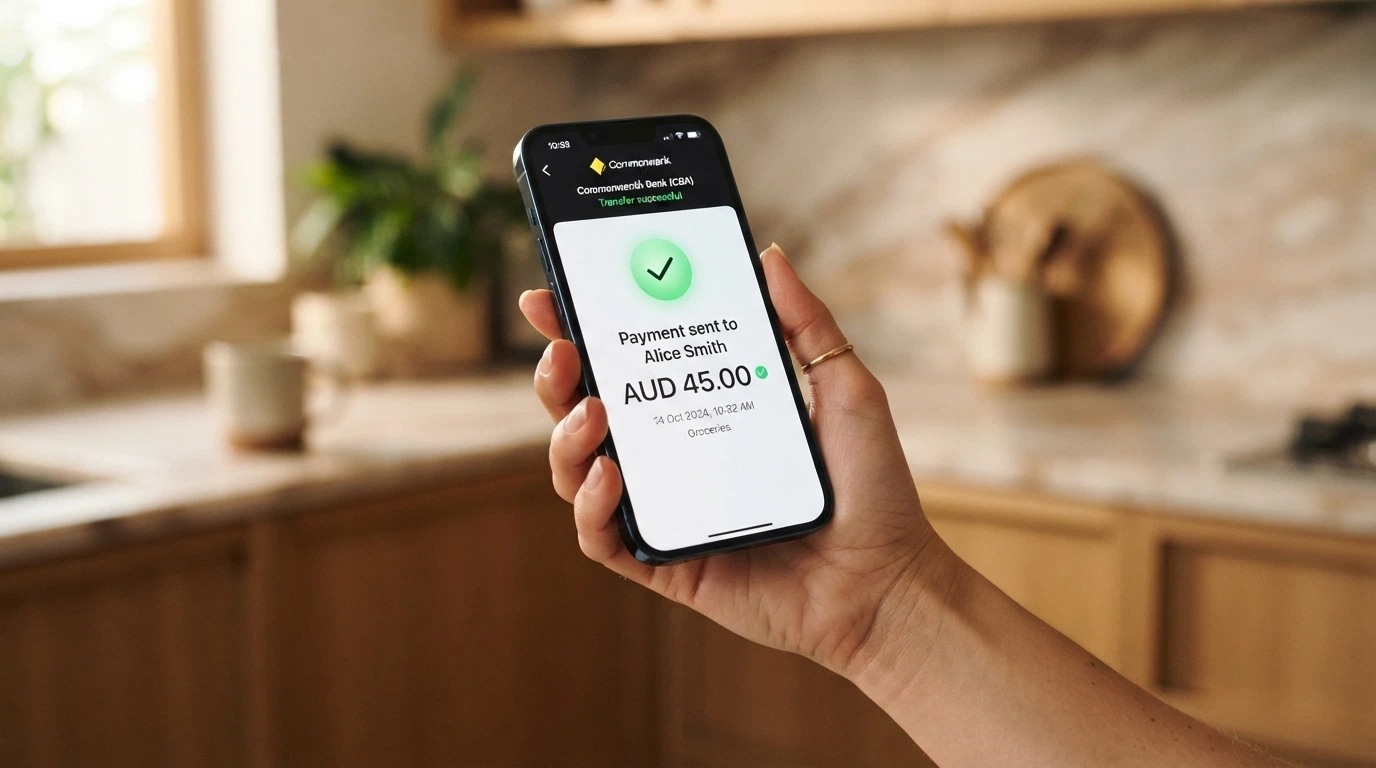
The mismatch is informative. A site that asks for a credit-card or crypto deposit is, by definition, telling the player it is operating outside Australian rules; the player should treat the deposit method as a tell that the operator is not bound by the local protections.
PayID: The AU Player’s Deposit Workhorse
PayID is the dominant deposit rail at AU-facing offshore casinos because it is instant, almost universally available through an Australian bank account and the deposit minimums are low. Deposits typically clear within seconds. Minimums range from A$10 to A$20. Maximums sit between A$2,000 and A$10,000 per transaction depending on the operator and the player’s bank.
PayID withdrawals are the metric an AU player should watch most carefully. The fastest tested withdrawal windows for PayID at AU-facing casinos in published source material were 28 minutes at Goldenbet and 35 minutes at Lucky7. The typical range sits between one and two hours. Across an audit window at ViperSpin, PayID withdrawals averaged 18 hours — longer than the same operator’s bitcoin withdrawals, which averaged 8 hours over the same period.
The point is that PayID deposits are faster than PayID withdrawals, on average, by a wide margin. The same rail in reverse takes longer because the cashier is verifying the withdrawal before pushing it to the player’s bank. A player who needs money faster than that window should compare PayID against crypto or another operator’s withdrawal rate before locking in.
Deposit Minimums, Maximums and Cashout Realities
The deposit numbers at AU-facing offshore casinos sit in a tight band. PayID minimums start at A$10; Neosurf minimums sit between A$10 and A$500 with instant deposit and free fees at the A$10 entry-level. Maximums on a single transaction track above A$2,000 for PayID and are typically uncapped for crypto at the operator’s discretion.
Withdrawal floors sit higher than deposit minimums. A$30 to A$50 is the standard floor at AU-facing operators in 2026. The player who funds an account with an A$10 PayID deposit has to run their balance up to A$30 to A$50 before the operator will let them withdraw — a fact that, combined with the cashout cap on no-deposit winnings, is the second silent cost on top of the bonus’s small print. A player who wins A$200 from a no-deposit chip at a casino with an A$30 minimum withdrawal will need to clear both the wagering hurdle and the A$30 floor before any money moves.
Neosurf has a particular flow: deposits of A$10 to A$500 via Neosurf voucher are instant and fee-free, but the cashout route goes through Jeton e-wallet, which runs 24 to 48 hours on withdrawal processing. The deposit-to-cashout asymmetry is a recurring pattern: the deposit rail is fast, the withdrawal rail adds a day or two.
The Legal Reality: Online Casino Is Prohibited in Australia
Online casino is prohibited in Australia. The Interactive Gambling Act 2001 makes it an offence for a provider to offer online casino games, online pokies or in-play sports betting to a person in Australia. There is no licence for these products anywhere in the country — not federally, not in any state or territory. Every operator marketing a $100 no-deposit bonus to an Australian player is doing so in breach of that prohibition. The catch is that the prohibition targets the provider, not the player.
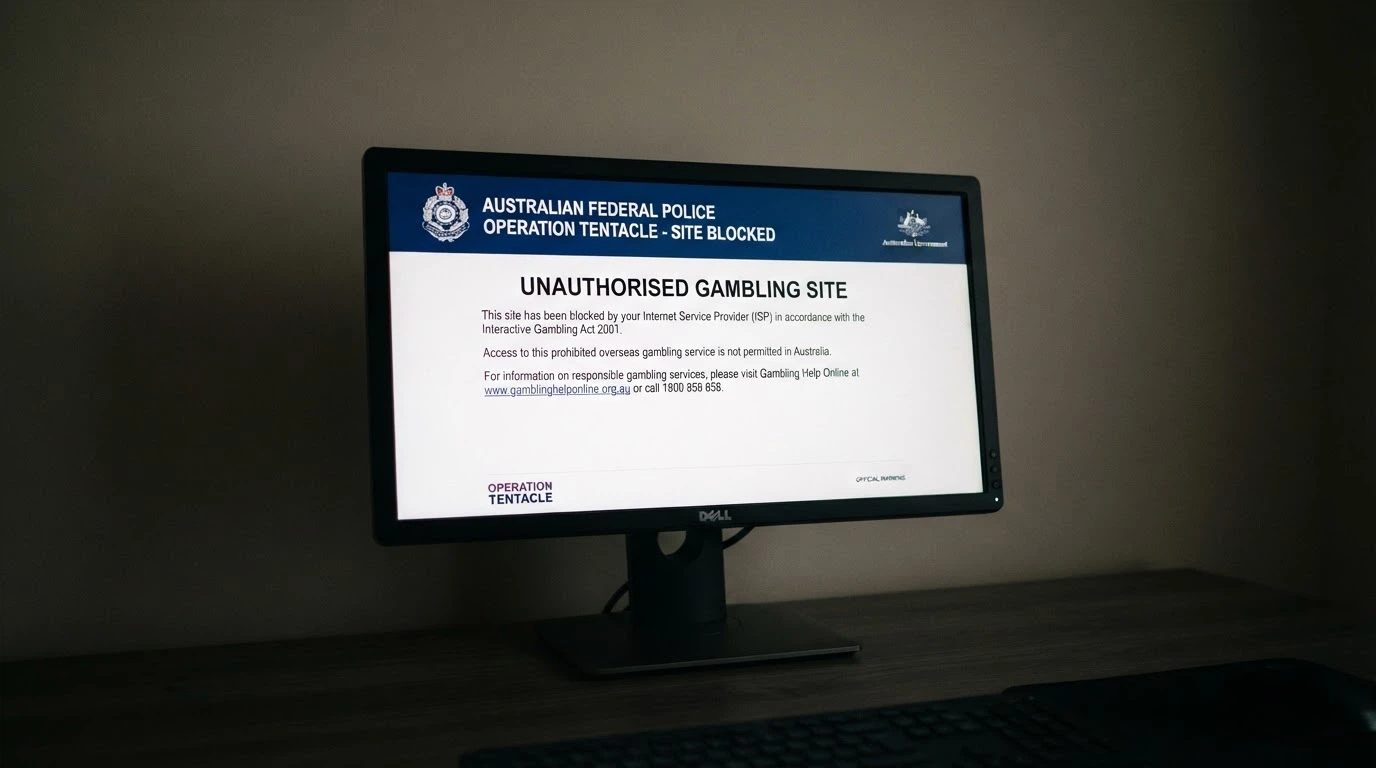
The statute itself carries civil penalties on the operator up to A$2,475,000 per day for an individual and A$12,375,000 per day for a corporation. Those numbers are the size of the regulator’s teeth, and ACMA — the Australian Communications and Media Authority — has spent the past decade using them.
ACMA Enforcement: 1,751 Sites Blocked and Counting
ACMA has directed Australian ISPs to block 1,751 illegal gambling and affiliate-marketing websites since the first blocking request in November 2019. More than 230 unlicensed gambling services have exited the Australian market since enforcement measures were strengthened in 2017.
Blocking happens at the DNS level, which is why an AU player at a blocked site sees a regulator-shaped stop page on a desktop browser rather than a finer-grained application-level block. The mechanism is blunt because the statute gives ACMA blunt instruments; the player whose site just got blocked does not have a recourse path under Australian consumer law because the product they were playing is itself prohibited.
ACMA has used infringement notices too. On 16 January 2026 the regulator issued 8 infringement notices to Tabcorp Holdings, each for A$19,800, totalling A$158,400, for in-play betting contraventions under subsection 15(2A) of the IGA. Tabcorp is one of Australia’s largest licensed wagering operators, and the infringement notices targeted the in-play betting prohibition specifically — a different prohibition from the online casino one but enforced under the same statute. The message ACMA sent is that even licensed operators do not get to pick which parts of the IGA they observe.
Offshore vs Licensed: What the Player Gives Up
The trade of playing at an AU-facing offshore operator instead of staying inside the licensed wagering system is not free. It is paid for in consumer protections the player cannot recover.
The licensed system binds the operator to BetStop, Australia’s National Self-Exclusion Register. Once a player registers, every AU-licensed wagering provider is required to refuse their account access. The offshore casino does not check the register. Registration on BetStop does not block the offshore casino, and the offshore casino does not extend BetStop coverage to a player who registered. The licensed market provides the register; the offshore operator provides nothing equivalent.
The licensed system gives the player a complaints body. ACMA can investigate, refer and where appropriate pursue civil penalty proceedings against an operator that breaches the IGA. If an AU-licensed operator refuses a withdrawal, the player can escalate to the relevant state or territory regulator, and there is a paper trail the operator has to respond to. Against an offshore operator, ACMA cannot recover the player’s money. The complaint path on a Curaçao-licensed operator runs through that operator’s internal dispute process and, if necessary, the Curaçao framework — a system that does not have an Australian arbitration gateway.
The licensed system caps how the player pays. Credit cards, credit-related products and digital currency have been banned for online wagering in Australia since 11 June 2024. An operator that asks for a credit card or a crypto deposit is telling the player, by the structure of the deposit page, that the operator is outside Australian rules. The deposit request is the most reliable signal an AU-facing player can read.
The licensed system also leaves the site reachable. The offshore operator’s domain is one blocking request away from disappearing behind an ACMA stop page, with whatever balance remains on the player’s account effectively trapped behind it. The site-blocking mechanism is DNS-level, which means an AU player can sometimes reach a blocked site through a VPN or a different DNS resolver, but doing so does not change the legal status of the activity. It moves the operator’s site into the same grey zone the operator already sits in.
The 2026 Reform: What Changes From 1 January 2027
The Interactive Gambling Amendment (Gambling Reform) Bill 2026 passed Parliament on 19 August 2026, and its measures commence on 1 January 2027. The reform is not yet in force, but the changes it locks in are not speculative.
From 1 January 2027, banks and payment providers in Australia gain express authority to block transactions to illegal gambling operators. For an AU player depositing at an offshore casino via PayID, that means a PayID transaction can be declined at the bank’s discretion if the recipient has been flagged. The mechanism is upstream of the casino’s cashier and is enforced at the bank’s end. The reform does not reach bitcoin or non-PayID rails by the same path, which is why a player choosing a deposit method on 2 January 2027 will be making a slightly different decision from the one they would have made on 30 December 2026.
Advertising and inducements are the other half. From 1 January 2027, wagering advertising is capped at three ads per hour between 6:00 am and 8:30 pm; broadcasting sporting odds is banned; athletes, celebrities and influencers can no longer promote wagering products; and there is a live-sport advertising blackout window covering the fifteen minutes before and five minutes after a sporting event. Direct marketing of inducements is prohibited for 14 days after a customer signs up with a licensed operator and for three months after a person deregisters from BetStop, with an indefinite restriction on at-risk customers. The reform is targeted at licensed operators, where the regulator has reach. Offshore casinos advertising a $100 chip to an Australian player are not subject to these rules because the regulator has no reach. The reform changes the licensed side of the market while leaving the offshore side where it was.
Staying in Control: The Tools That Actually Work for AU Players
The Australian responsible-gambling infrastructure is real and well-resourced. The catch is that it was built for the licensed wagering system. The tools below work; most of them do not see offshore operators, and a player who relies on them needs to know which.
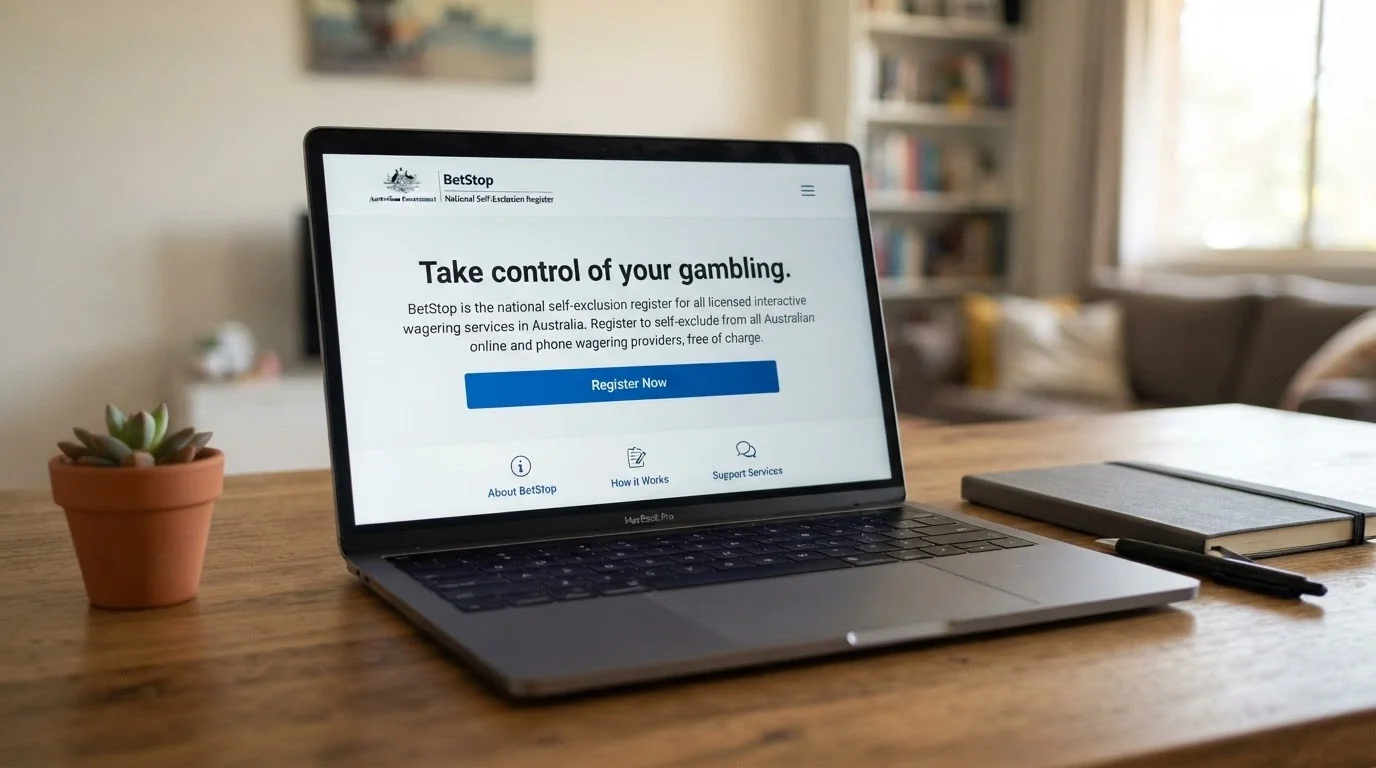
BetStop: How the National Register Works — and Where It Doesn’t
BetStop — the National Self-Exclusion Register — went live in August 2023. As at 31 July 2026 the register had received 67,480 registrations, of which 41,290 exclusions were still active. About 78% of registrants were under 40, and 38% chose lifetime exclusion.
One registration covers every AU-licensed wagering provider — BetStop binds approximately 150 licensed wagering operators under its framework. Self-exclusion can be set for a minimum of three months up to a lifetime, with no application for removal permitted inside the first three months of any term. A player who registers with BetStop cannot reopen a BetStop-banned AU-licensed account for the duration of their exclusion.
The gap is the offshore casino. BetStop does not extend to offshore operators because they are not licensed by an Australian regulator and the operator-side integration is voluntary. An AU-facing offshore casino never receives the BetStop notification and has no obligation to act on it. A player who registers with BetStop and then opens an offshore account has not closed the loop — they have closed the licensed half and left the offshore half open.
For a player deciding where to bet, that fact has a straightforward consequence. BetStop is the right tool for players whose gambling happens entirely in the licensed system. For players whose activity includes offshore casino products, BetStop cannot be relied on as a complete answer.
Deposit Limits, Breaks and Where to Get Help
Deposit limits and take-a-break tools sit at the licensed-operator level. AU-licensed wagering operators are required to offer customer-set deposit limits and activity statements under their state or territory licensing conditions, and the rules differ between jurisdictions — deposit-limit defaults, cooling-off periods and the level of activity-statement detail all vary. A player who has a BetStop registration and a deposit limit set at a licensed operator has, between those two tools, blocked the structure of the licensed-side activity.
For an AU player whose gambling includes offshore activity, the equivalent tools at offshore operators vary. Some operators expose deposit limits, session timers and time-out tools directly; others leave the player to set them at the cashier and many do not surface them in the bonus-active window. The same gap that runs through the offshore casino’s exclusion integration runs through its responsible-gambling tooling.
The helpline is the one thing that does cross the line. The National Gambling Helpline — 1800 858 858 — is free, confidential and available 24/7, with professional counsellors regardless of whether the player’s gambling was licensed or offshore. Gambling Help Online offers free chat and email counselling, plus self-assessment tools that screen for problem-gambling patterns without requiring the player to share identifying information. About 2.1% of Australian adults — roughly 430,000 people — experience problem gambling, and the higher a player sits on the consumption end of that statistic, the more those resources matter.
How We Evaluated These AU-Facing Casinos
The ten operators above were checked against the ACMA register and the Curaçao Gaming Authority’s public licensee search. The bonus terms were verified from the operators’ own published terms pages during the audit window, supplemented by affiliate and bonus-aggregator audits where those audits named their methods. Where an AU-facing offer could not be confirmed during this run, the entry has been written as “not confirmed this run” rather than guessed at.

The evaluation looked at licence status, bonus terms, AU player accessibility and the transparency of those terms. Licence status is the floor: every operator named here is Curaçao-licensed because no other licence route permits the offshore online casino product to reach Australian players. Bonus terms are the question the player can actually act on. The audit asked, on each offer, whether the wagering multiple, the cashout cap, the bet-size cap, the game-contribution table and the bonus expiry window could be confirmed against the operator’s own terms page at the time of writing. AU player accessibility is the question of whether the operator actually serves an AU account — many offshore brands are not, in fact, AU-facing, even though they accept Australian dollars as a cashier convenience. Transparency of terms is the test of whether the operator publishes the small print a player needs before claiming, or hides the offer sheet behind affiliate redirects and crypto-only cashier pages.
The current ranking reflects those four tests, weighted qualitatively because the small sample size does not survive a numerical scoring framework. The audit did not invent percentages or scores that the underlying data does not carry.
What the AU Player Should Actually Do About a No-Deposit Bonus in 2026
Three numbers to read on the offer page before any money is anywhere near the cashier, and three questions those numbers answer.

The first number is the wagering multiple. A 30× multiplier is reasonable; a 40× or 50× is on the edge; anything above 50× is, by the standards this page operates on, hostile to clear. The chip size does not change that calculation — the same 60× wagering on an A$10 chip and a $100 chip is the same shape of deal in ratio terms, and the bigger chip is not better because the absolute turnover it imposes is bigger. A player who can read the multiplier and translate it into the number of spins or hands needed to clear it is already ahead of the marketing pitch.
The second number is the max cashout. This is the cap that decides what walks out the door, and on a $100 chip it caps winnings somewhere between A$200 and A$300 regardless of the chip’s size or the player’s run quality. The cashout cap is, more often than the wagering multiple, the figure that decides what the bonus is really worth. A reader who finds a 30× wagering multiple but a A$50 cap on what looks like a generous chip should treat the chip as a A$50 chip in practical terms.
The third number is the game eligibility list. A 100% pokies weighting and a 0% table-games weighting means the chip is a pokies chip. A player who wants to play blackjack with the same credit will need to bet approximately ten times the equivalent turnover, or have the bonus voided for using a non-contributing game. The bonus is not “free credit across the casino”; it is credit for the games the operator has chosen for it.
When those three numbers line up — a 30× multiplier, a A$200-plus cashout ceiling and a pokies-eligible library the player is happy with — the bonus is genuinely worth the claim. When the wagering is above 50×, the cashout is below the chip’s headline or the game eligibility excludes the player’s preferred pokies, the numbers say walk away. No bonus is worth claiming on terms the player has not read, and no offer this page describes is worth claiming as a side door to a larger payout.
The trade the player is being asked to make has a shape the numbers make clear. The $100 chip is the marketing headline; A$3,500 turnover is the cost of clearing it; the cashout cap is what survives after. The “free” in the offer’s name is, in arithmetic terms, the approximately A$122.50 a player statistically pays across the playthrough. The offer is not free. It is an exchange, priced against the house edge, with terms that decide who wins.
Frequently Asked Questions
Is a $100 no deposit bonus real in Australia, or is it too good to be true?
Genuine A$100 no-deposit chips at AU-facing casinos are vanishingly rare in 2026. Most offers advertised as $100 free chips are either US-only, deposit-triggered, or bundled spin packages worth closer to A$20. The few verified A$100 chips that exist carry 30× to 60× wagering and A$50 to A$200 cashout caps, with pokies as the only eligible game class. The honest player reads the wagering multiple and the cap before clicking claim.
Are online casinos legal in Australia, and can I get in trouble for playing?
Online casino games and online pokies are prohibited in Australia under the Interactive Gambling Act 2001, with no licence for them federally or in any state or territory. The IGA targets the provider, not the player; individual players are not prosecuted for accessing offshore casinos. The civil penalties of up to A$2,475,000 a day for an individual and A$12,375,000 a day for a corporation apply to operators, not players. The legal gap a player should think about is consumer protection — there is no AU body that can recover a disputed withdrawal from an offshore operator.
How does BetStop protect me, and does it cover offshore casino sites?
BetStop — the National Self-Exclusion Register — went live in August 2023 and excludes registered players from every AU-licensed wagering provider, about 150 operators in total. As at 31 July 2026 it had 67,480 registrations, with 41,290 active exclusions. BetStop only binds AU-licensed wagering services; an offshore casino is not connected to the register and does not receive the exclusion notification. A player who has registered with BetStop and then opens an offshore account has closed the licensed half of the activity and left the offshore half open.
What payment methods can I use to deposit and withdraw at AU-facing casinos?
PayID is the dominant deposit method at AU-facing offshore casinos, with instant deposits at minimums from A$10 to A$20 and maximums between A$2,000 and A$10,000 per transaction. PayID withdrawals typically take one to two hours, with the fastest tested windows of 28 and 35 minutes. Neosurf deposits run A$10 to A$500 instantly; Jeton e-wallet withdrawals (the Neosurf cashout path) take 24 to 48 hours. Bitcoin averaged 8 hours for withdrawals against PayID’s 18-hour average in one published audit period. In the licensed Australian wagering system, credit cards and crypto have been banned for online wagering since 11 June 2024, and PayID is the same rail there.
What happens if an offshore casino refuses to pay my winnings?
An offshore operator’s refusal triggers a dispute path that does not run through Australian regulators. ACMA can investigate the operator for breaching the IGA, but ACMA cannot recover the player’s money; there is no AU complaints body with arbitration authority over a Curaçao-licensed operator. The player is left with the operator’s internal dispute process and, if needed, the Curaçao framework’s enforcement. This is the structural gap every AU player should know about before depositing, and it is the gap that closes the analysis the rest of this page has built.
Bonus Codes: Still a Thing for AU Players in 2026?
Codes are still part of the AU-facing bonus infrastructure, though they have been moving toward a more optional role over the last several years. Three flavours show up.
The first is the public promotional code, advertised on the operator’s bonus page or in affiliate copy, that a player enters at sign-up or on the deposit page. Some operators auto-credit the bonus once the code is in; others require a separate opt-in inside the bonus menu.
The second is the deposit-tied code, where a particular bonus amount — including the rarer $100 version of the standard A$10–A$50 free chip — only activates when the player deposits using a specific method or enters a code at the cashier. Fair Go’s public no-deposit chips typically land at A$10 to A$50; the $100 versions are most often tied to either a deposit code or a loyalty-tier reward the new account does not have.
The third is the loyalty code, which a player receives through an operator’s email or VIP manager rather than the front-page offer. These codes often carry the least stiff terms because the operator has already established that the player will deposit.
The code mechanic itself does not change the deal. The wagering multiple, the cashout cap, the game weighting and the expiry window are the same regardless of how the offer is routed to the player. What changes is accessibility — who can claim a given chip, and when. Players reading a “no code required” badge on an offer page should still read the terms; the badge is a convenience, not a softened contract.
Written by the editors at Free Spins No Deposit AU.